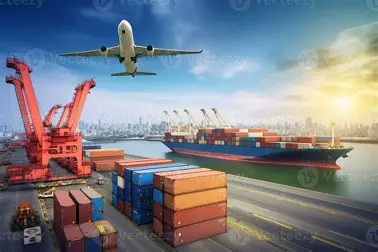
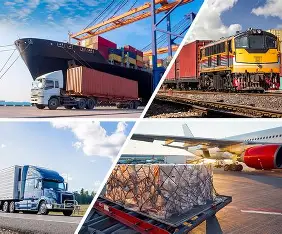
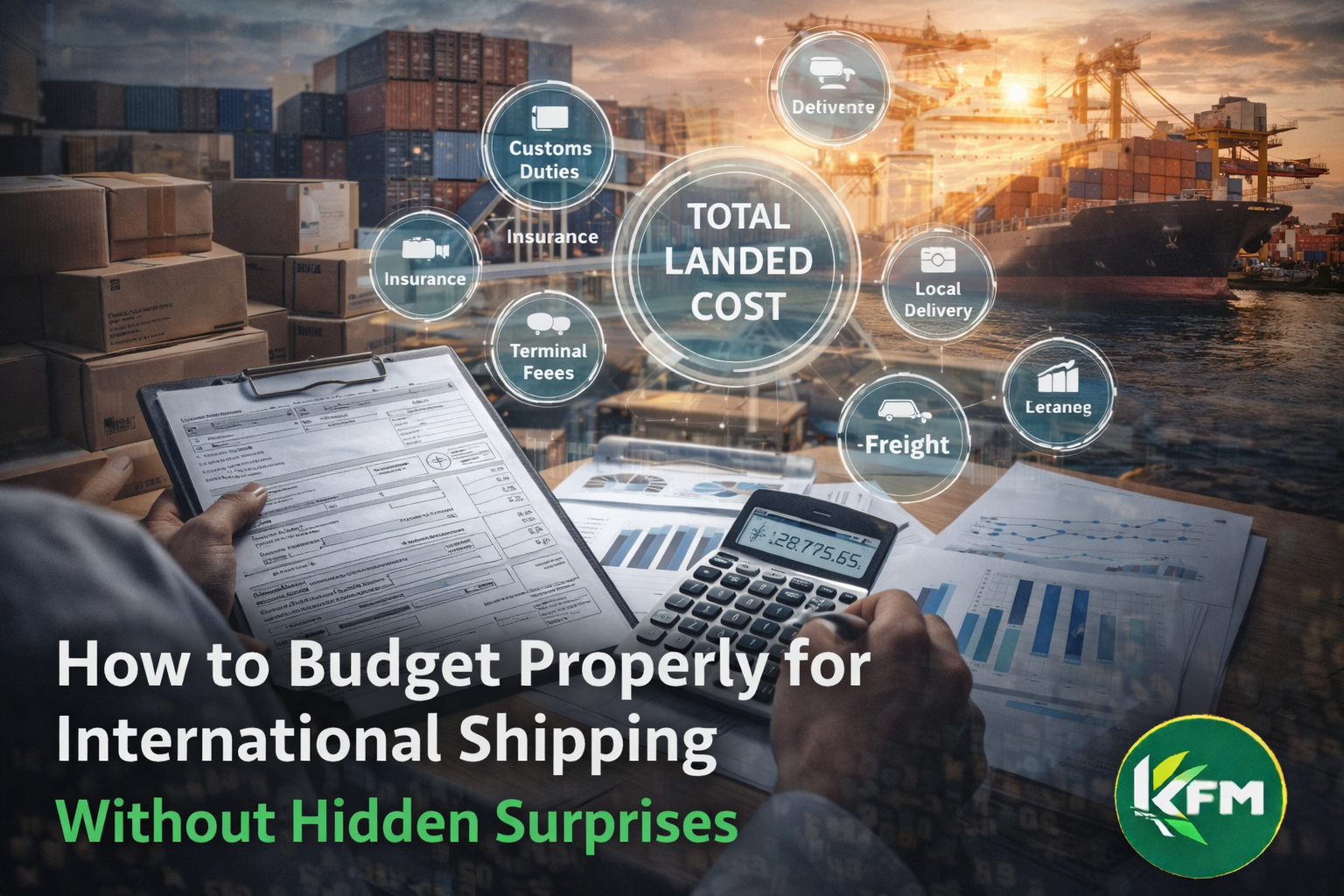
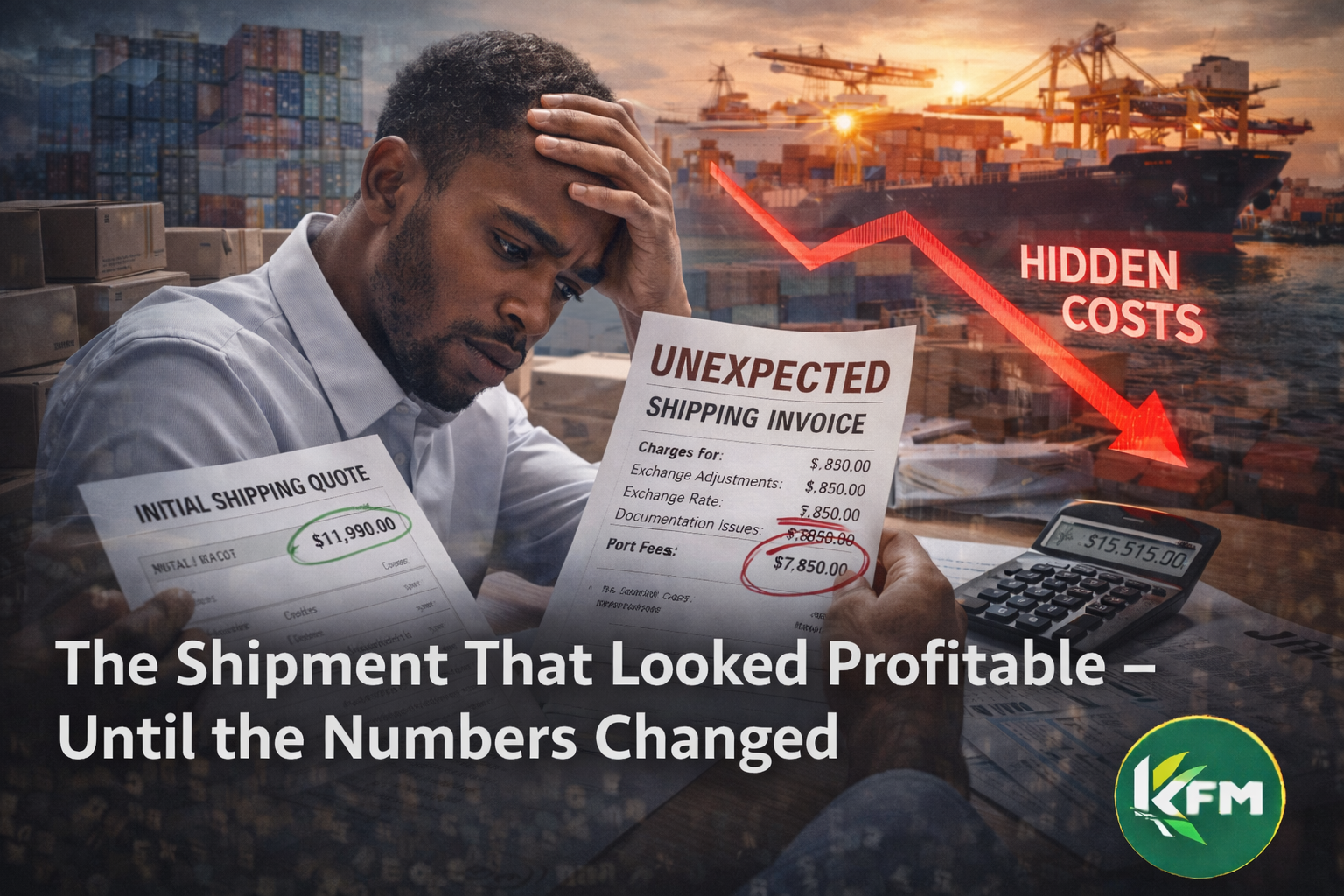
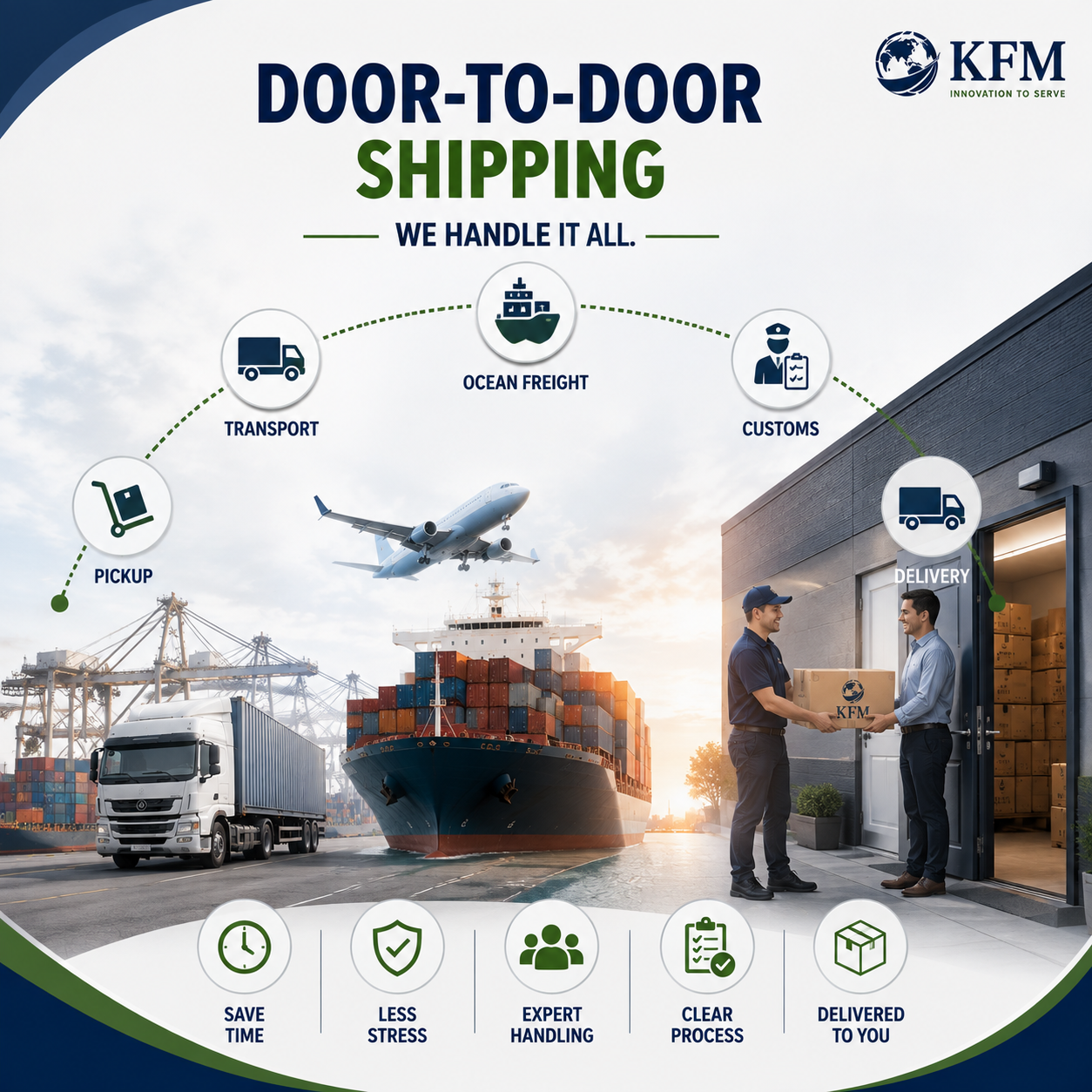
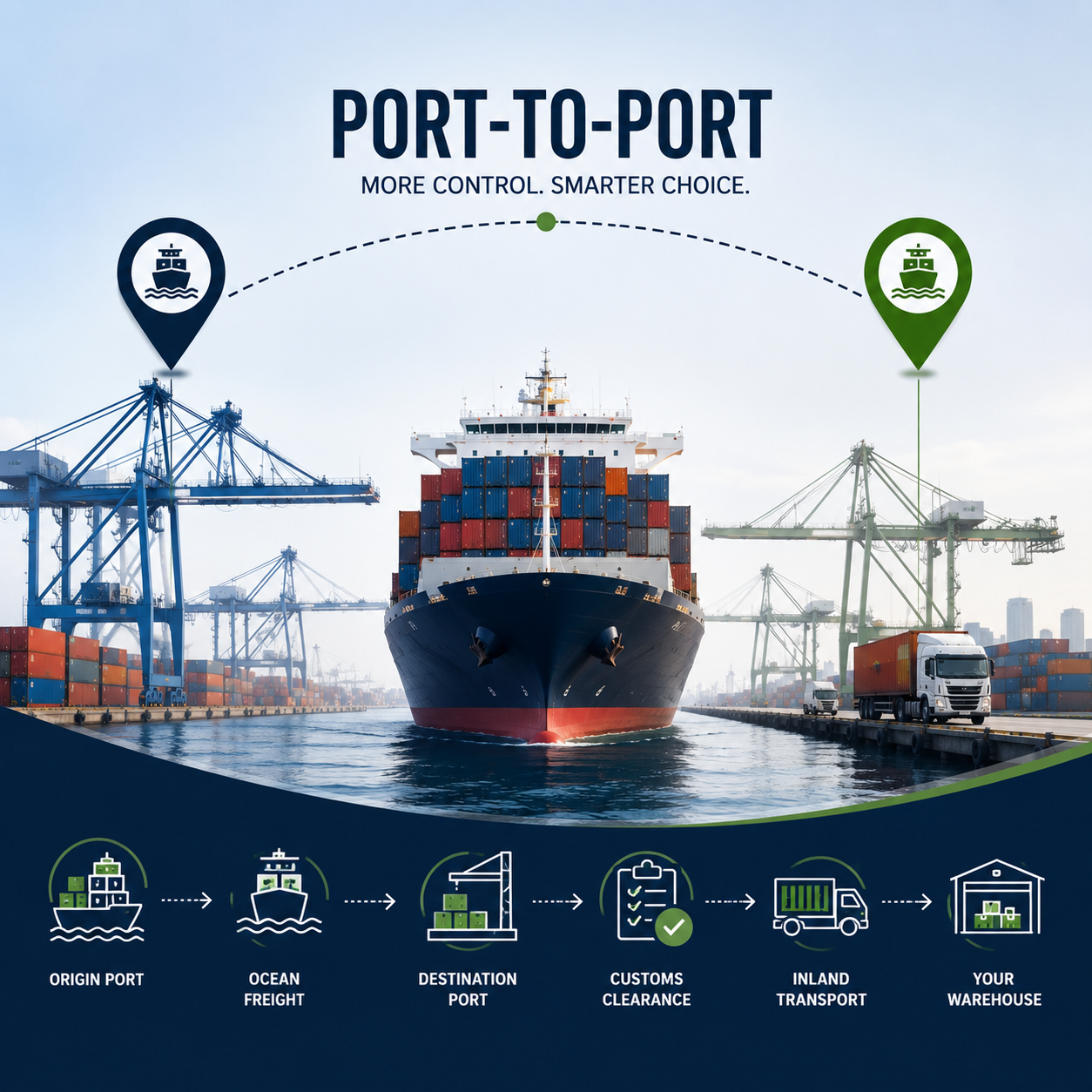
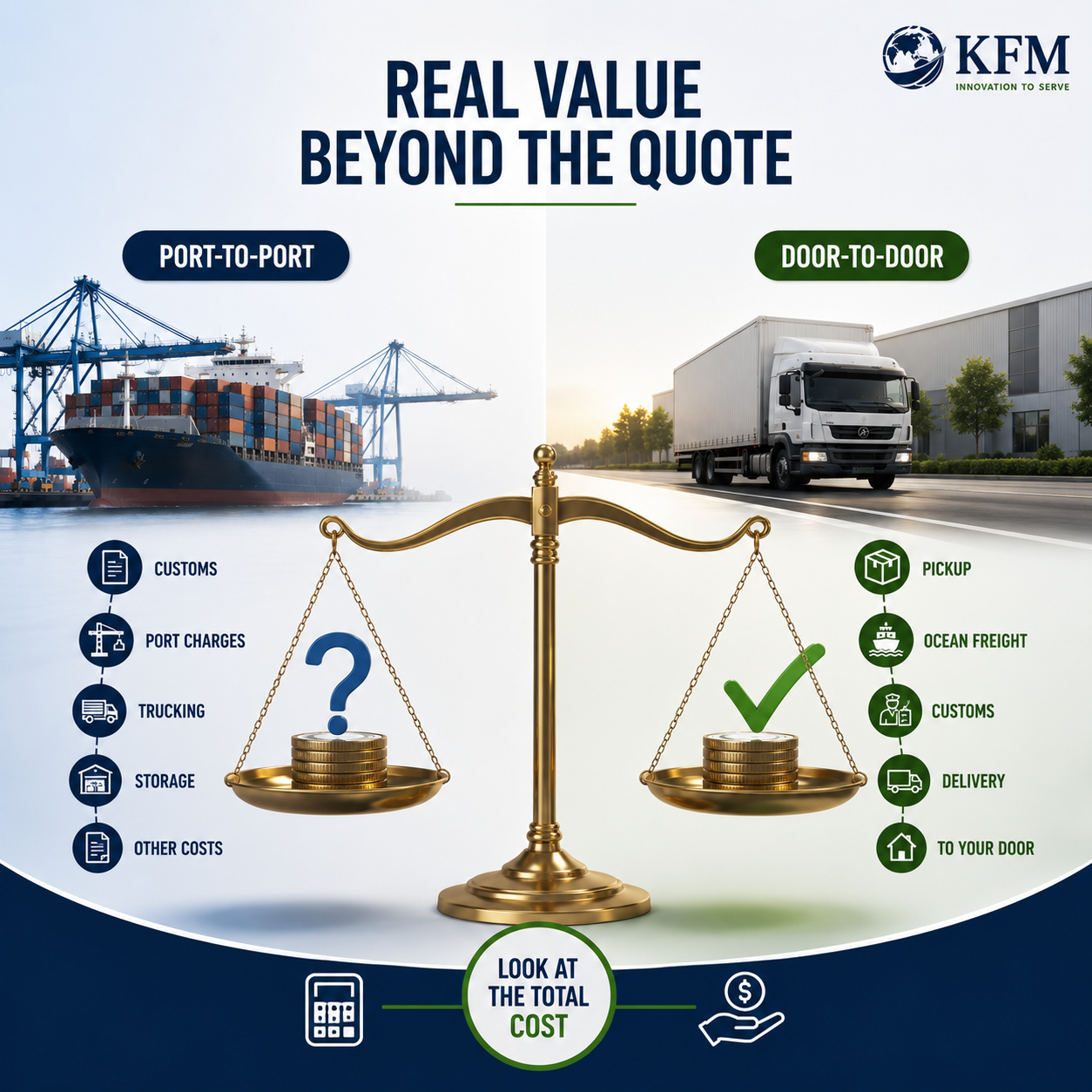
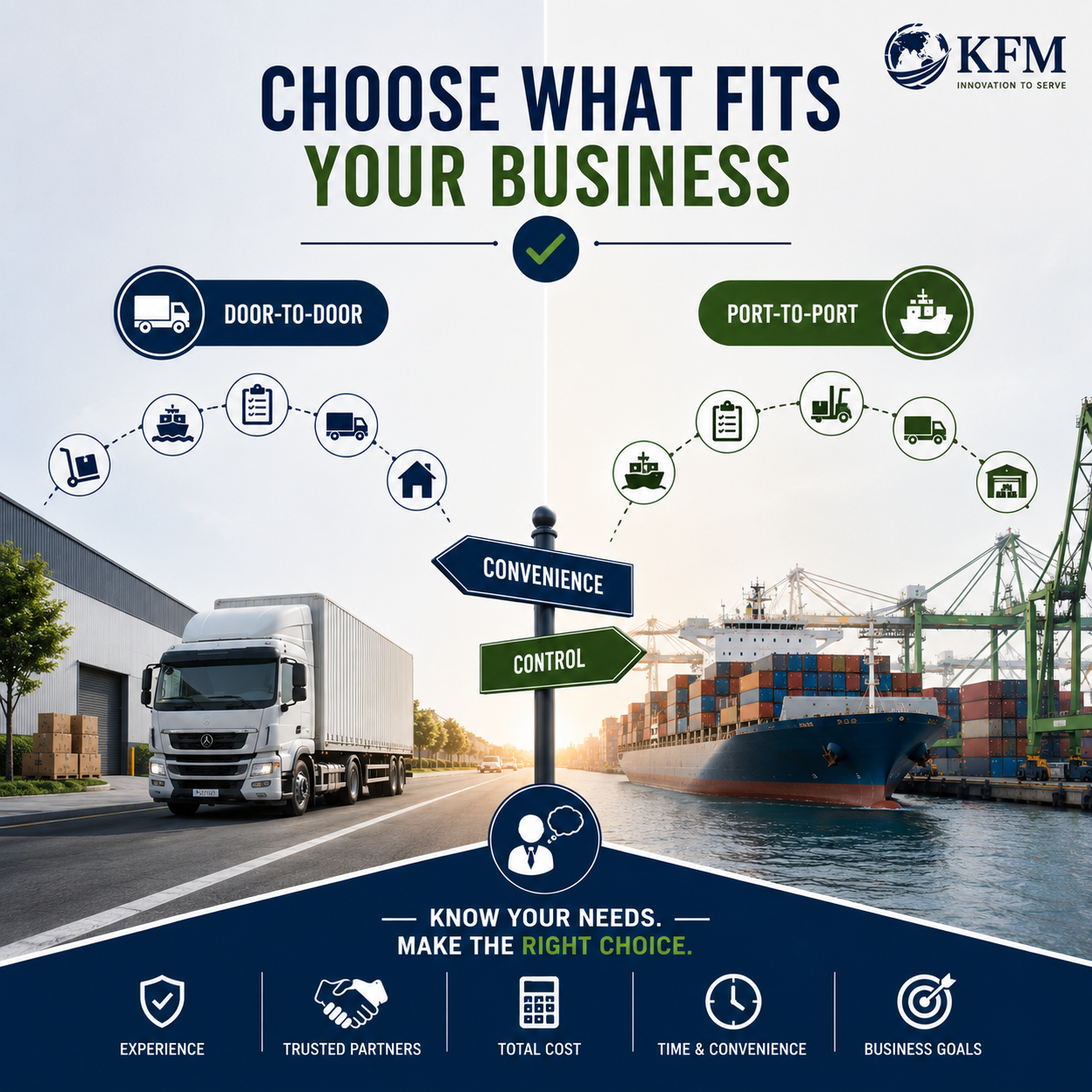
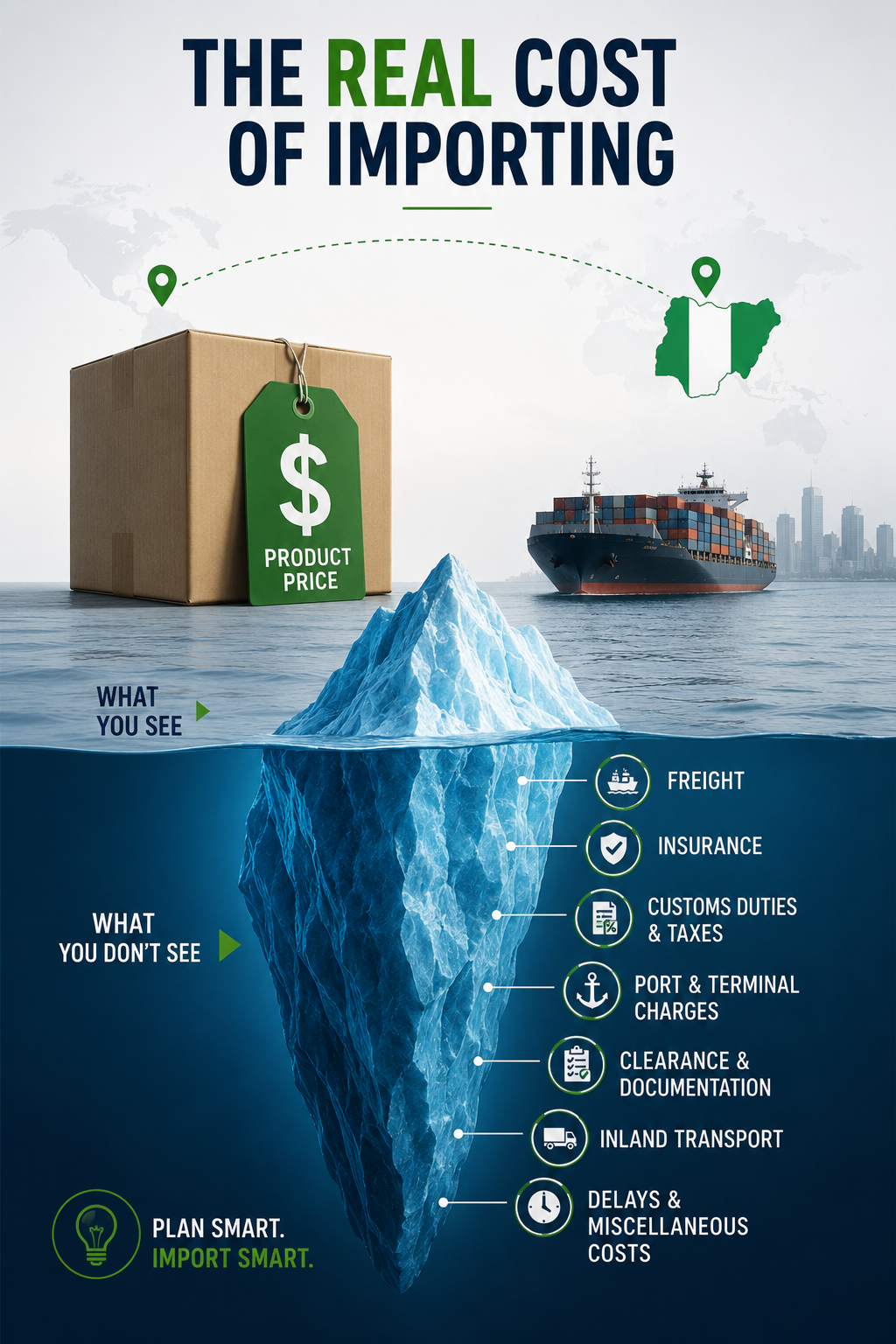
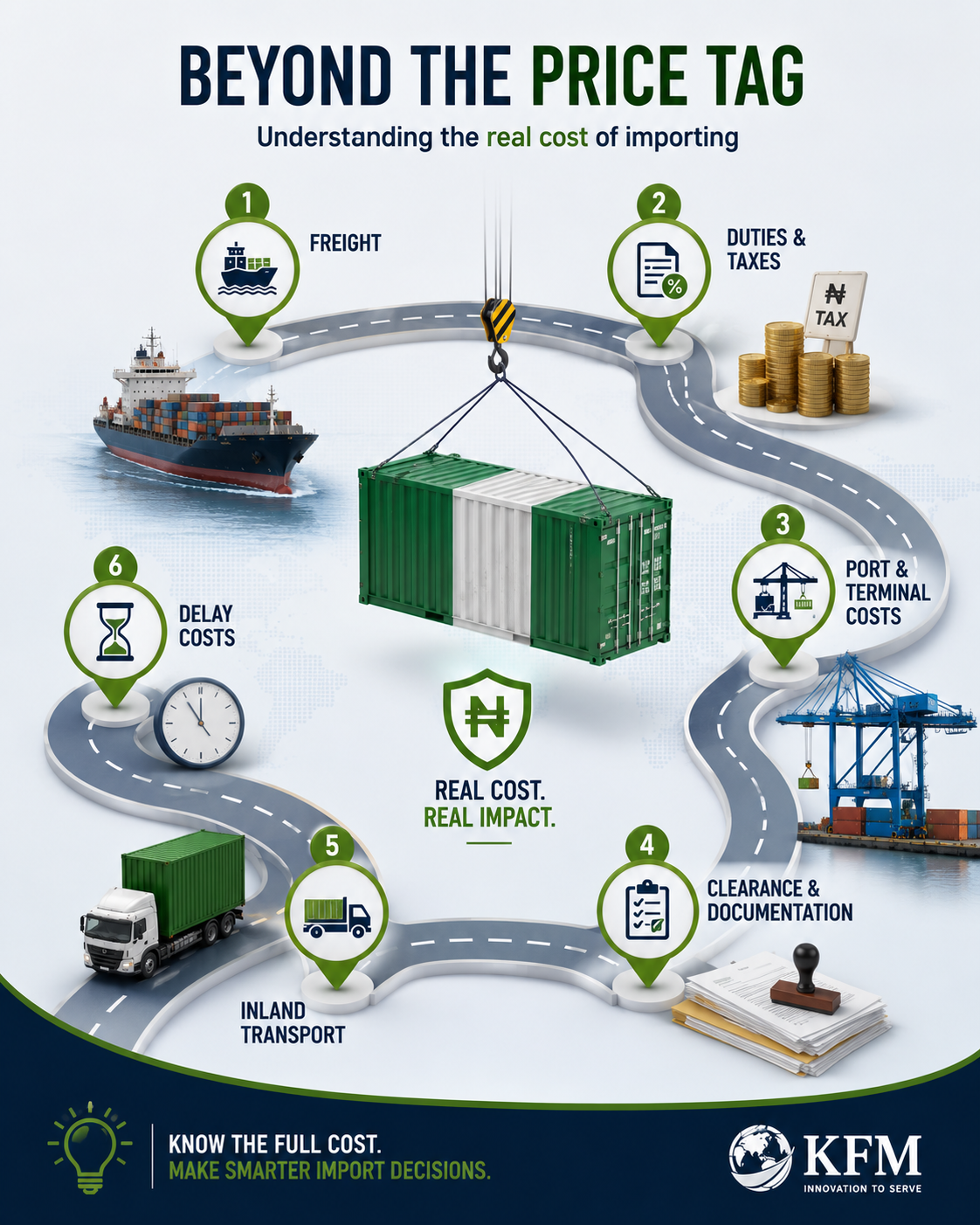
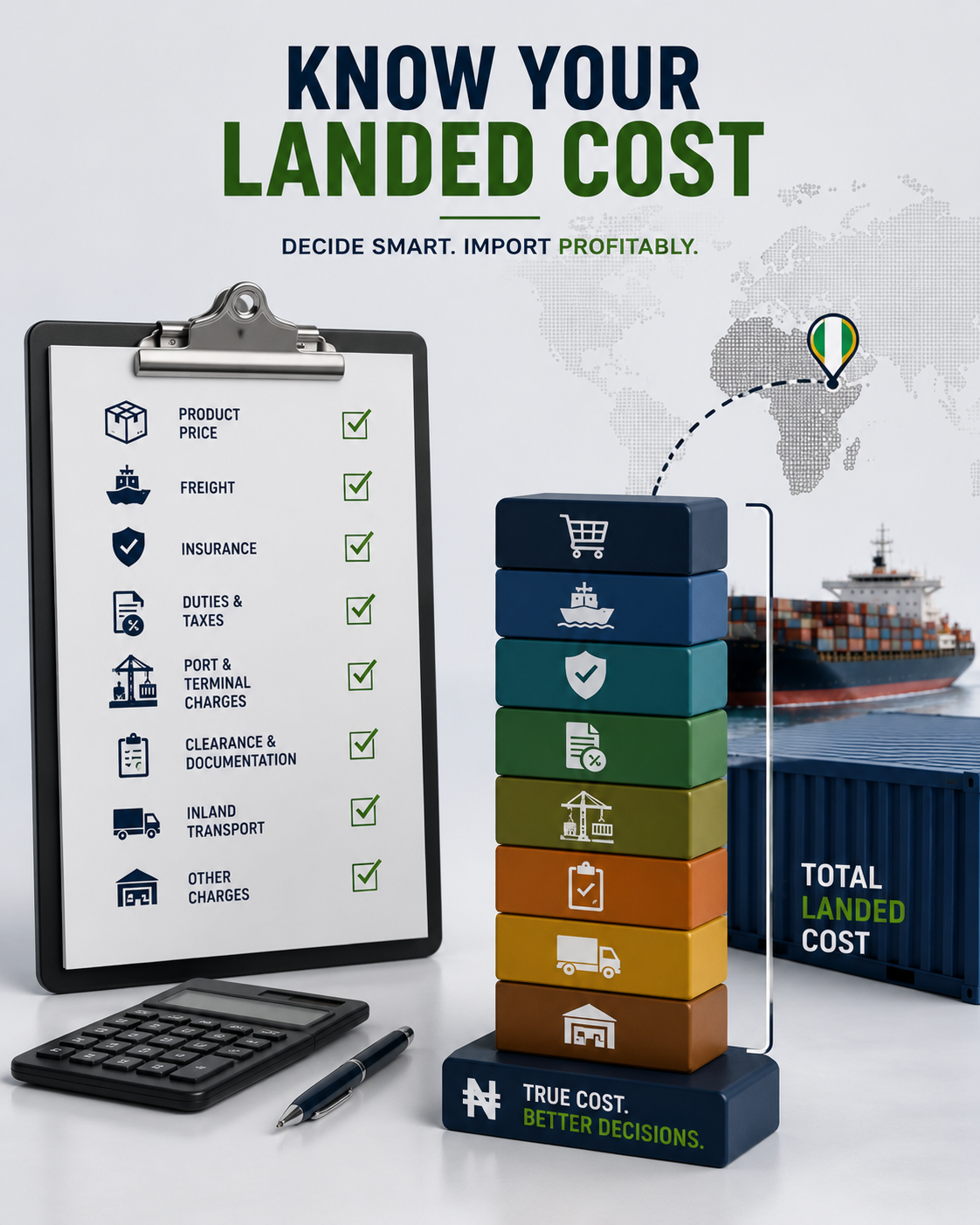
Your Cargo Doesn't Just "Arrive at the Port"
Your supplier ships the goods.
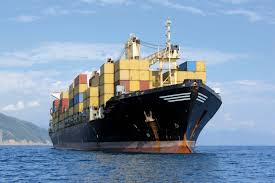
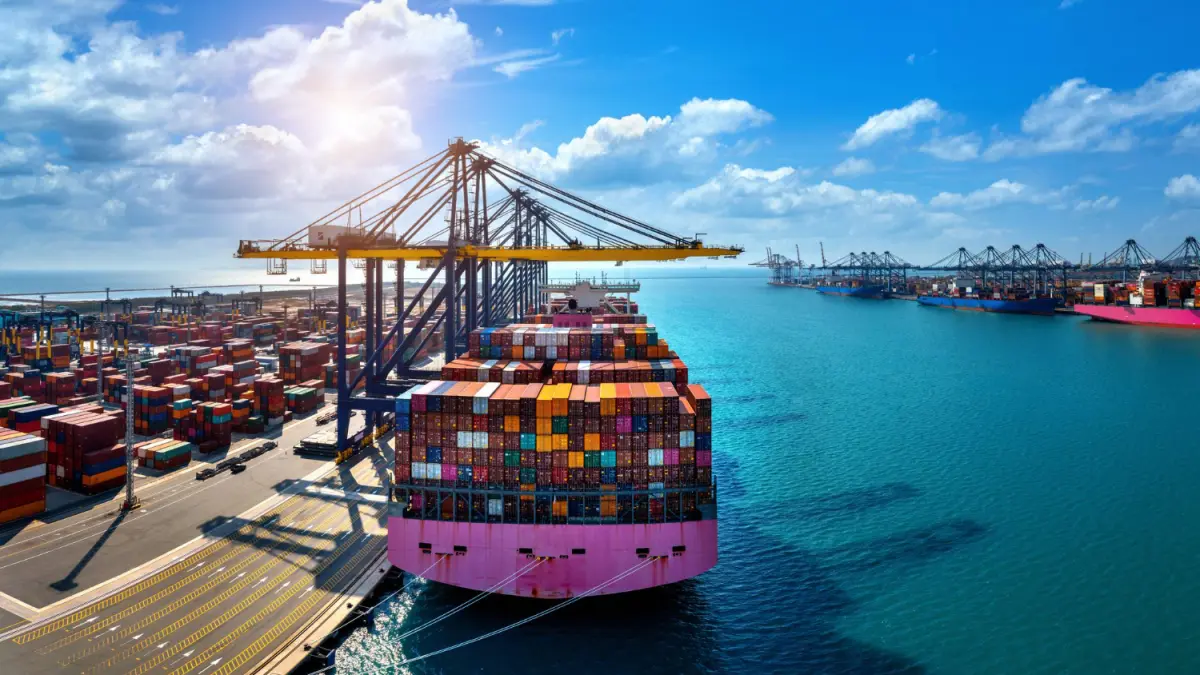
The vessel arrives in Nigeria.
You expect the next step to be simple: clear the cargo and take it home.
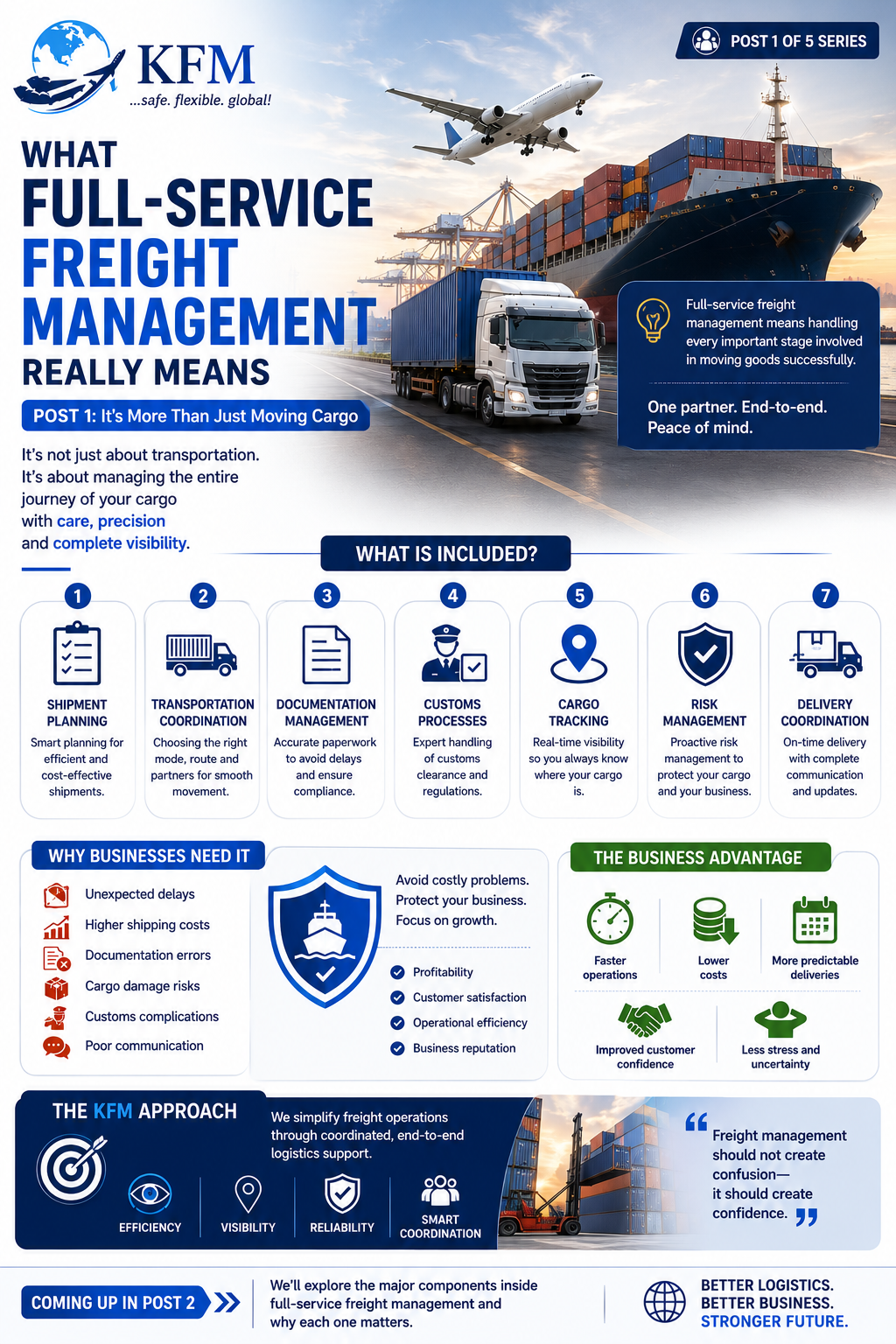
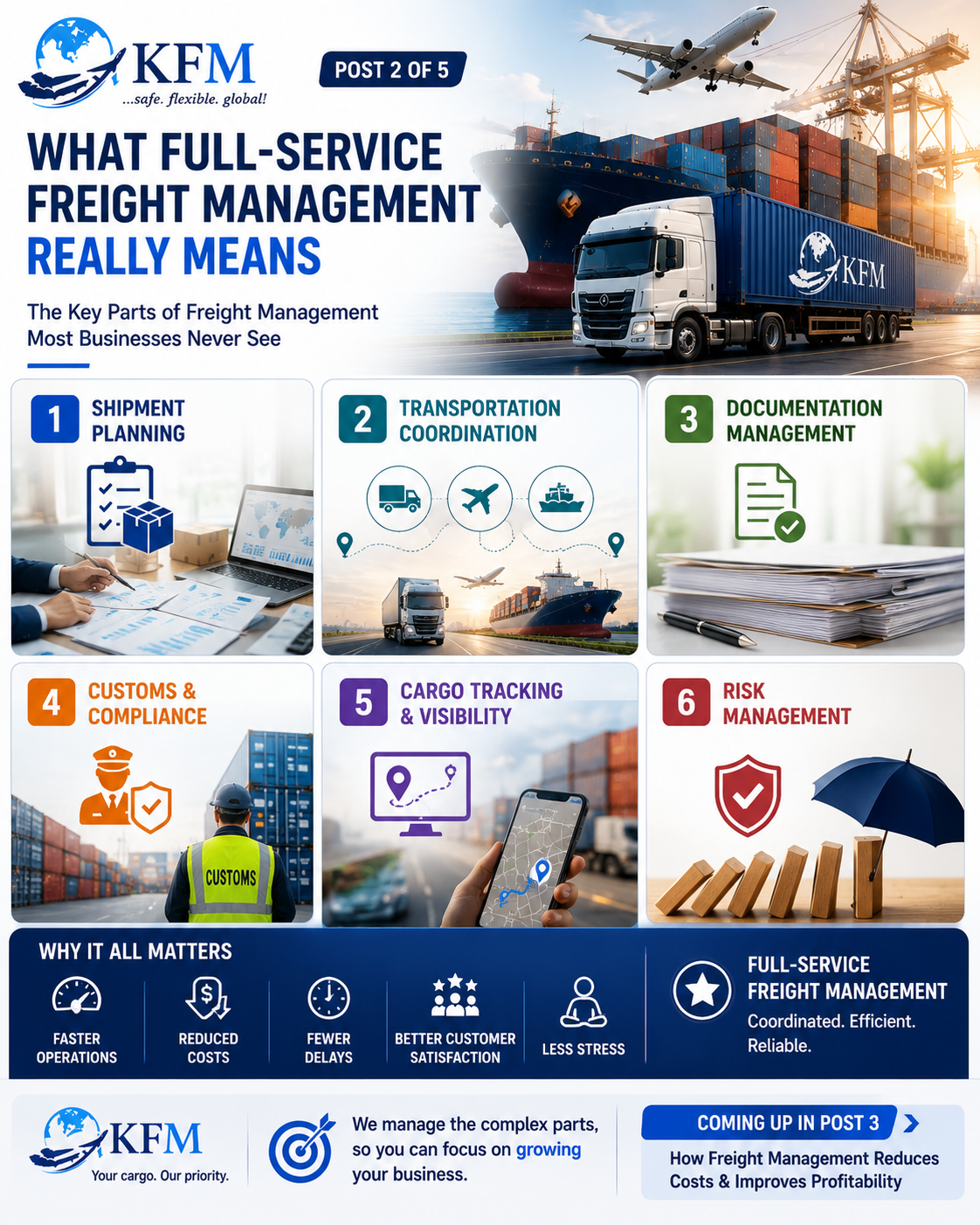
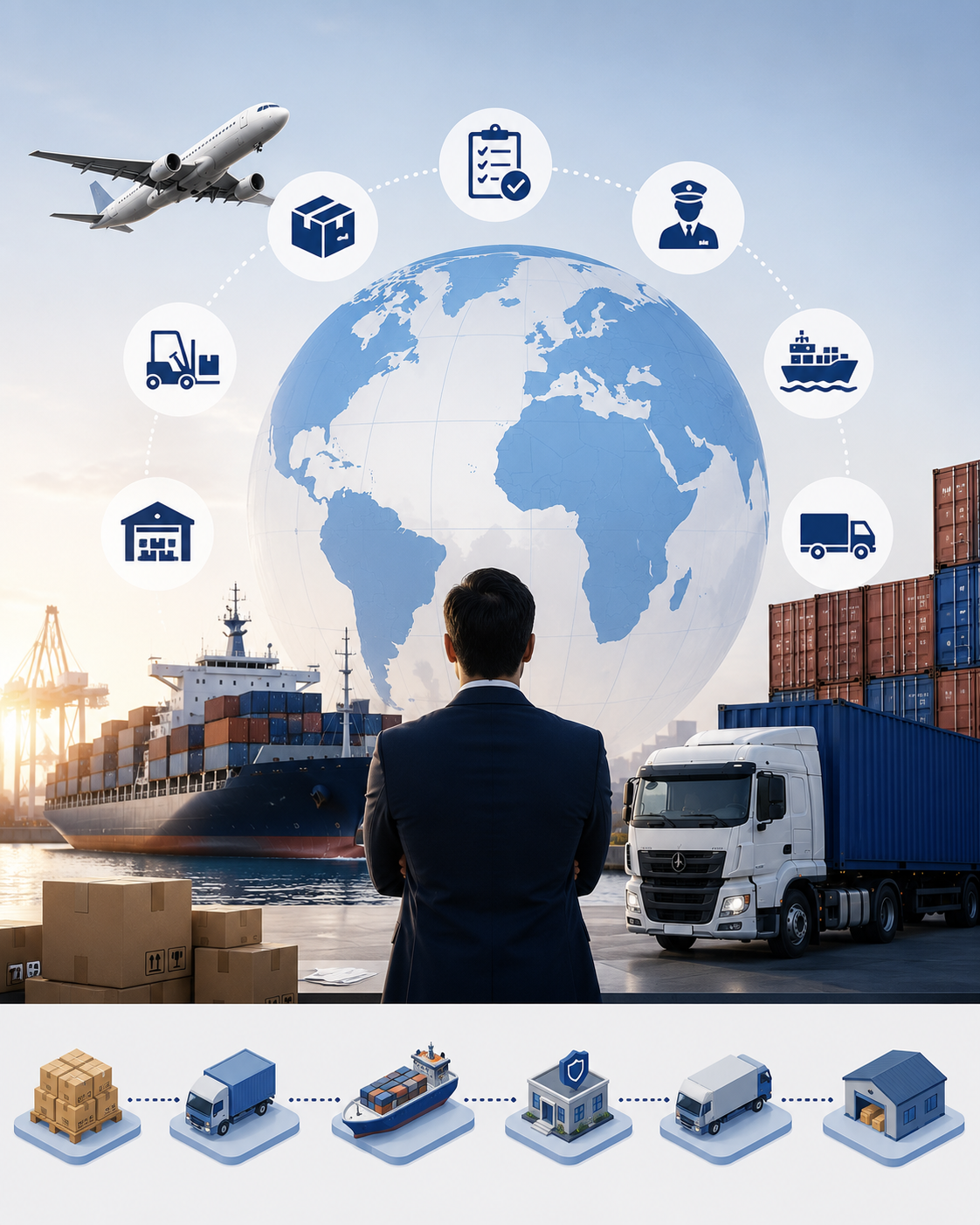
But behind that simple expectation is a chain of people, systems, documents, inspections, payments, and approvals.
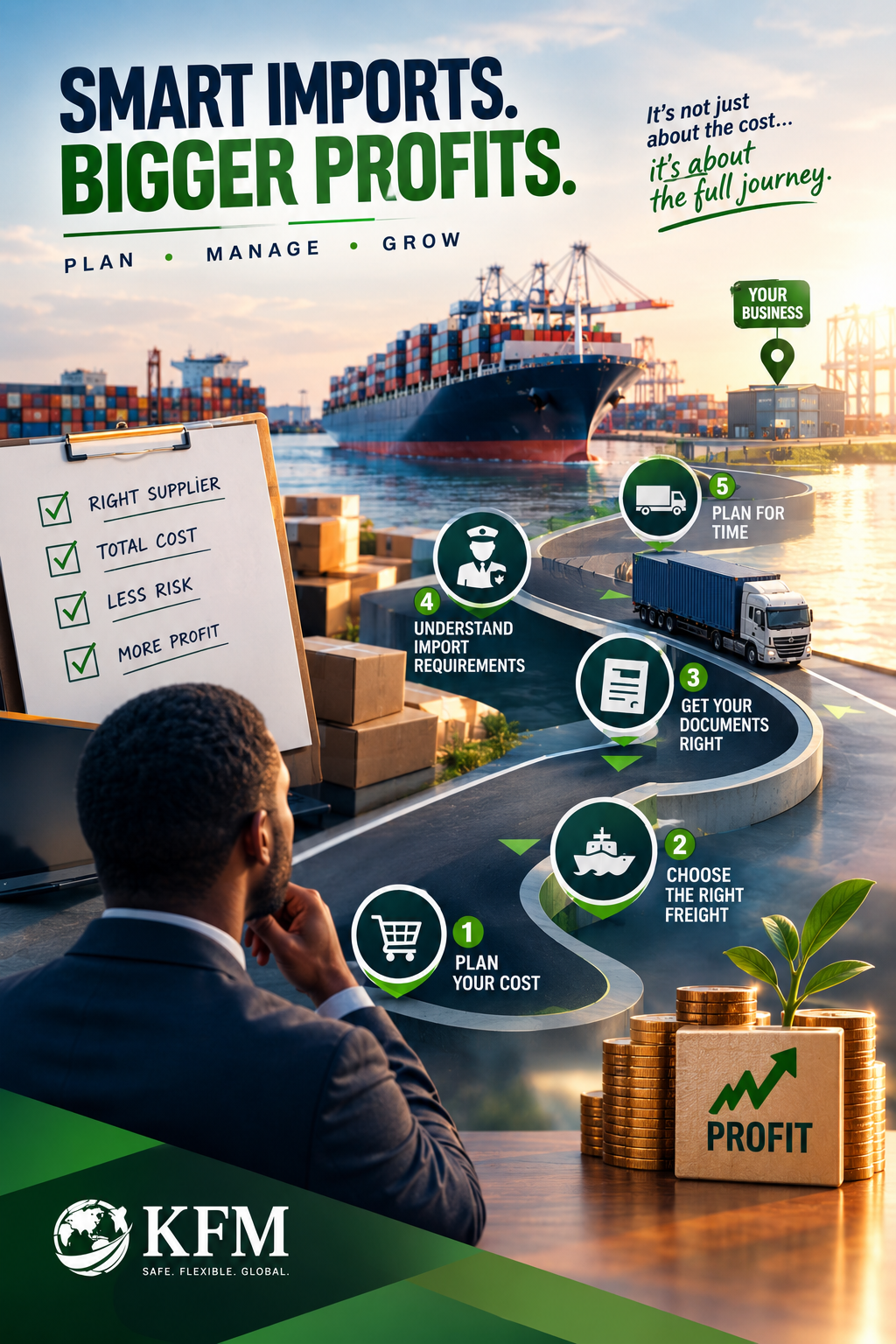
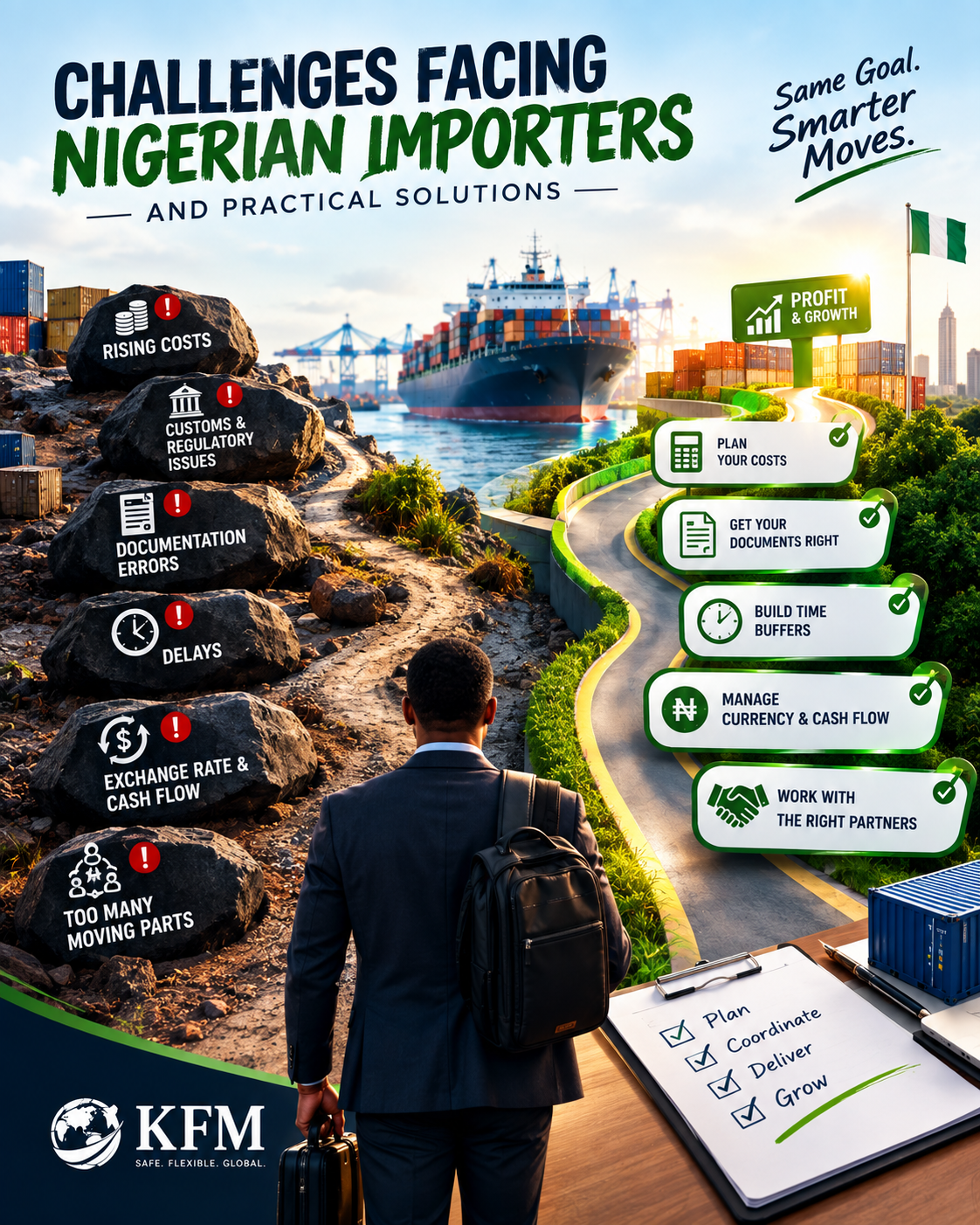
Understanding how that chain works can help importers plan better, avoid unnecessary surprises, and know what is happening to their cargo.
First: What Actually Happens When a Vessel Arrives?
Before a vessel can berth, several port-entry requirements have to be handled. The Nigerian Ports Authority (NPA) requires advance vessel documentation, including the Ship Entry Notice, manifest, stowage plan and cargo details. Berthing also involves port-entry and safety clearances.
In simple terms:
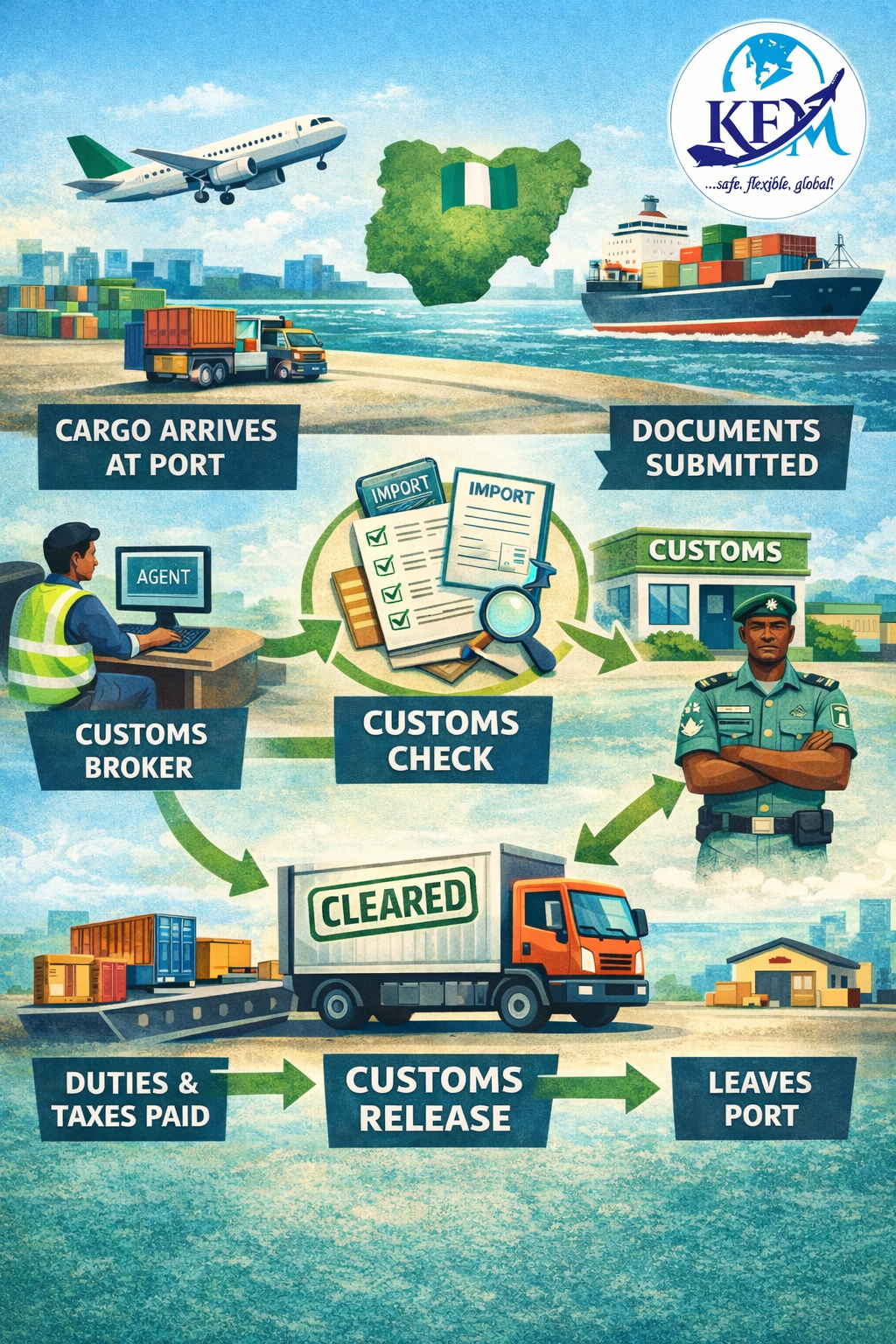
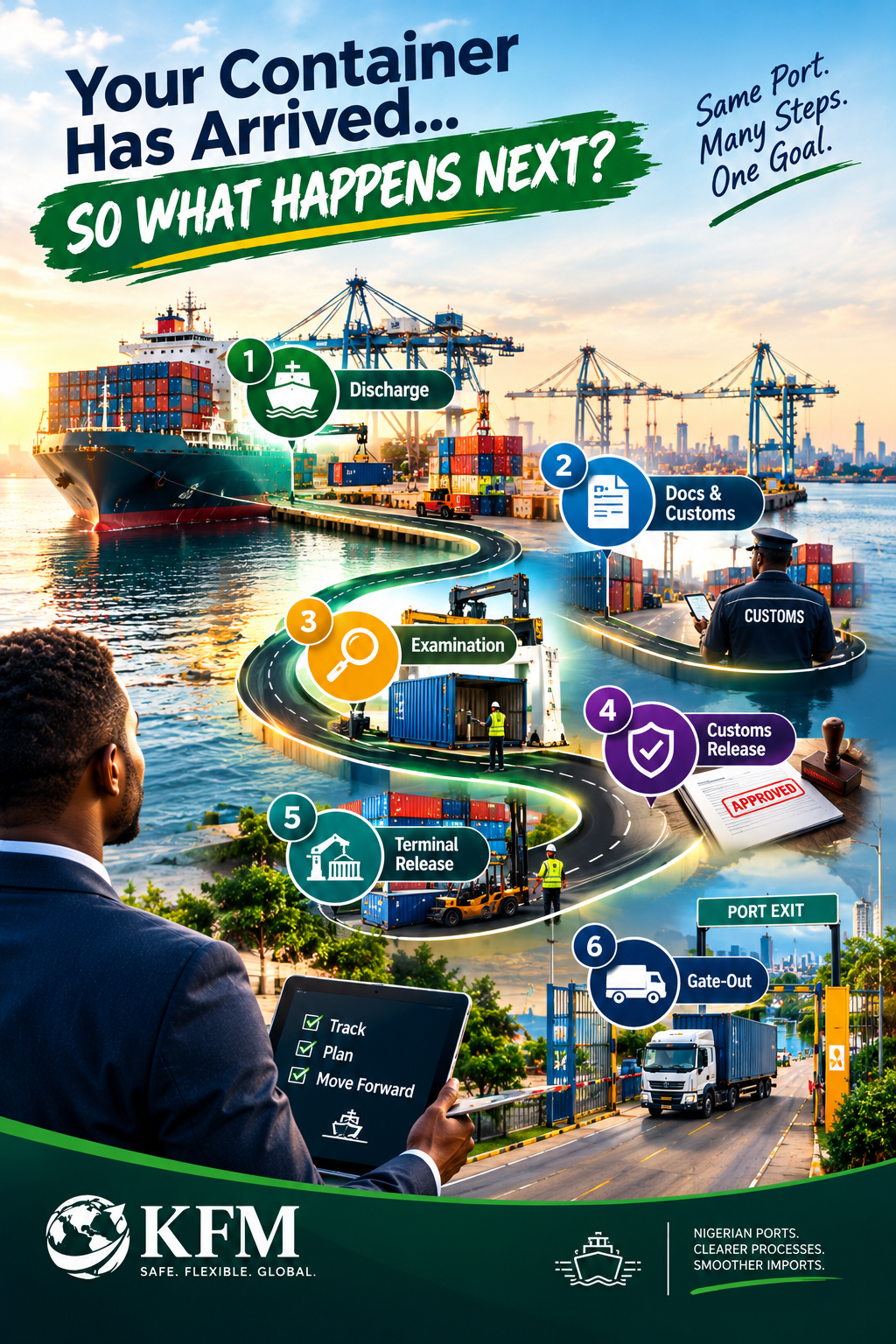
Vessel arrives → Port procedures → Berthing → Cargo discharge → Terminal handling
And that's only the beginning.
📦 Then Your Container Enters the Terminal Process
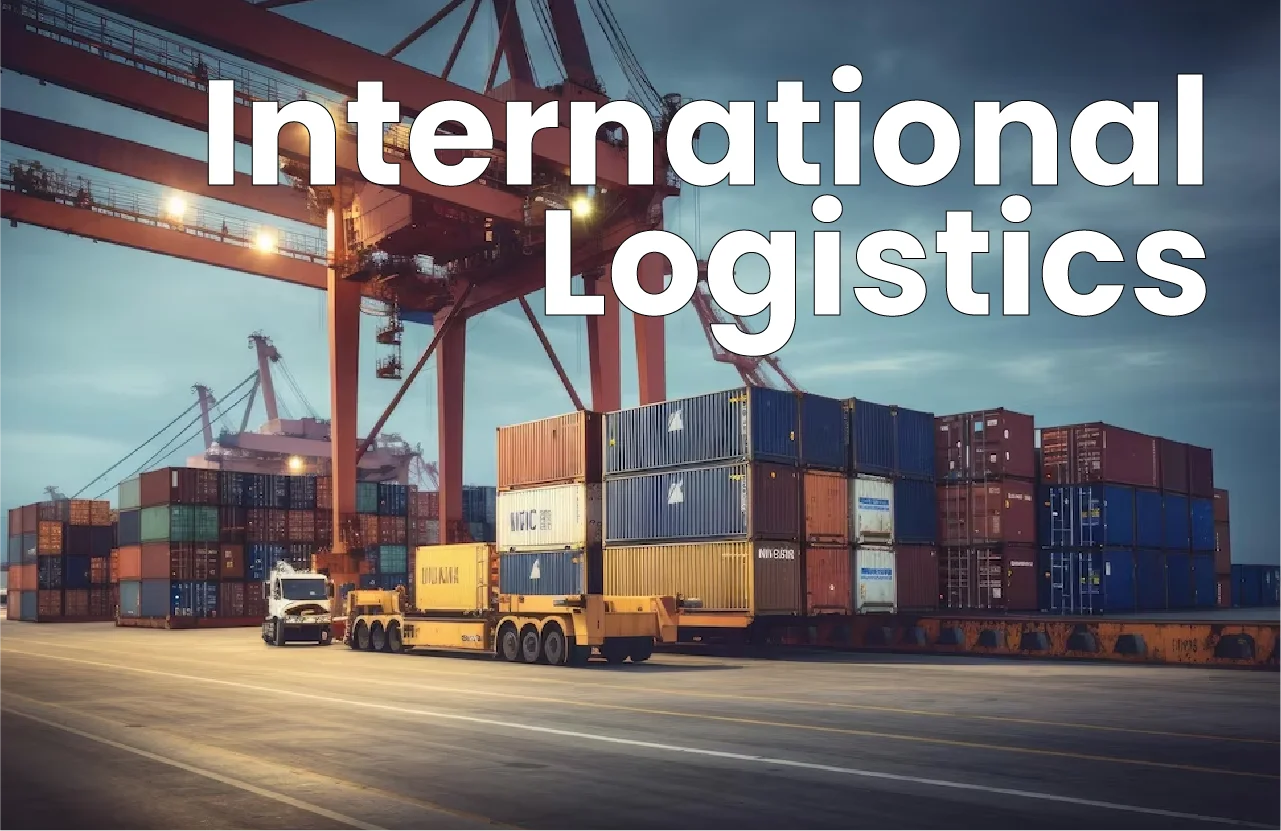
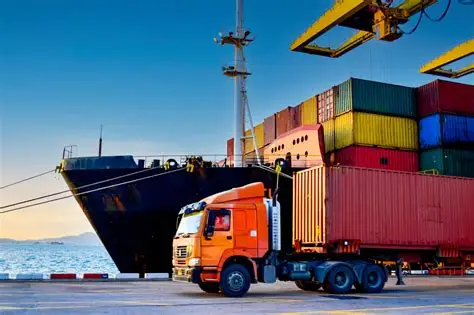
Once cargo is discharged, the terminal operator becomes an important part of the journey.
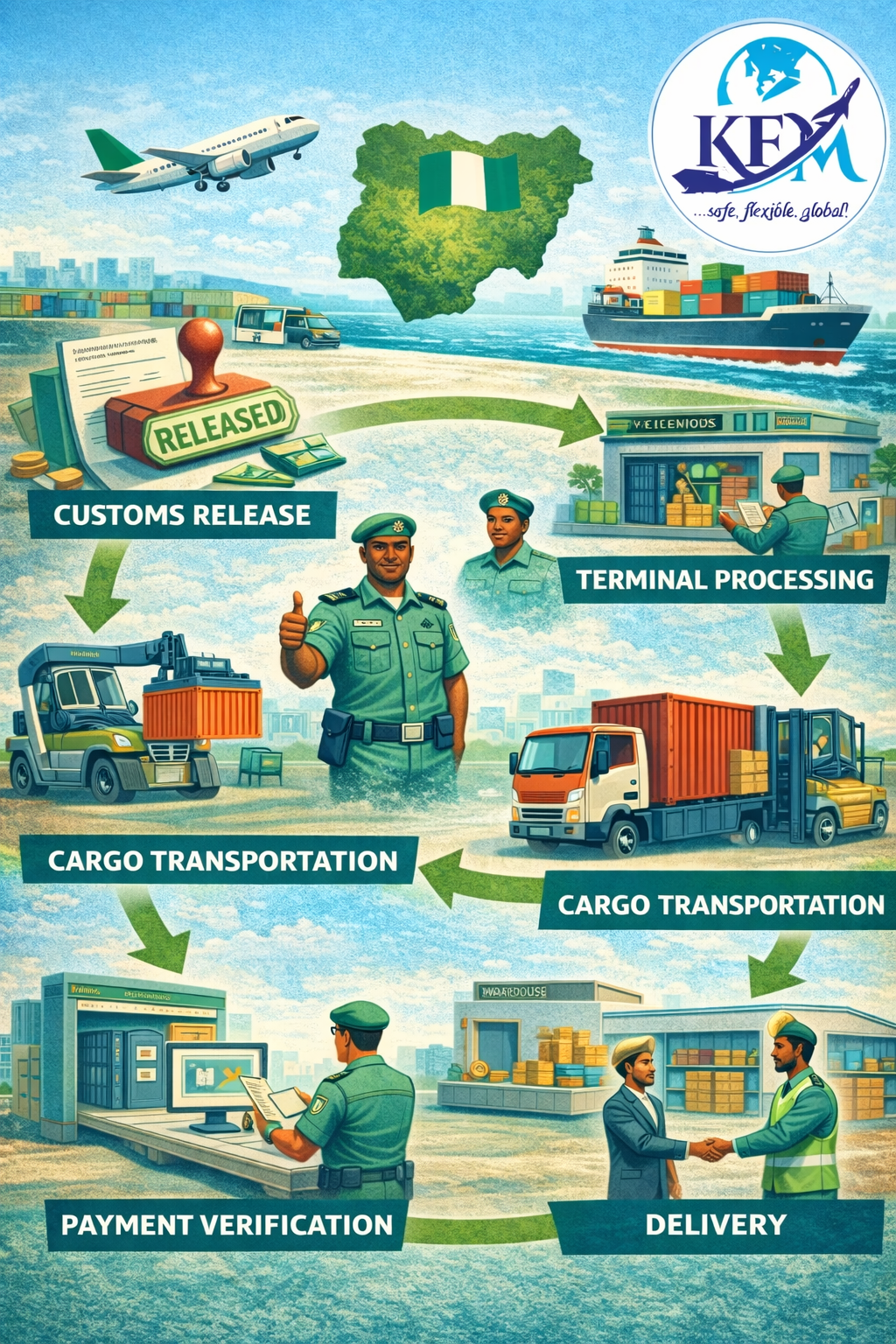
Terminal operators handle activities such as unloading, stacking, storage, and procedures connected with cargo exit. Nigeria's port system operates through a combination of public authorities and private terminal operators.
This means your cargo isn't simply sitting in a warehouse waiting for someone to pick it up.
It is moving through a controlled process.
🛃 Where Does Customs Come In?
This is one of the most important parts for an importer to understand.
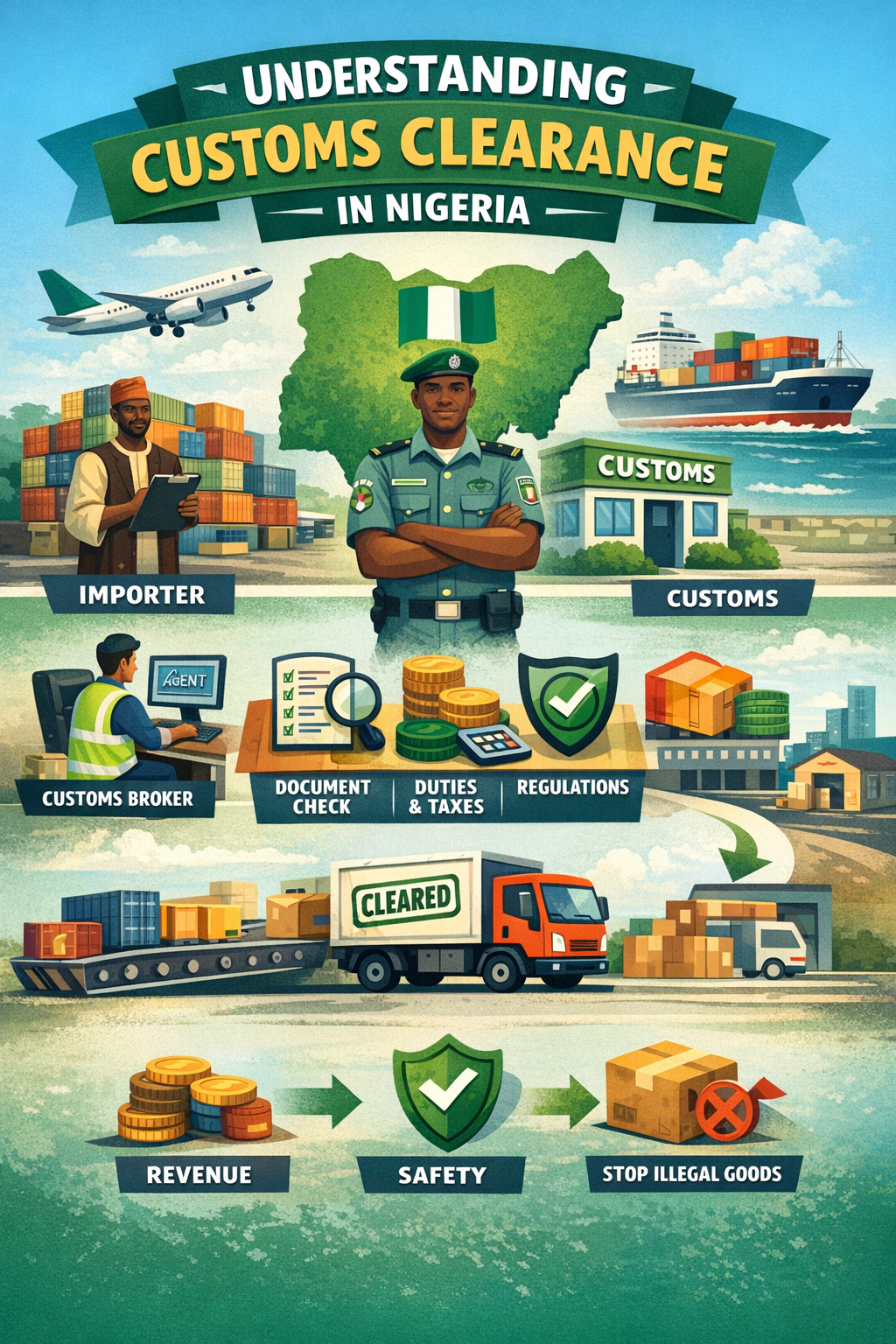
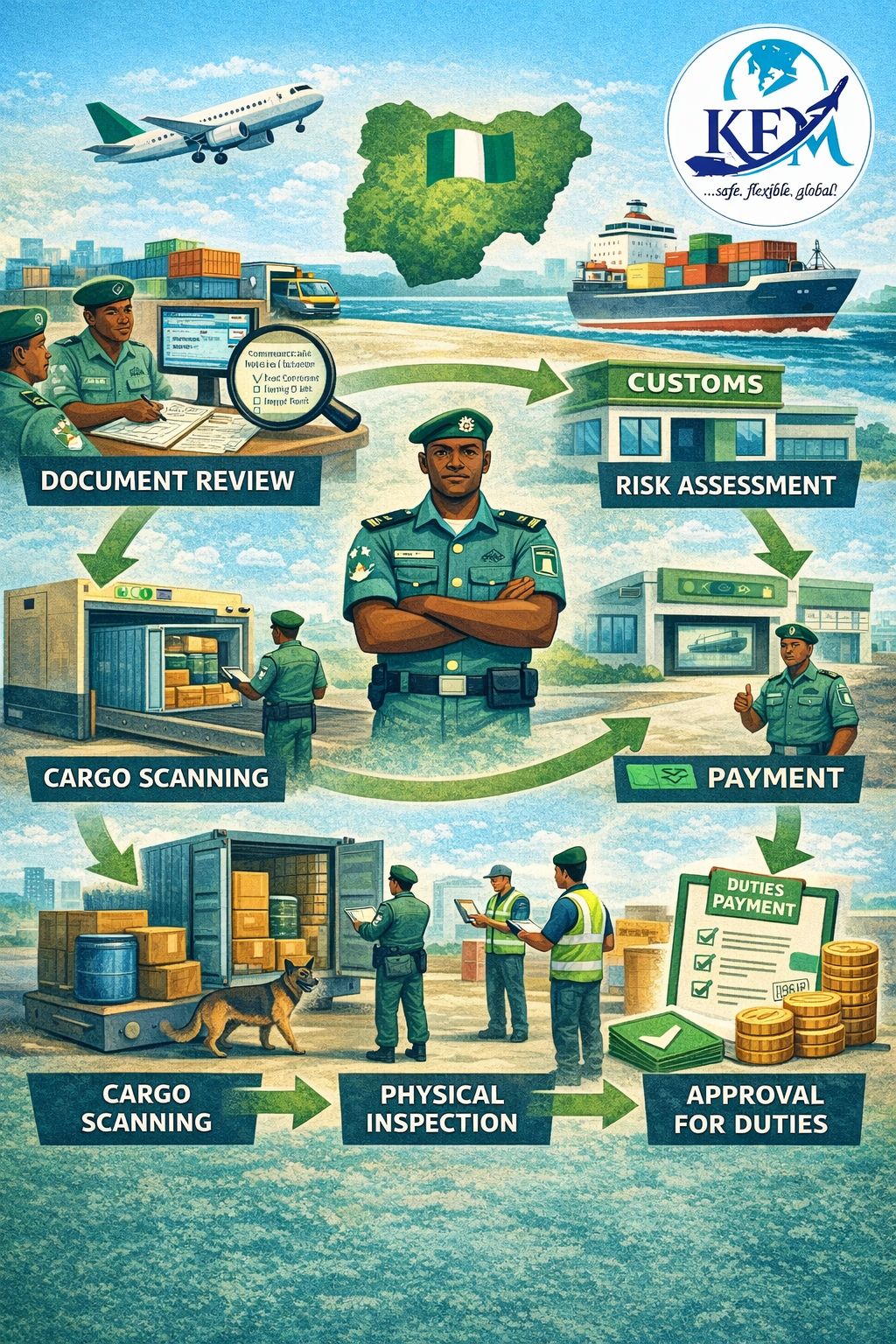
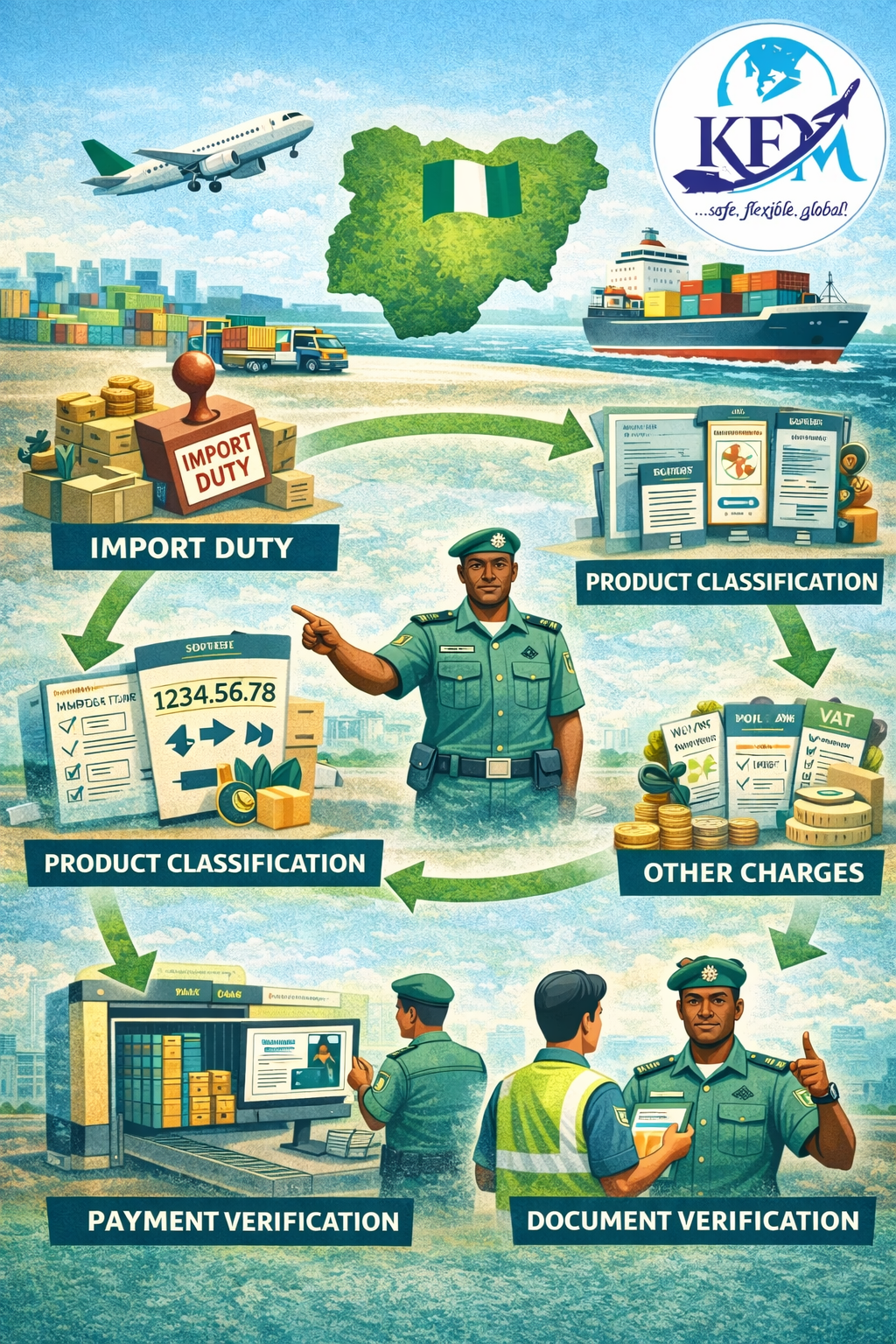
The Nigeria Customs Service (NCS) is responsible for customs clearance functions including cargo classification, valuation, duty and tax assessment, examination, revenue collection, and enforcement.
Depending on the shipment and applicable risk processes, cargo may be subject to scanning, physical examination, or other checks.
Customs isn't simply "collecting duty." It is also part of Nigeria's trade-control and border-security system.
📄 Your Documents Start Working Before Your Cargo Arrives
A major mistake new importers make is thinking the clearance process begins when the container reaches the port.
Important customs procedures happen before and around the arrival of the shipment.
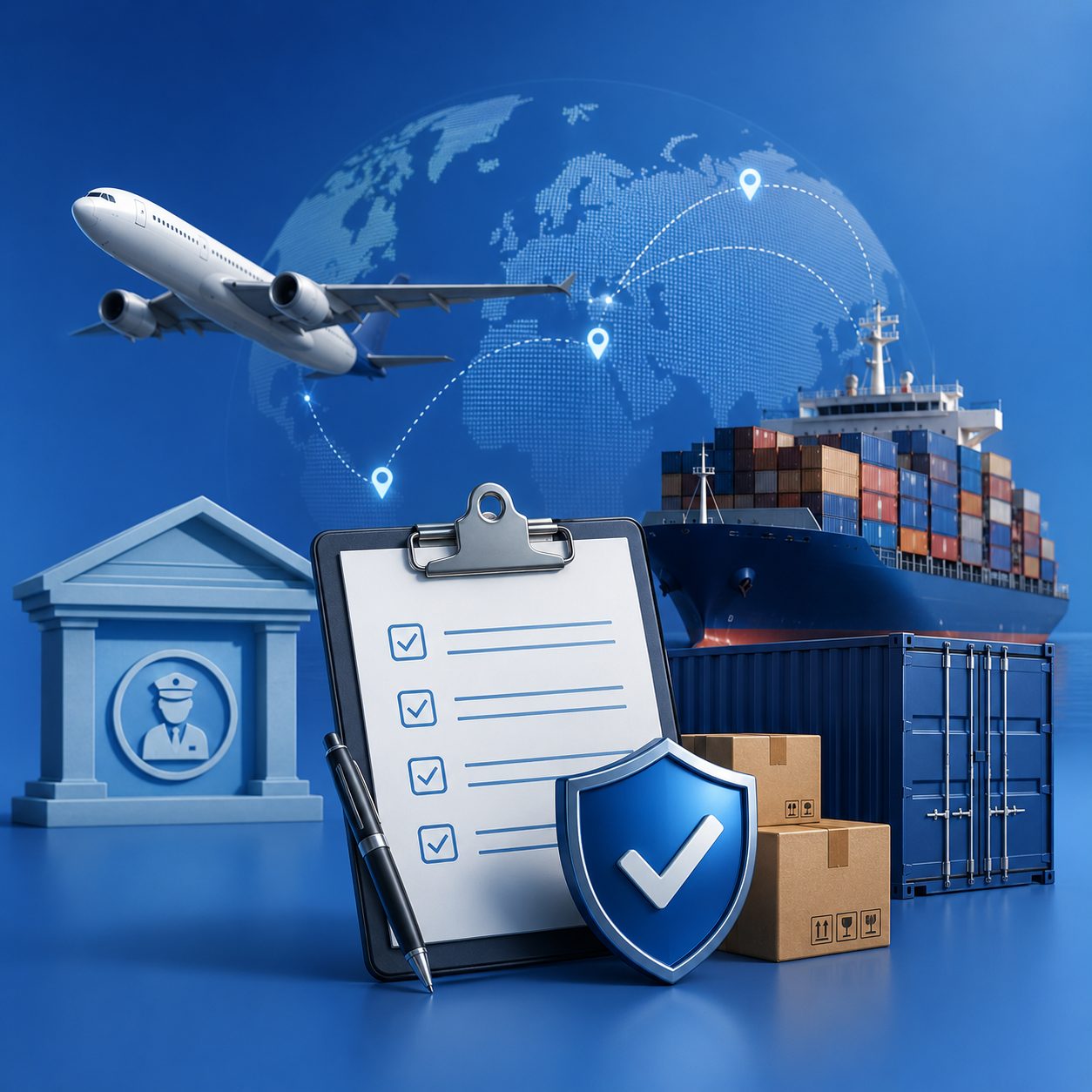
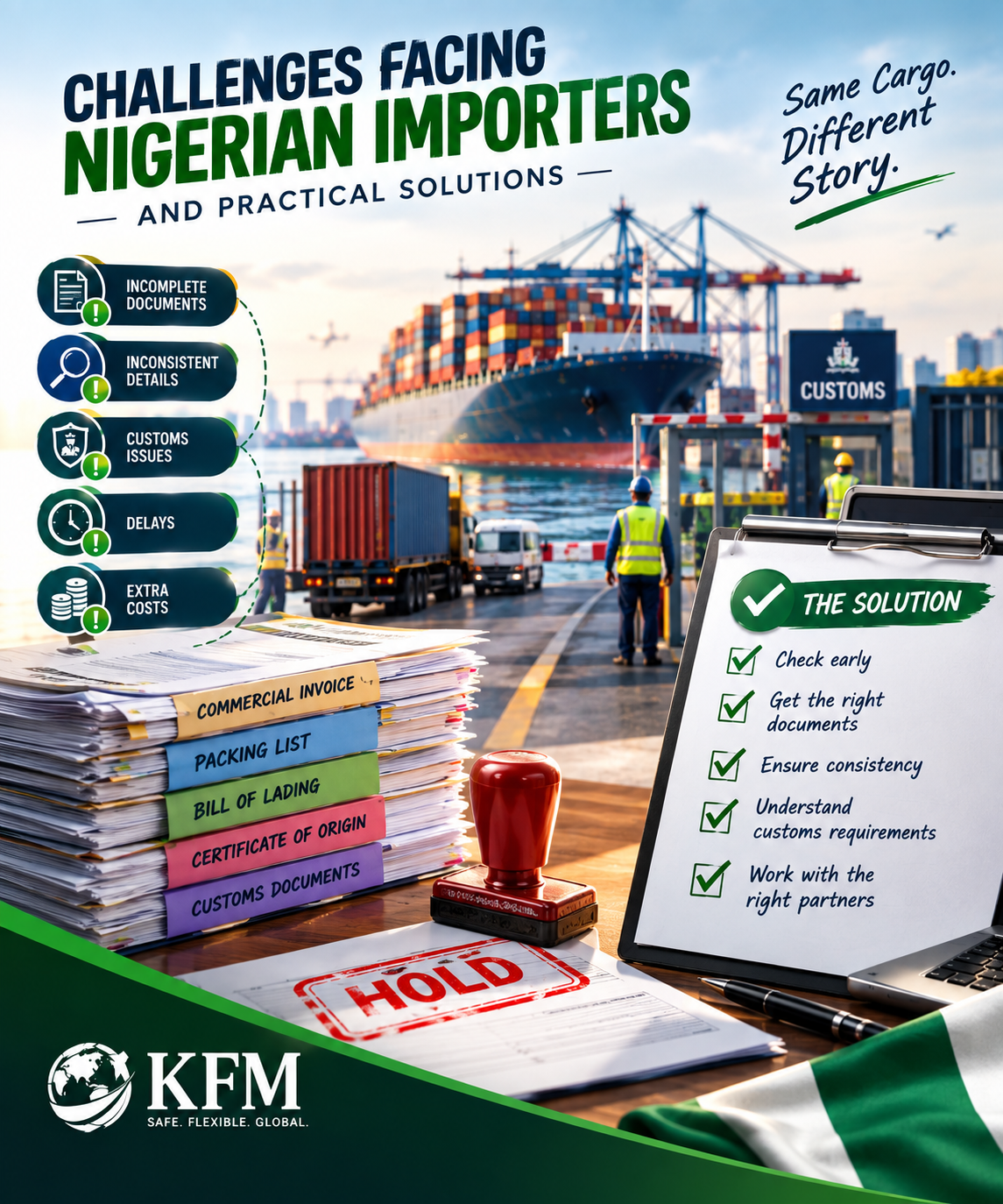
Current NCS guidance describes processes involving the importer's registration, Form M, the Pre-Arrival Assessment Report (PAAR), and the Single Goods Declaration (SGD). The Service has also been moving customs processes onto its Unified Customs Management System, known as B'Odogwu.
The earlier your documentation is properly prepared, the better positioned you are to deal with the clearance process.
👥 So Who Is Actually Involved?
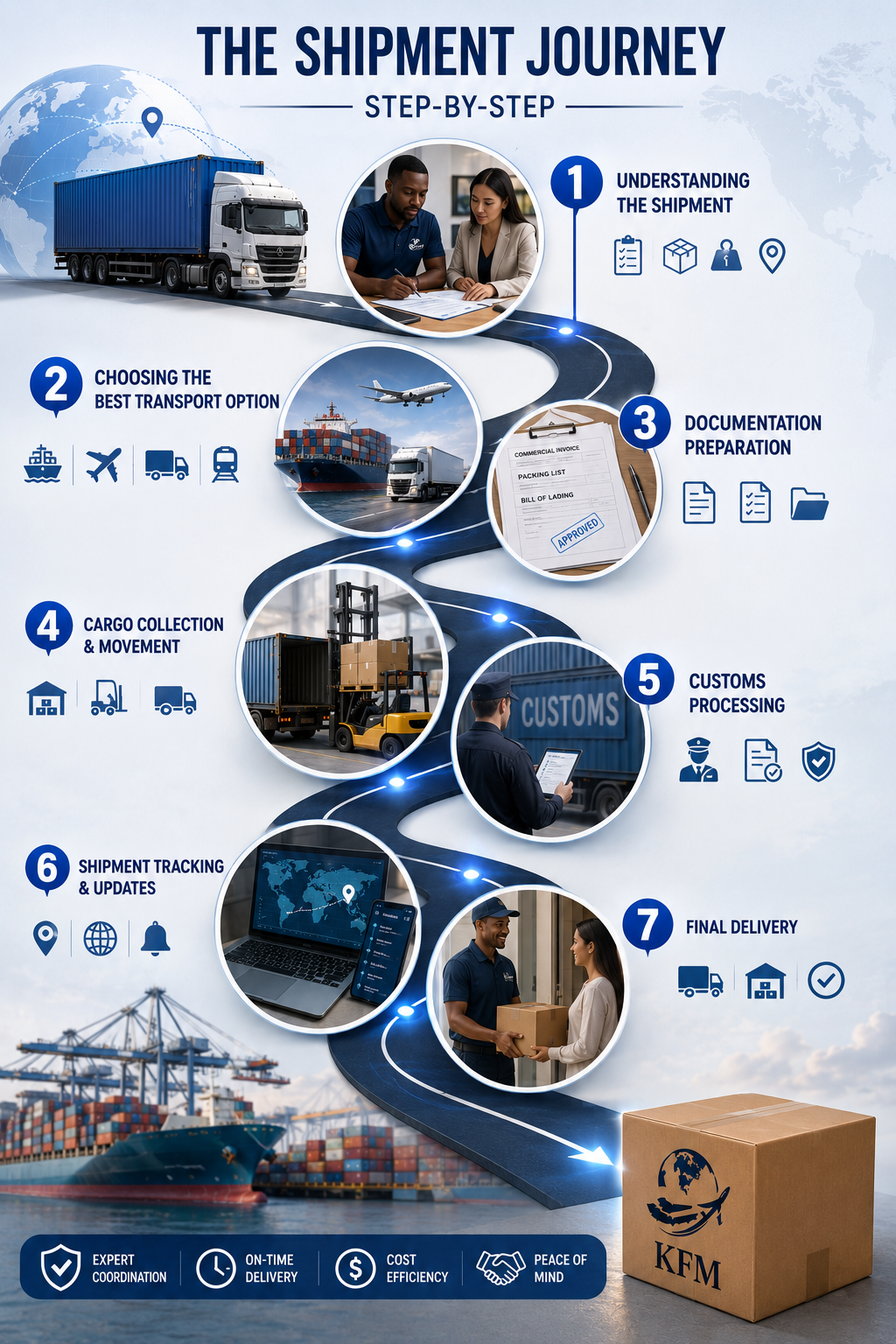
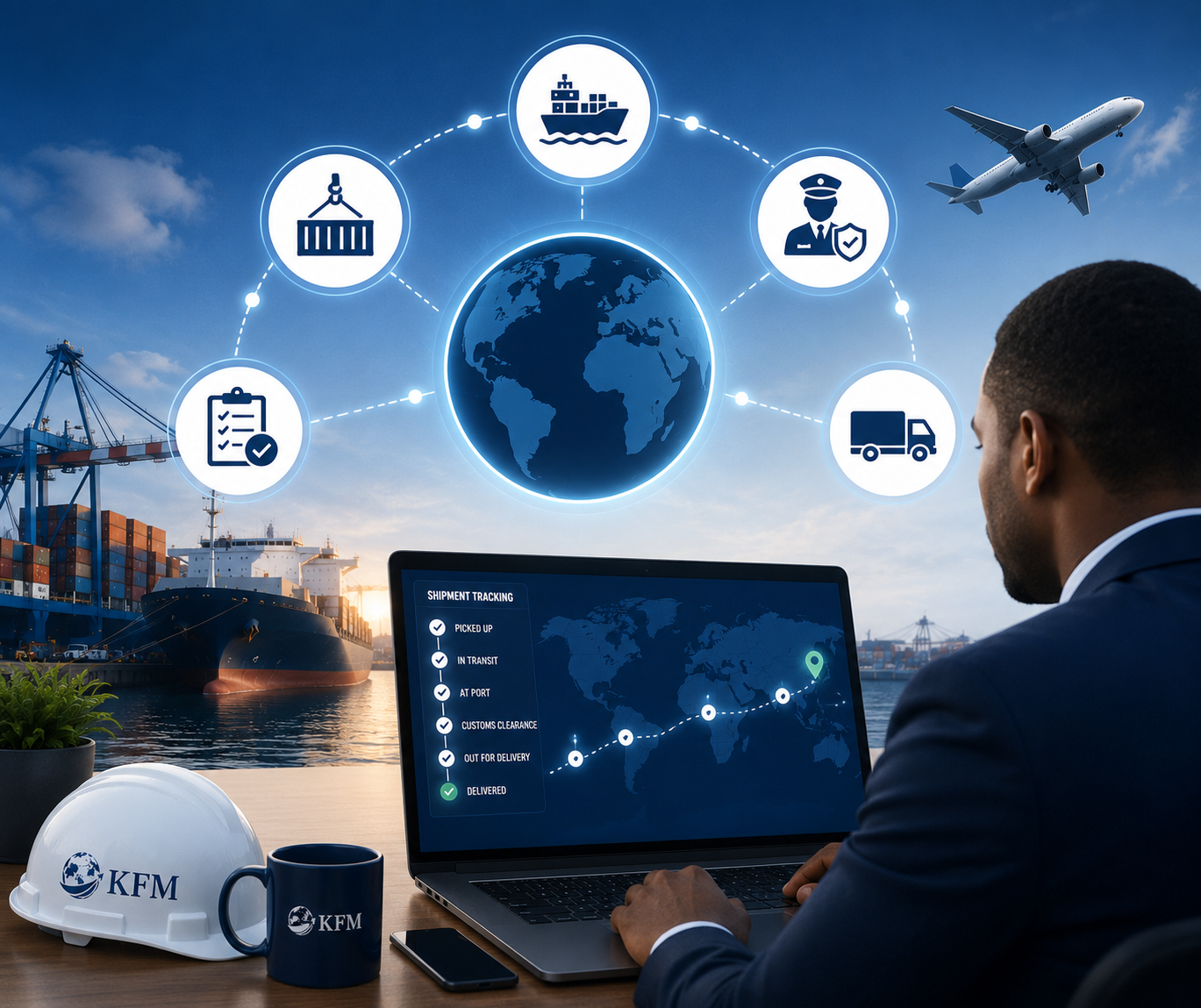
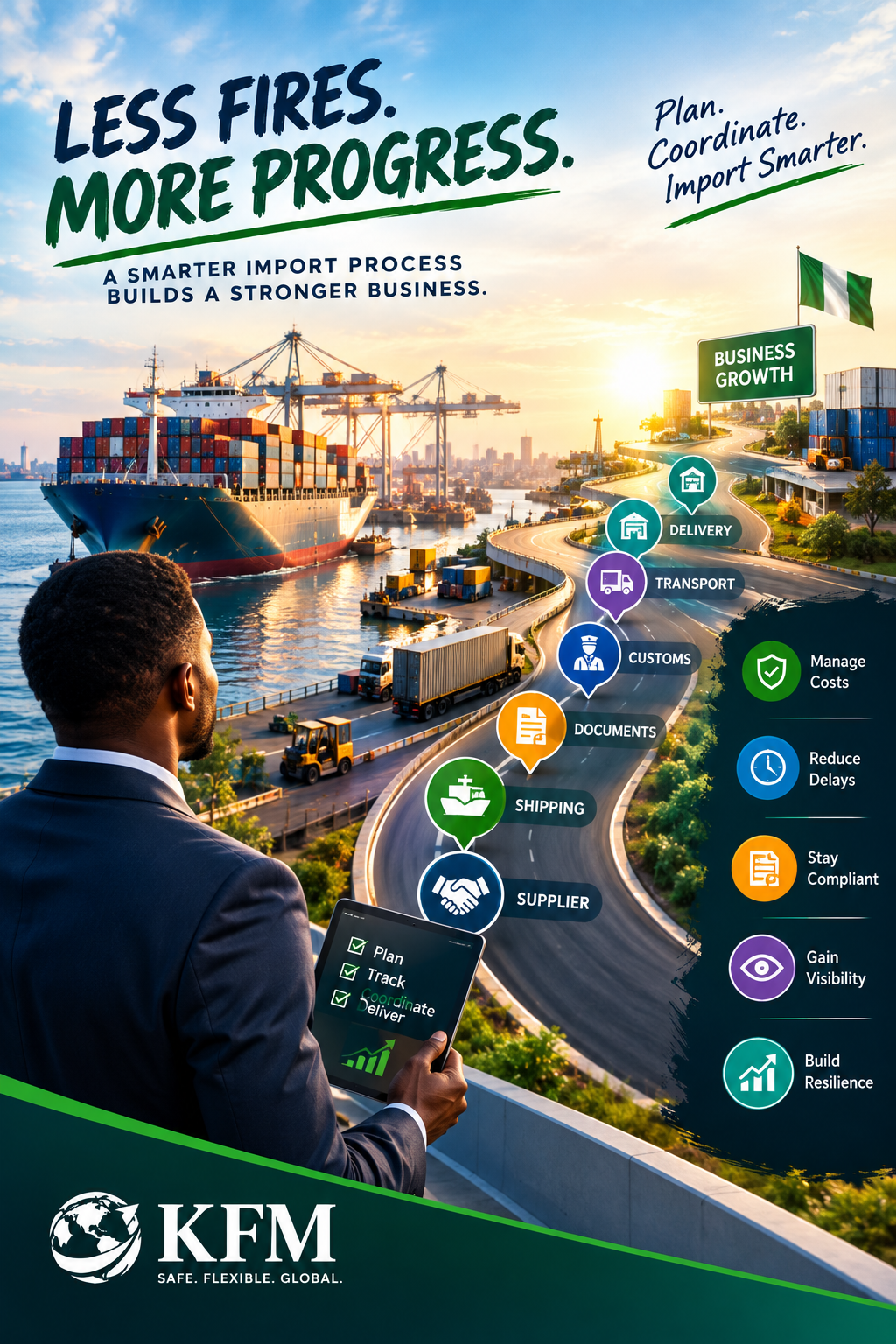
A typical import shipment can involve several different players:
- NPA — oversees and regulates port operations.
- NCS — handles customs control, assessment, examination and revenue functions.
- Terminal Operator — handles cargo operations within the terminal.
- Shipping Line — operates the vessel and provides key shipping documentation.
- Freight Forwarder / Customs Agent — coordinates documentation and represents the importer in relevant processes.
- Other Government Agencies — may become involved depending on the nature of the goods.
- Transporter — moves the released cargo from the port to its next destination.
Nigeria's port environment is therefore a multi-agency, multi-actor system, rather than a single office where one person controls the entire process.
🚨 Why This Matters to You as an Importer
Here's the important part:
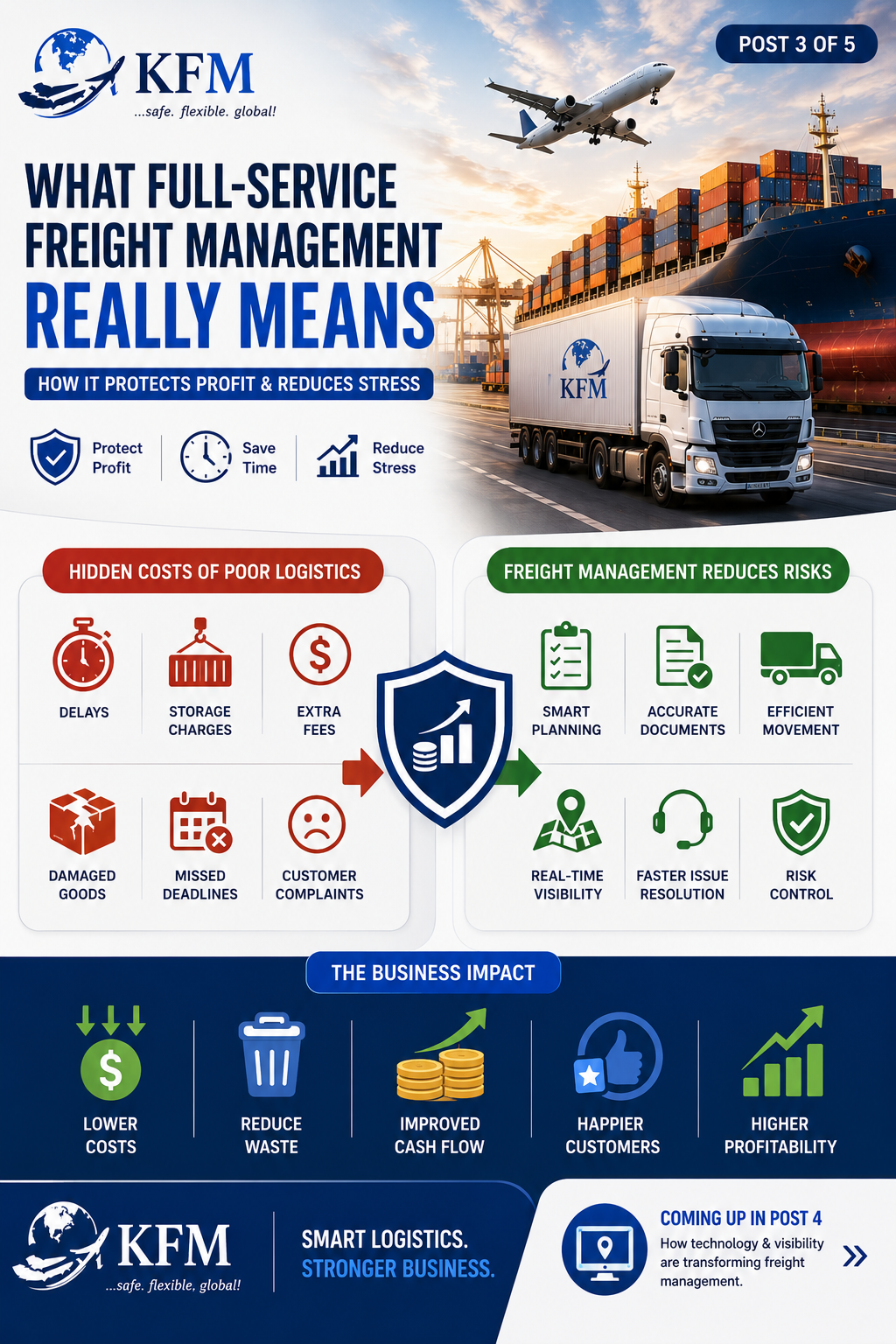
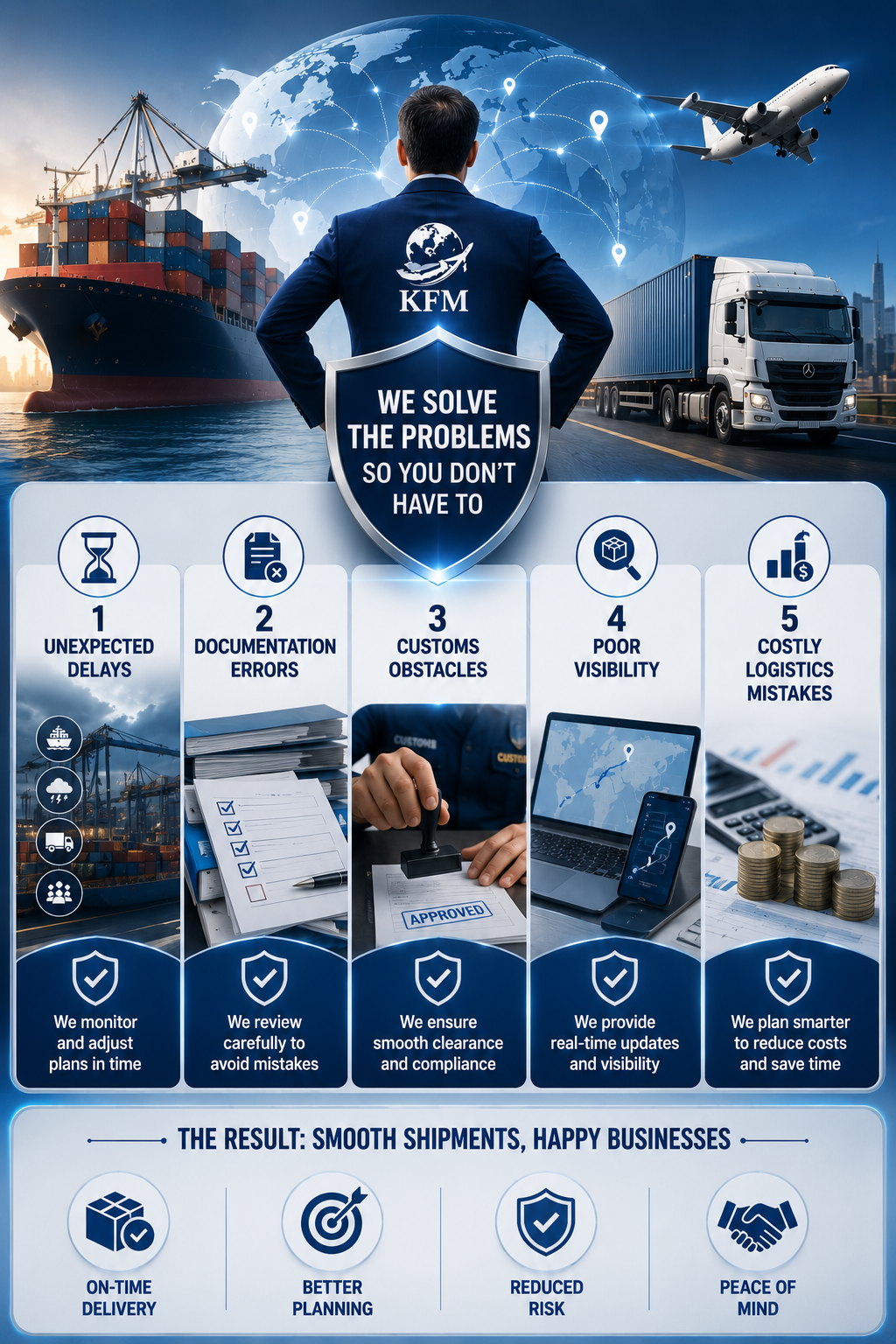
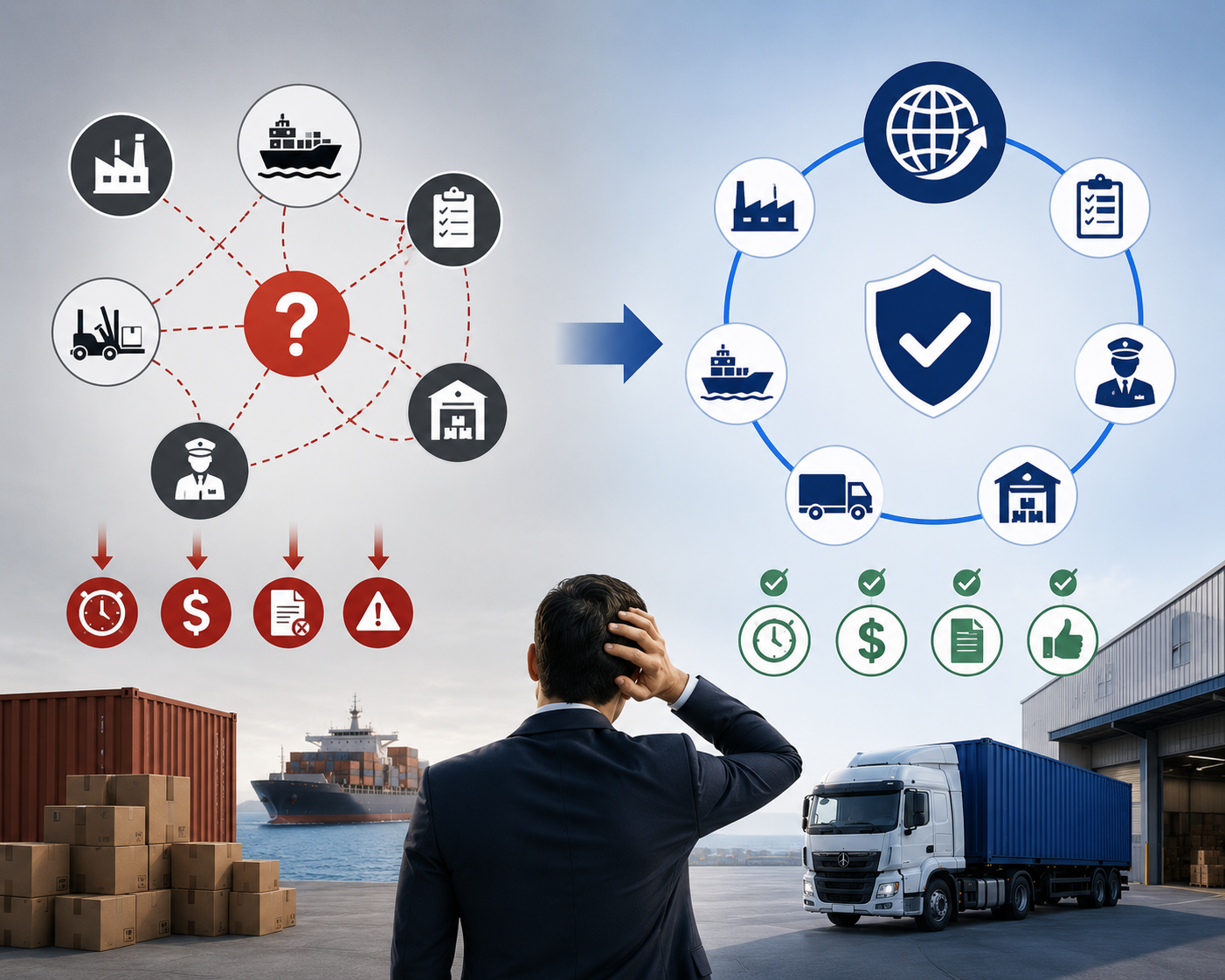
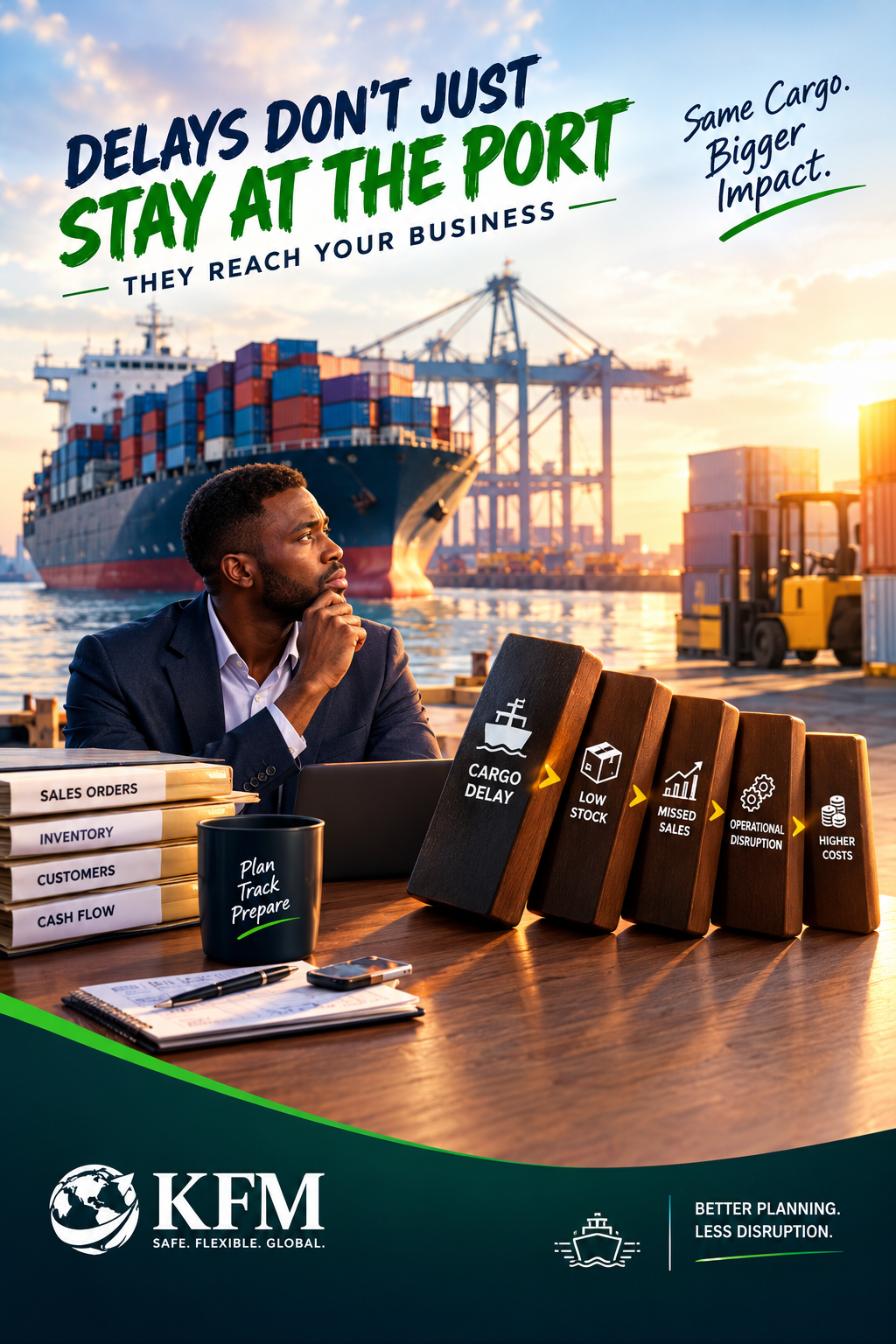
A problem at one stage can affect the stages that follow.
A documentation issue can slow clearance.
A clearance delay can keep cargo inside the terminal longer.
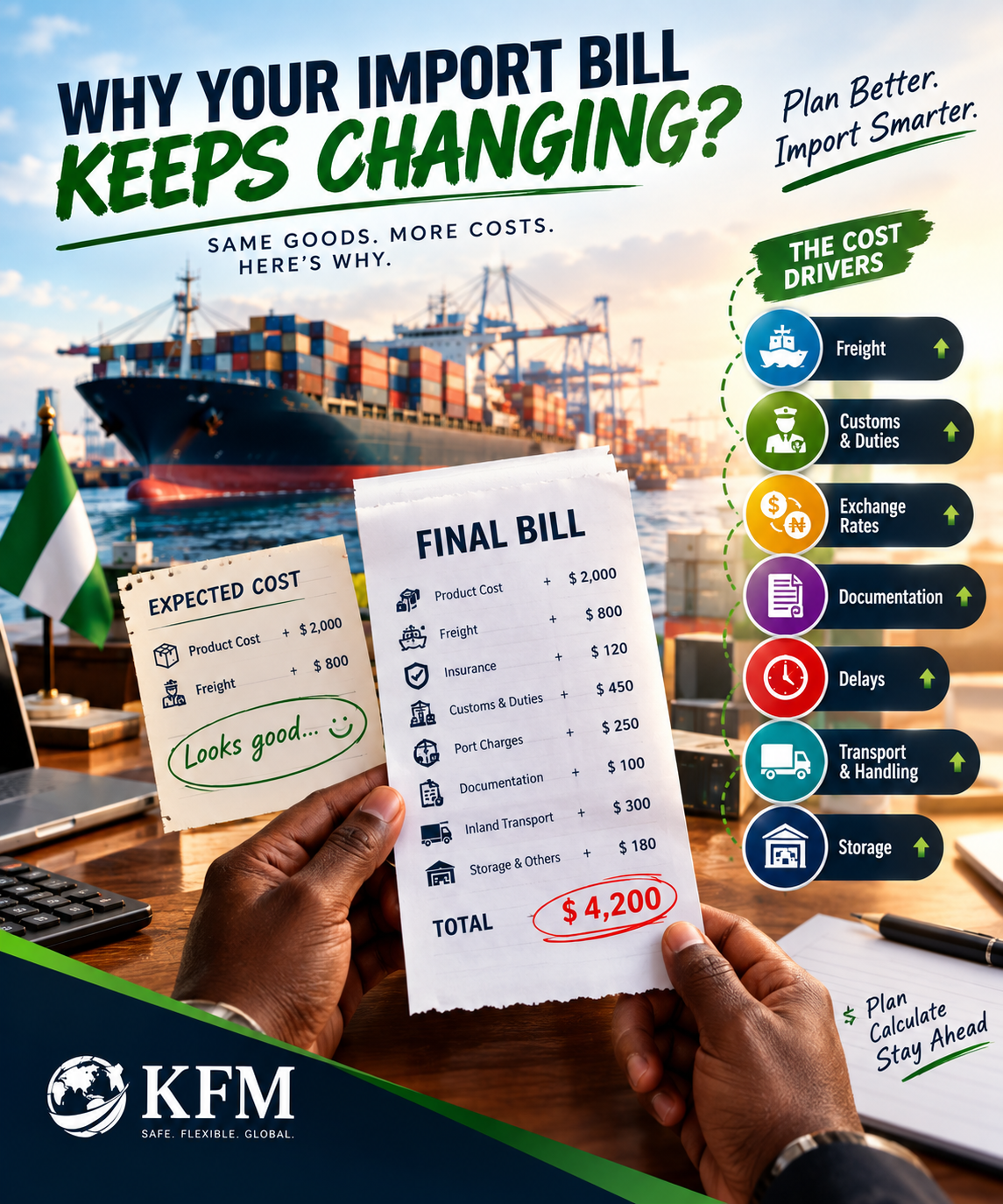
A longer stay can affect your overall logistics cost and delivery schedule.
And if your business is waiting for that inventory, the consequences can go beyond the port.
🧠 The Smart Importer's Mindset
Don't think of the port as:
"Where my container goes after the ship arrives."
Think of it as:
"A connected system where several processes have to work together before my cargo can leave."
That small change in perspective can help you ask better questions, prepare earlier, and understand where your shipment actually is in the process.
🚀 The KFM Perspective
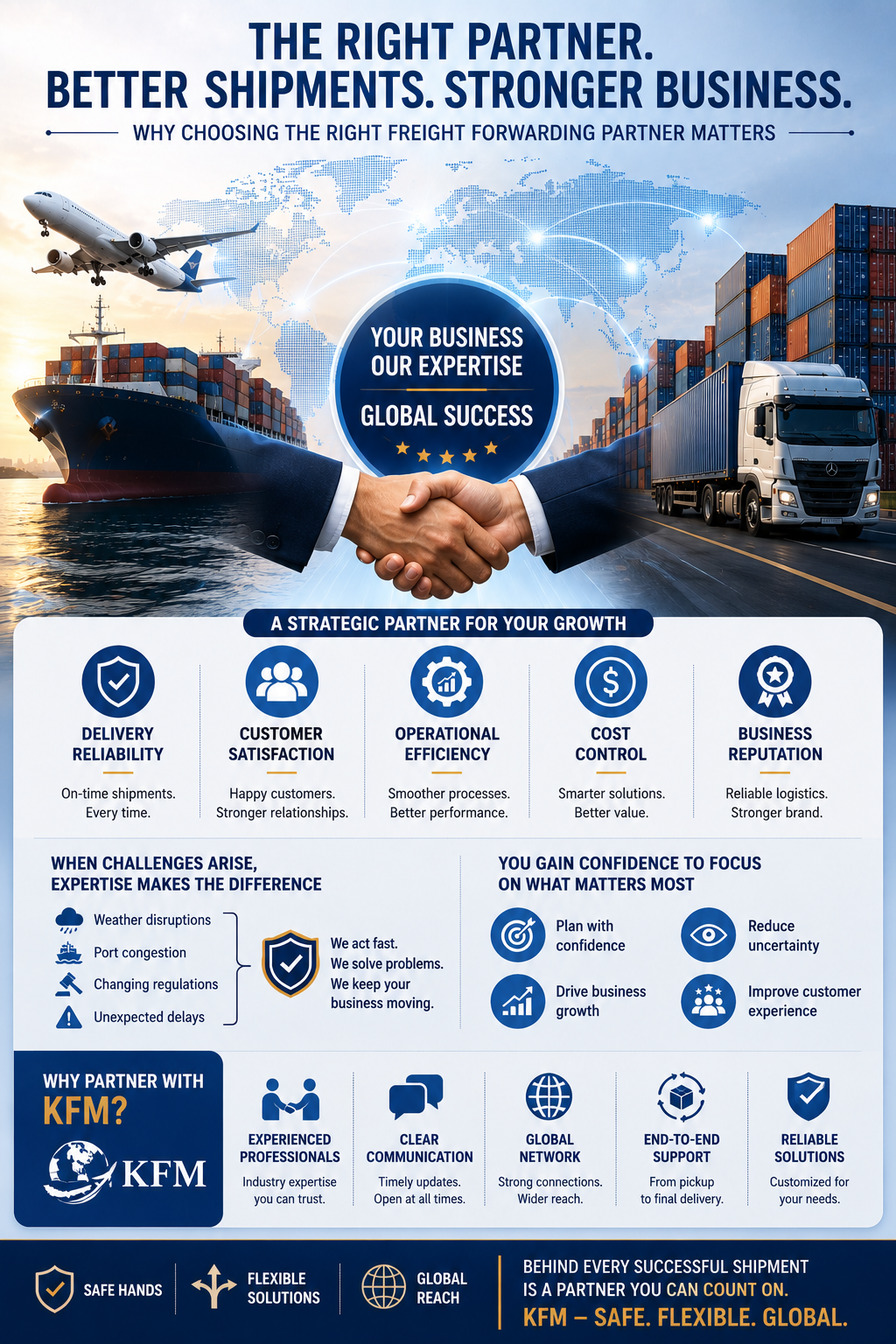
At KFM, we believe importers shouldn't have to feel lost once their cargo enters the port.
Understanding the different stages of the process helps businesses plan their imports more intelligently and coordinate the right logistics support.
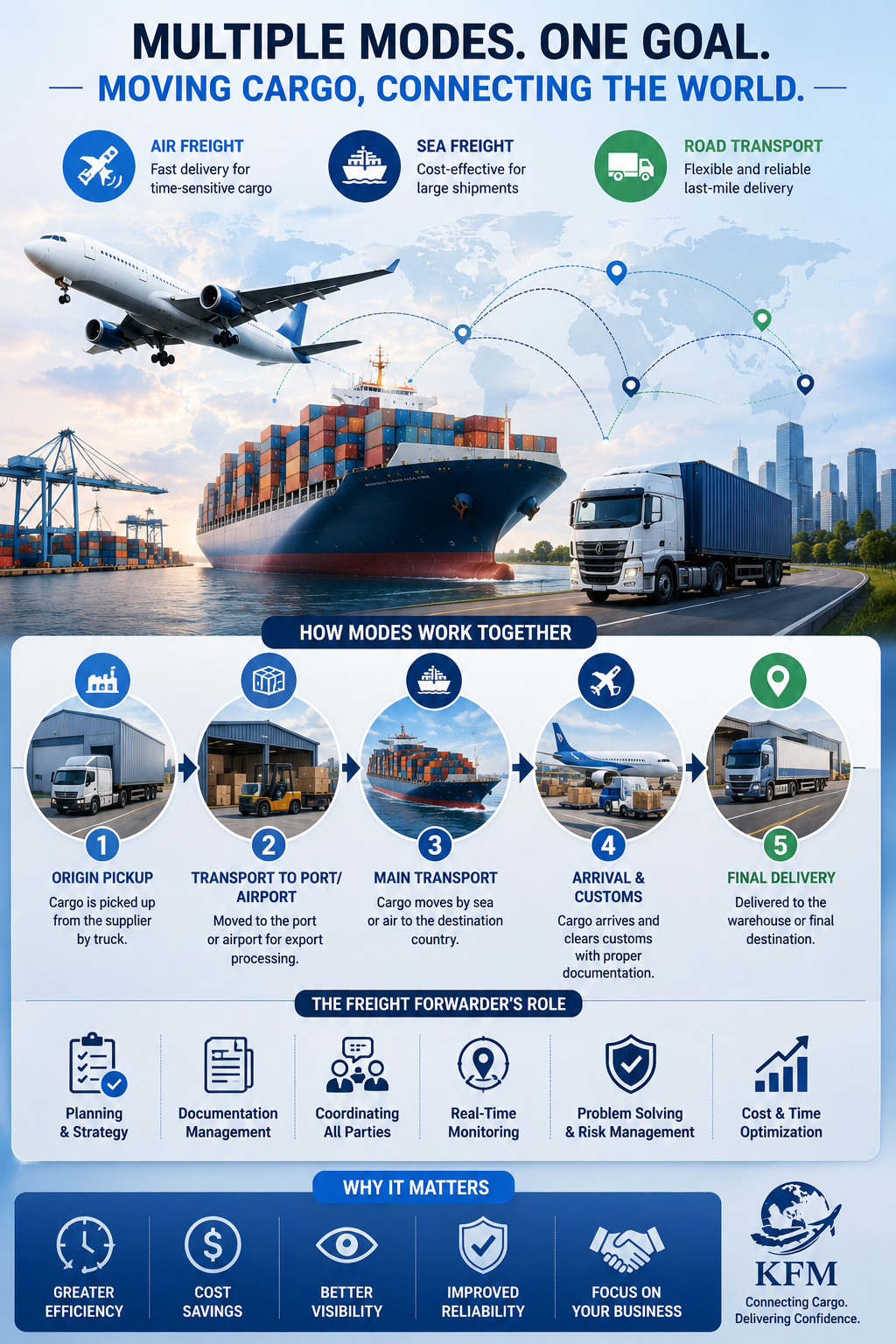
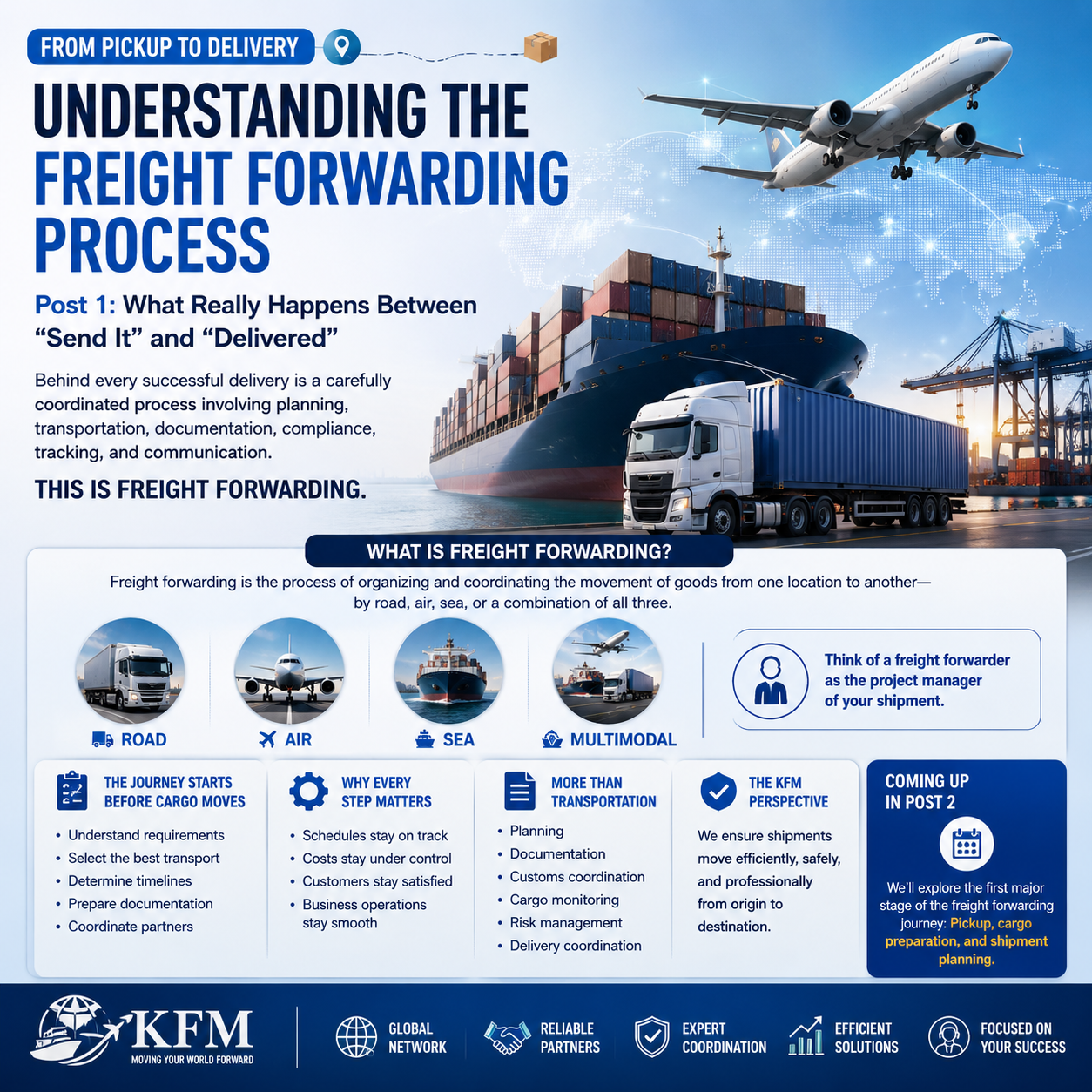
Because freight forwarding isn't just about moving cargo across the ocean.
It's about understanding what happens after the vessel arrives — and making sure every stage connects.
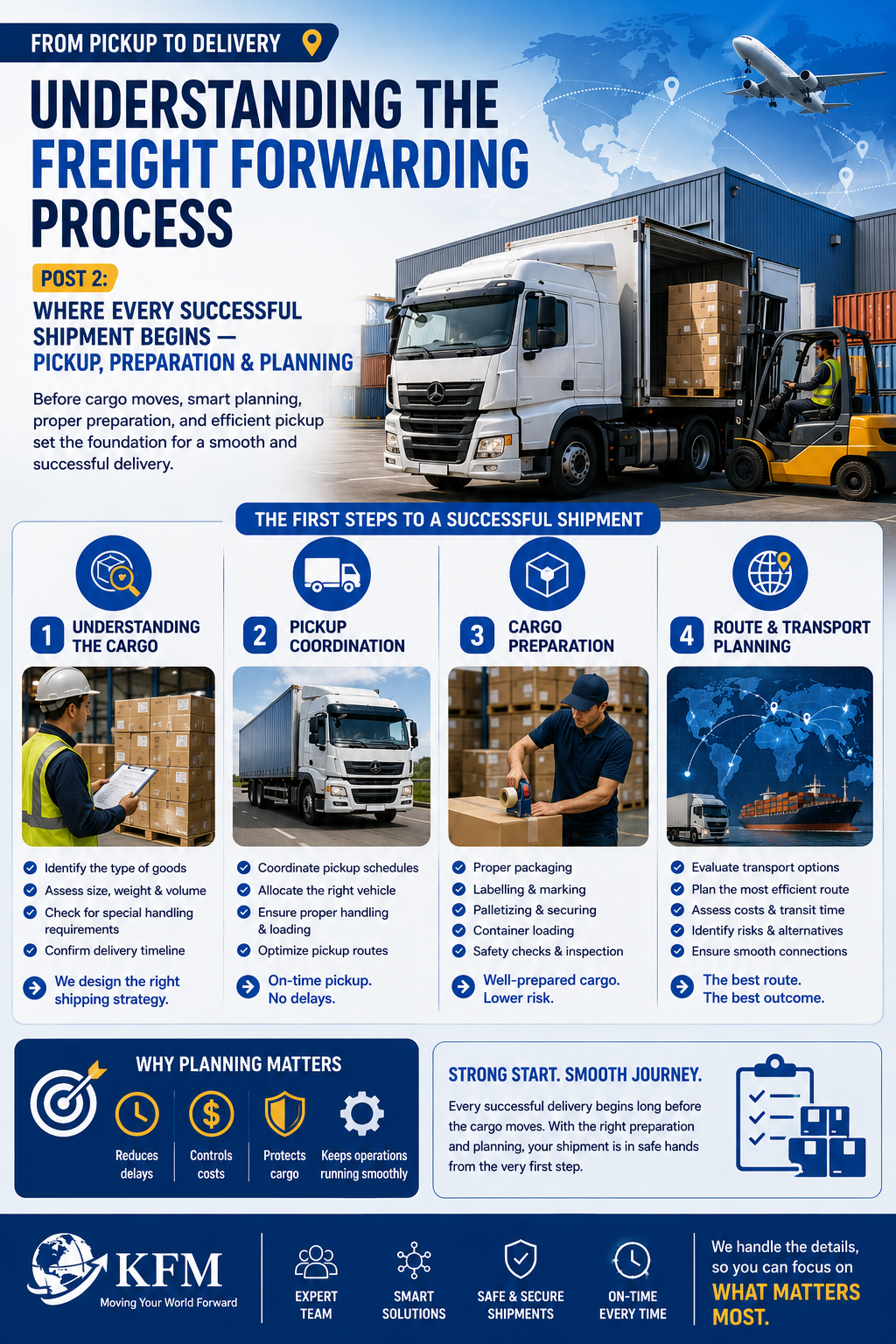
Coming Up in Post 2 👀
Next, we'll go deeper into one of the biggest questions importers ask: What actually happens to your container after it is discharged from the vessel?
The ship arriving is not the finish line. For an importer, that's where another part of the journey begins.