Let’s get practical…
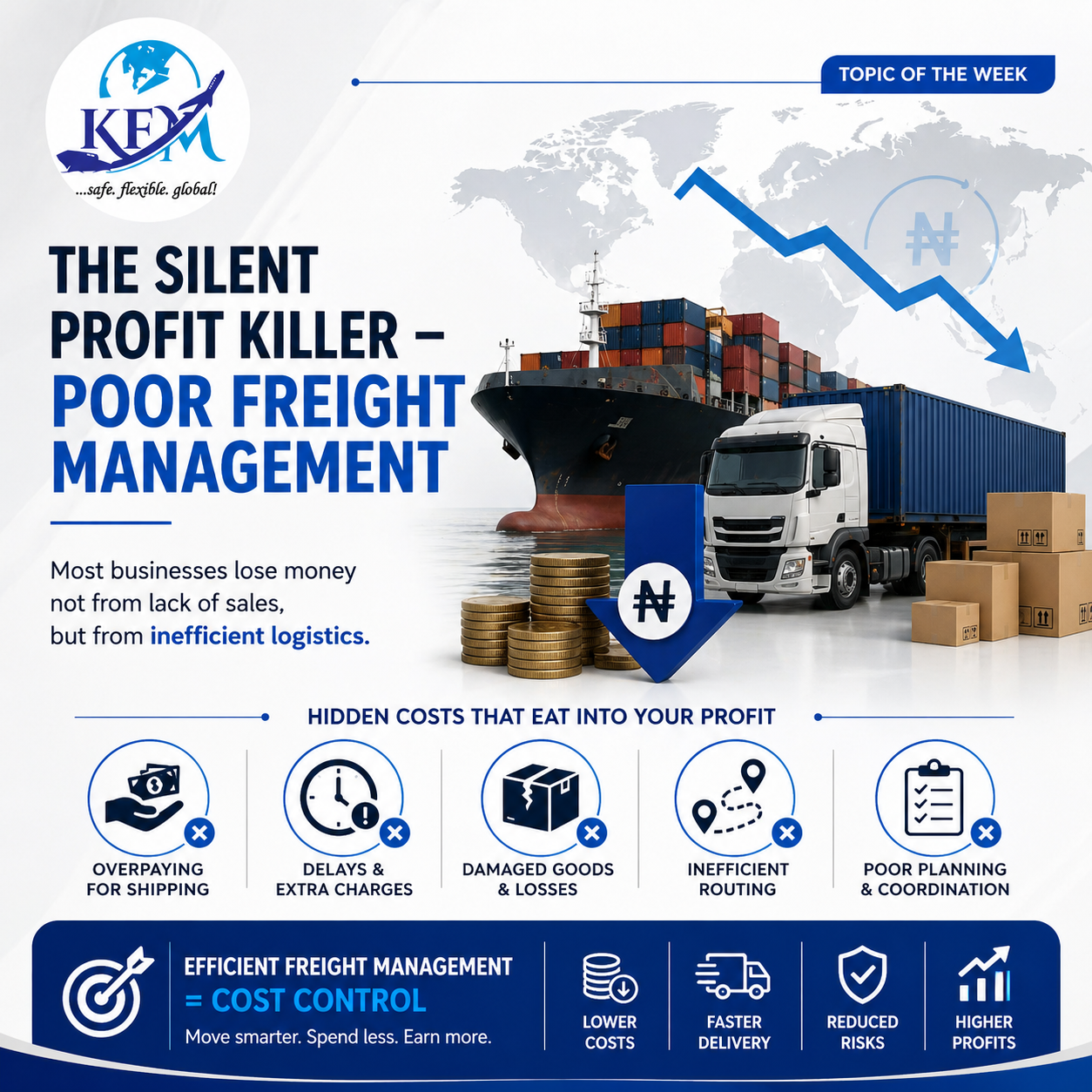
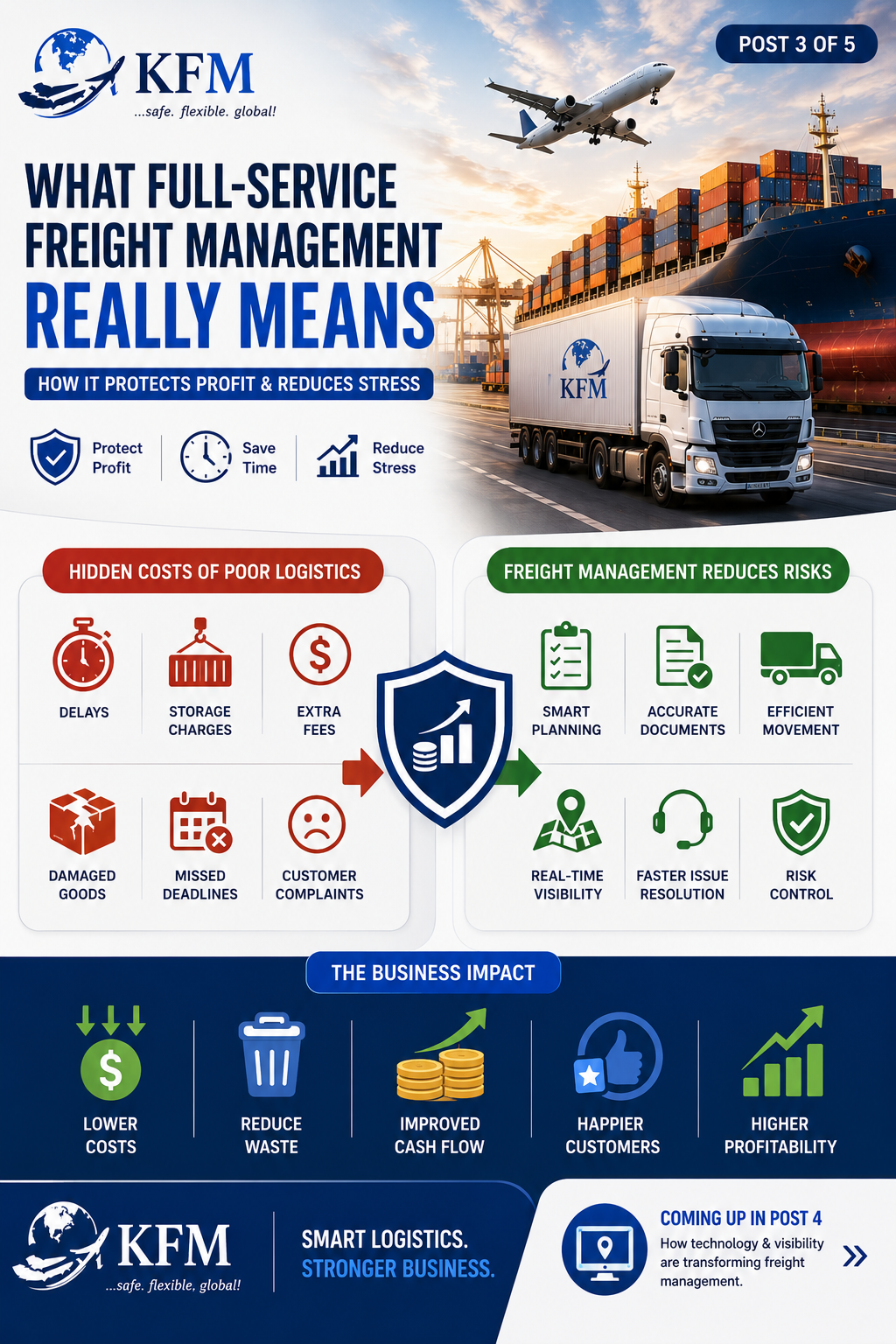
In Post 1, we talked about how poor freight management quietly eats into profit.
Now the real question is: How exactly does efficient freight management save you money?
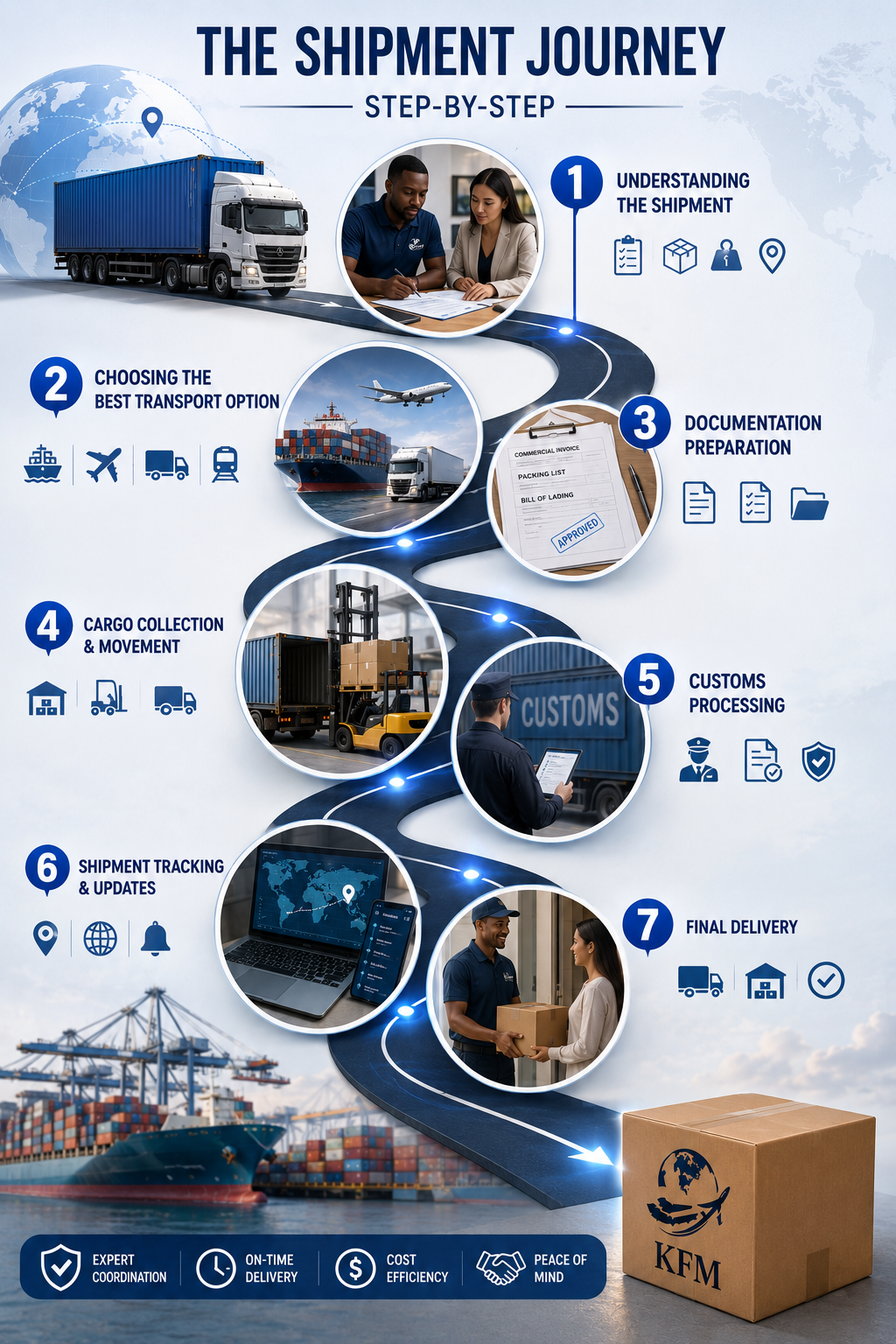
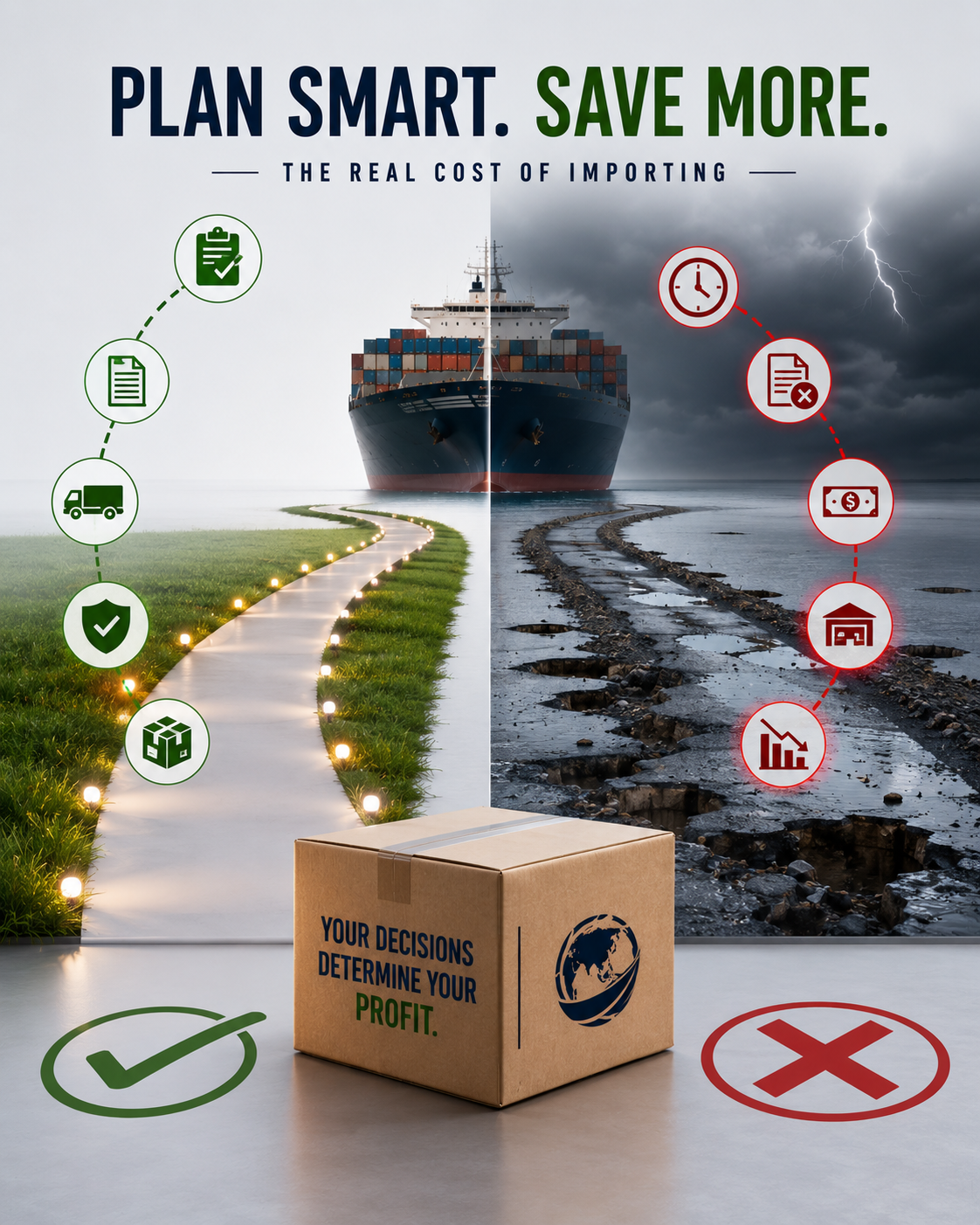
At KFM, the answer is simple — planning.
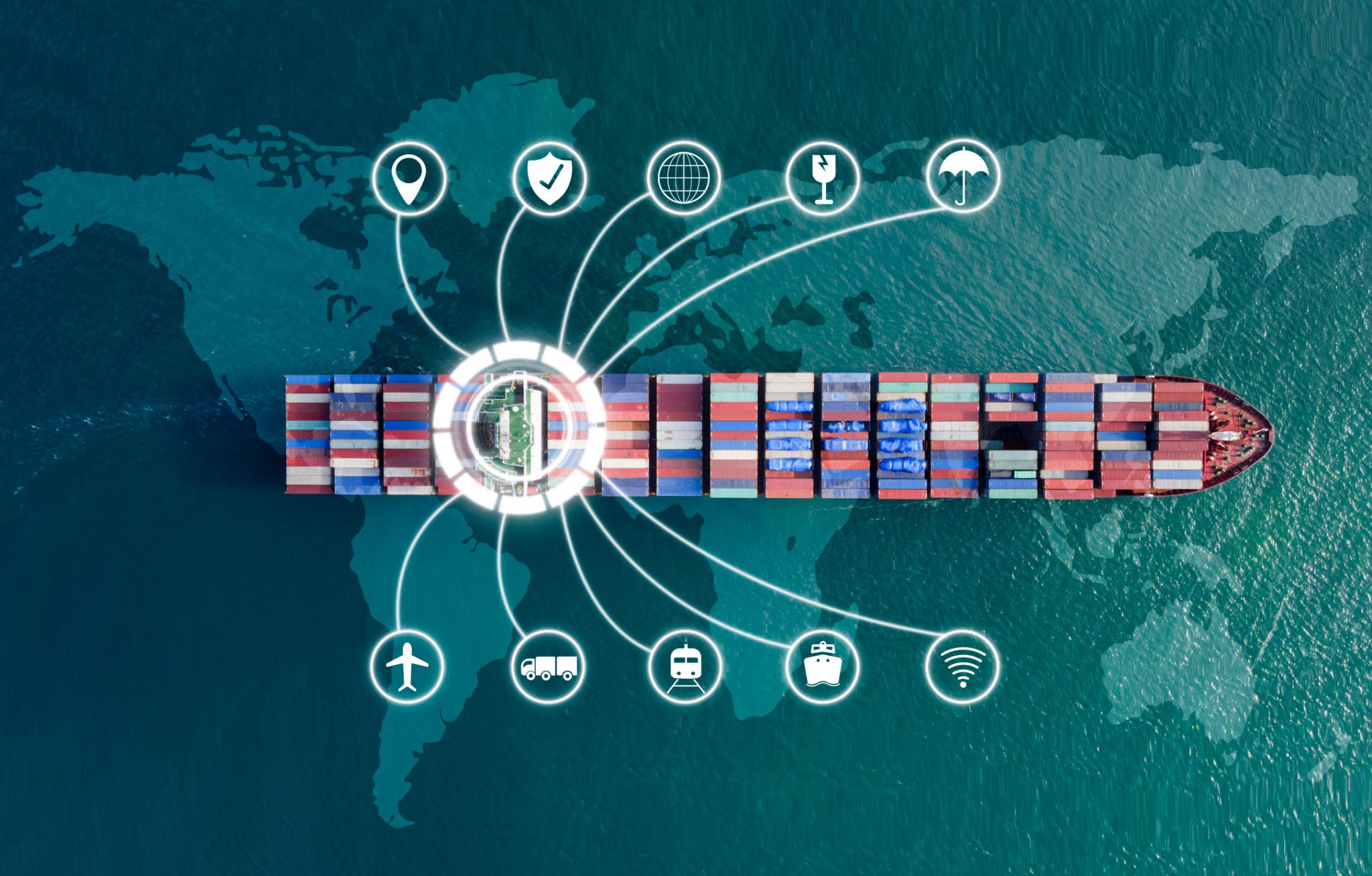
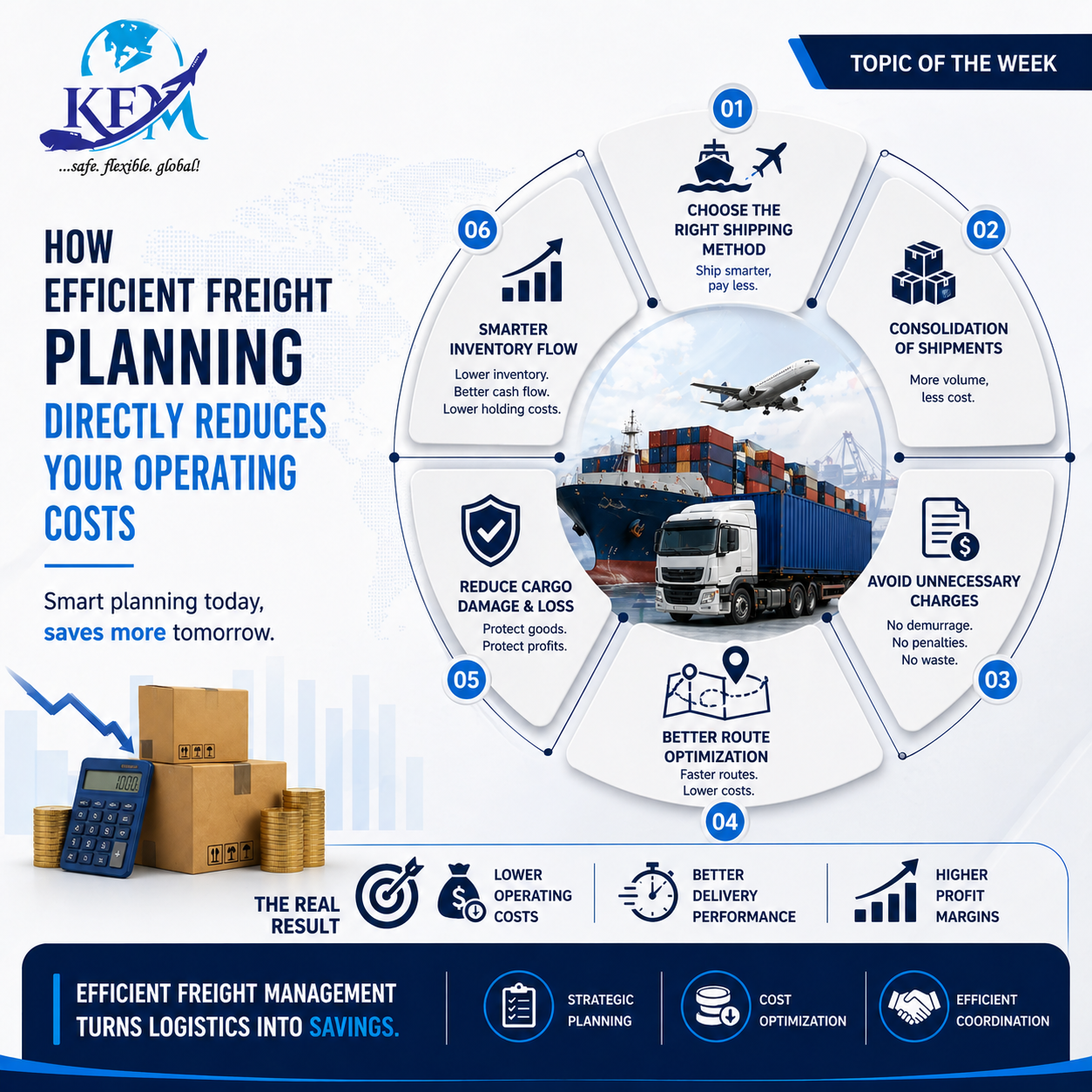
1. Choosing the Right Shipping Method
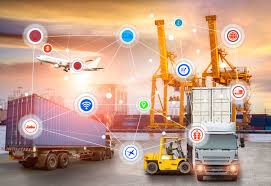
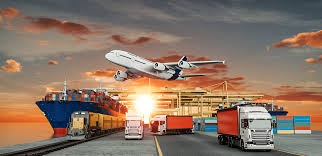
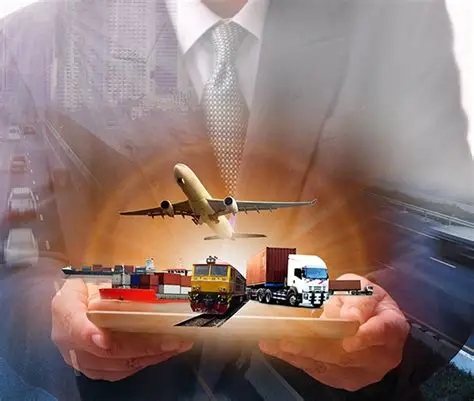
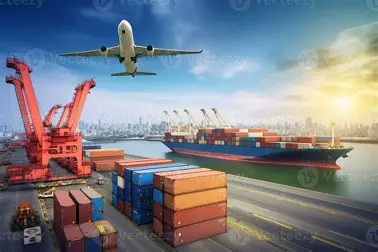
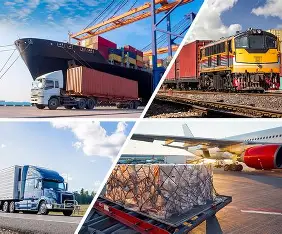
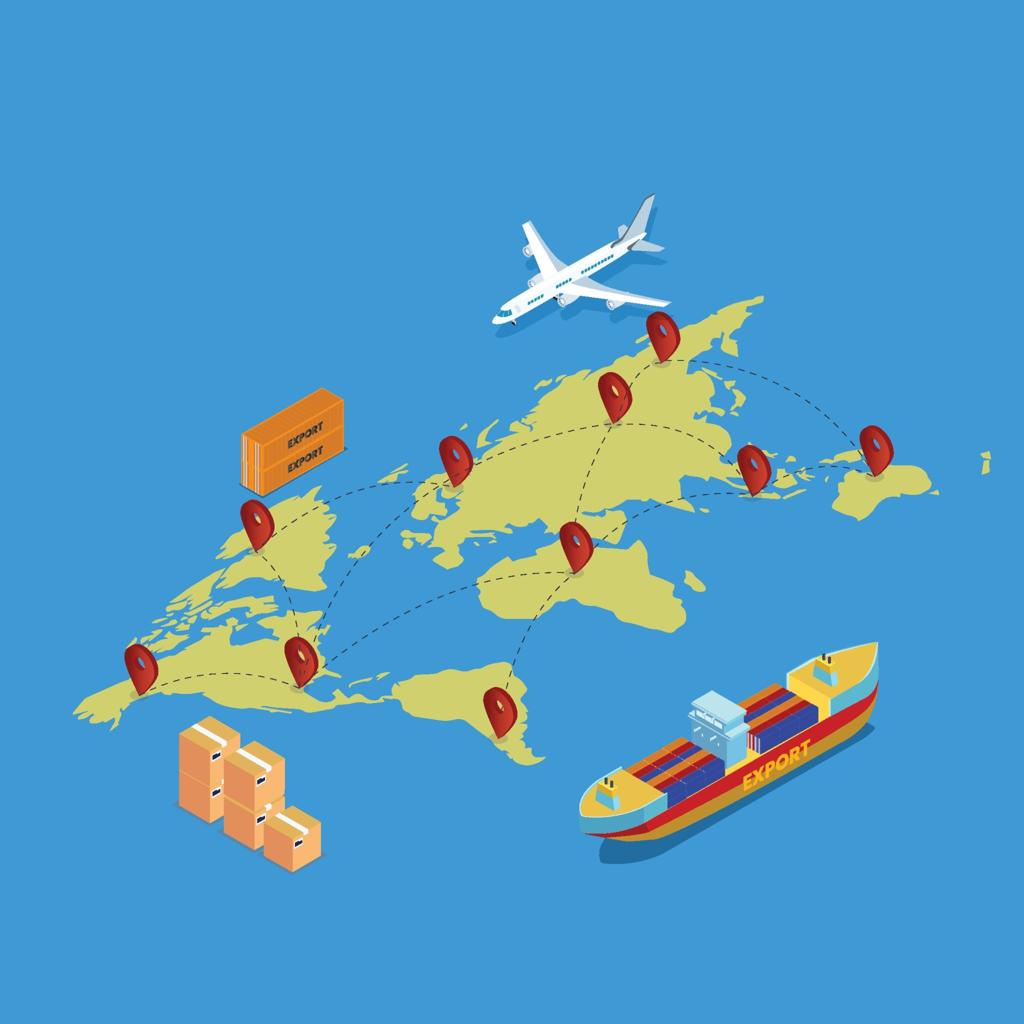
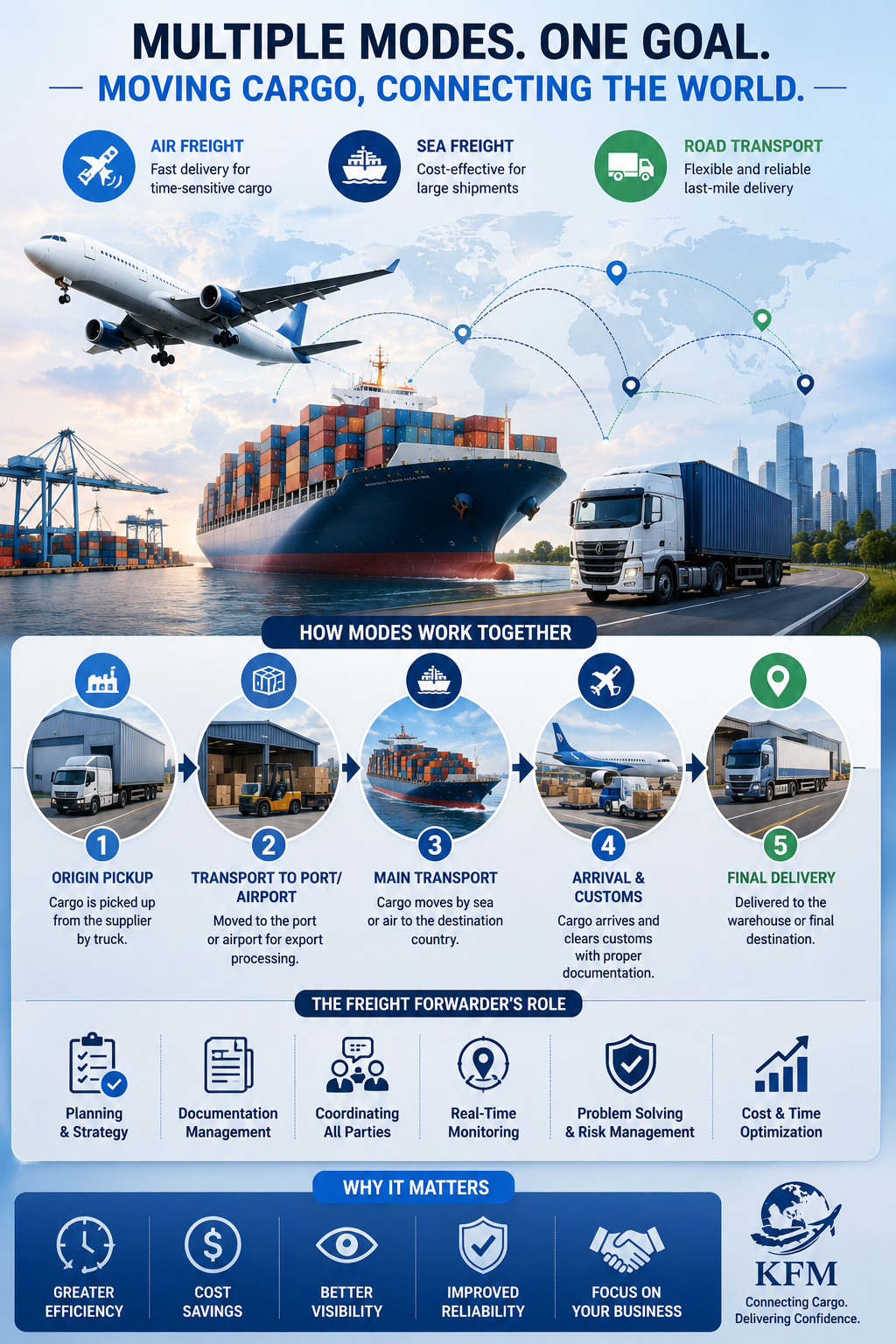
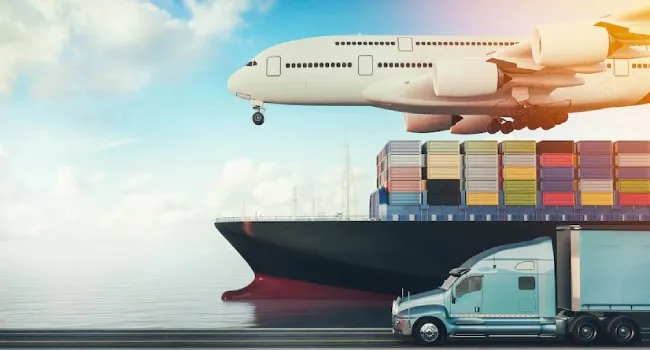
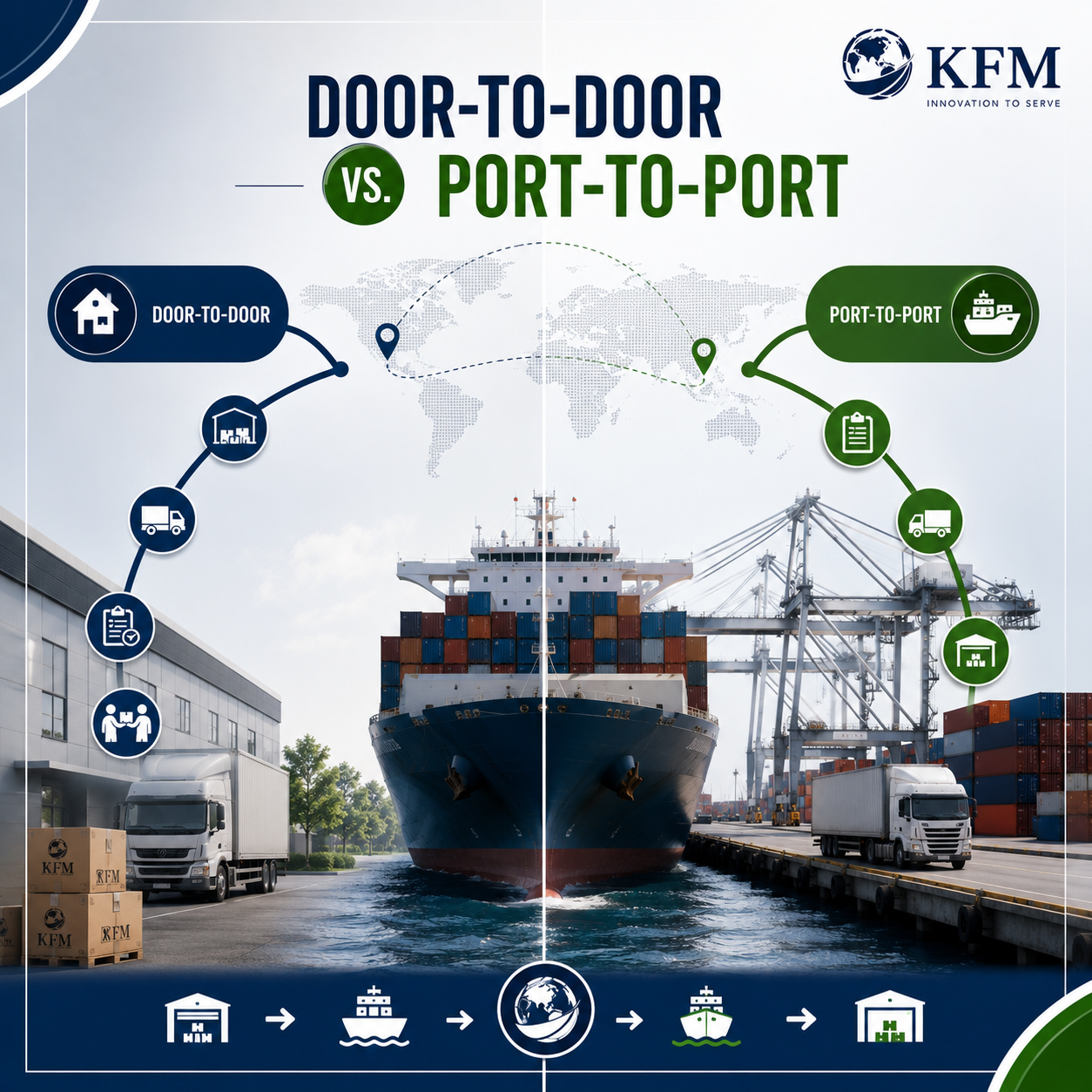
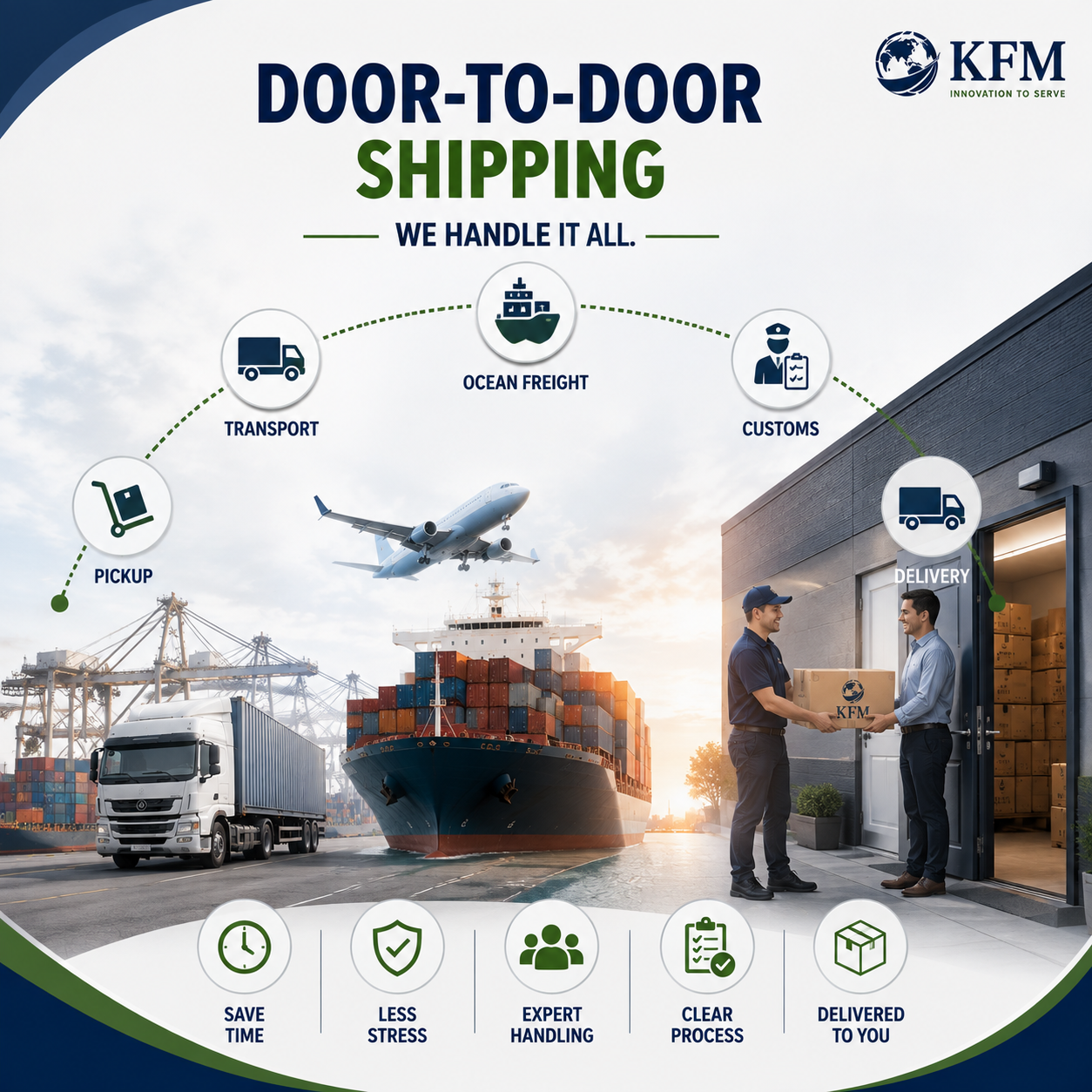
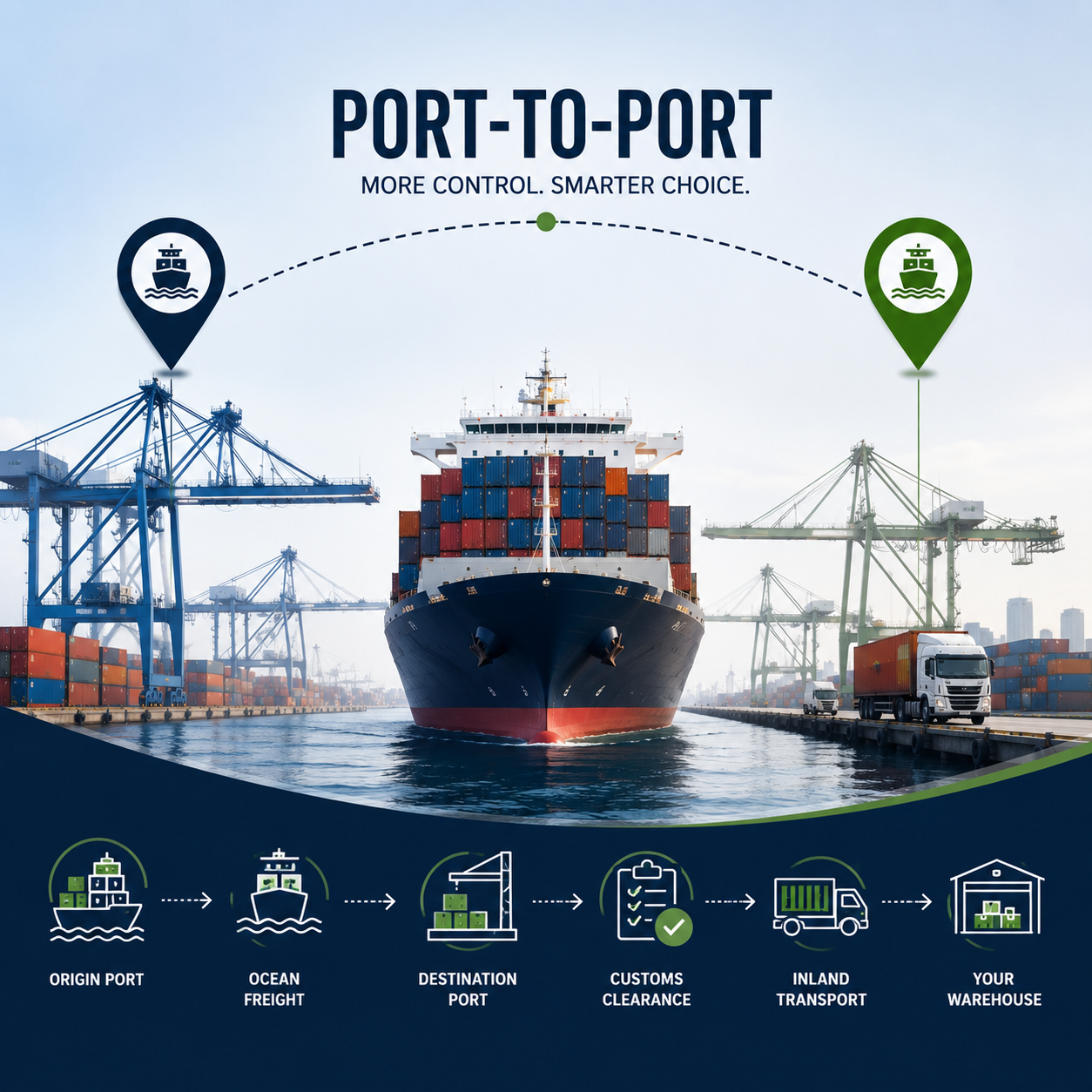
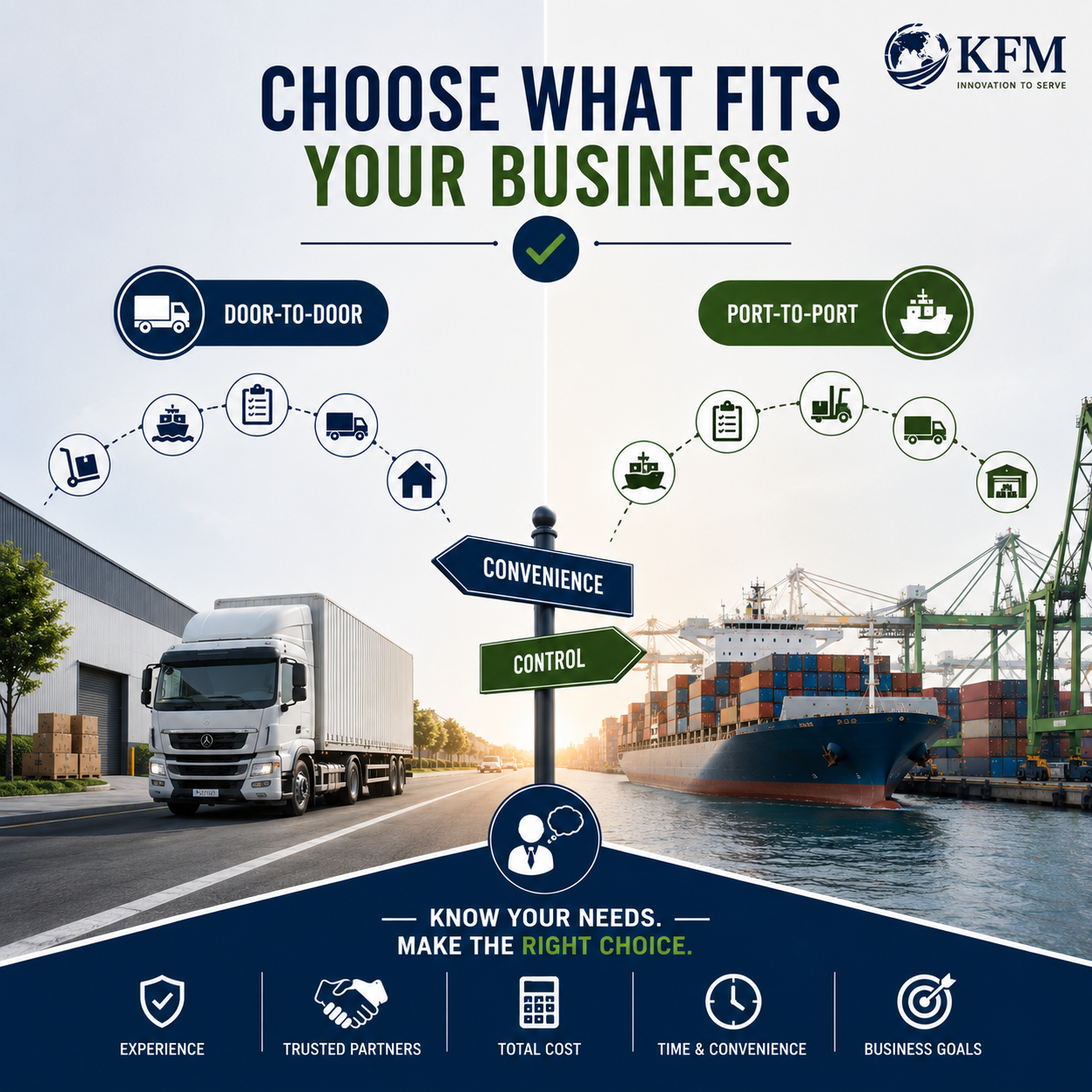
One of the biggest cost drivers is how you ship.
- Using air freight unnecessarily = higher costs
- Using sea freight for urgent goods = delays and losses
Efficient planning ensures you choose the right method for each shipment.
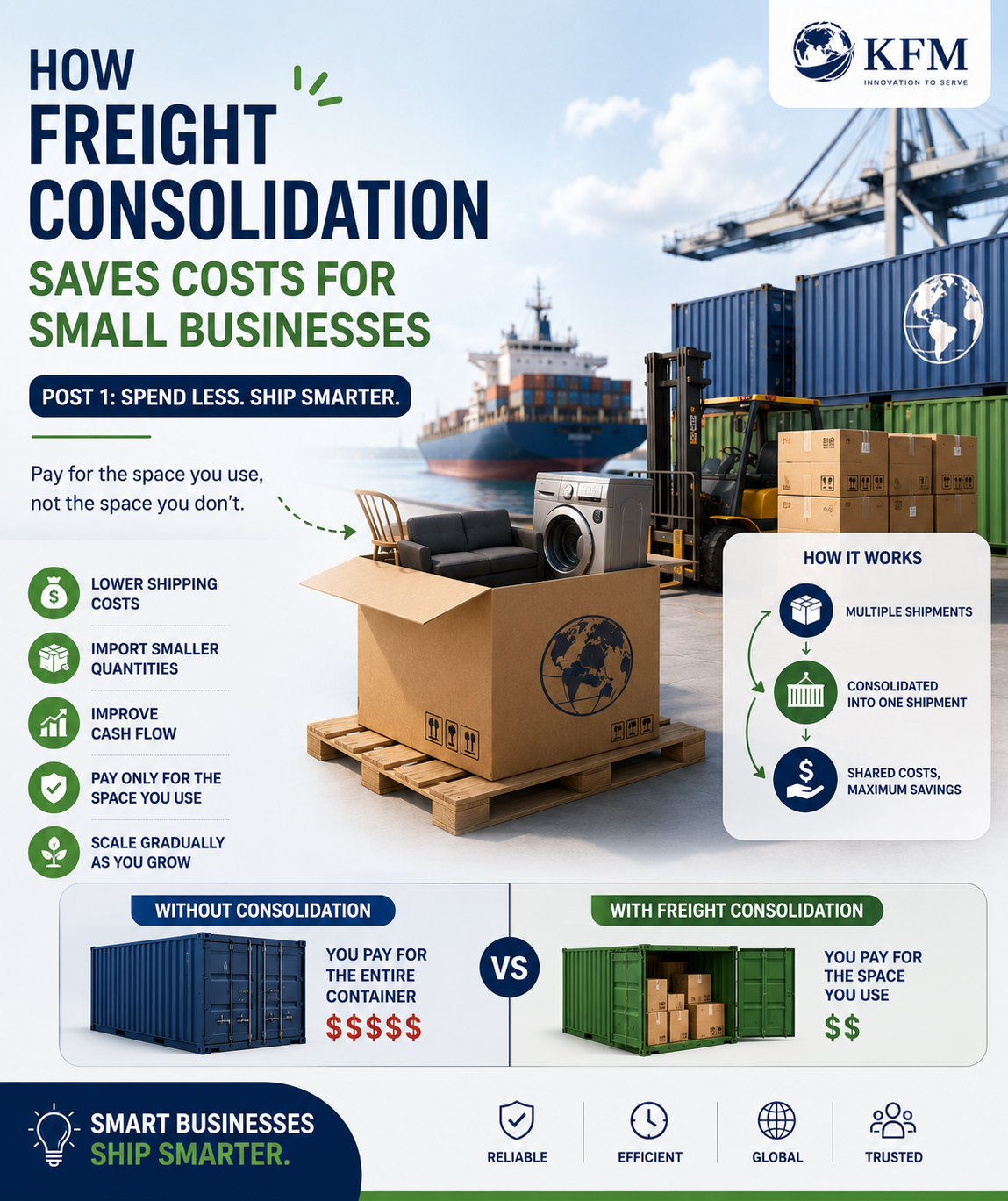
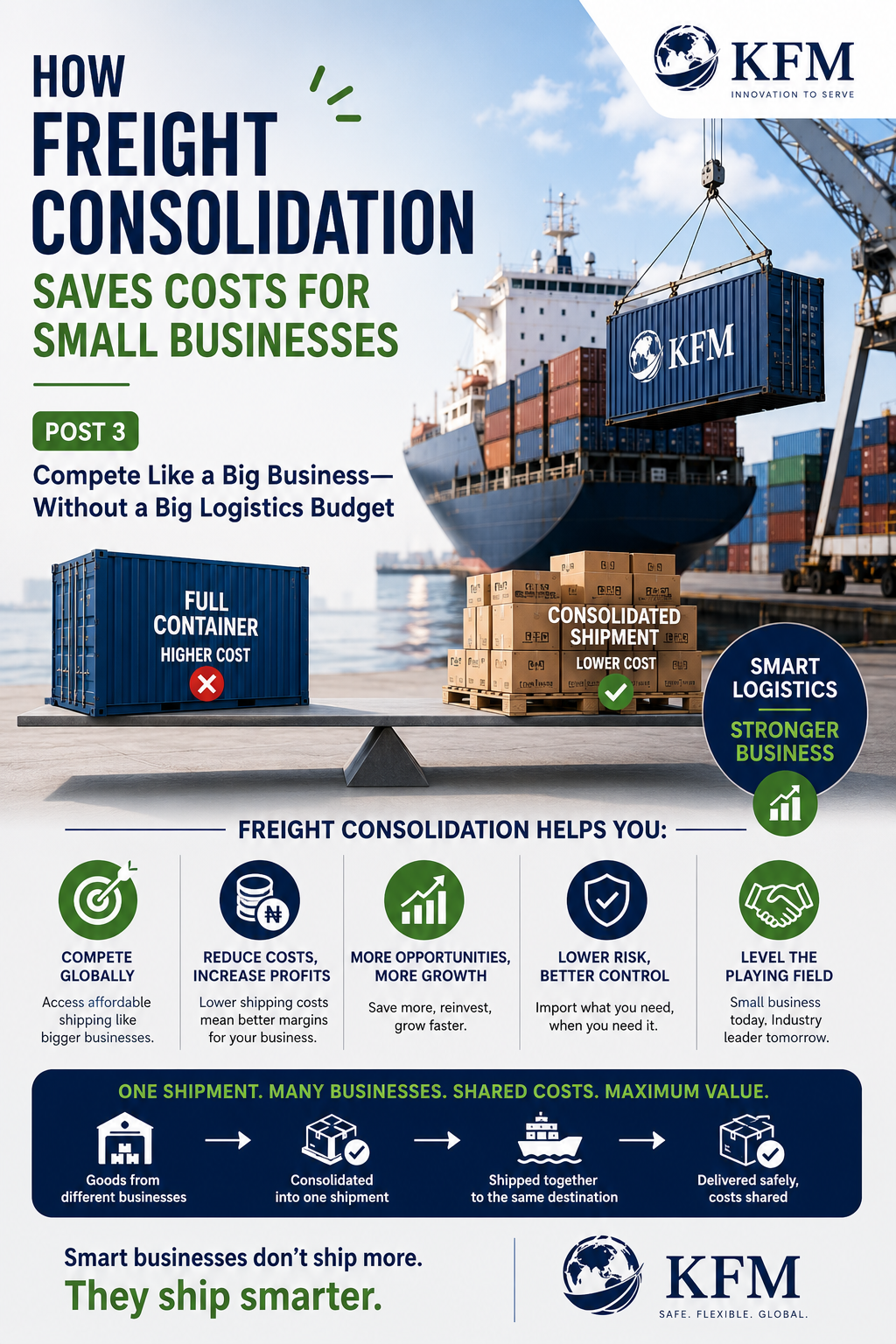
2. Consolidation of Shipments
Shipping goods in small batches costs more over time.
Smart freight management groups shipments together.
- Lower cost per unit
- Better use of container space
- Reduced frequency of shipments
More volume, less cost.
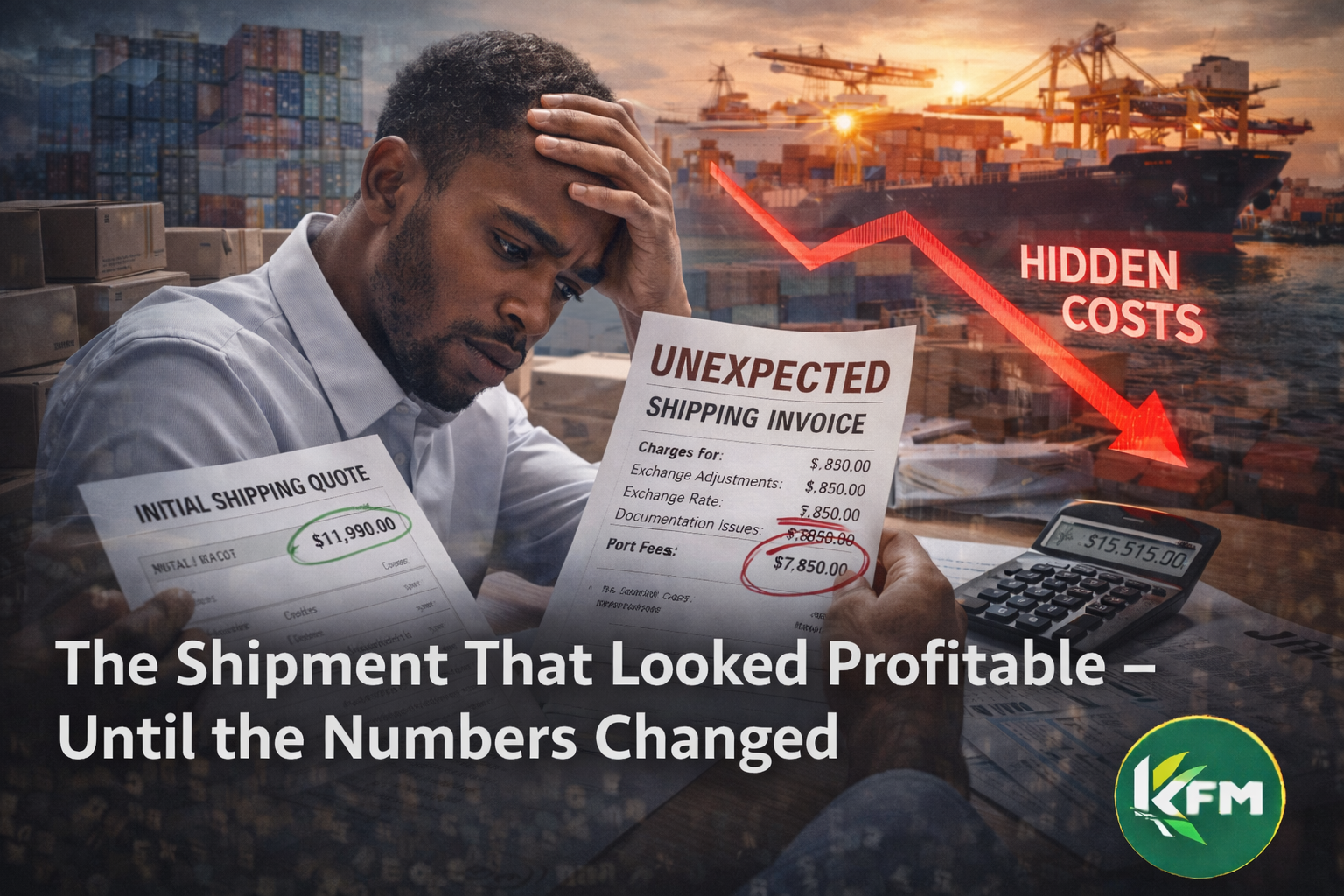
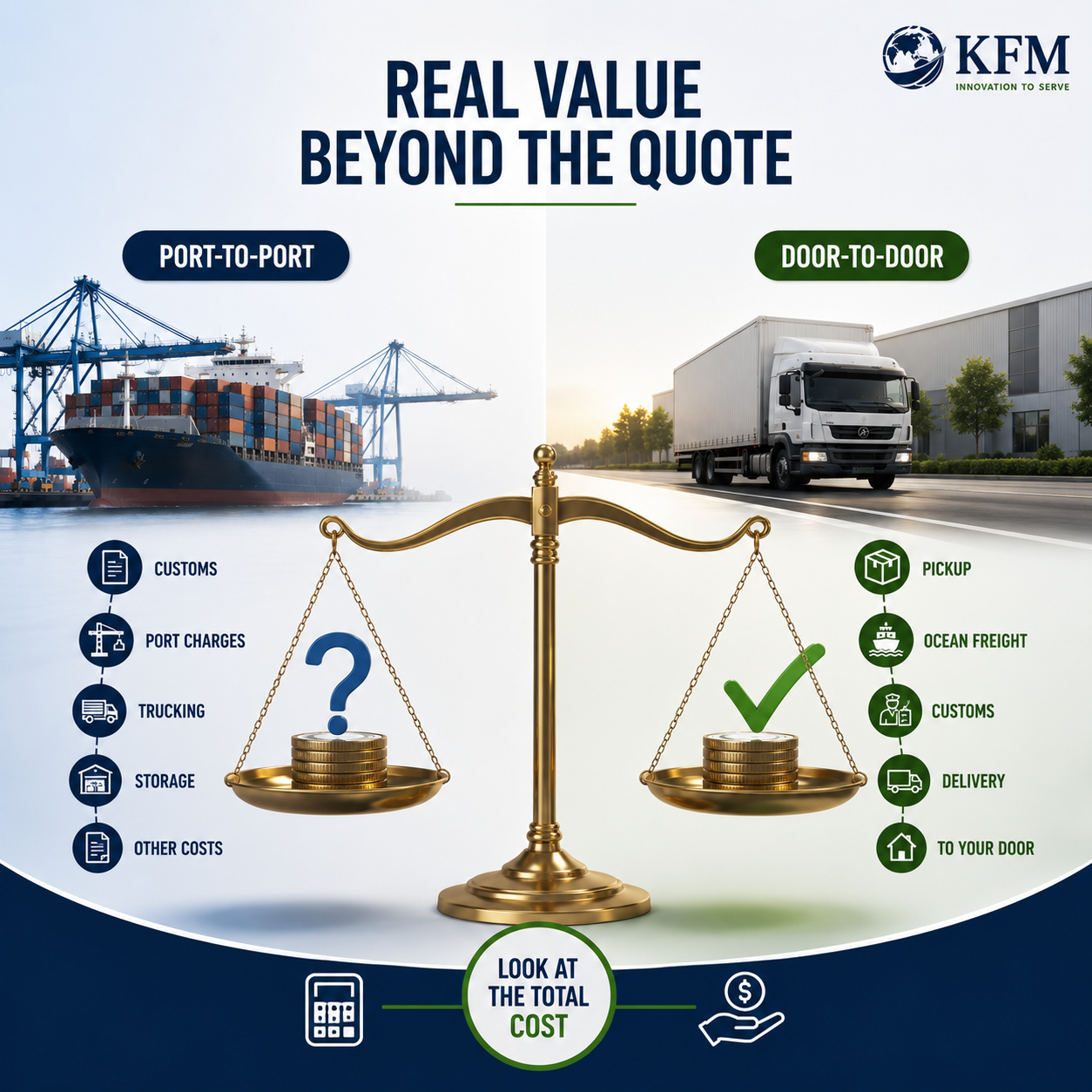
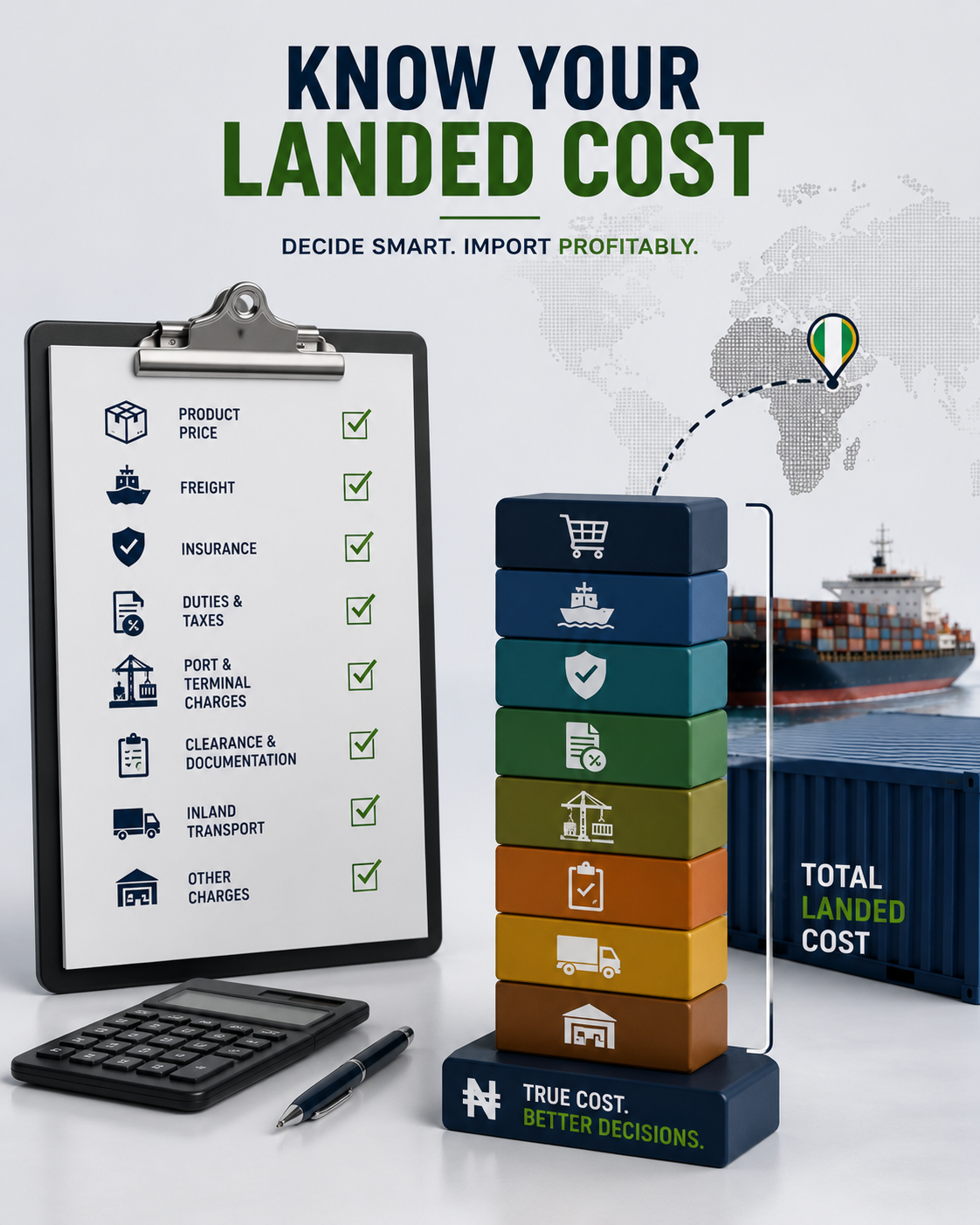
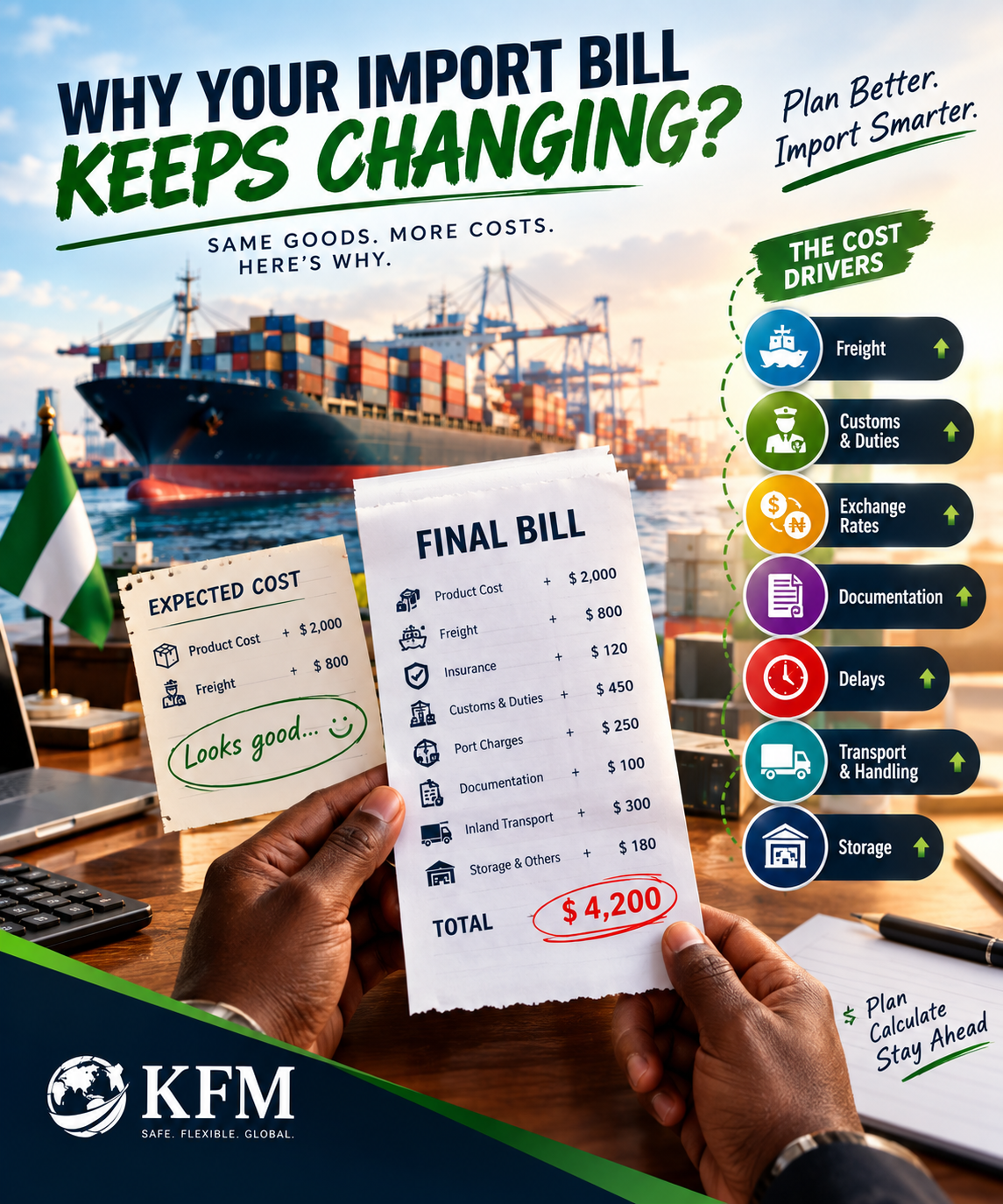
3. Avoiding Unnecessary Charges
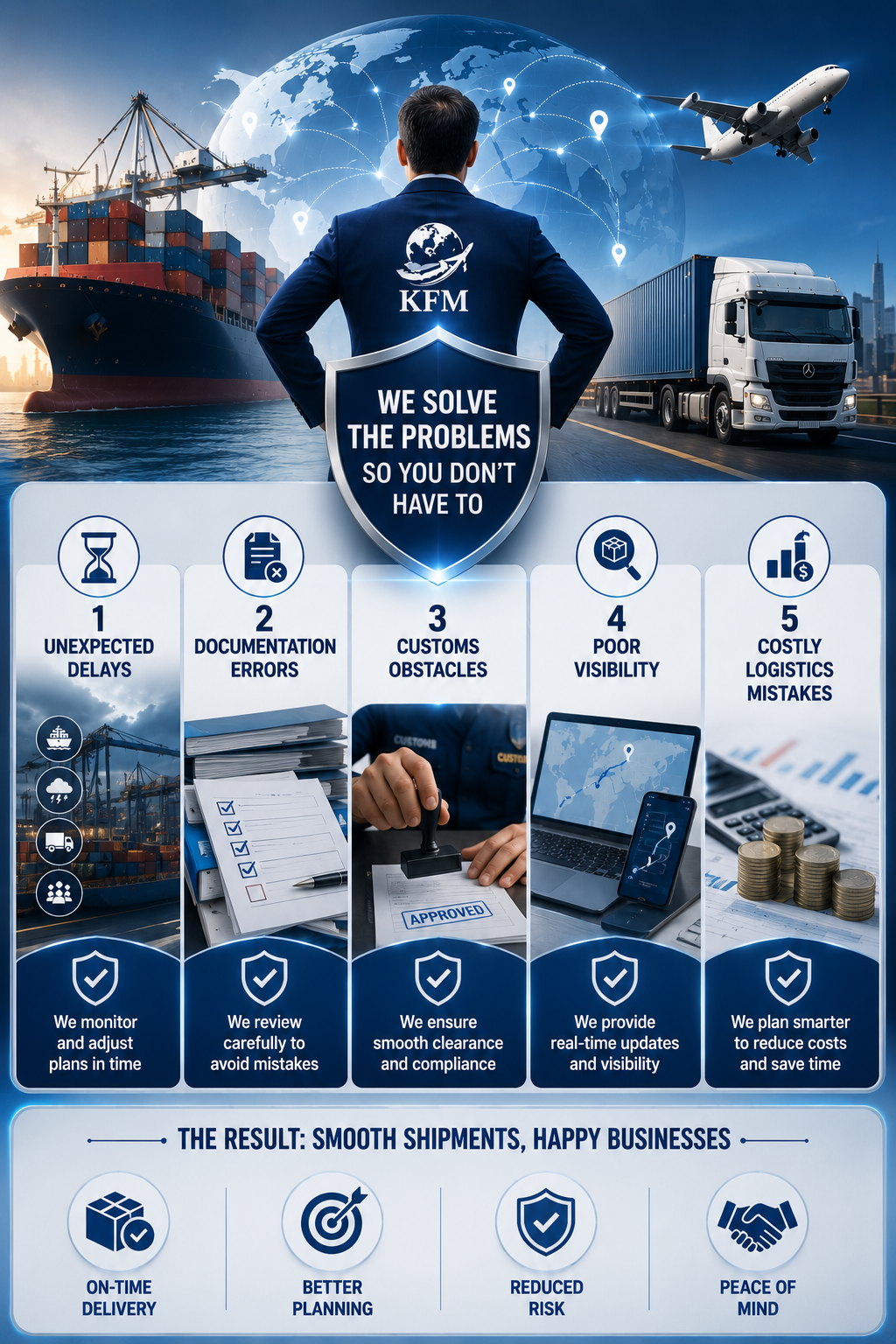
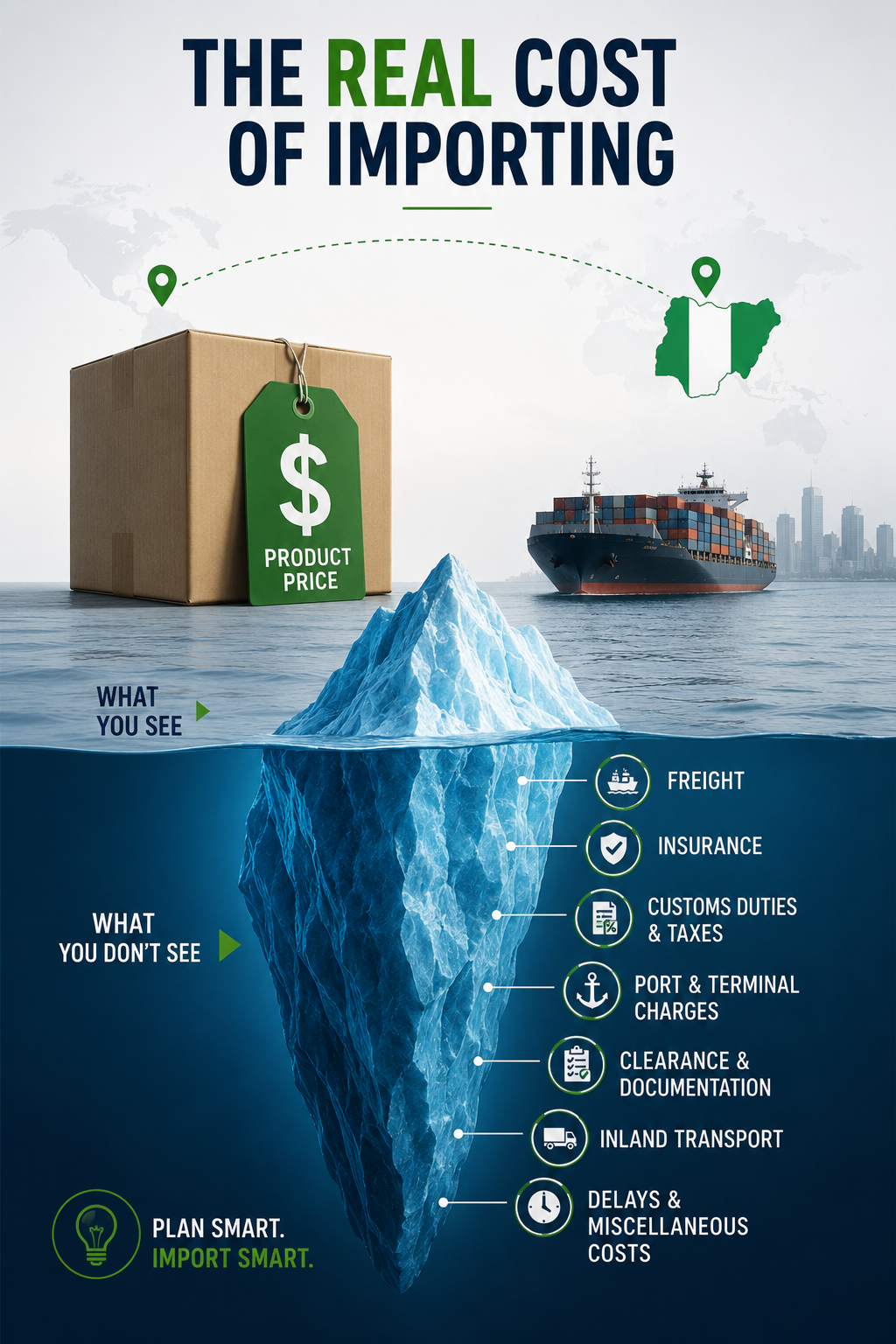
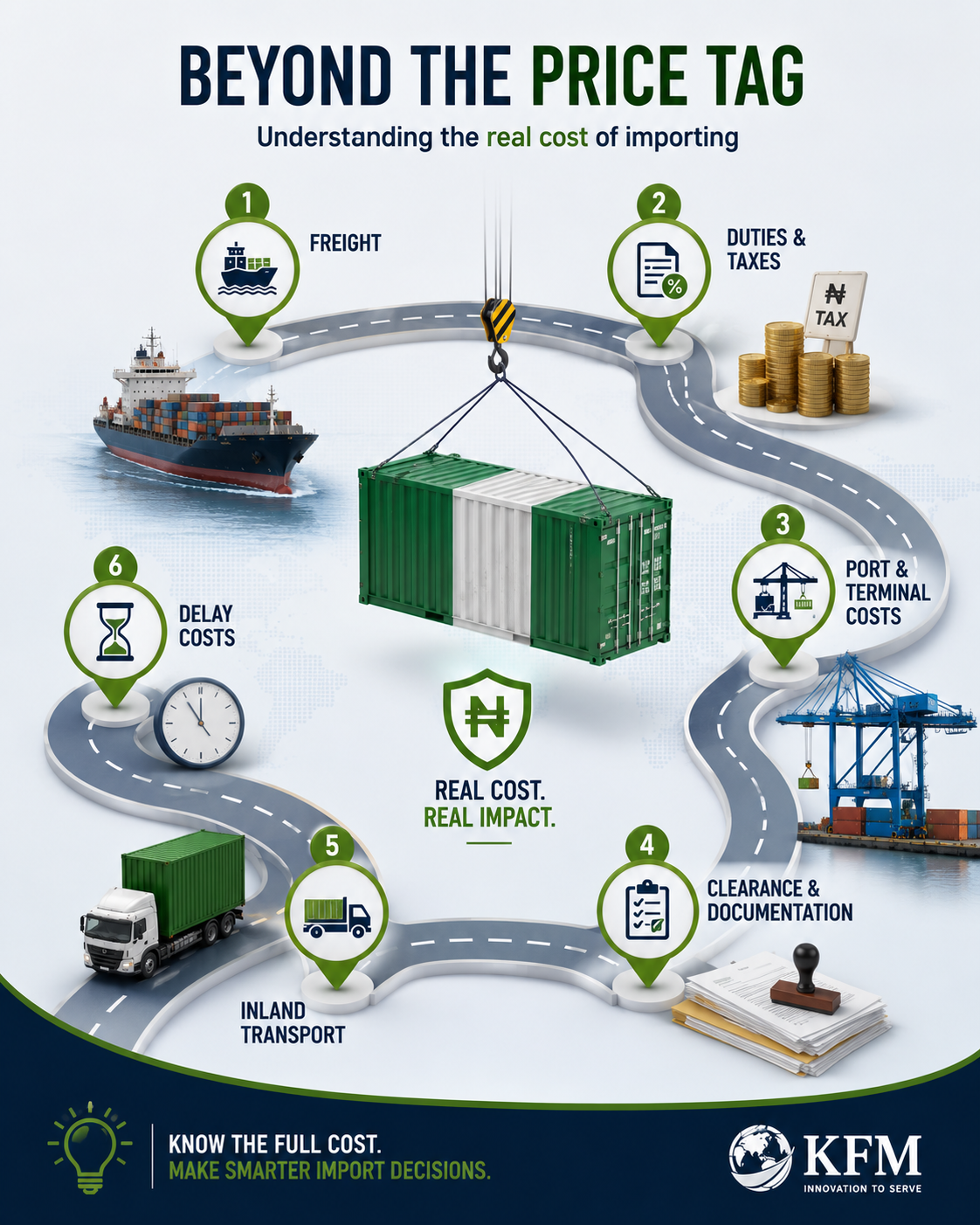
Many businesses lose money on charges they could have avoided:
- Demurrage fees
- Storage charges
- Late clearance penalties
With proper coordination and timing, these costs can be minimized or eliminated.
4. Better Route Optimization
Not all routes are equal.
Efficient freight management identifies:
- Faster routes
- More cost-effective paths
- Reliable transit options
This reduces both time and fuel-related costs.
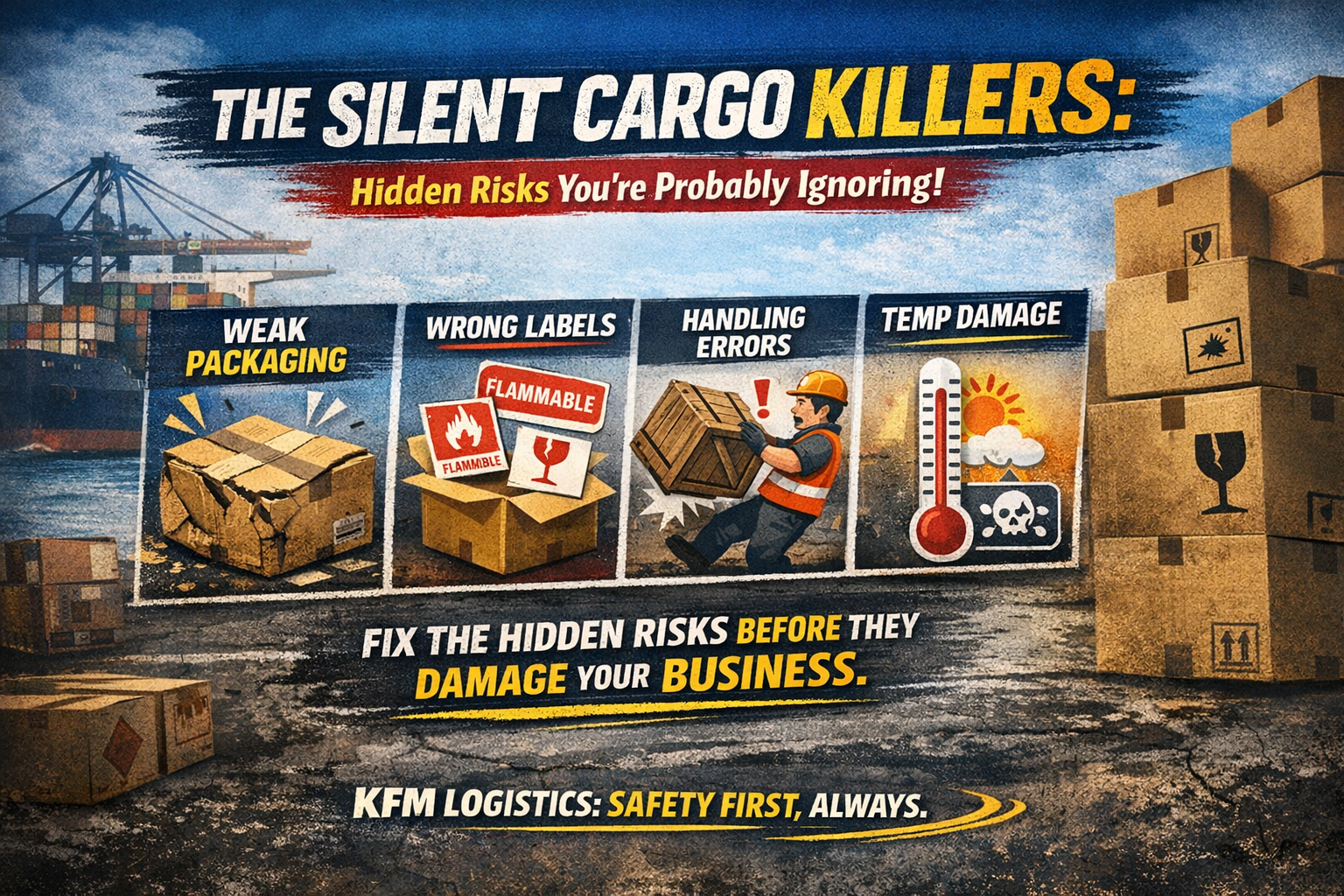
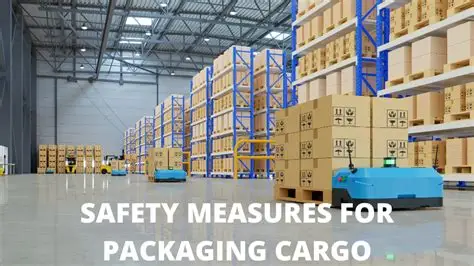
5. Reducing Cargo Damage & Los
Every damaged shipment is a direct financial loss.
Good planning ensures:
- Proper handling
- Correct packaging
- Secure transportation
Less damage = fewer replacements and refunds.
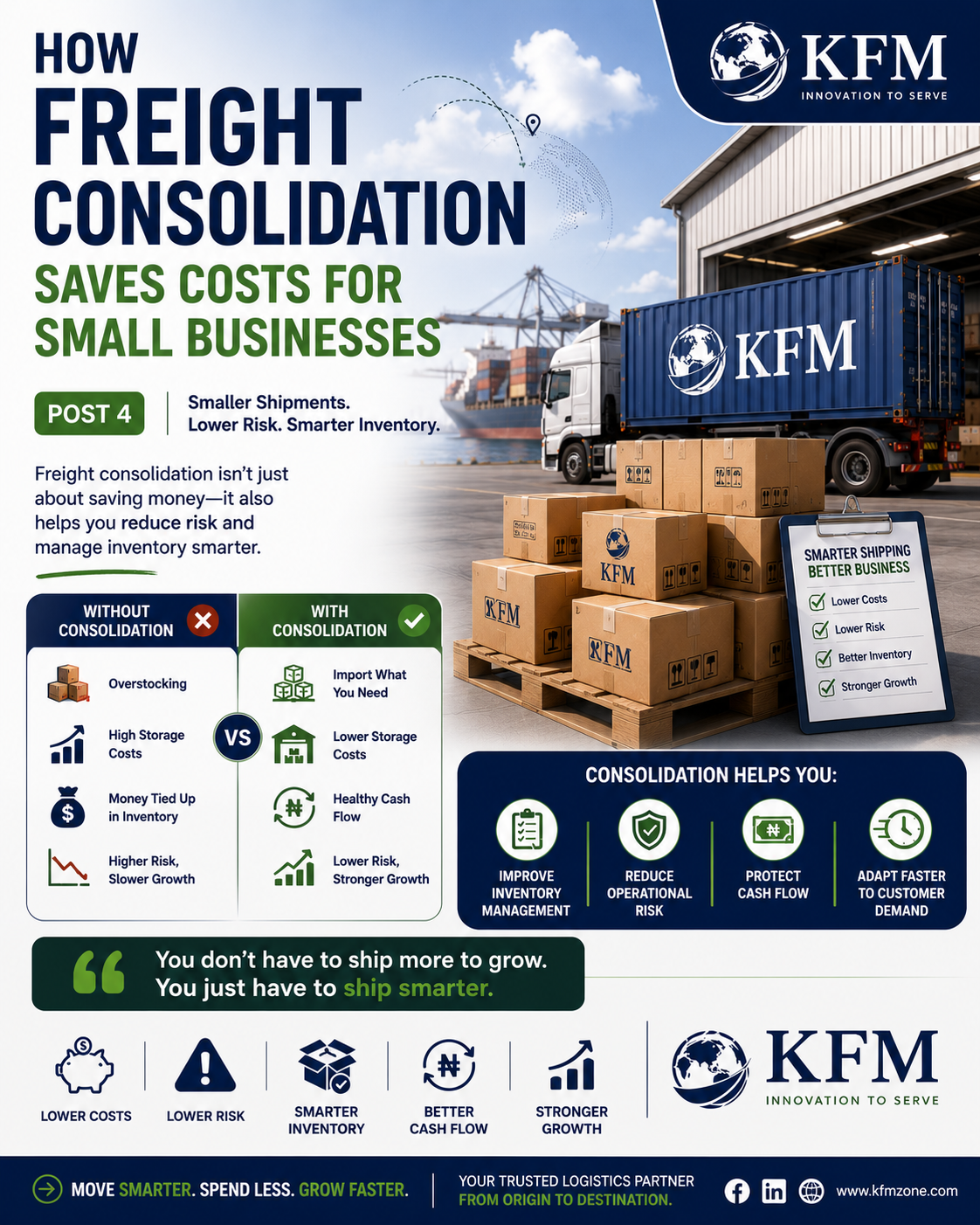
6. Smarter Inventory Flow
Efficient freight management helps you:
- Avoid overstocking
- Prevent stockouts
- Maintain steady supply
This improves cash flow and reduces storage costs.
The Real Result
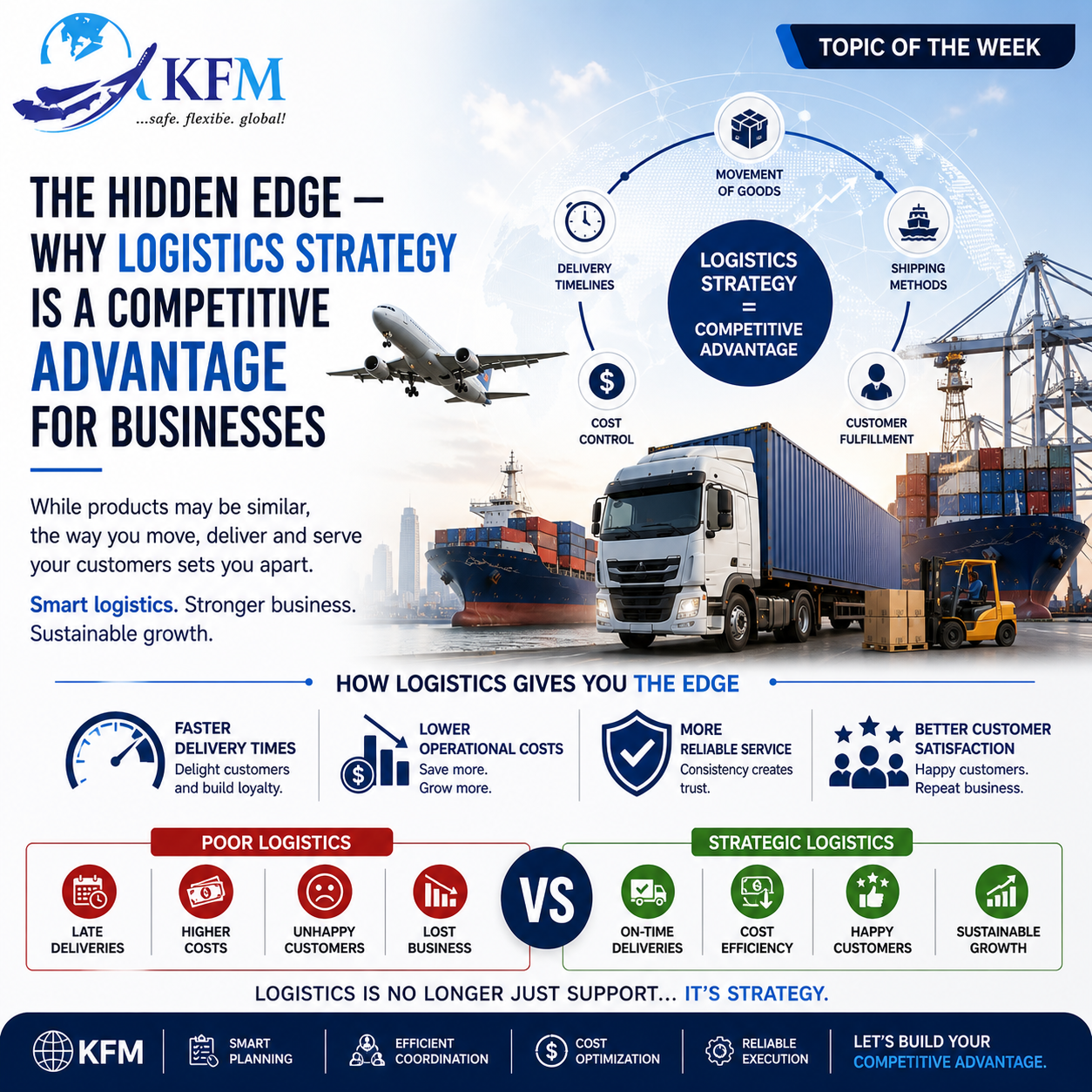
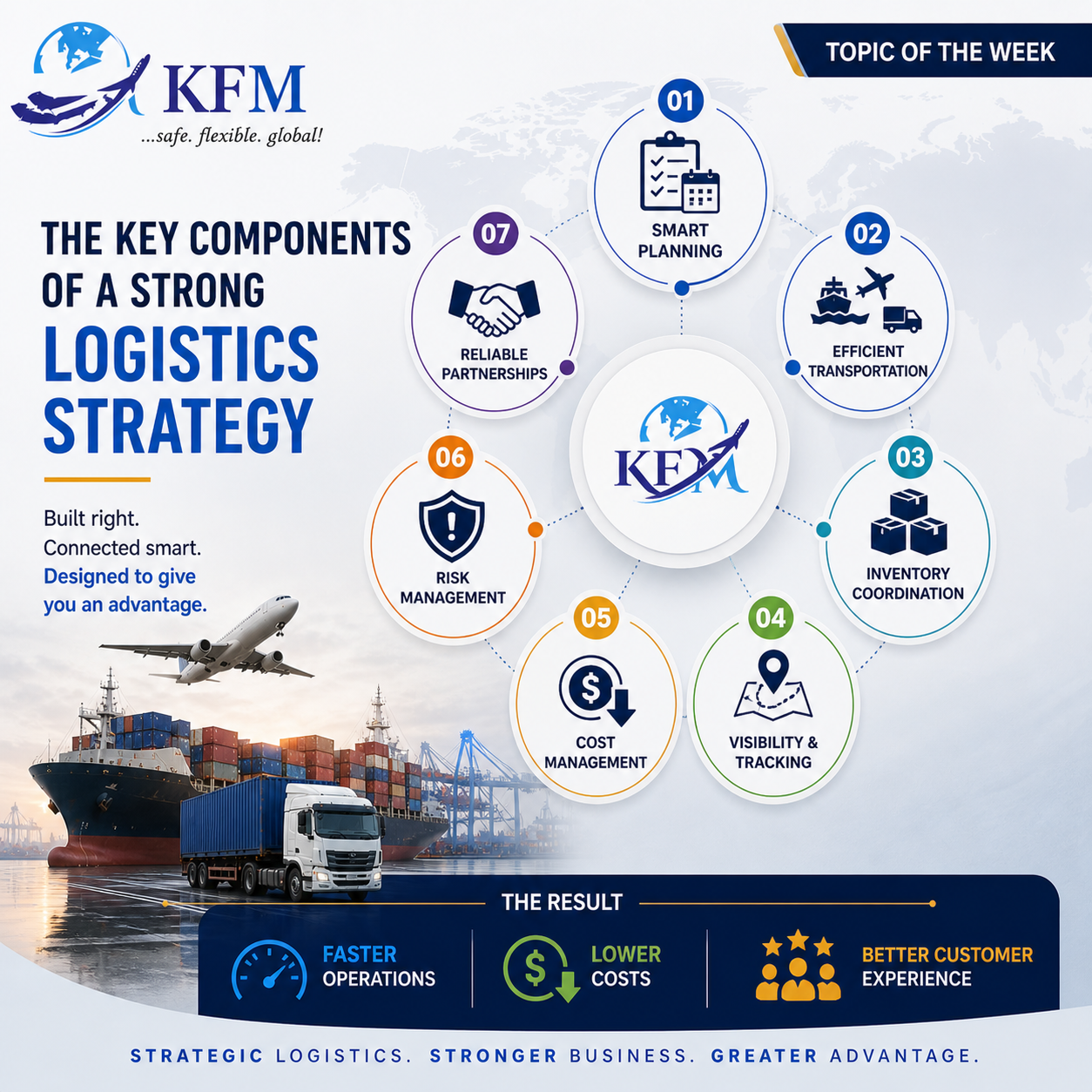
When all these come together, you get:
- Lower operating costs
- Better delivery performance
- Higher profit margins
That’s the power of efficient freight management.
The KFM Advantage
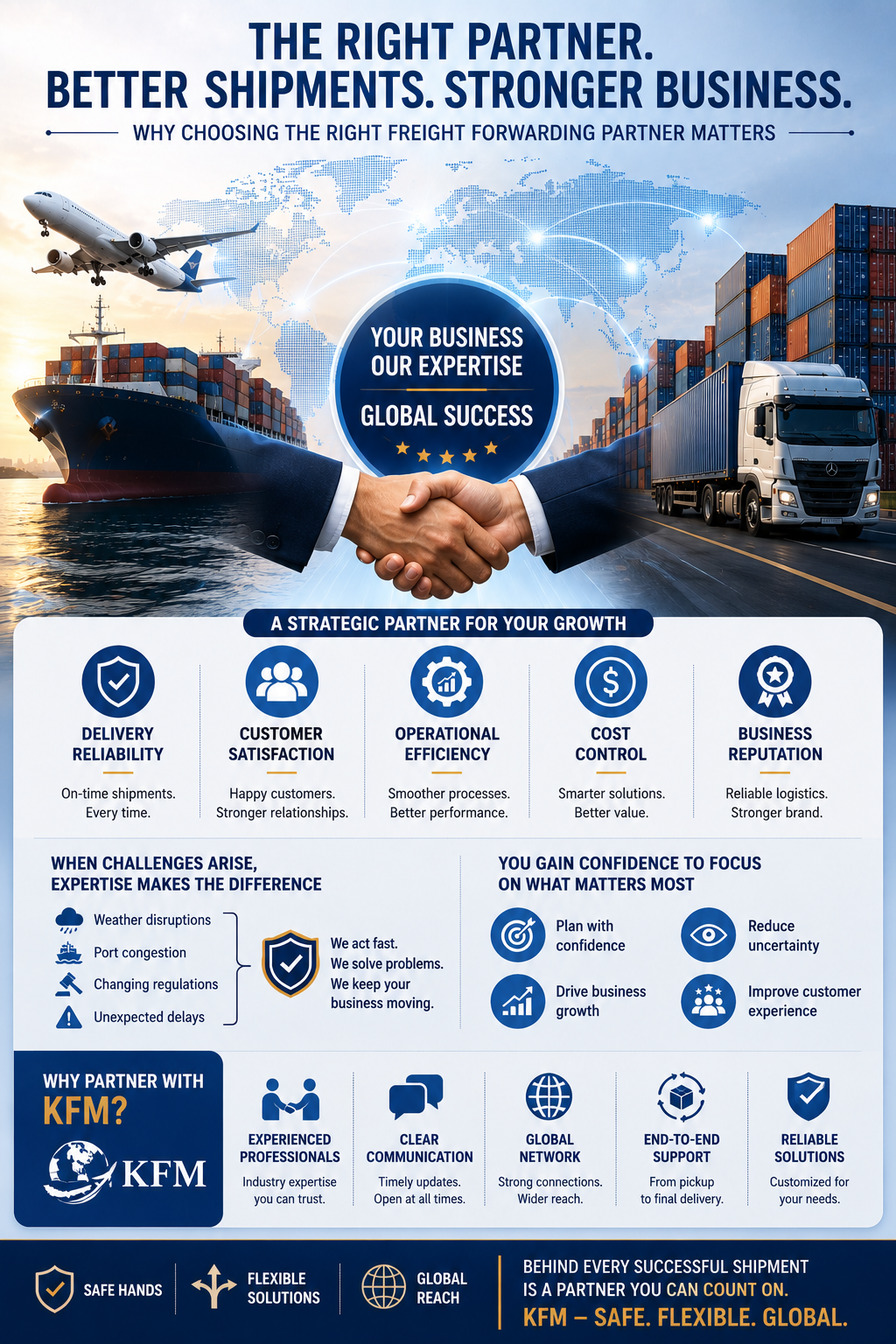
At KFM, we help businesses turn logistics into savings.
- Strategic shipment planning
- Cost optimization
- Efficient coordination
Because saving money in logistics isn’t luck — it’s strategy.
Coming Up in Post 3
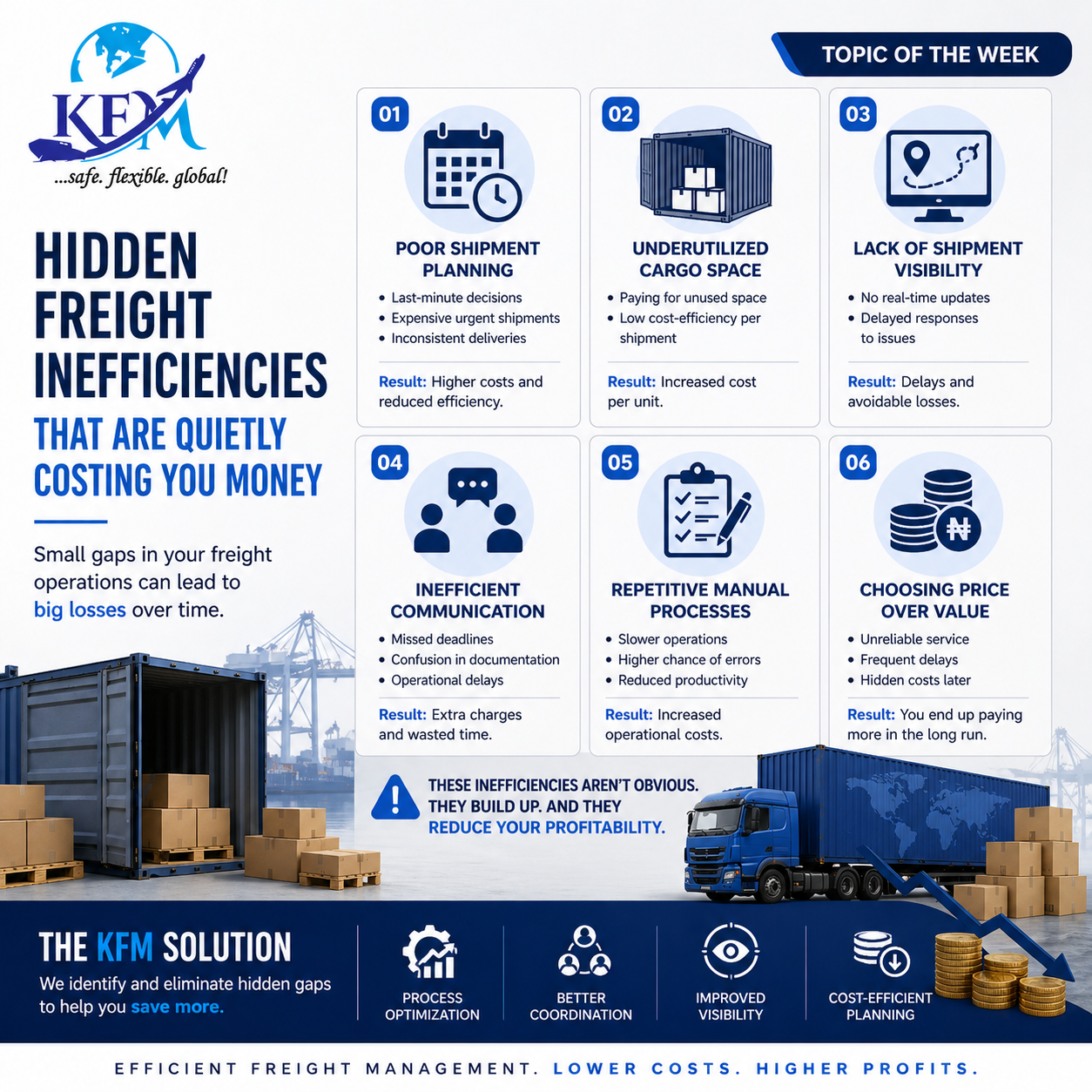
Next, we’ll reveal: the hidden inefficiencies in freight operations that most businesses overlook — and how to fix them.
This is where real transformation begins