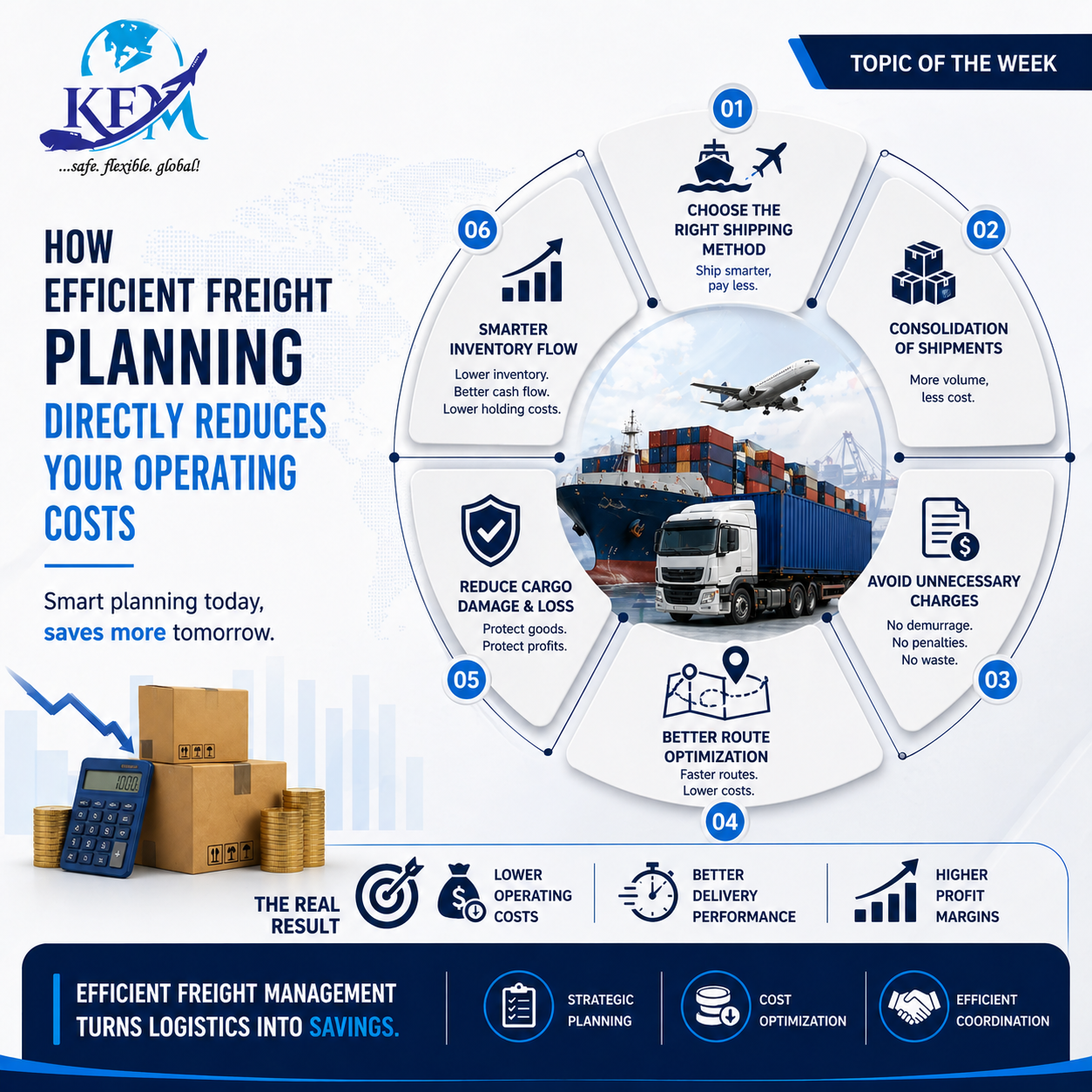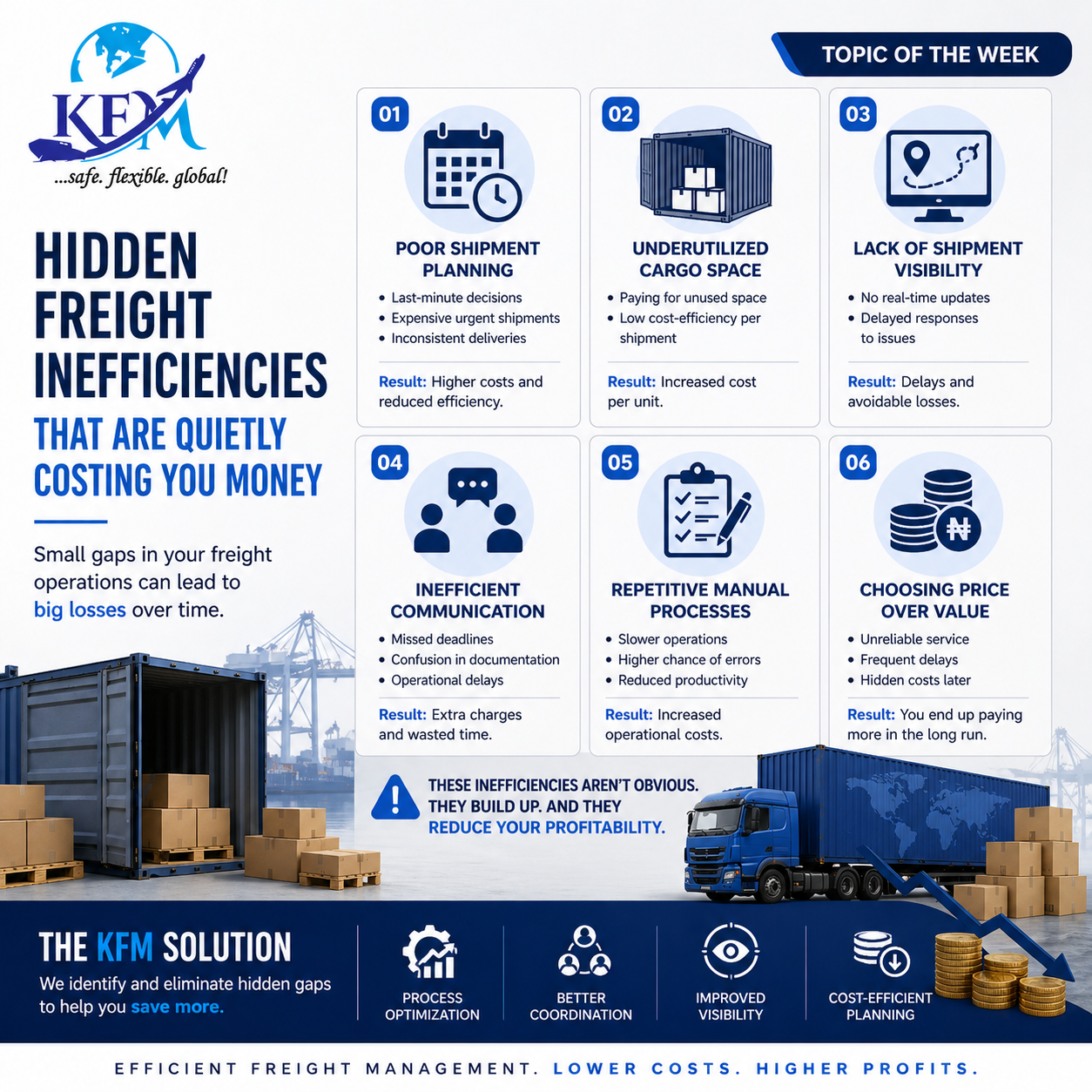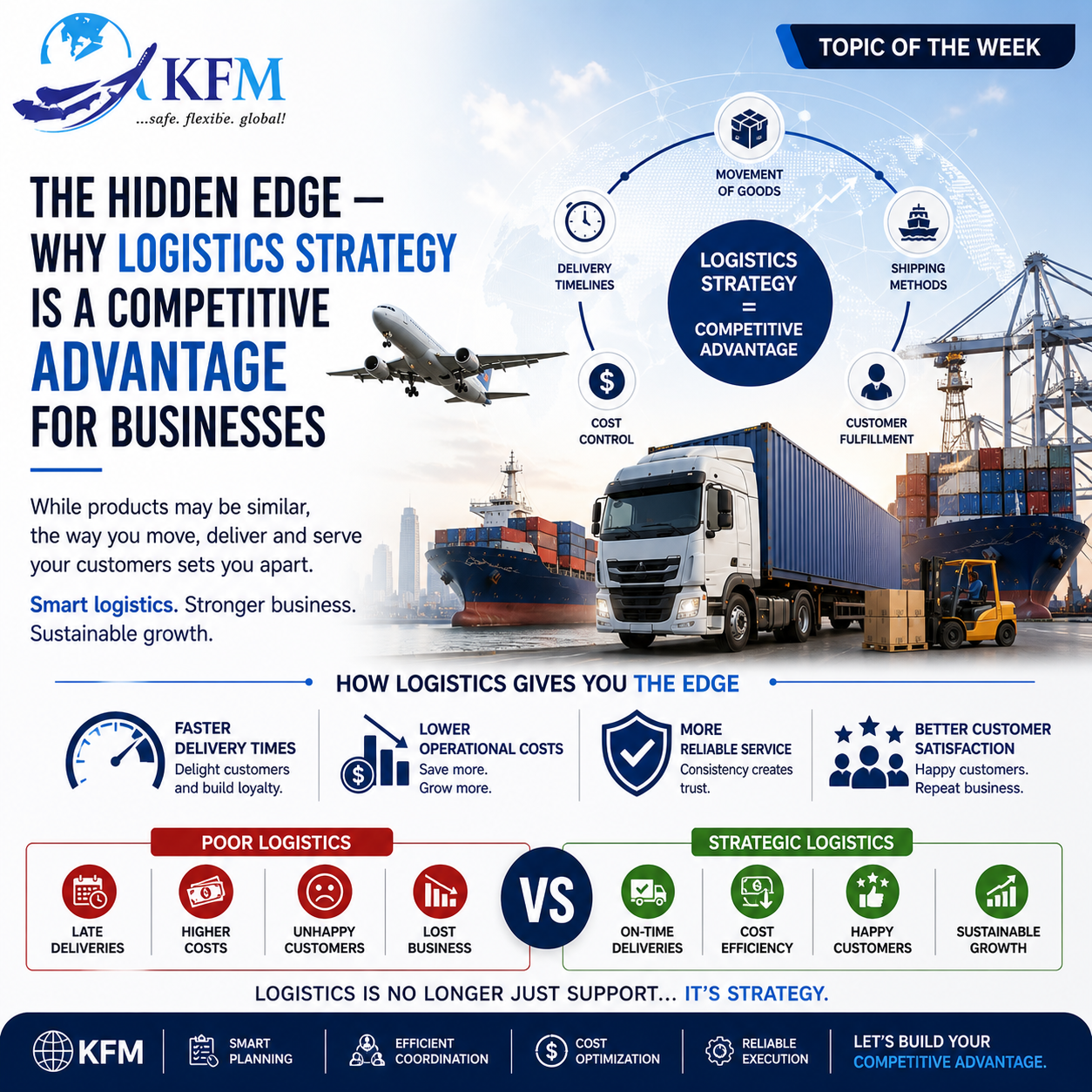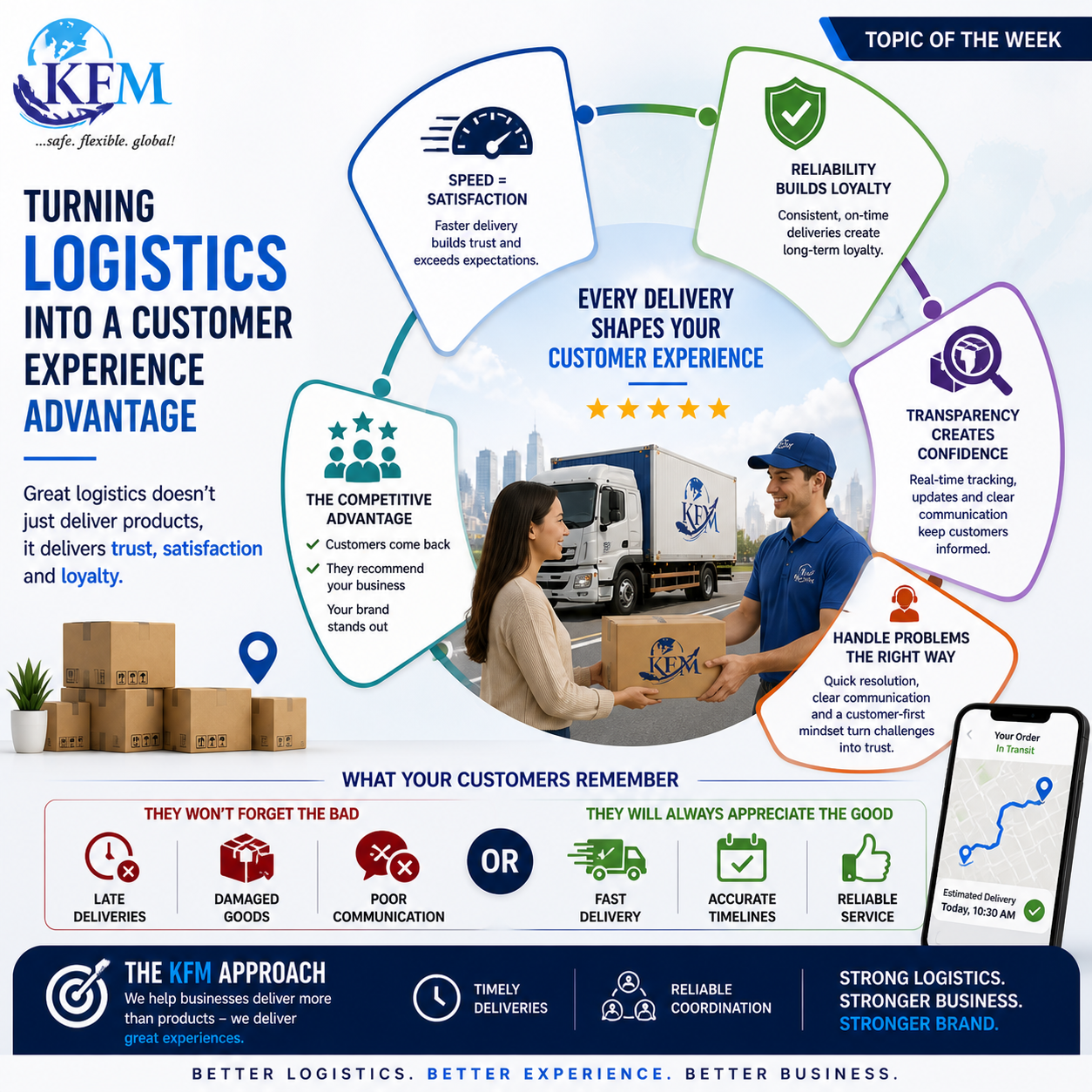
In Post 1, we established something important: logistics is not just operations — it’s a competitive advantage.
Now the real question is: What makes a logistics strategy actually strong?
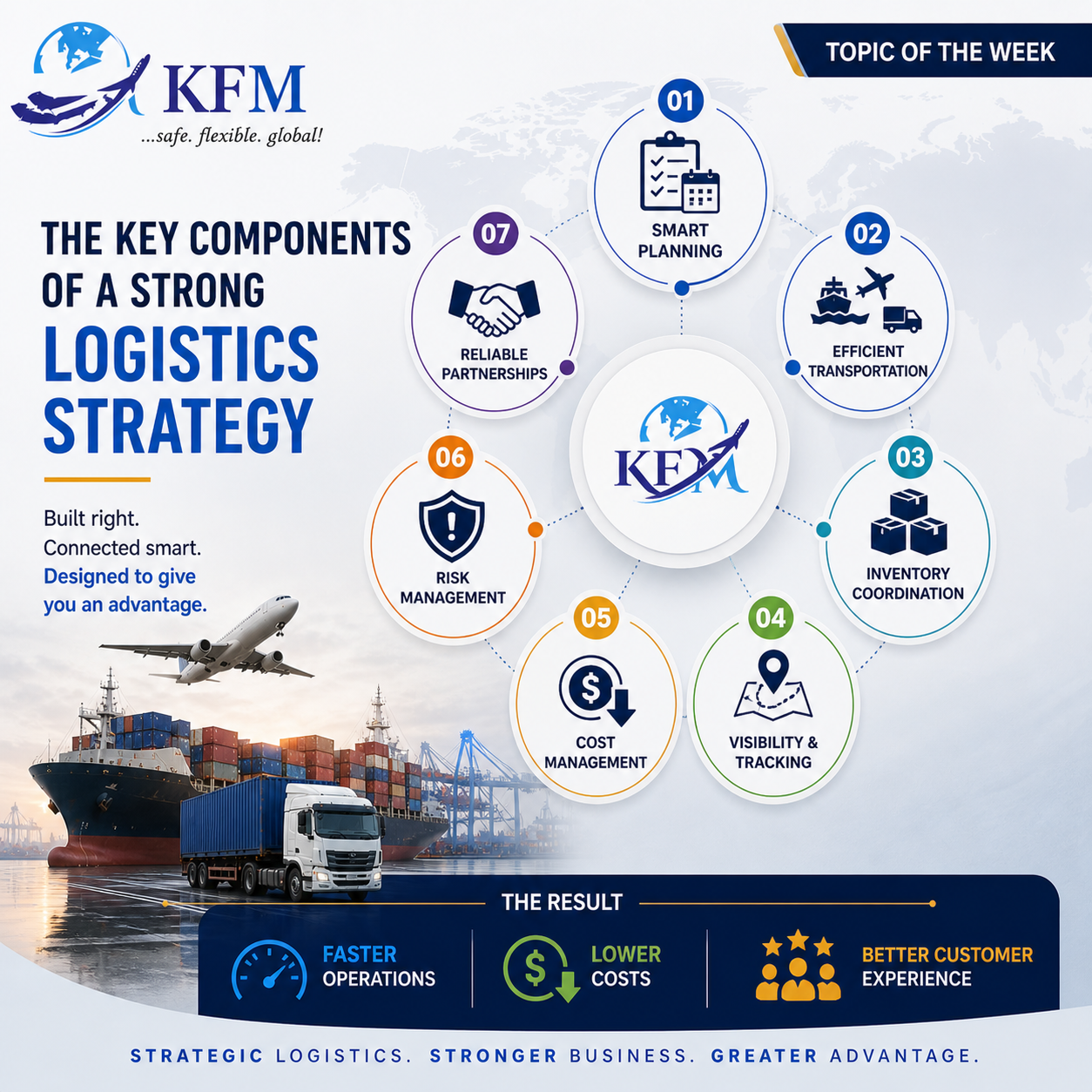
At KFM, strong logistics doesn’t happen by chance — it’s built on a few key components working together.
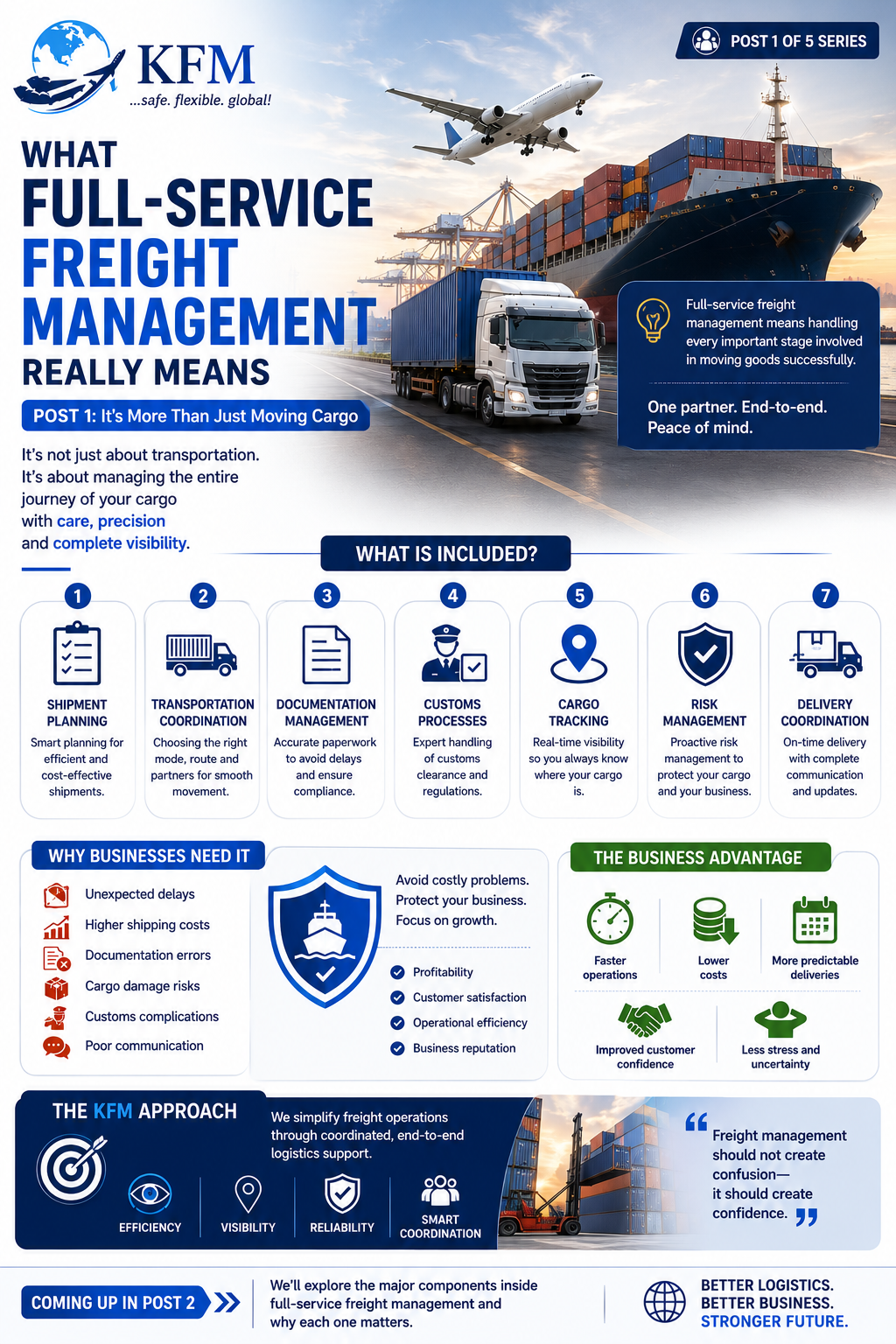
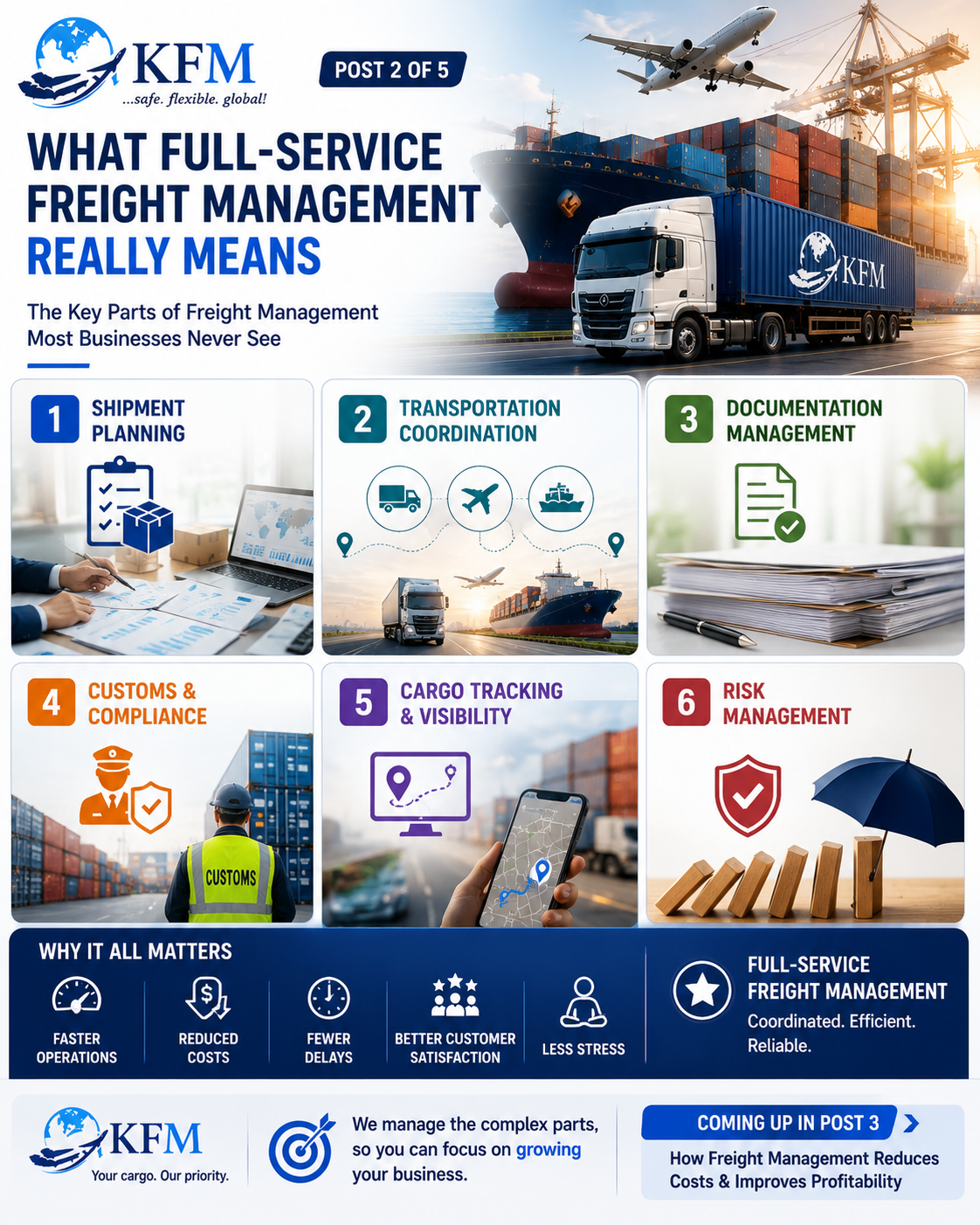
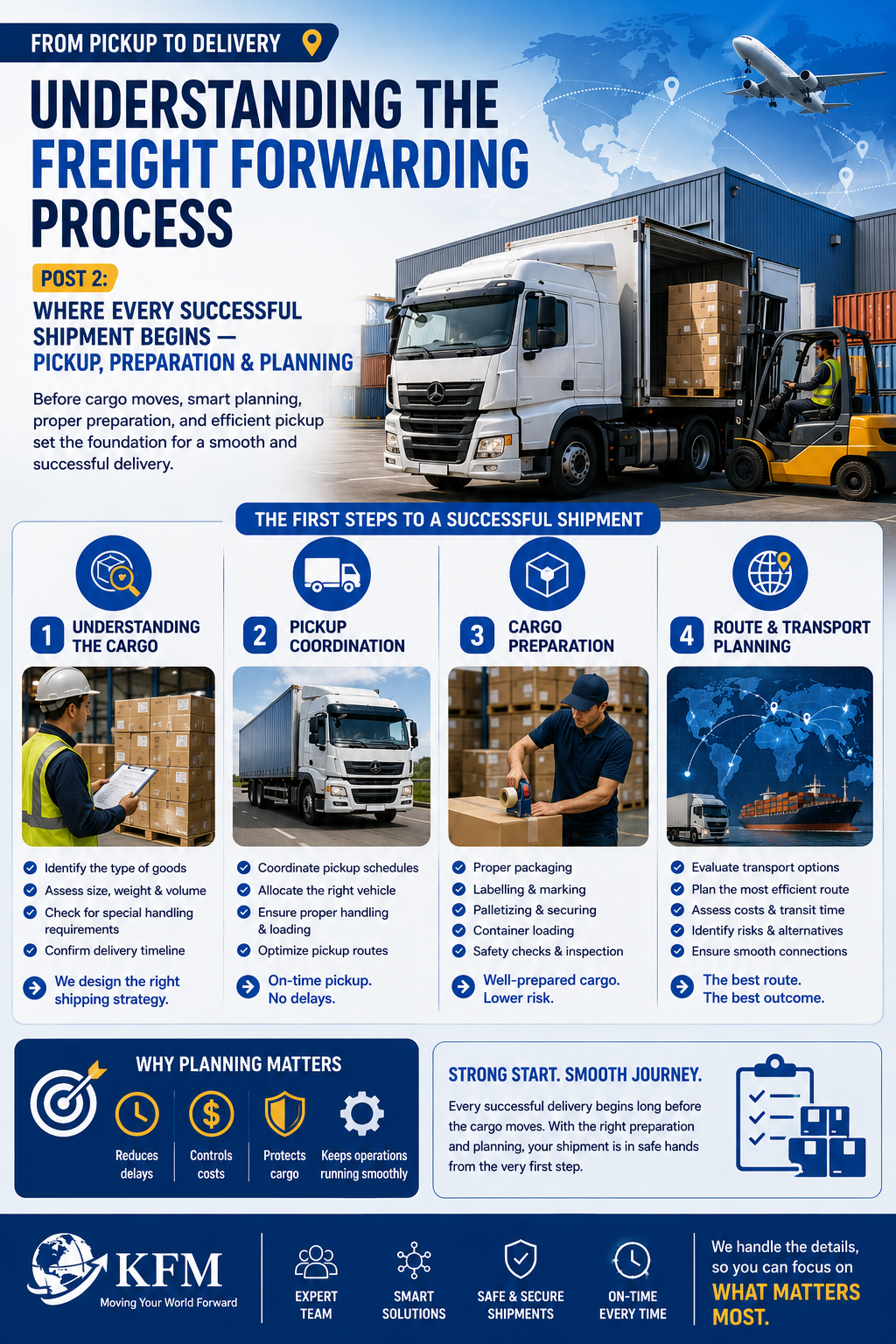
1. Smart Planning
Everything starts with a plan.
- Forecasting demand
- Scheduling shipments
- Preparing for peak periods
Without planning, businesses react instead of control.
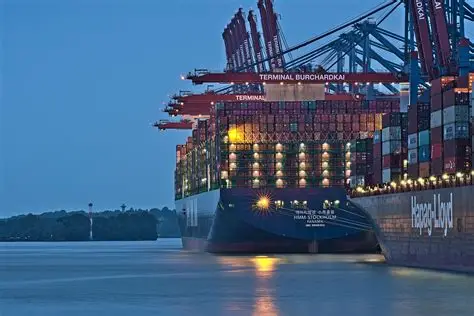
2. Efficient Transportation
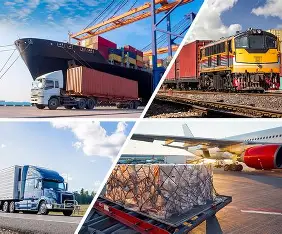
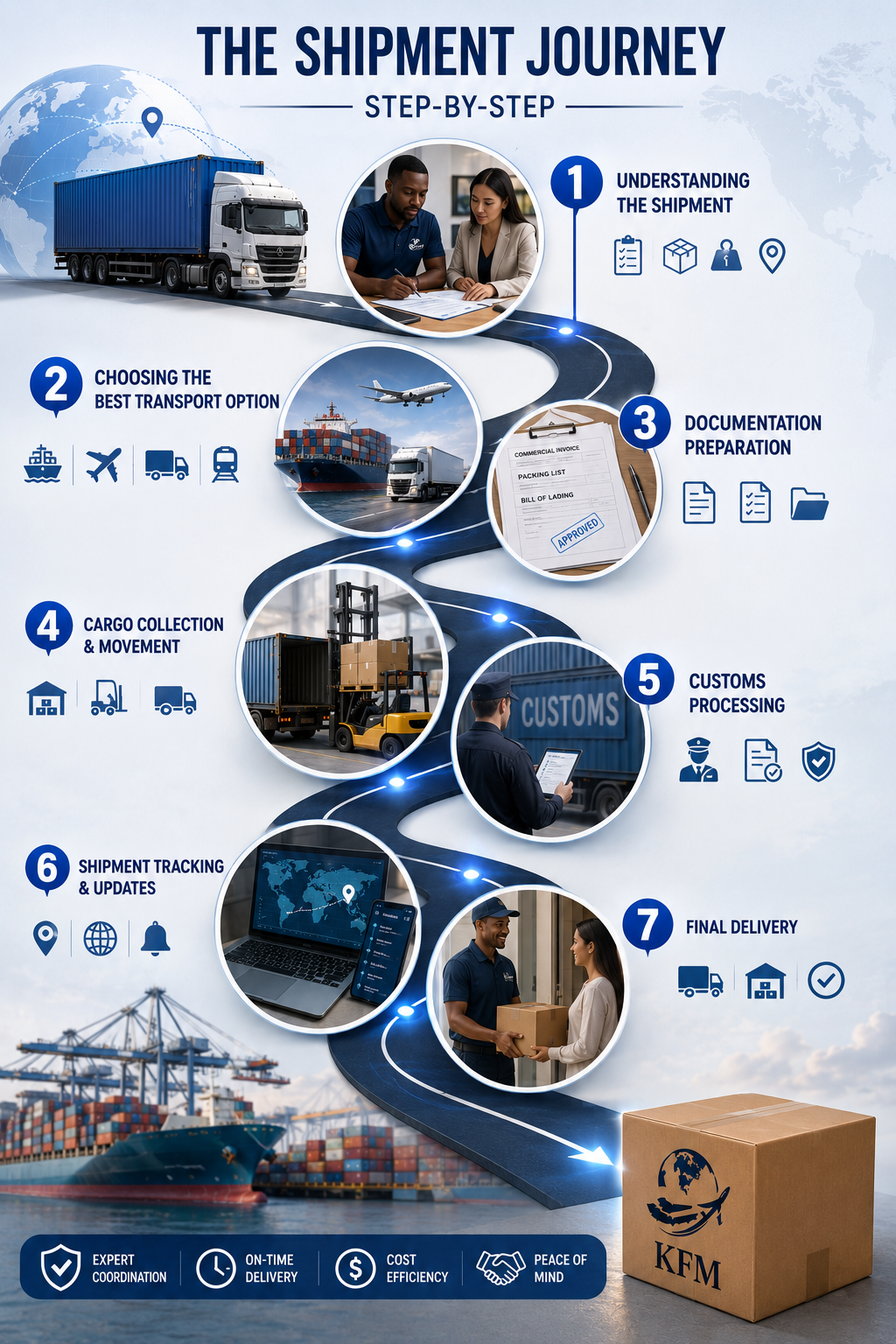
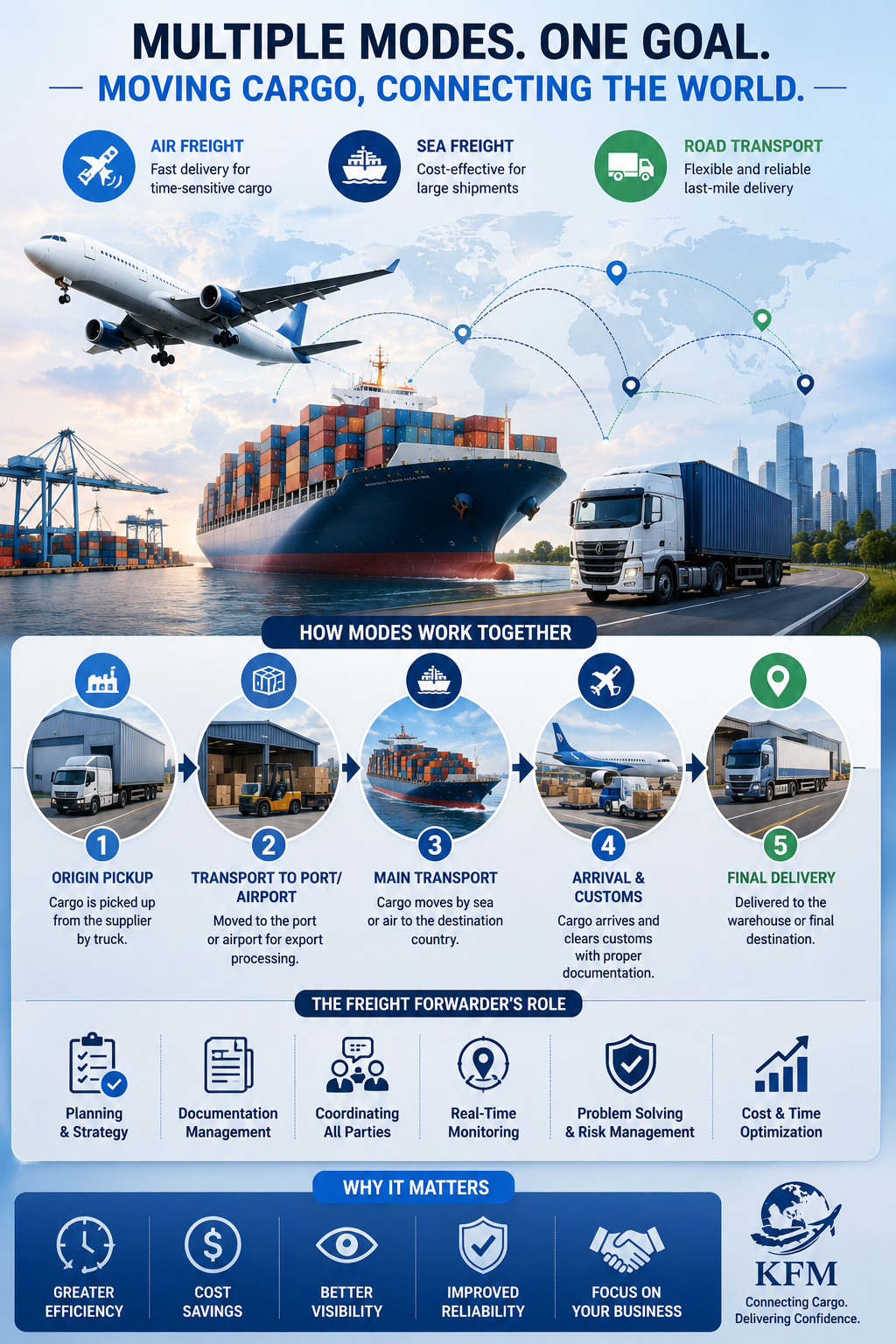
Choosing how goods move is critical.
- Right mode (air, sea, road)
- Optimized routes
- Reliable carriers
The goal: balance speed, cost, and reliability.
3. Inventory Coordination
Your logistics strategy must align with your inventory.
- Avoid overstocking
- Prevent stockouts
- Maintain steady supply flow
Good coordination keeps operations smooth and costs controlled.
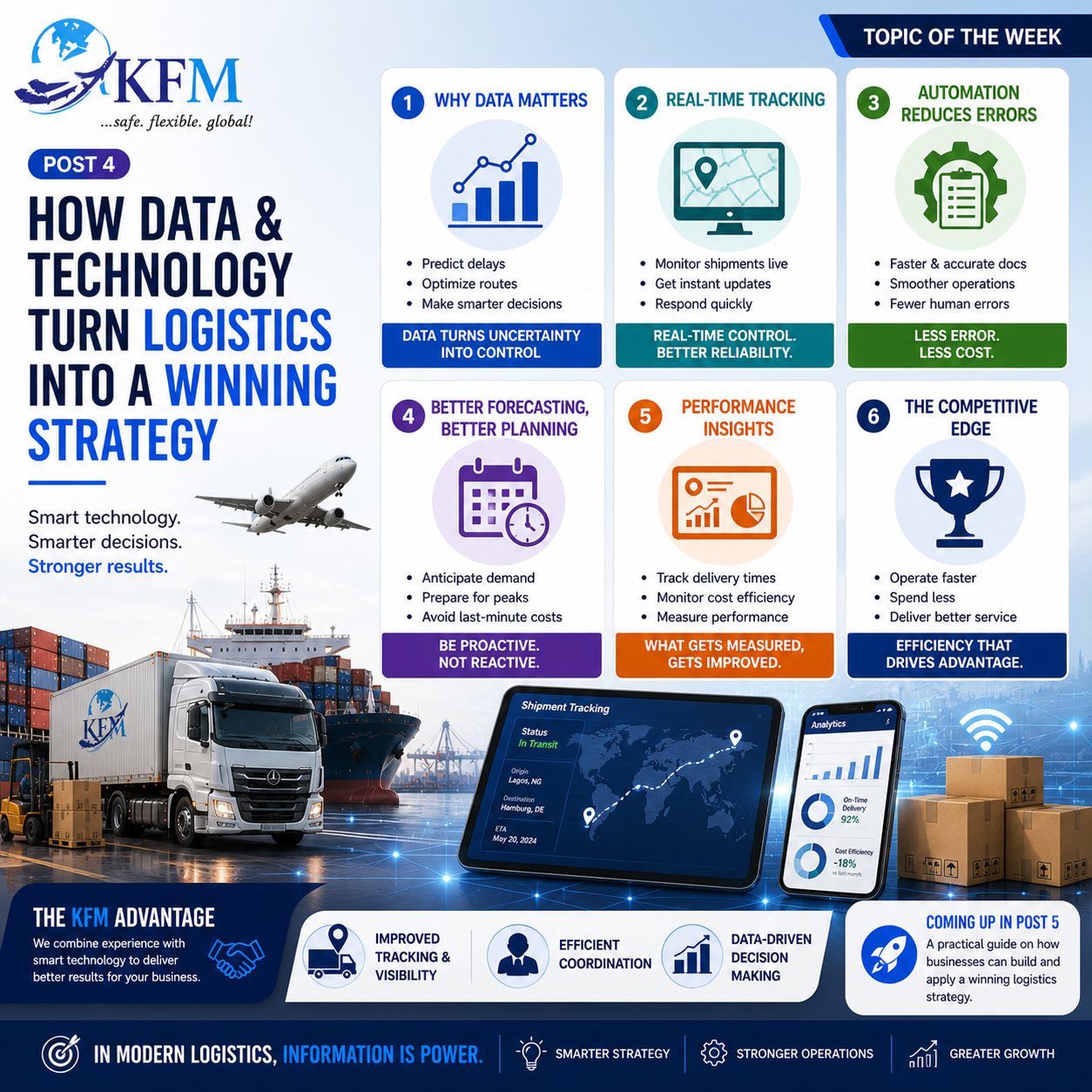
4. Visibility & Tracking
You can’t manage what you can’t see.
- Real-time shipment tracking
- Status updates
- Quick response to delays
Visibility gives you control.
5. Cost Management
A strong strategy always keeps cost in check.
- Optimizing shipping expenses
- Avoiding unnecessary charges
- Maximizing resource use
Because efficiency is where profit lives.
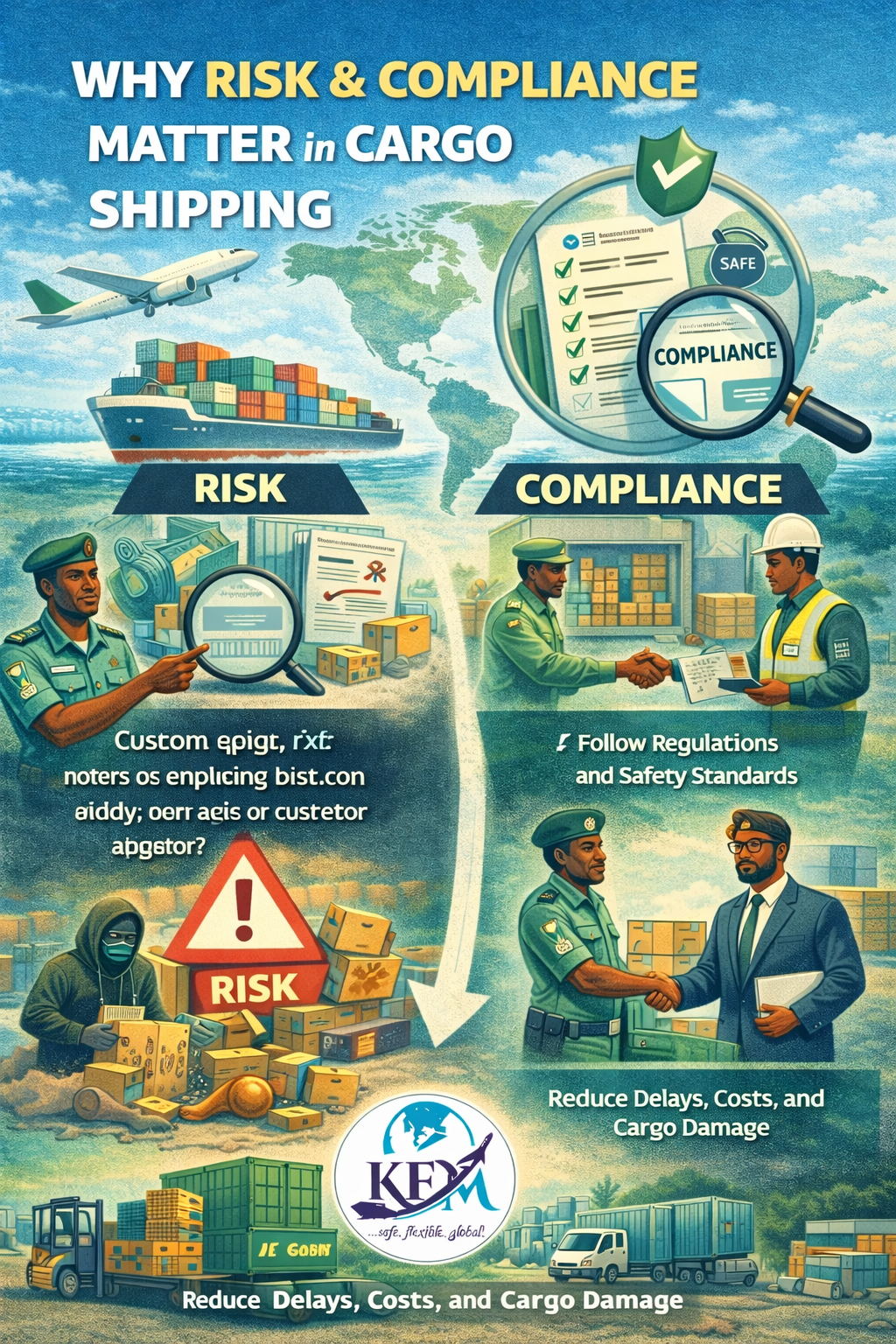
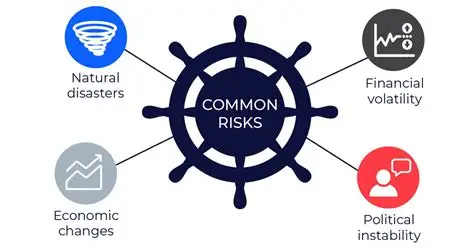
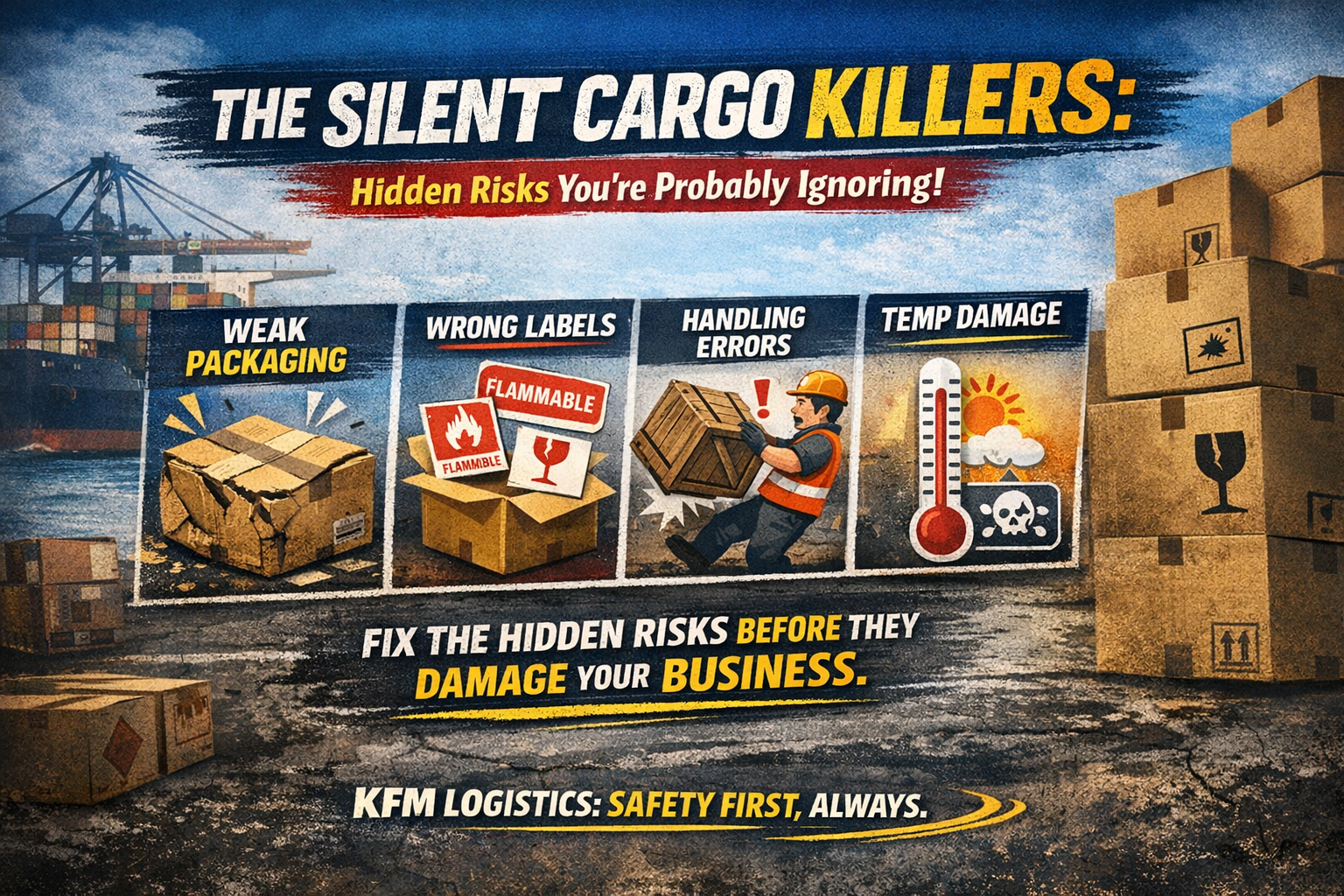
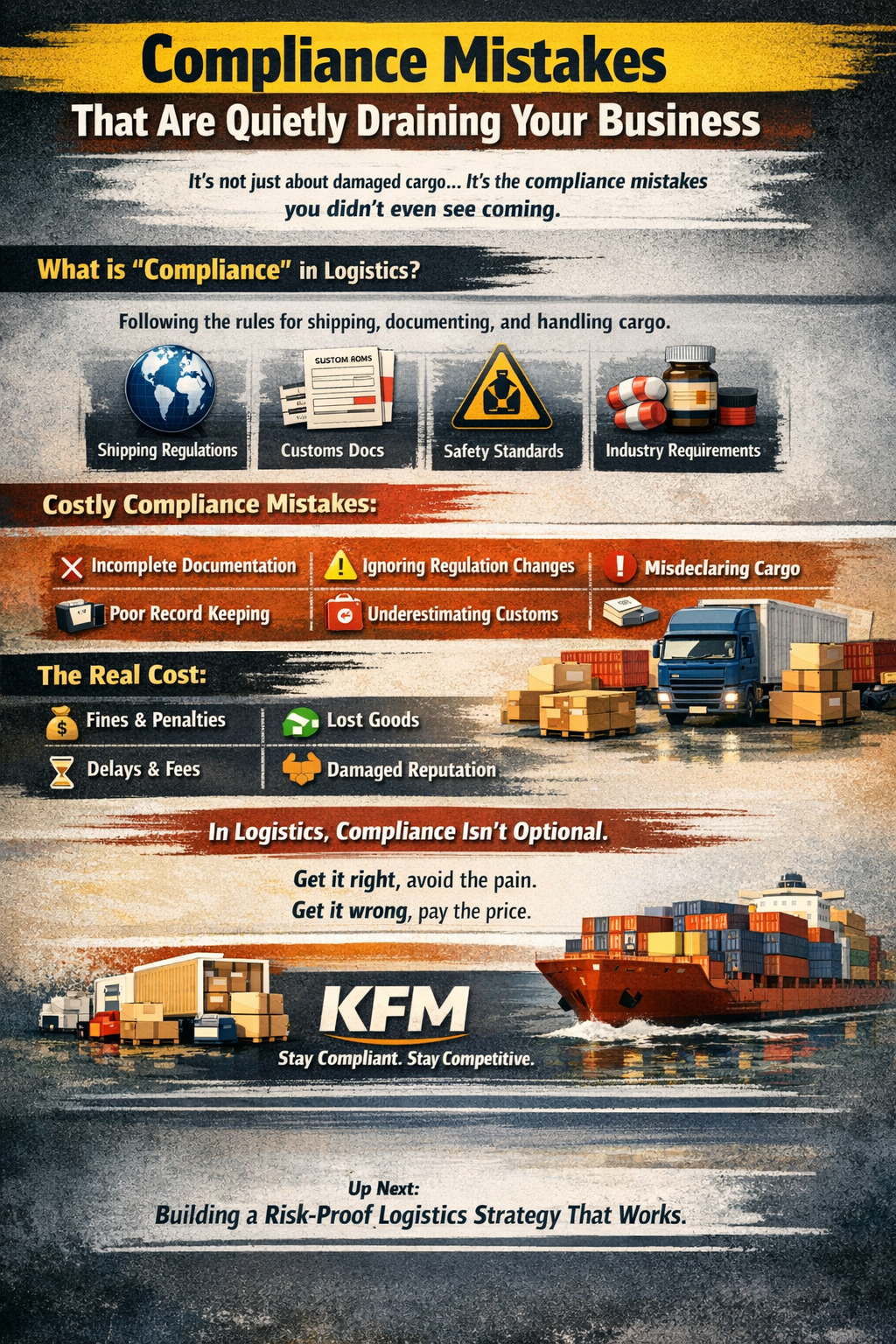
6. Risk Management
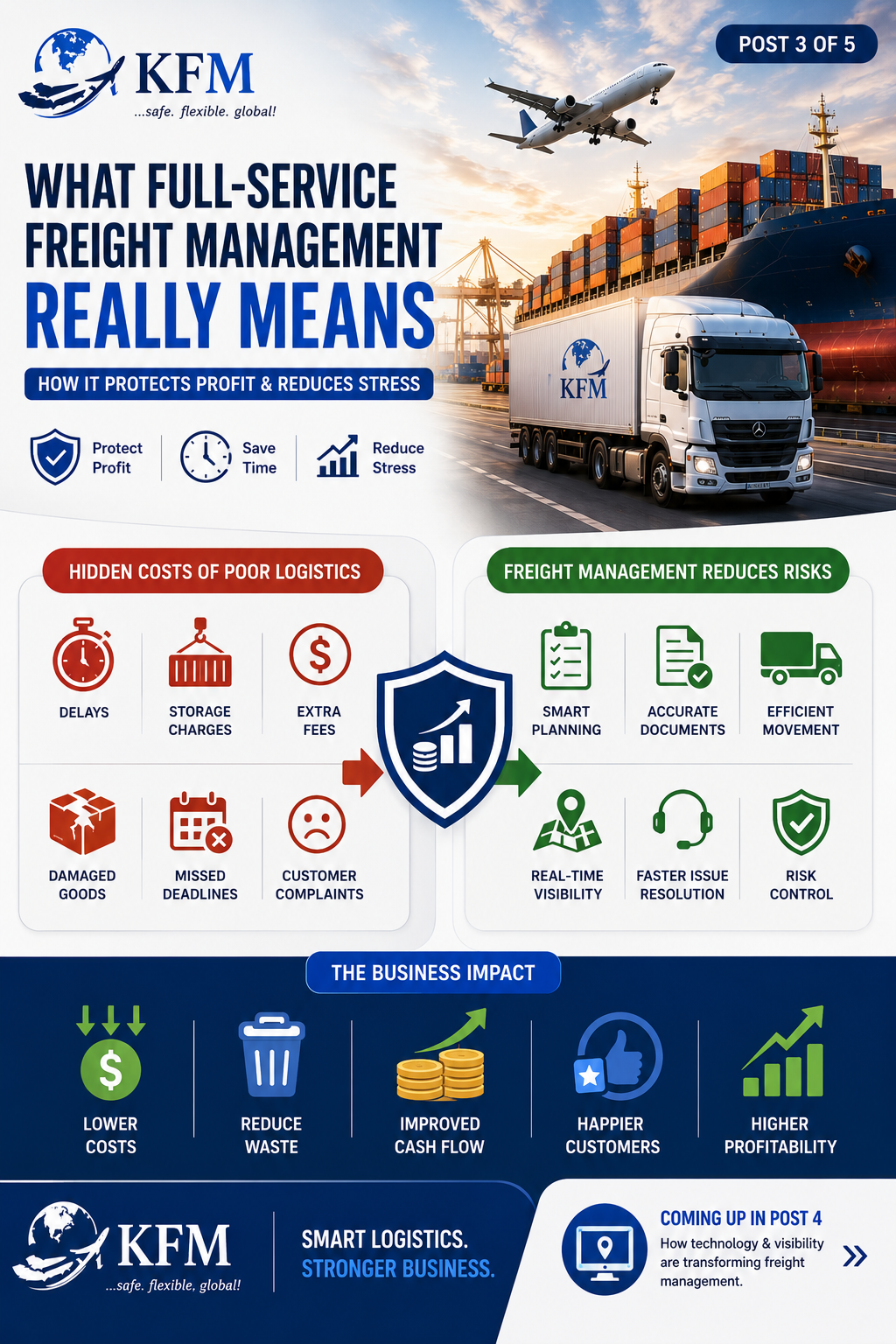
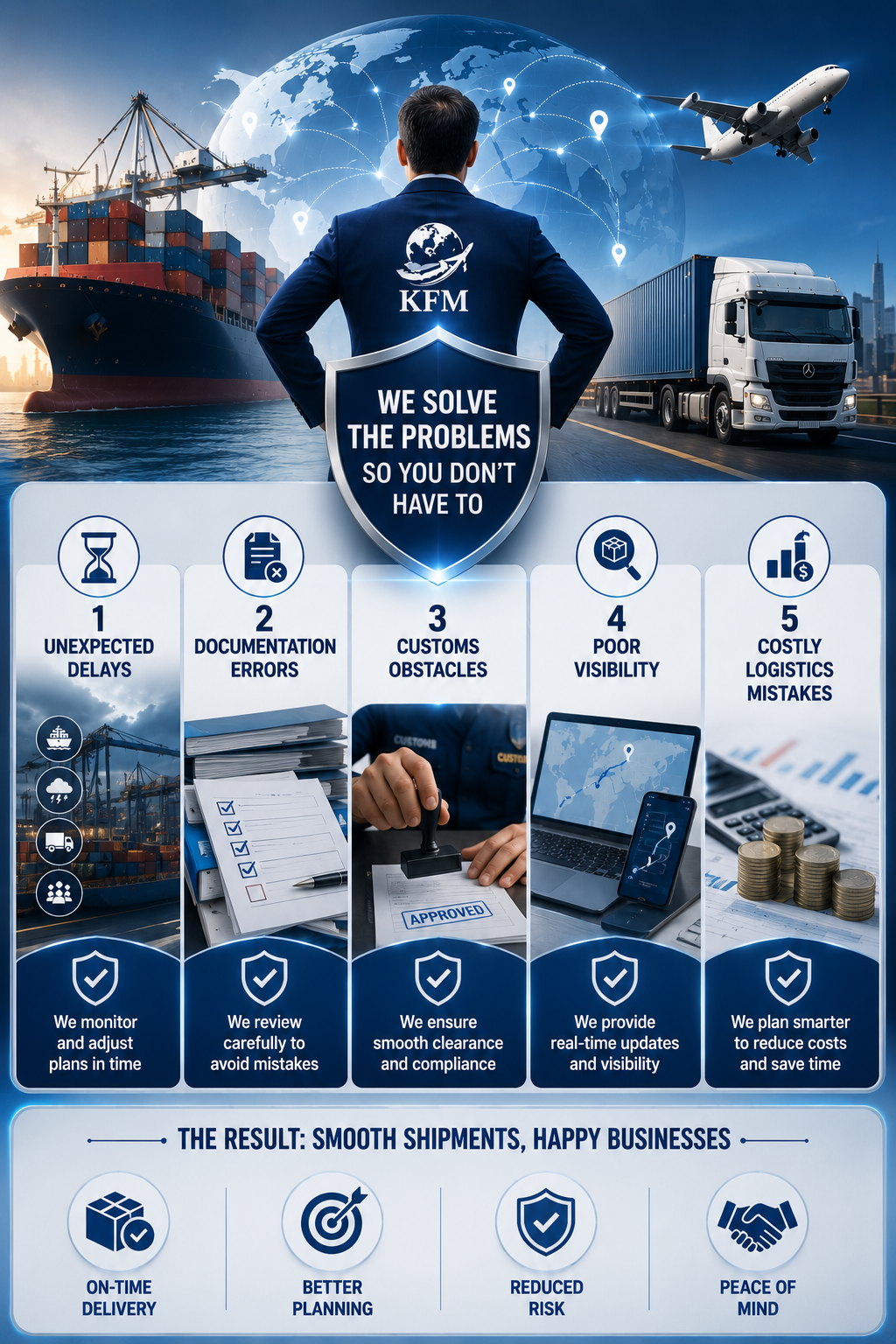
Things can go wrong — smart businesses prepare for it.
- Delays
- Damage
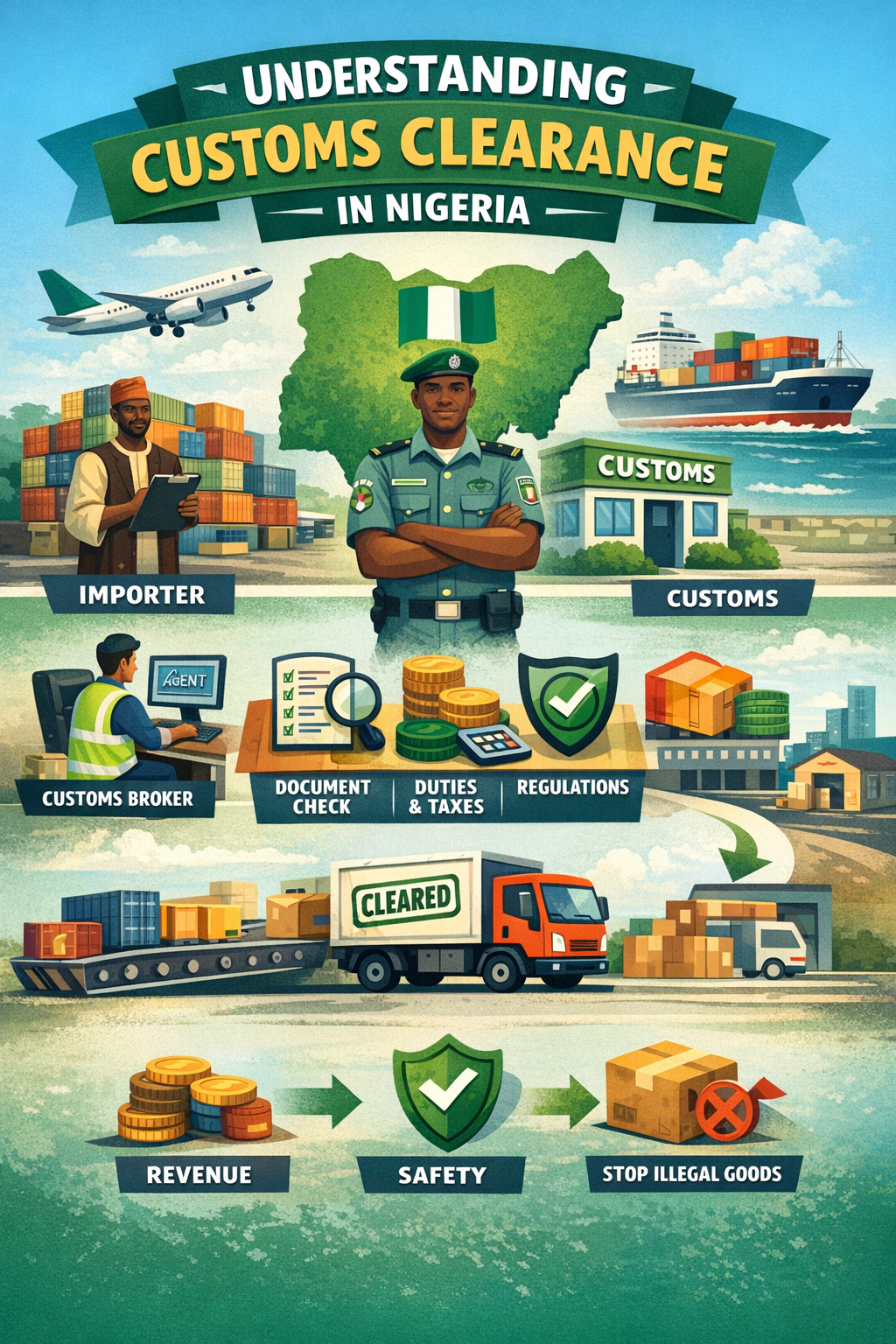
- Regulatory issues
Planning for risks reduces surprises.
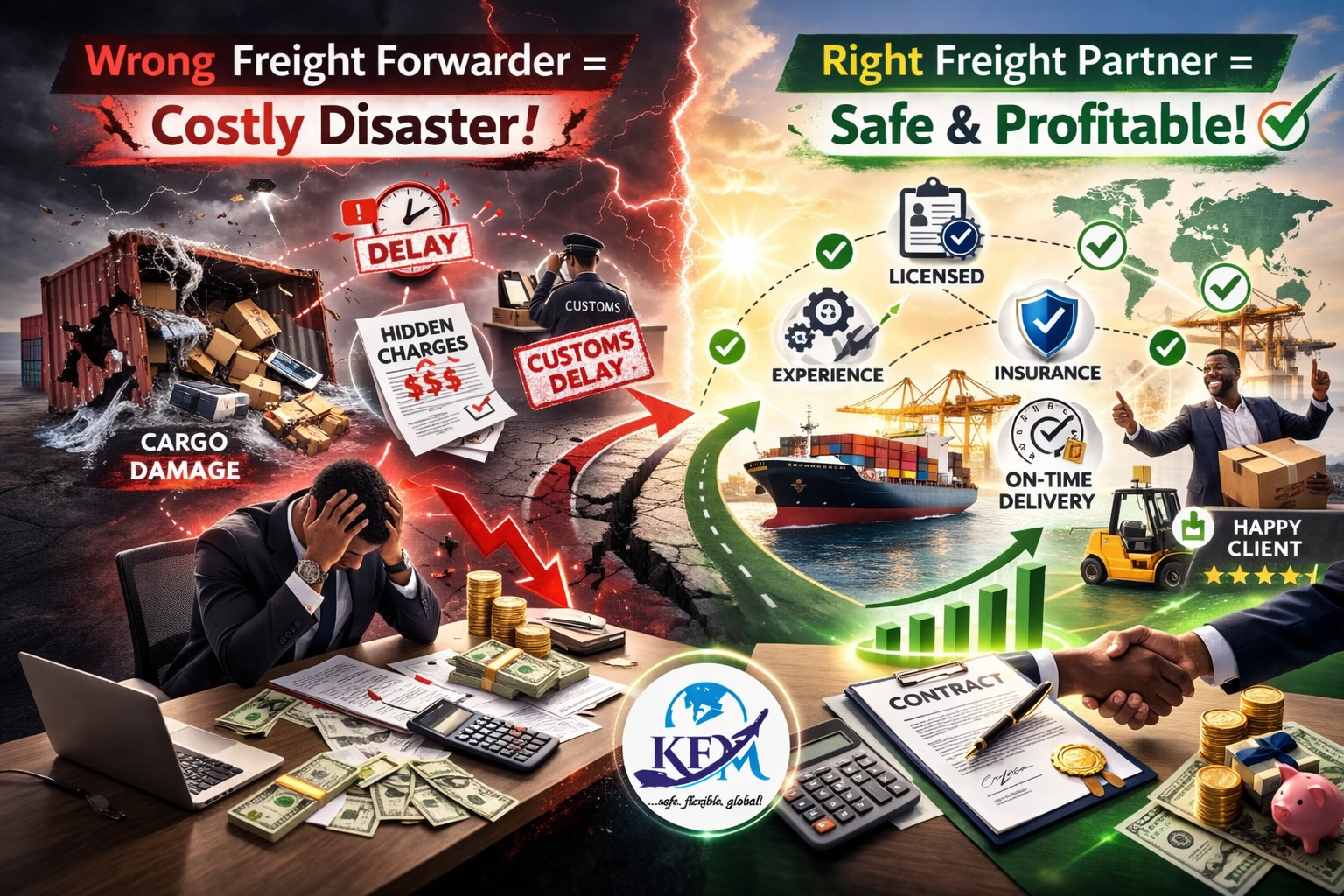
7. Reliable Partnerships
Your logistics partners matter.
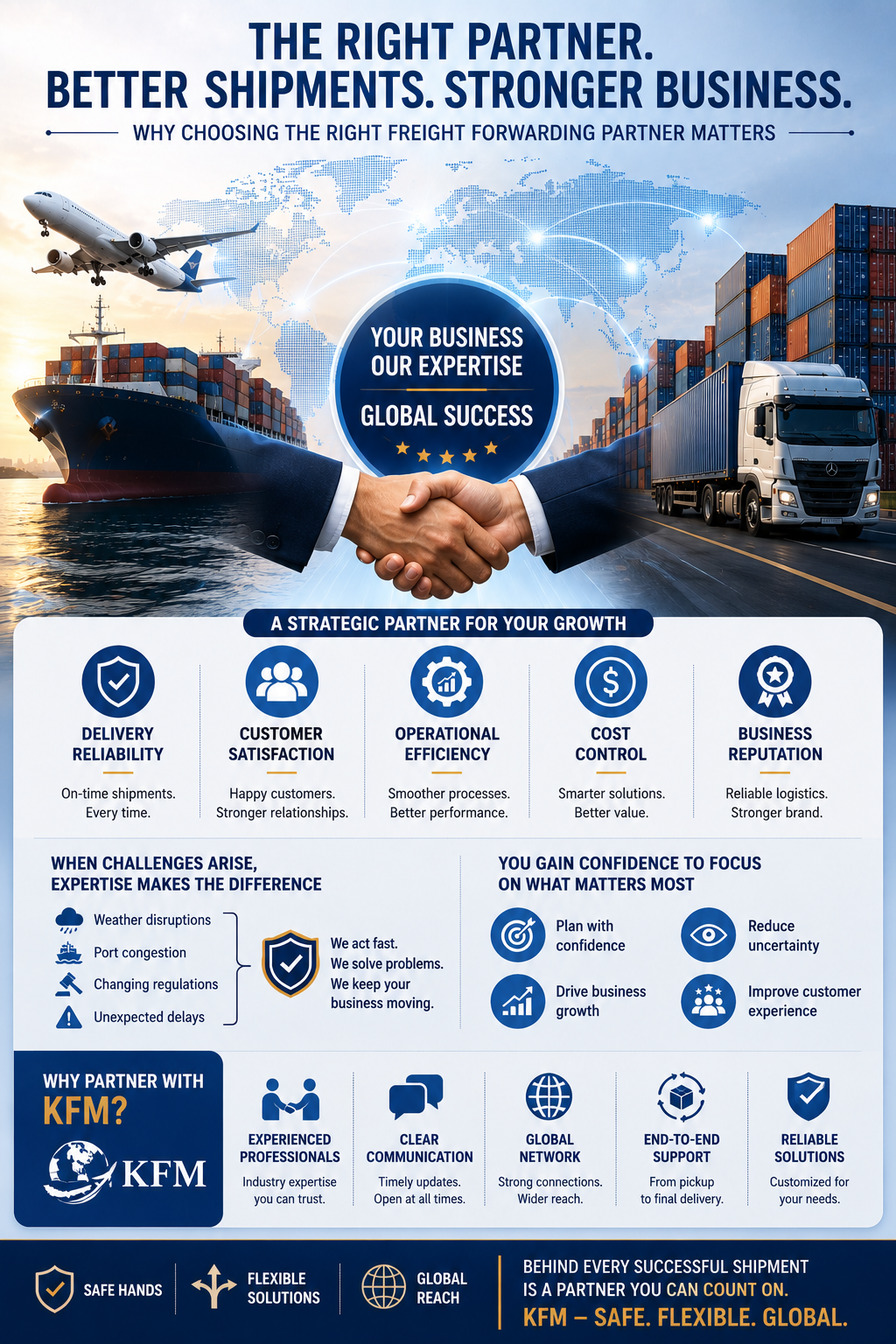
With the right partner like KFM, you get:
- Consistency
- Expert support
- Smoother operations
You’re only as strong as your logistics network.
The Big Picture
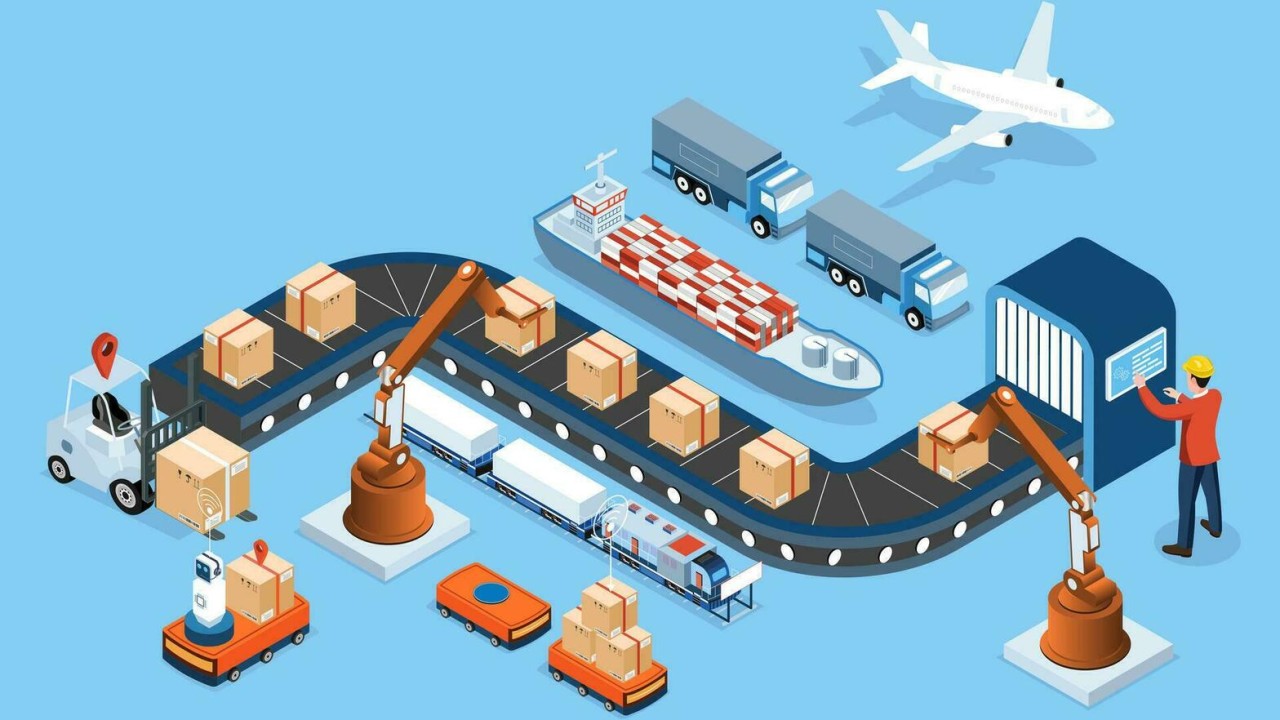
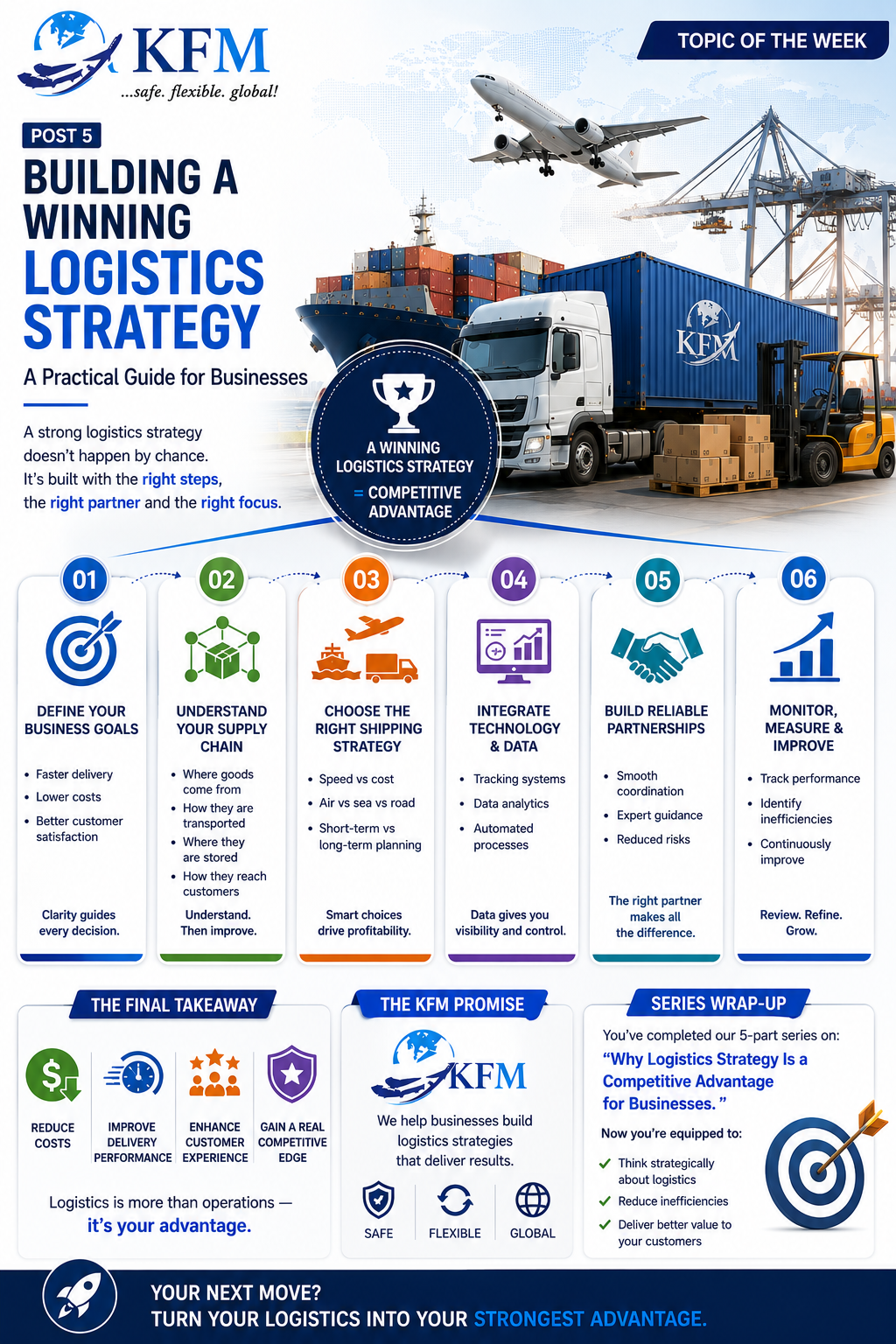
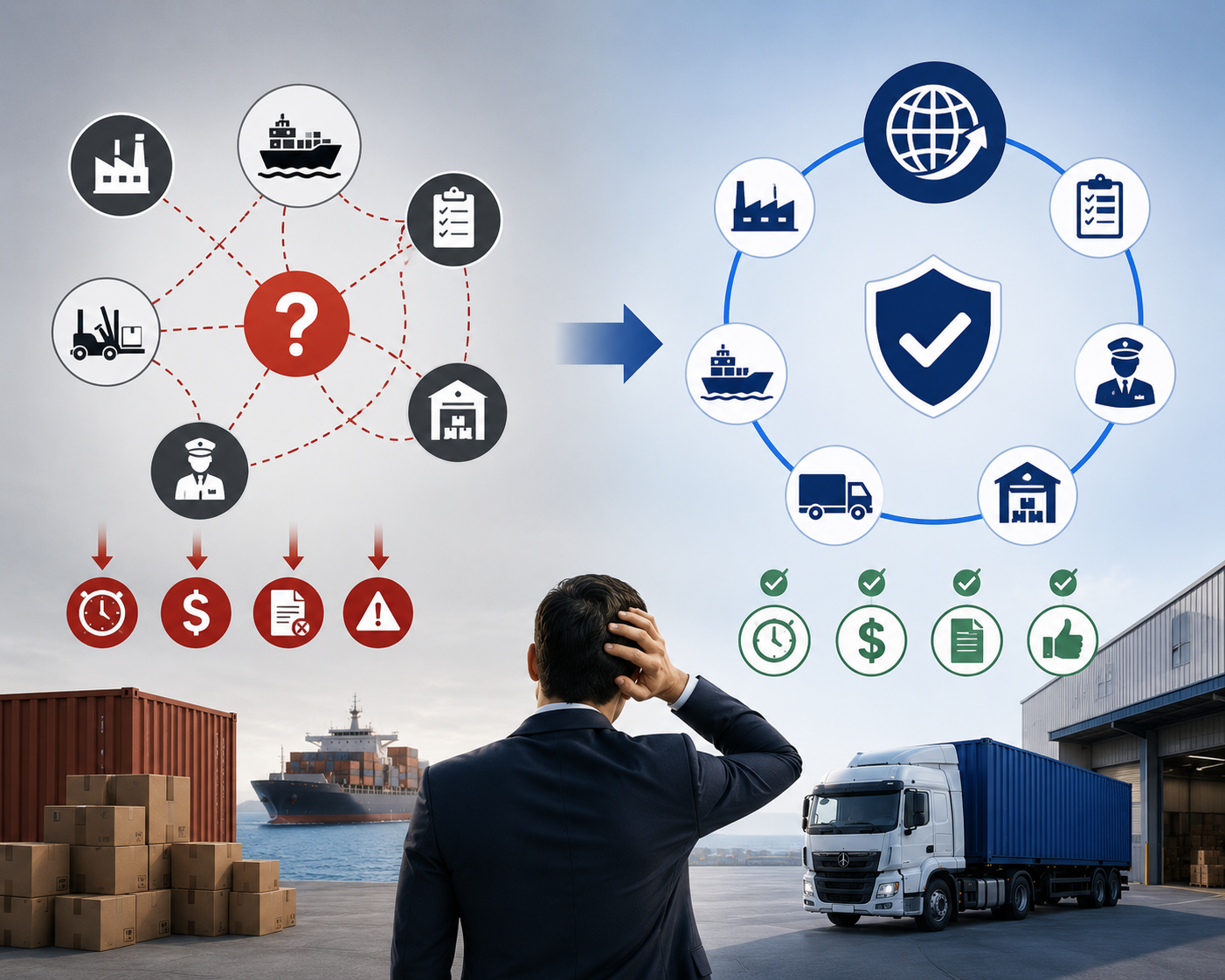
A strong logistics strategy connects all these elements into one system.
When aligned, they deliver:
- Faster operations
- Lower costs
- Better customer experience
That’s what creates real competitive advantage.
Coming Up in Post 3
Next, we’ll explore: how businesses can turn logistics into a customer experience advantage — and win loyalty through delivery performance.
Because speed and reliability don’t just move goods… they build trust