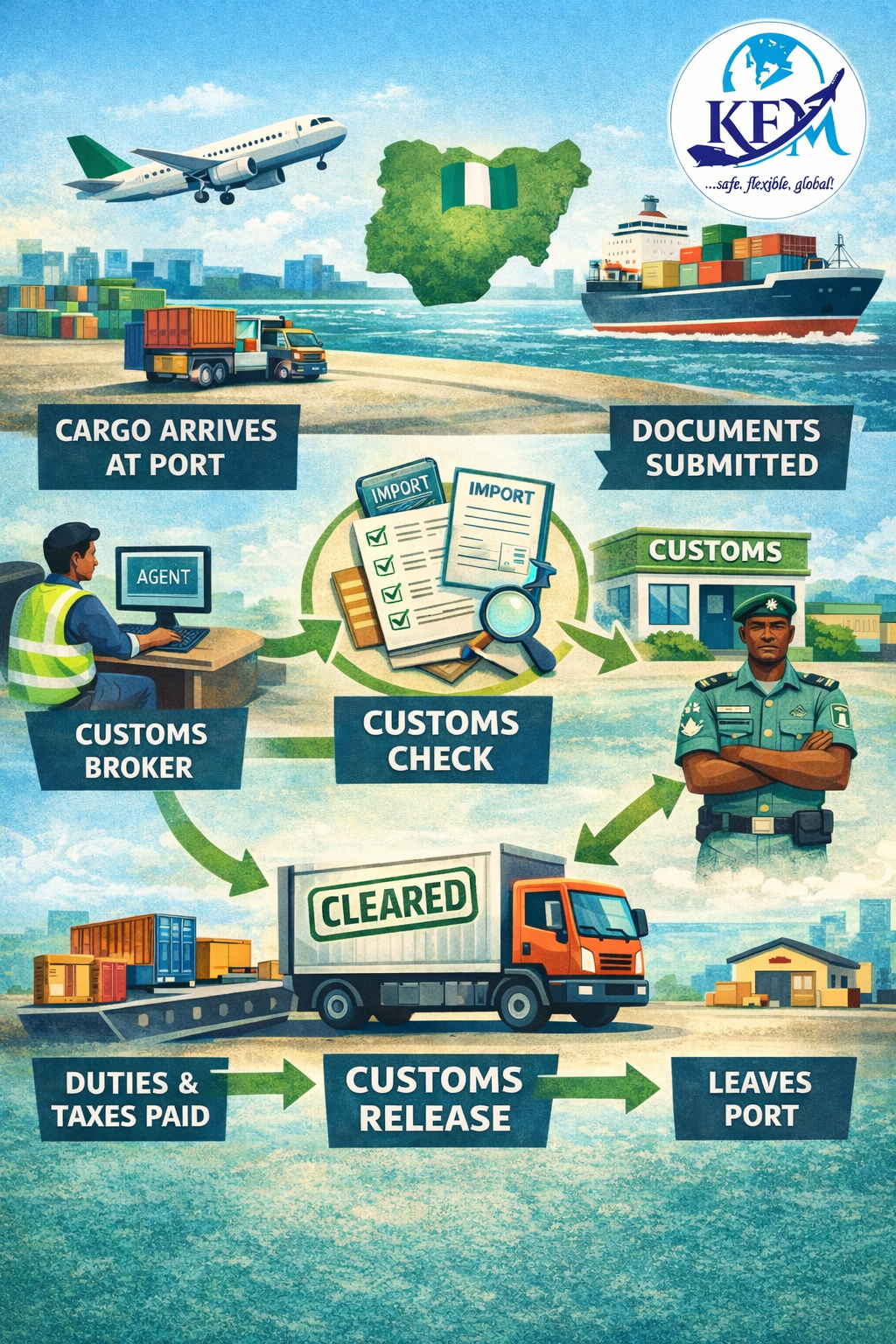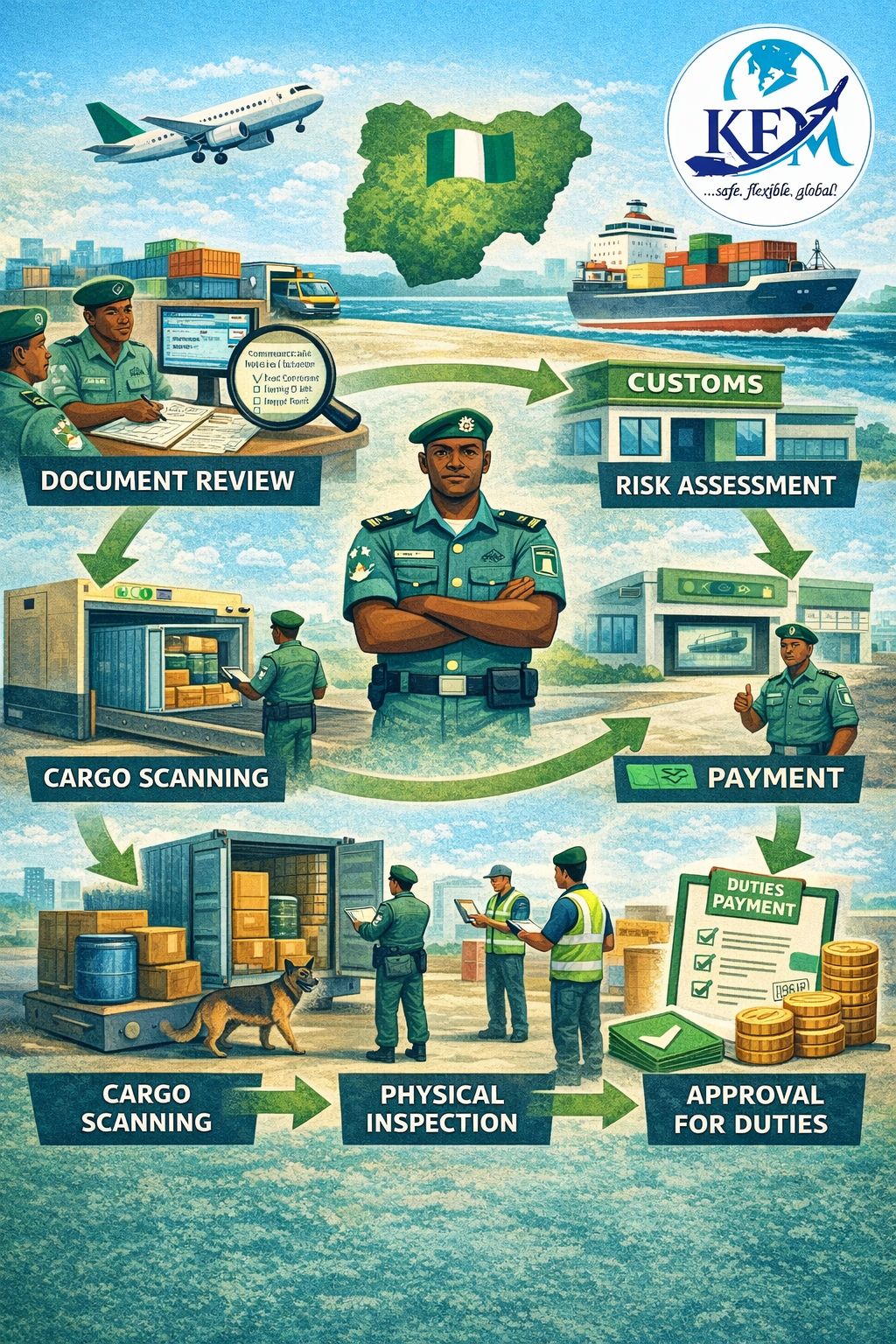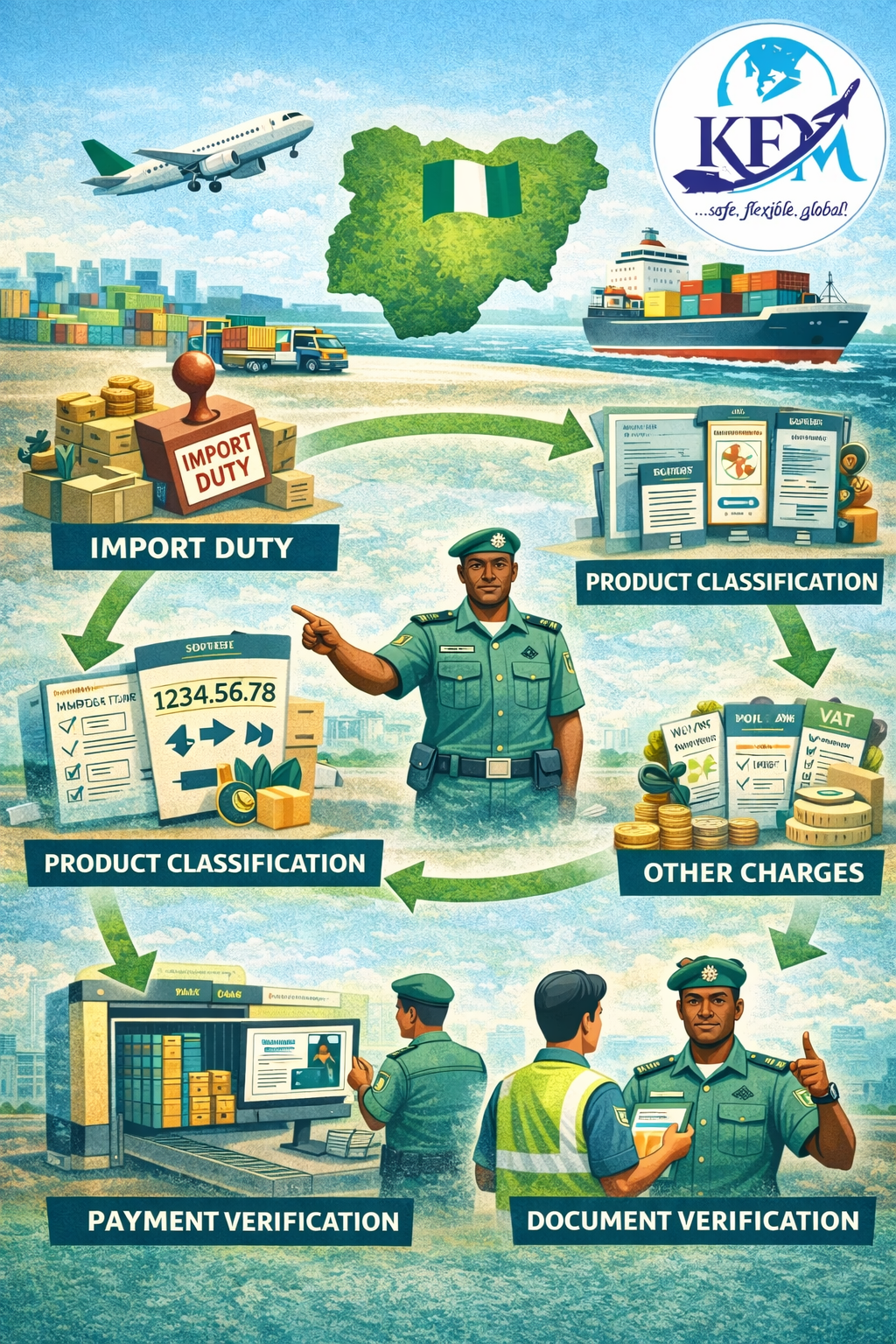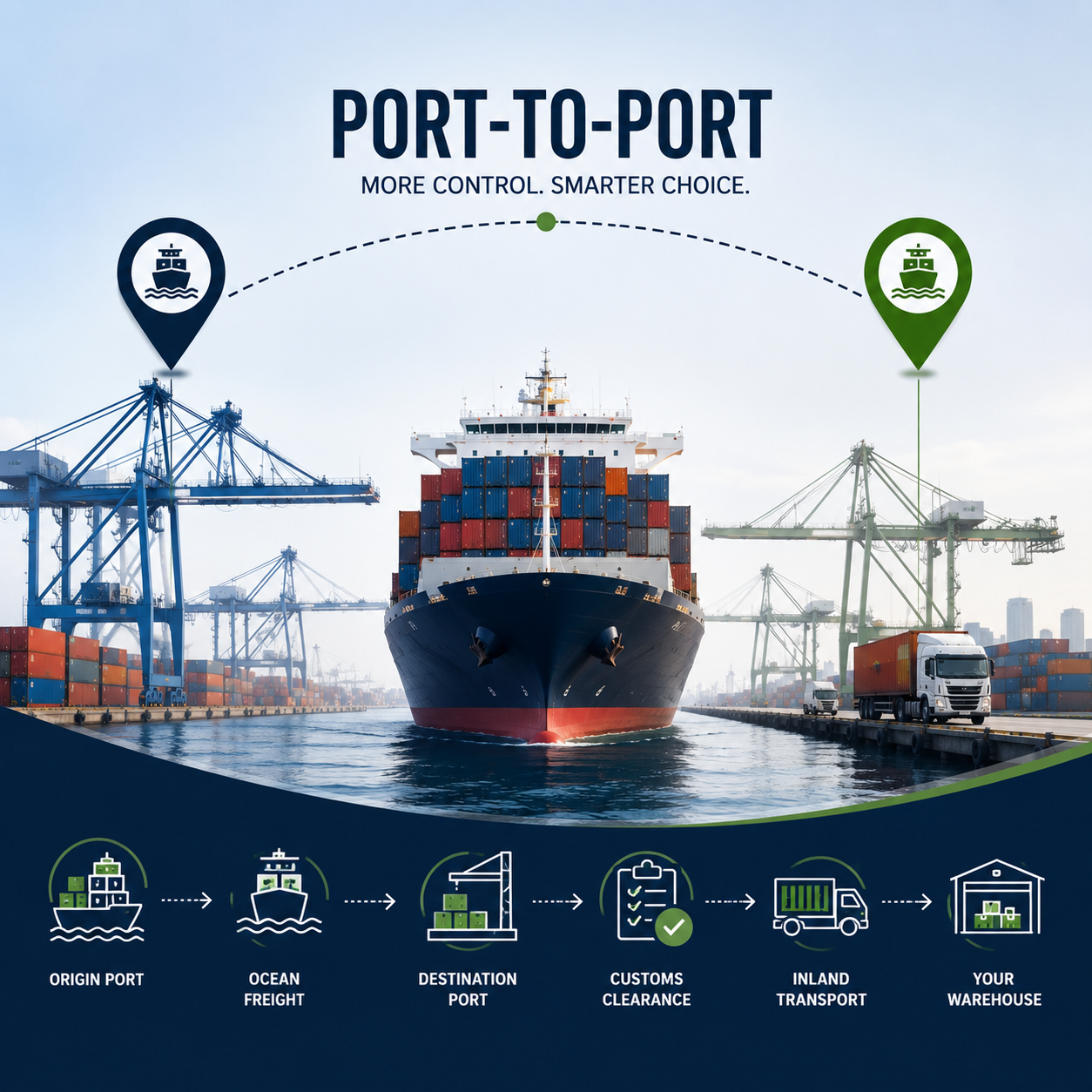
After documents have been verified, inspections completed, and all duties and taxes paid, the final step in the customs clearance process is the release of the cargo.
This is the stage every importer looks forward to, because it means the shipment is now approved to leave the port and be delivered to its final destination.
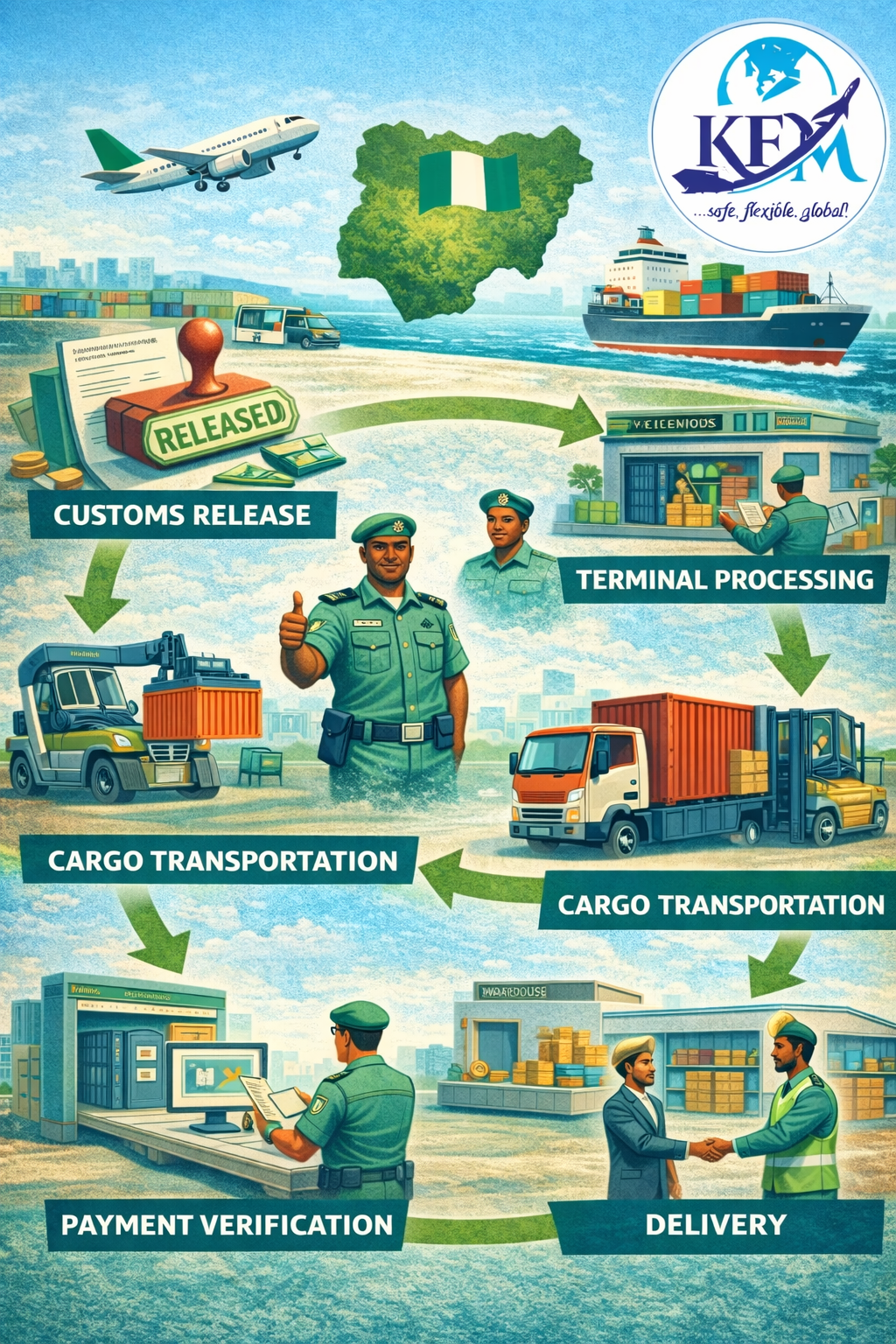
1. Customs Release Approval
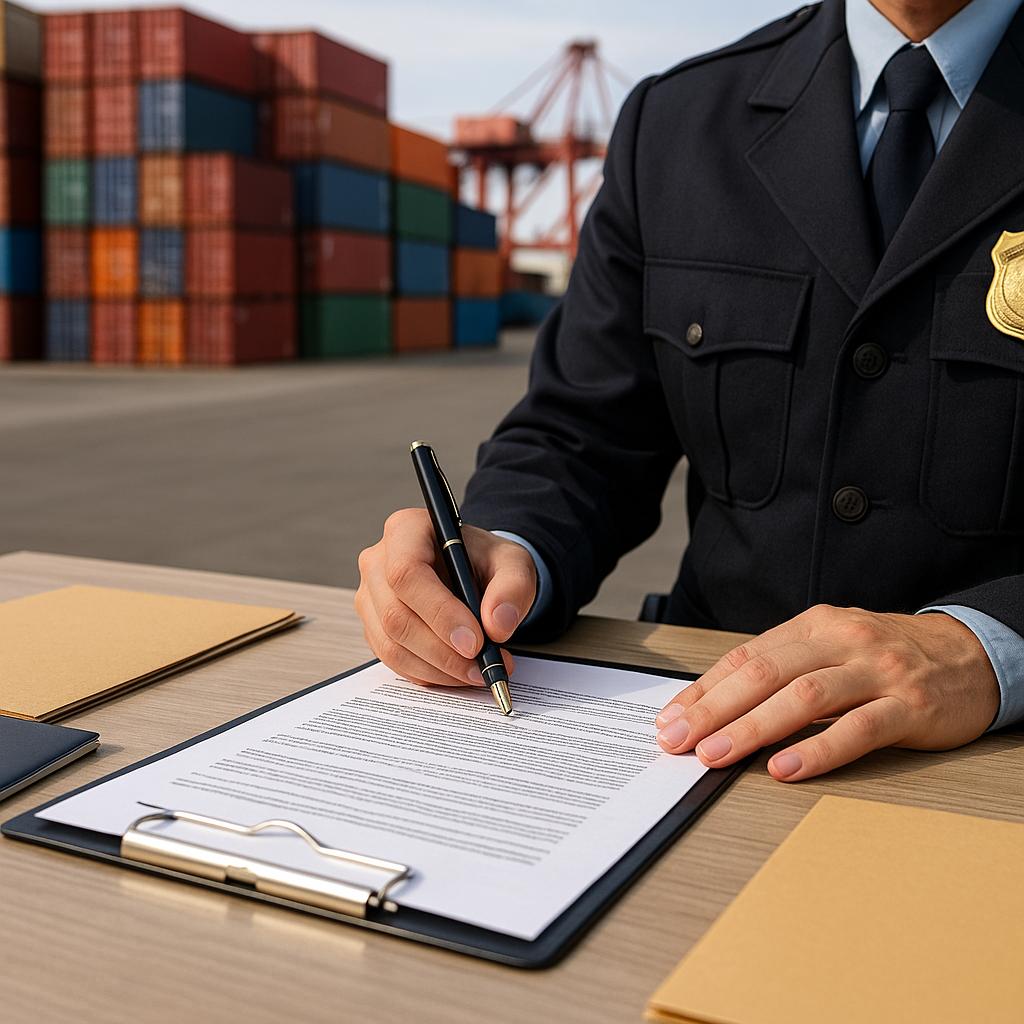
Once all requirements have been satisfied, customs authorities issue an official approval allowing the cargo to exit the port.
This approval confirms that:
- All documents are correct
- Duties and taxes have been paid
- The shipment passed inspection
- The goods comply with Nigerian import regulations
After this confirmation, the container or cargo becomes eligible for collection.
2. Terminal Processing
Even after customs release, there are still a few steps handled by the terminal operators at the port. These include:
- Container handling and positioning
- Verification of release documents
- Scheduling cargo pickup
This stage ensures that the right cargo is released to the correct importer or clearing agent.
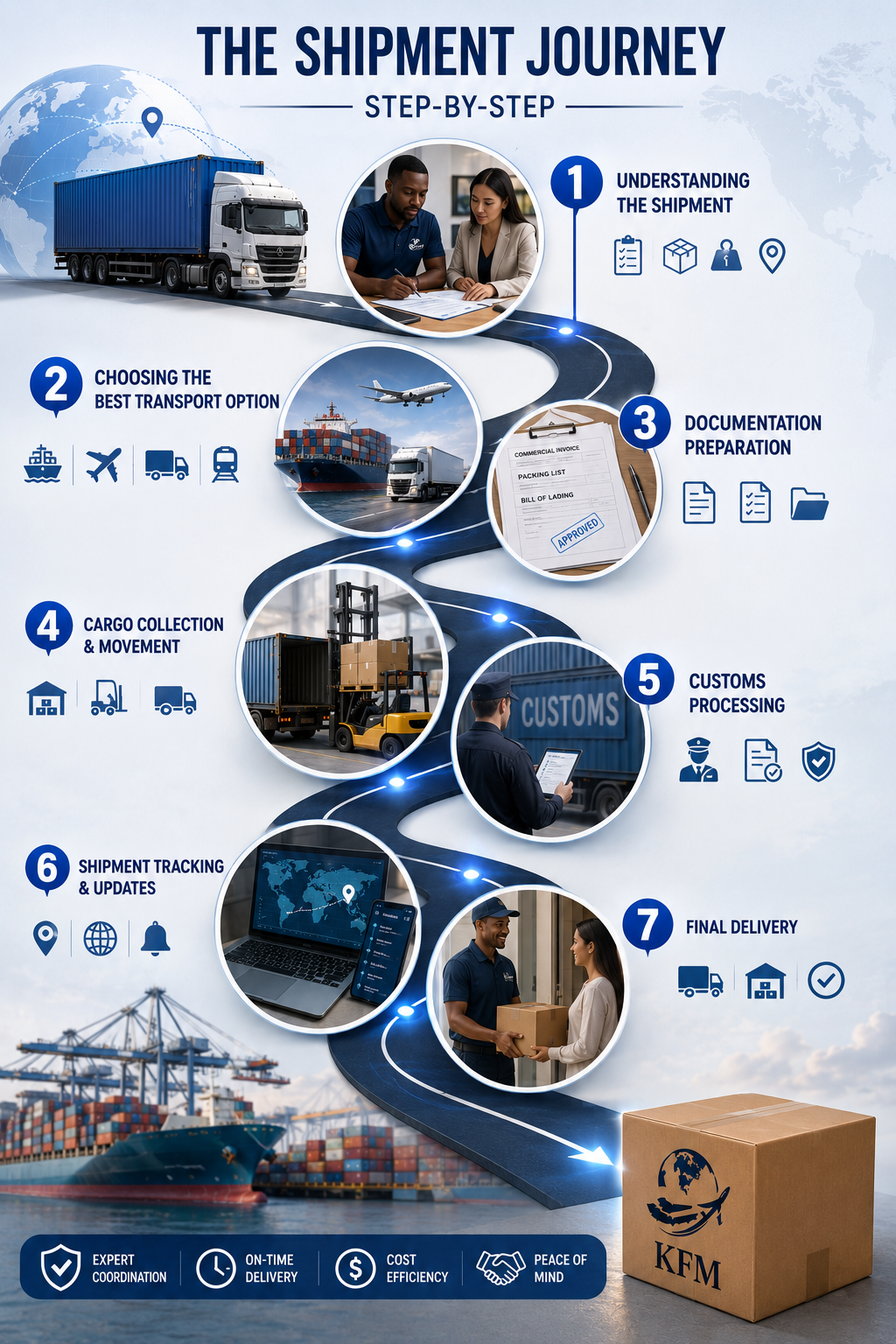
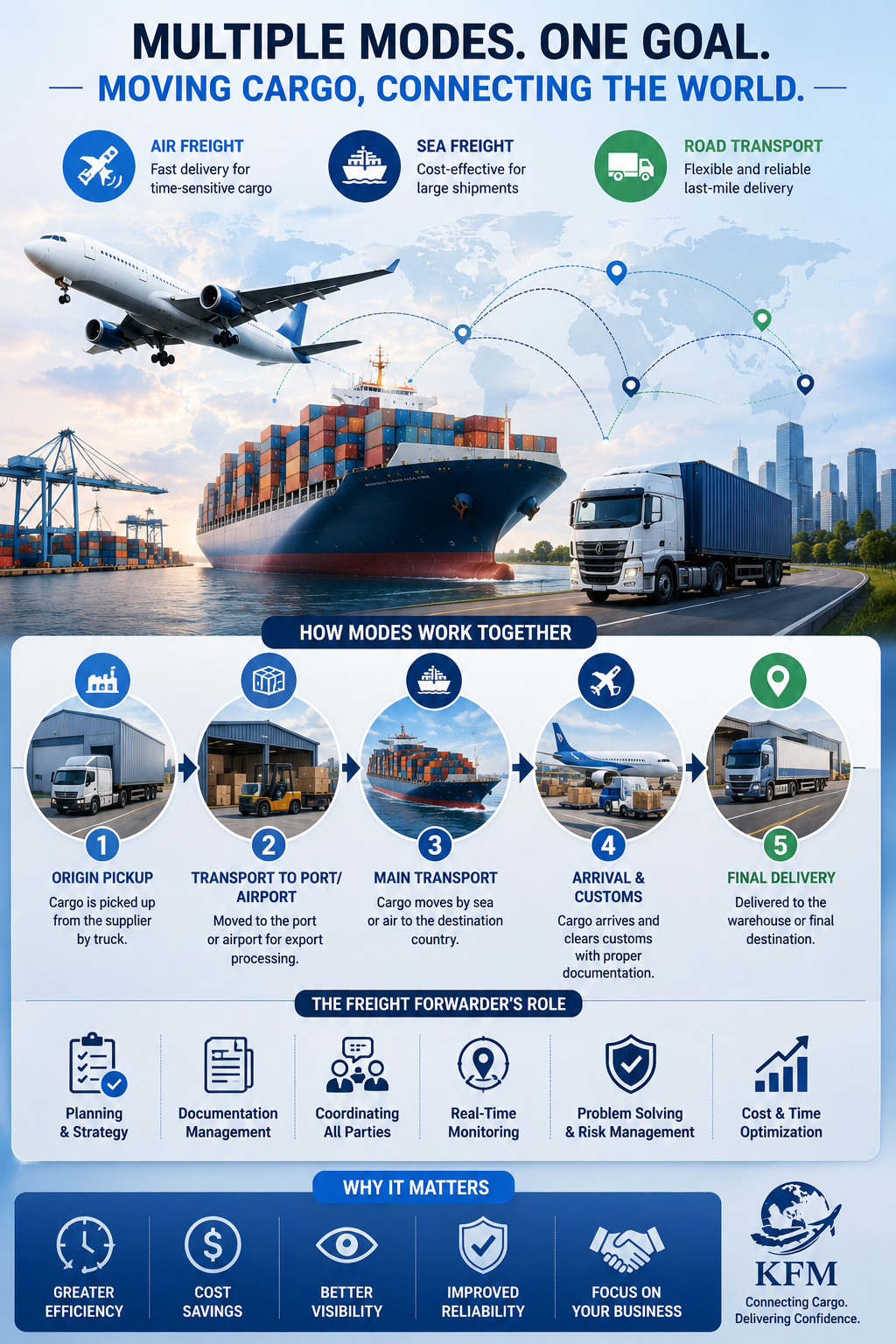
3. Cargo Pickup and Transportation
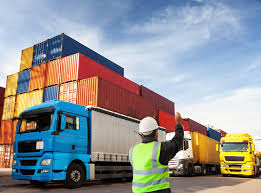
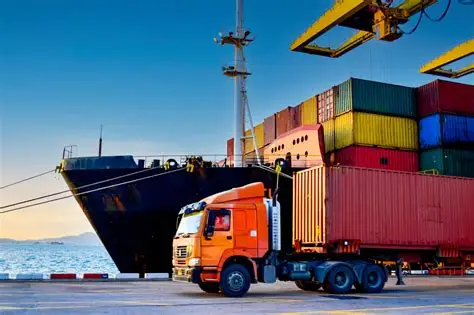
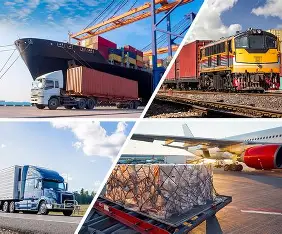
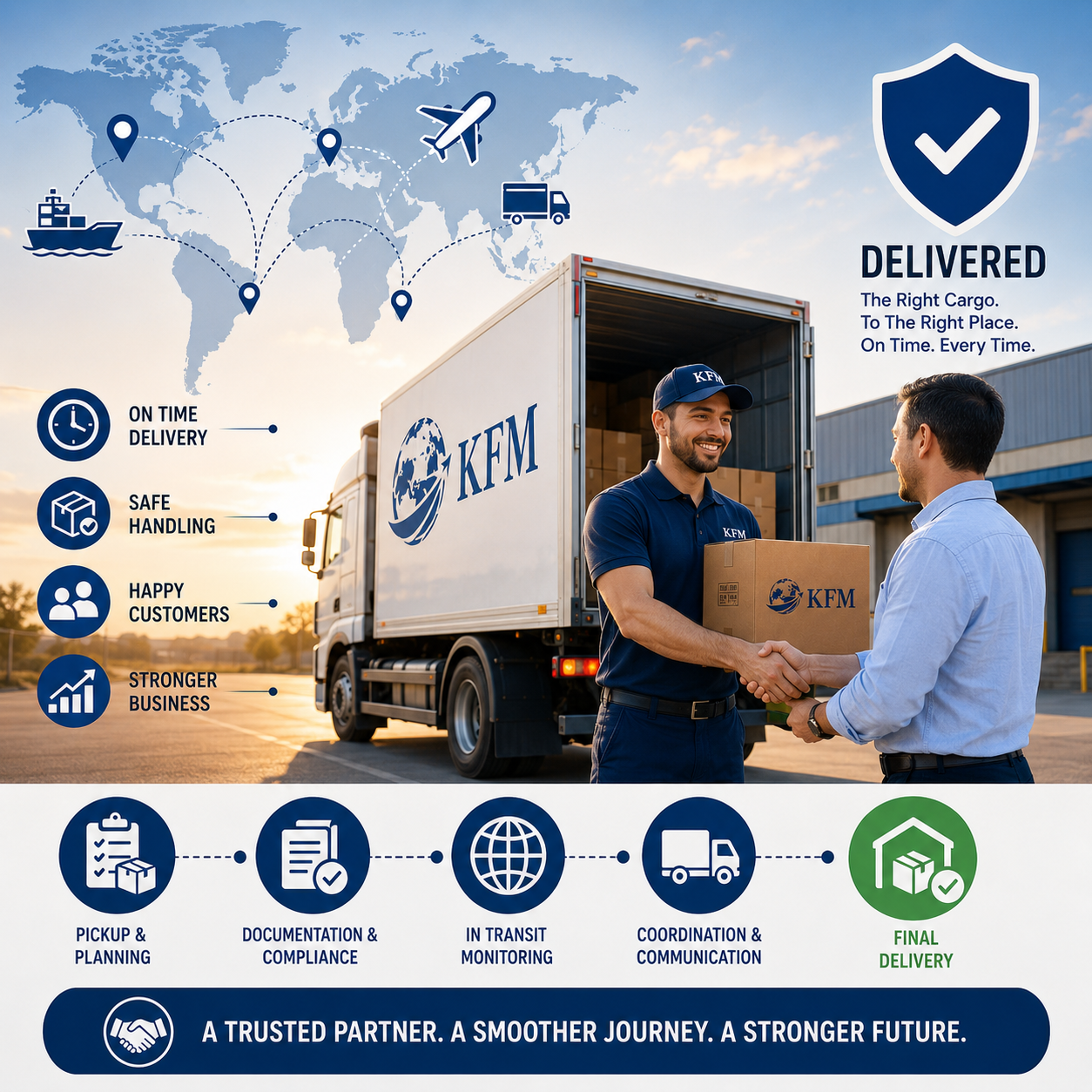
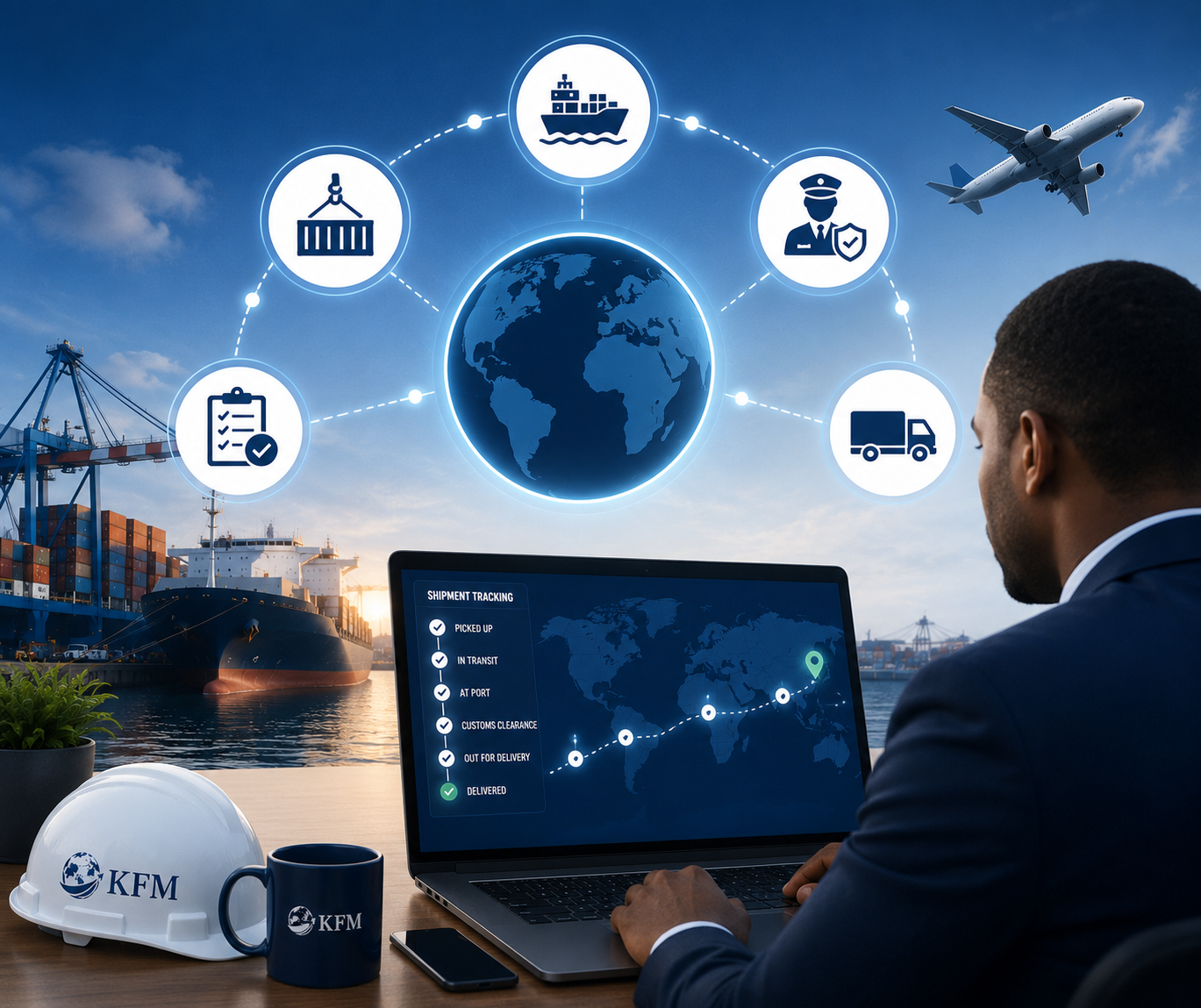
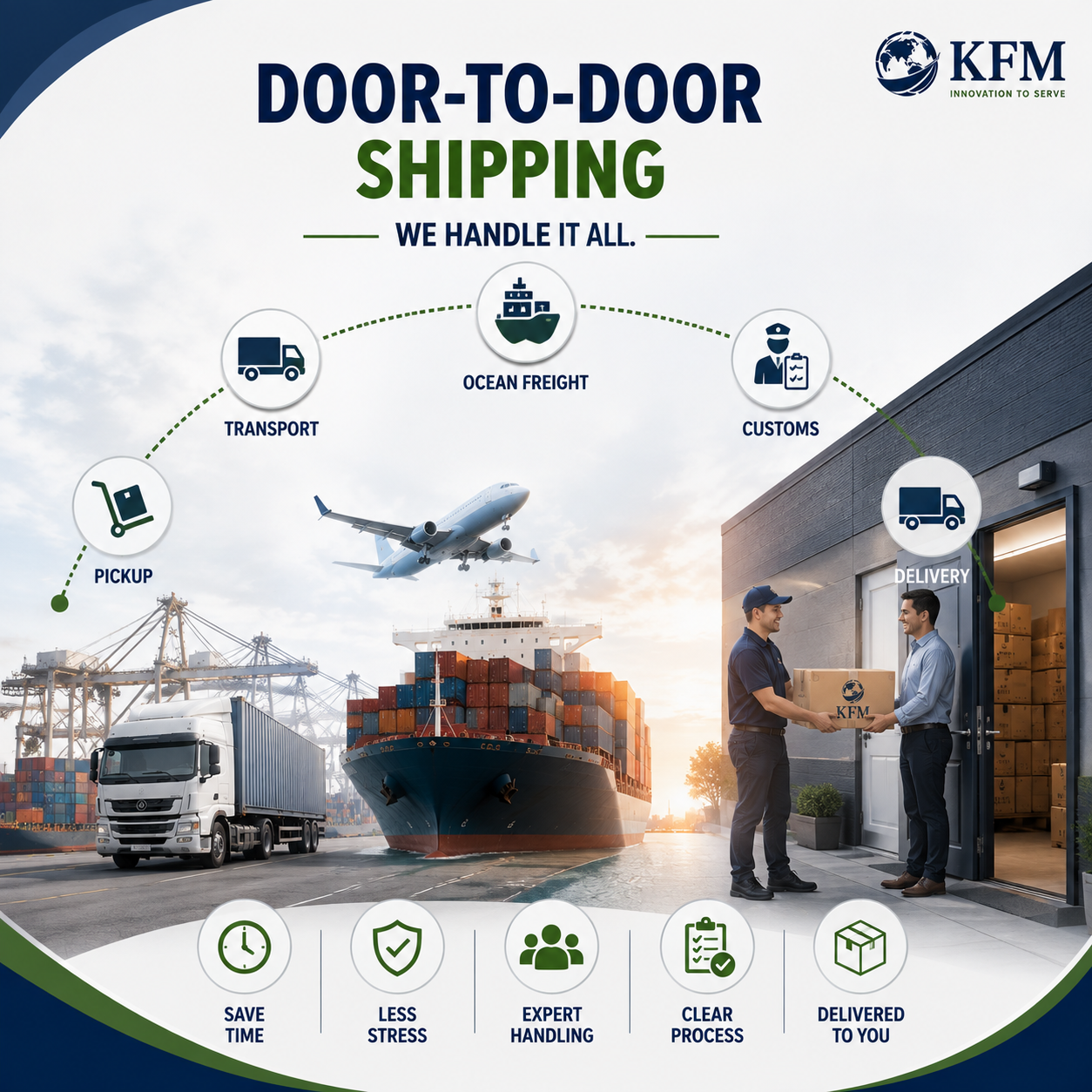
Once the terminal confirms the release, trucks or logistics vehicles can enter the port to pick up the cargo.
The shipment is then transported to its final destination, such as:
- A warehouse
- A distribution center
- A retail business location
- A manufacturing facility
At this point, the customs clearance process is officially complete.
4. The Role of Logistics Companies
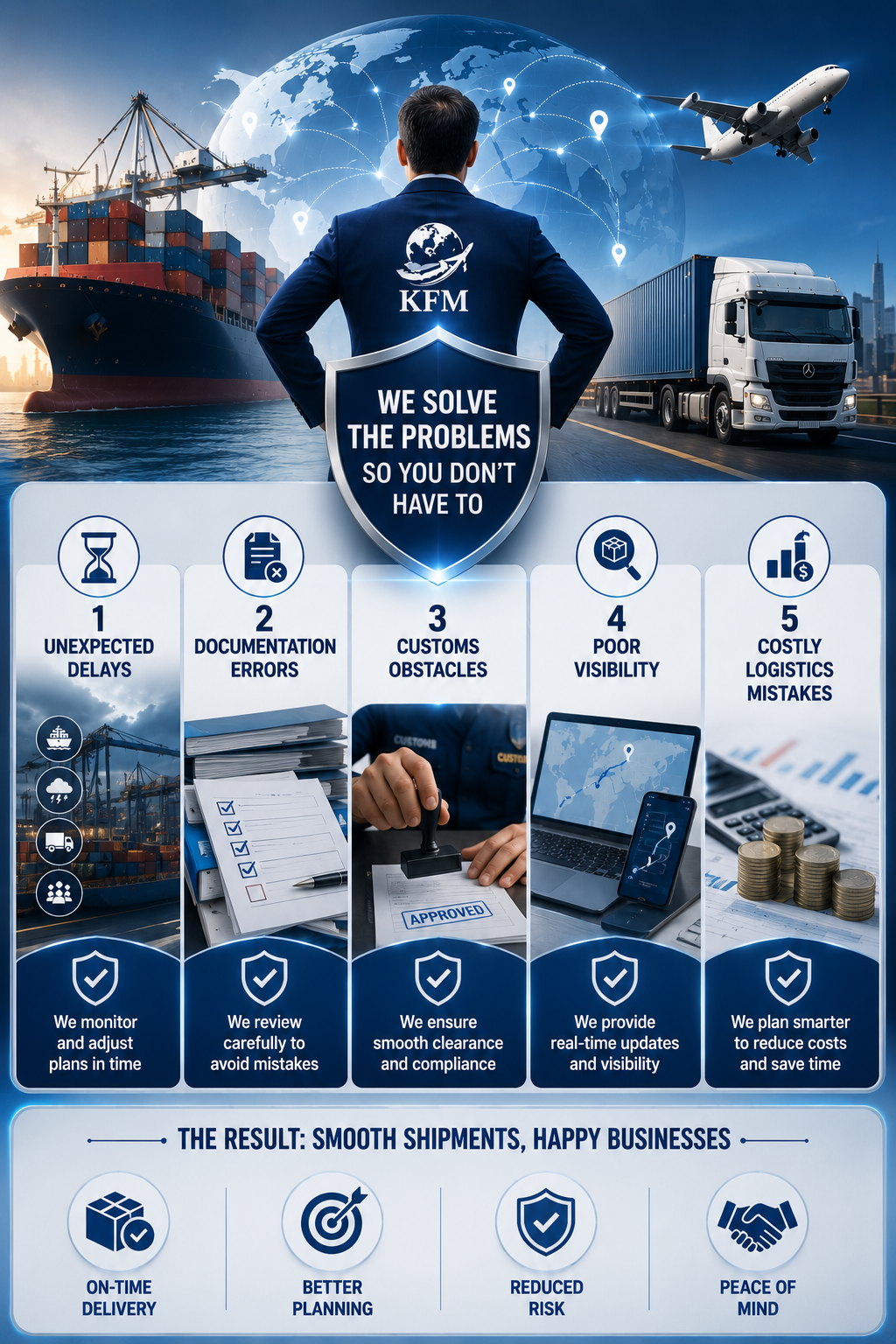
Logistics providers and customs clearing agents play an important role in ensuring this final stage runs smoothly. They coordinate documentation, payments, inspections, and delivery logistics.
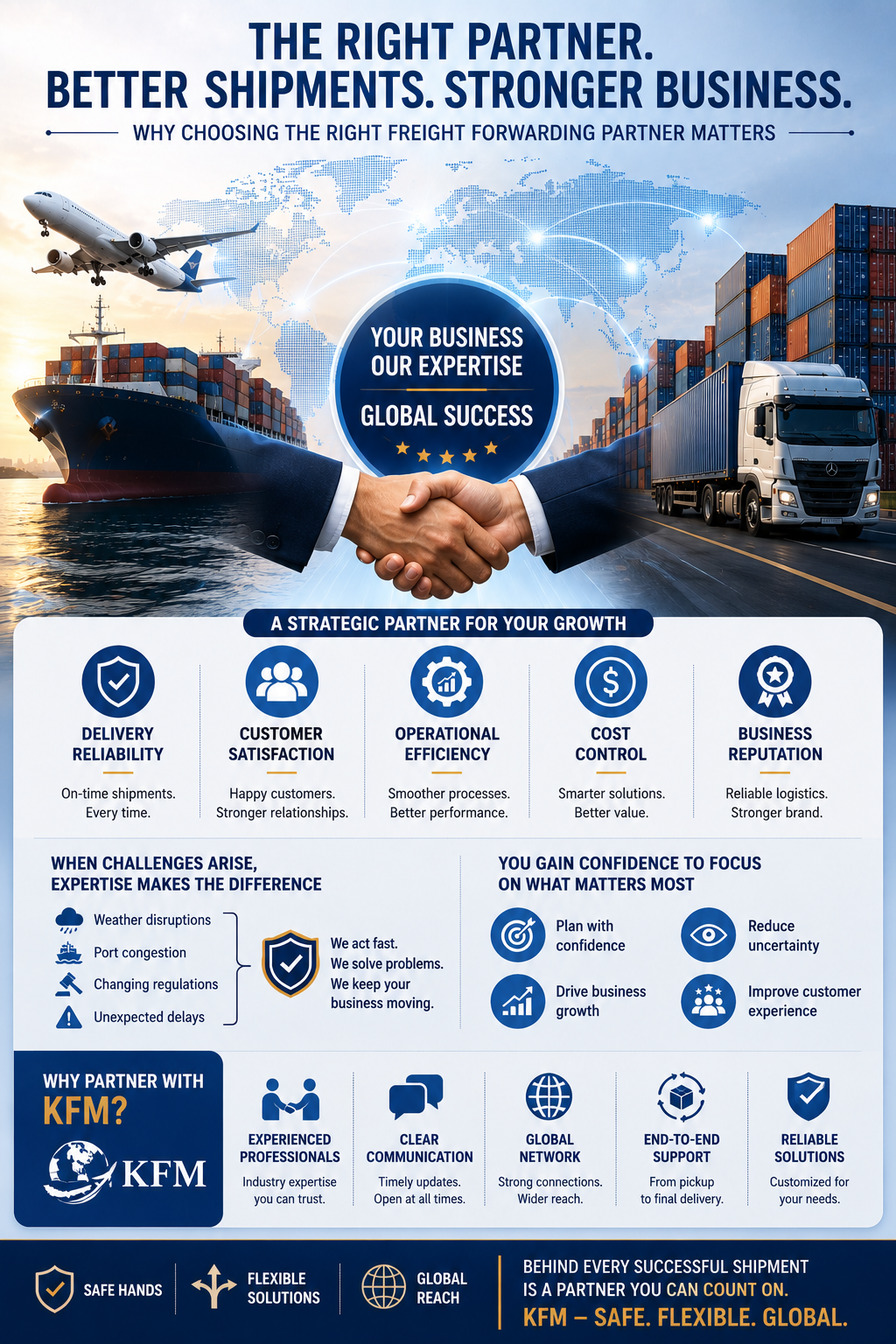
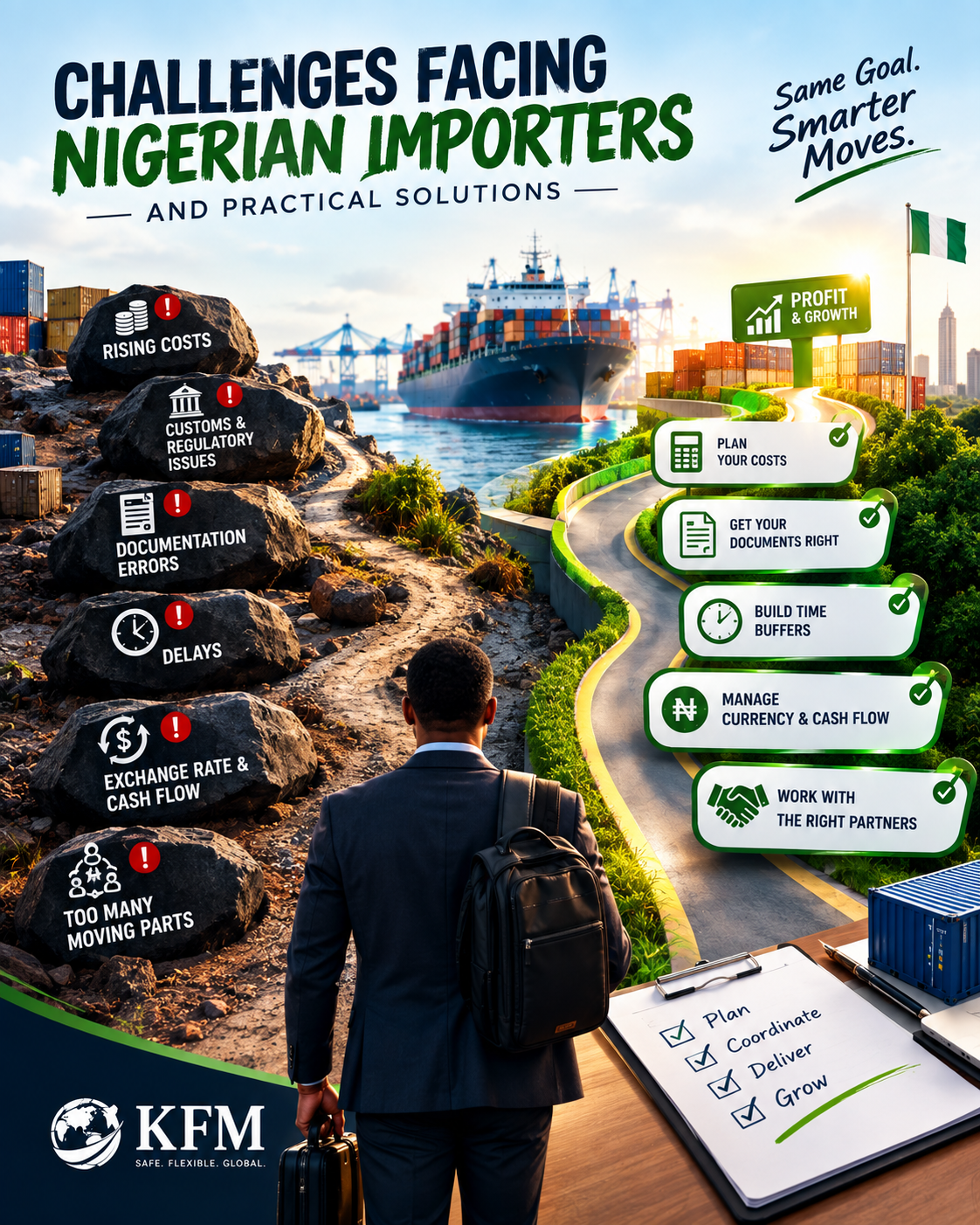
Working with an experienced logistics partner can significantly reduce delays and complications during the entire process.
Conclusion: Understanding Customs Clearance in Nigeria
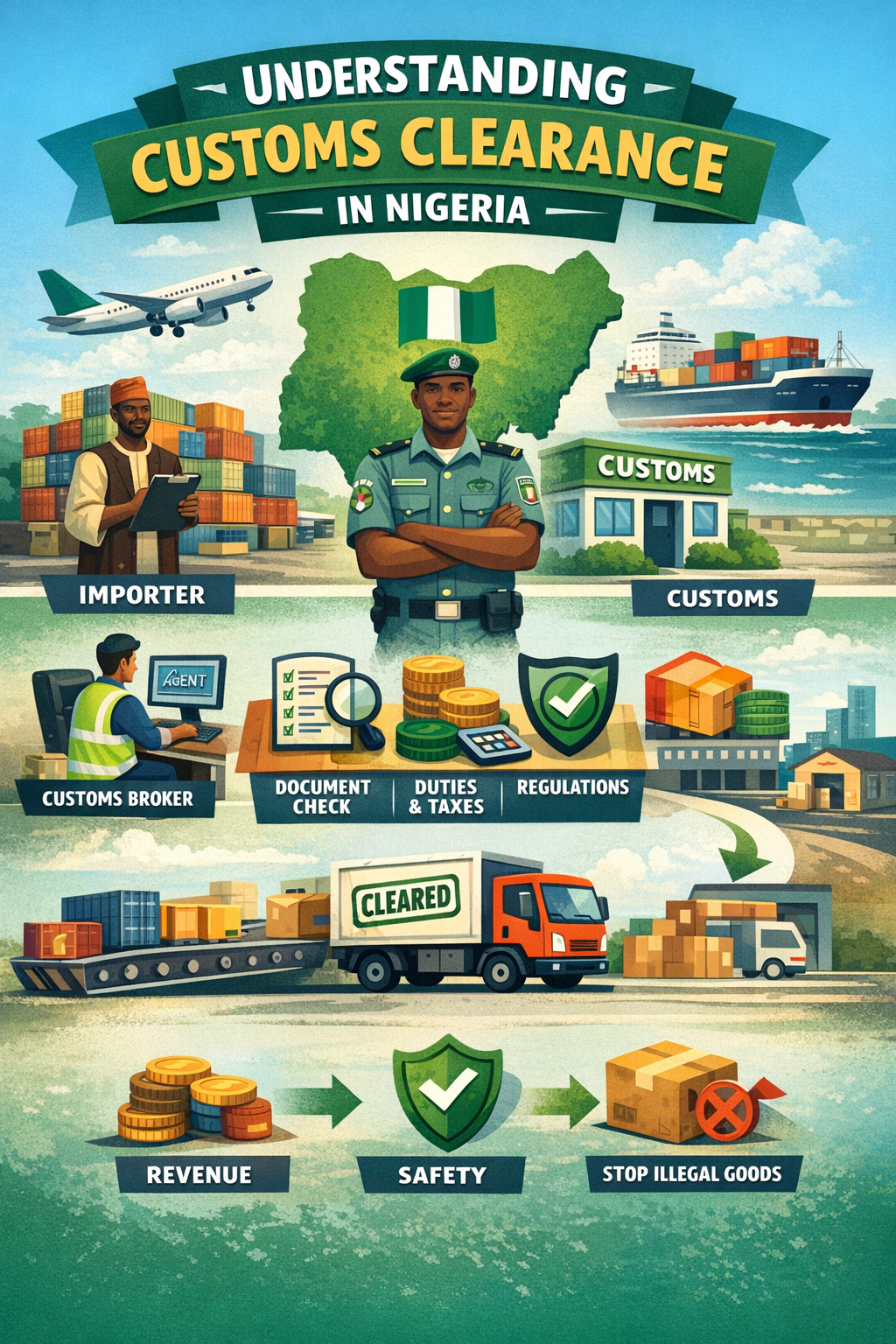
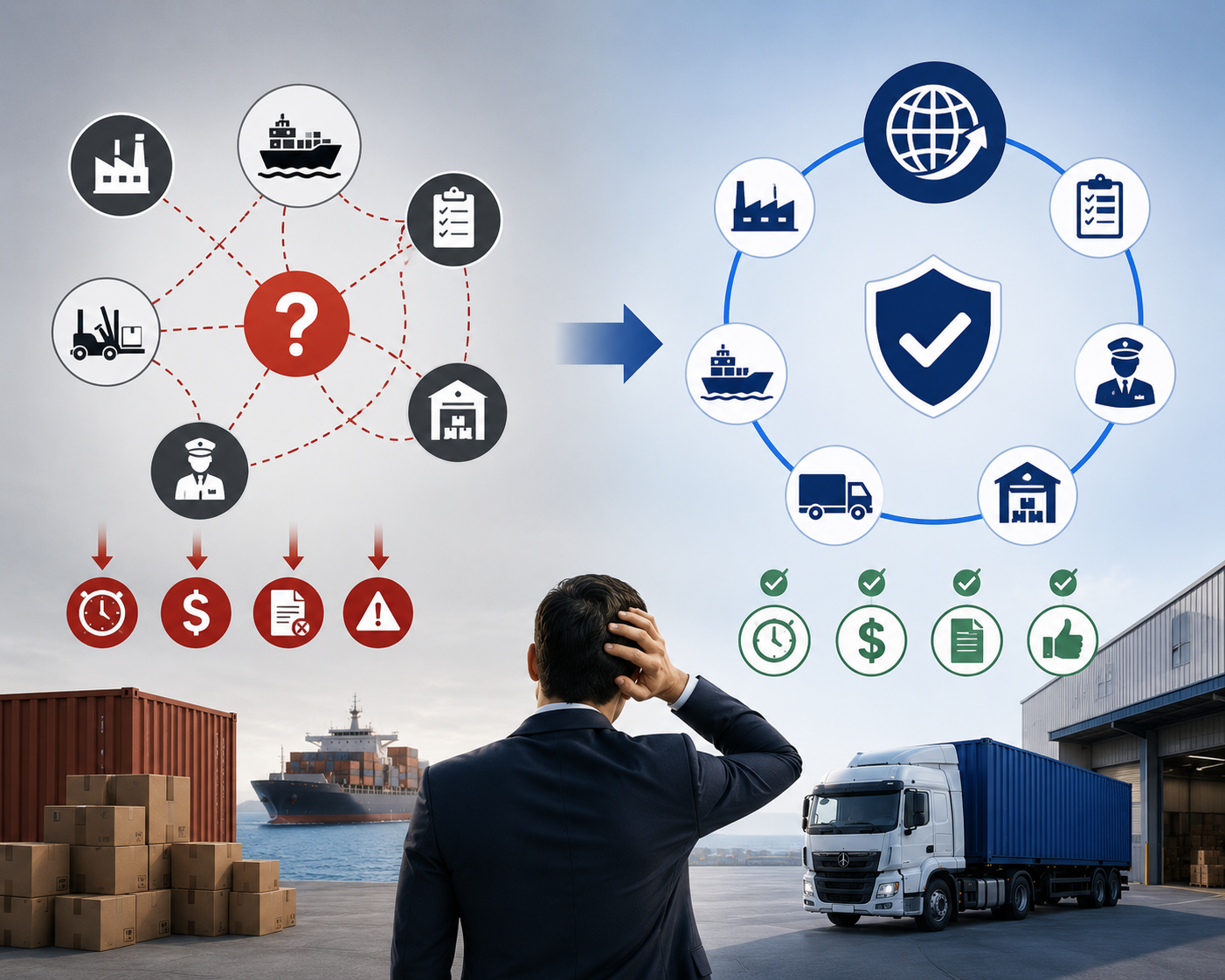
Customs clearance may seem complex at first, but when broken into clear steps, the process becomes much easier to understand.
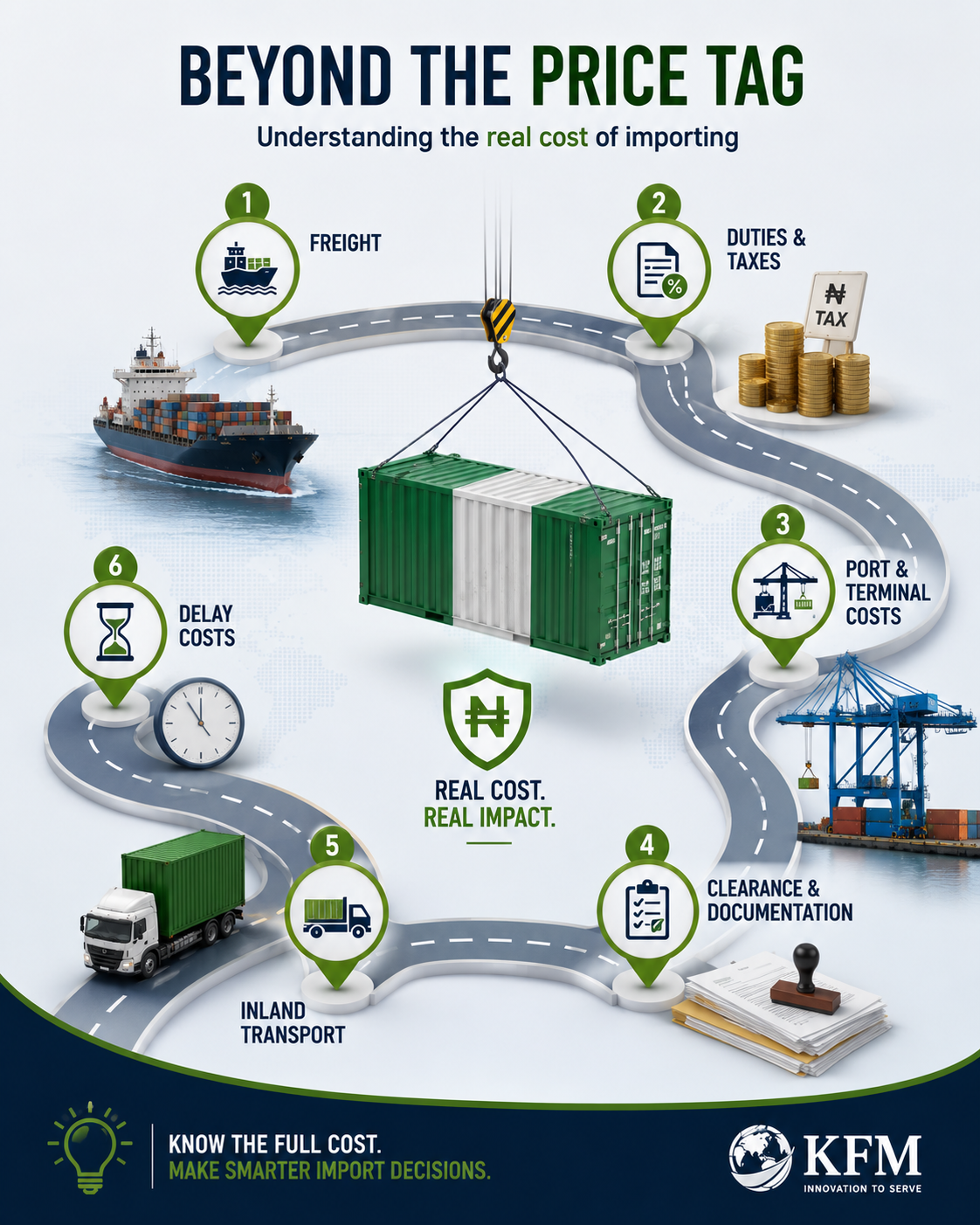
In this guide, we covered the full journey of imported goods:
- Arrival of cargo at the port
- Document submission and verification
- Customs inspection procedures
- Calculation and payment of duties
- Final cargo release and delivery
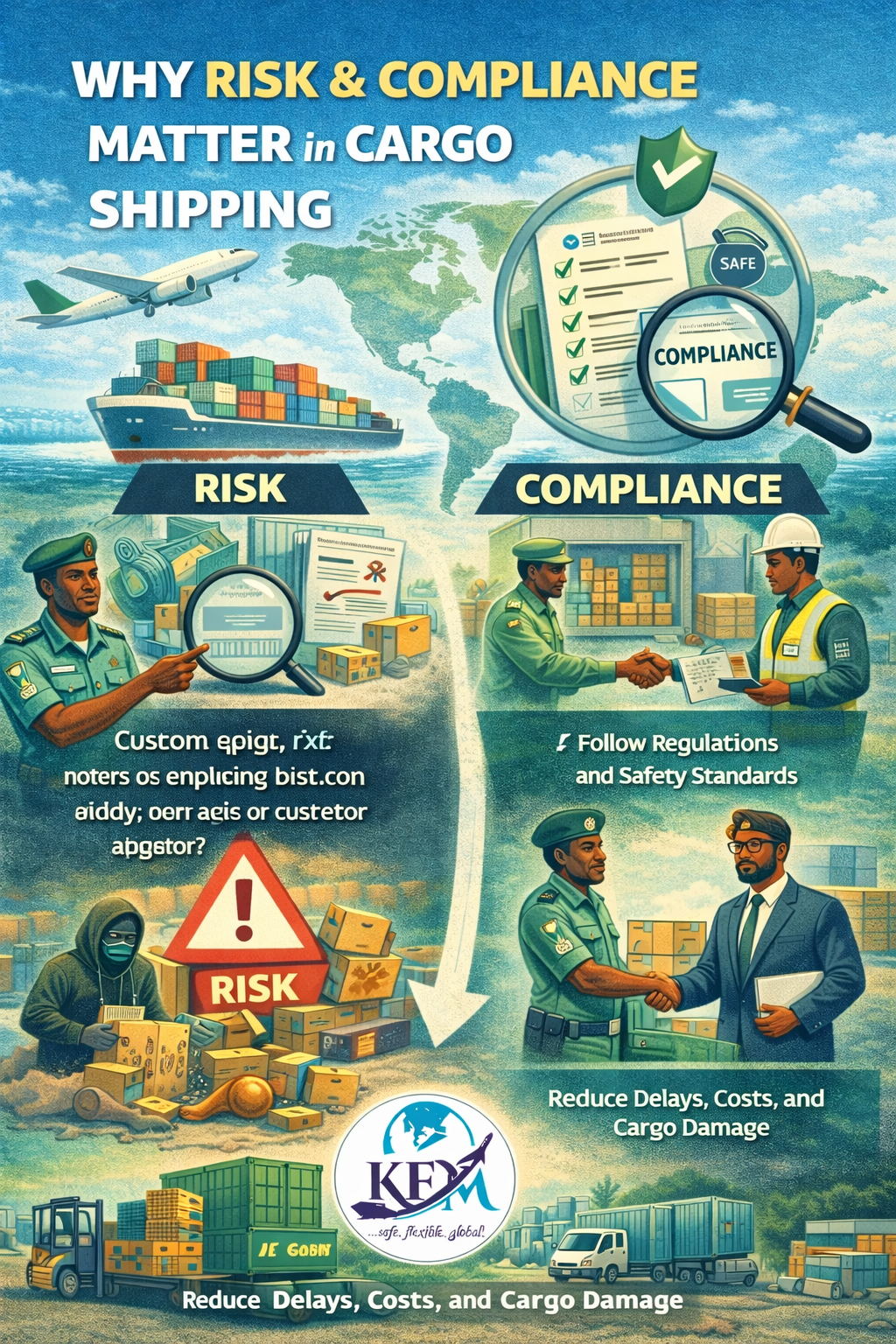
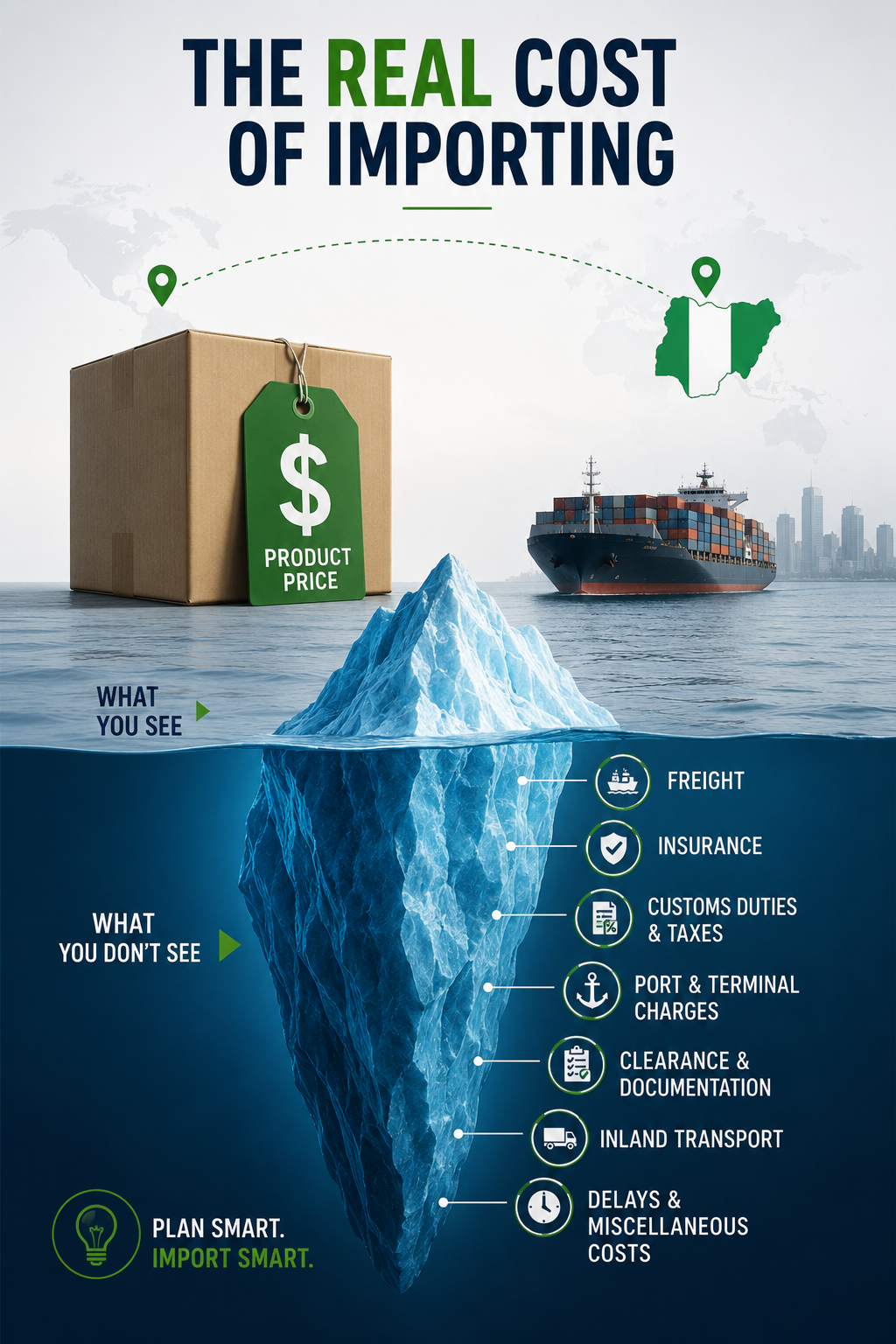
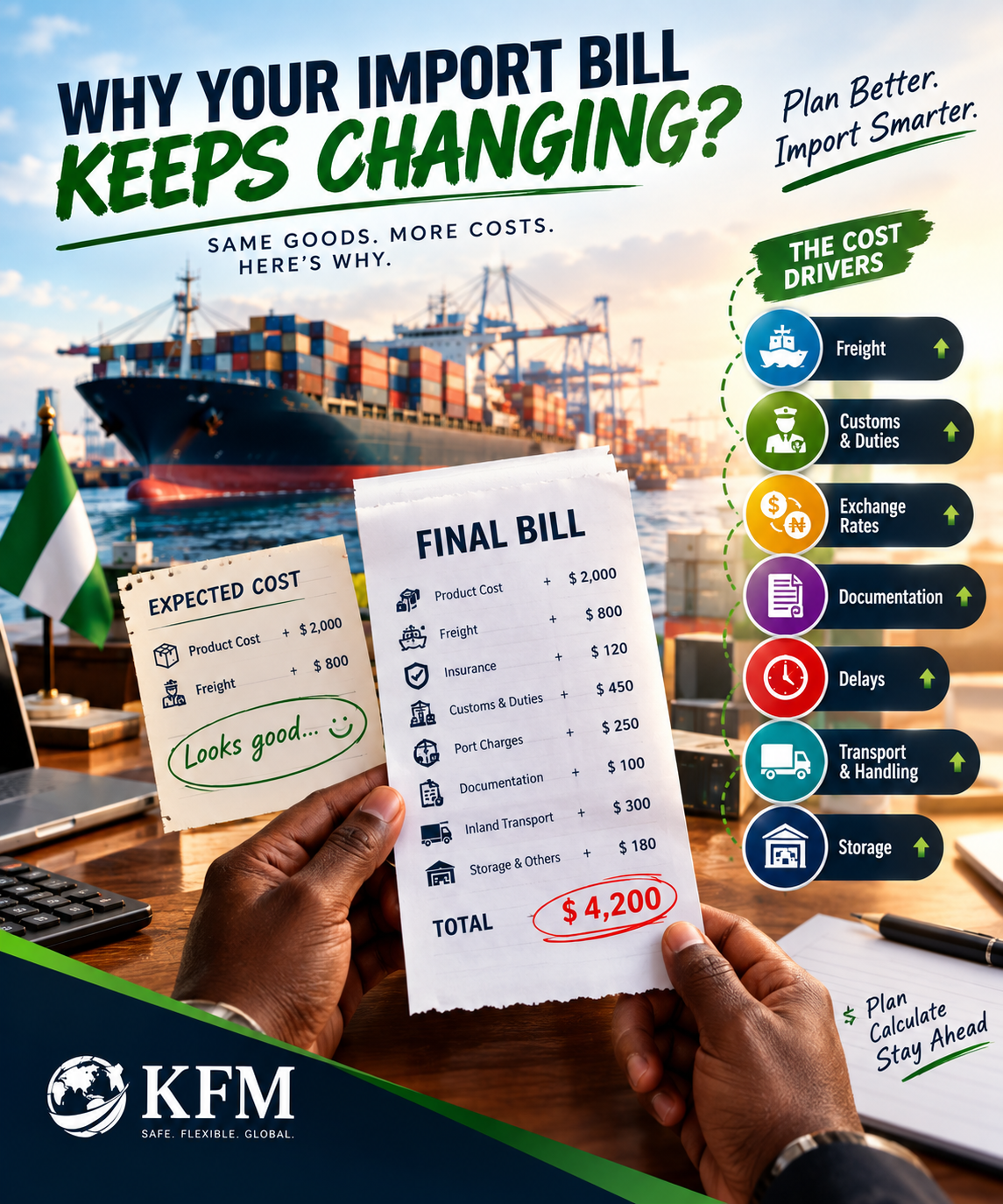
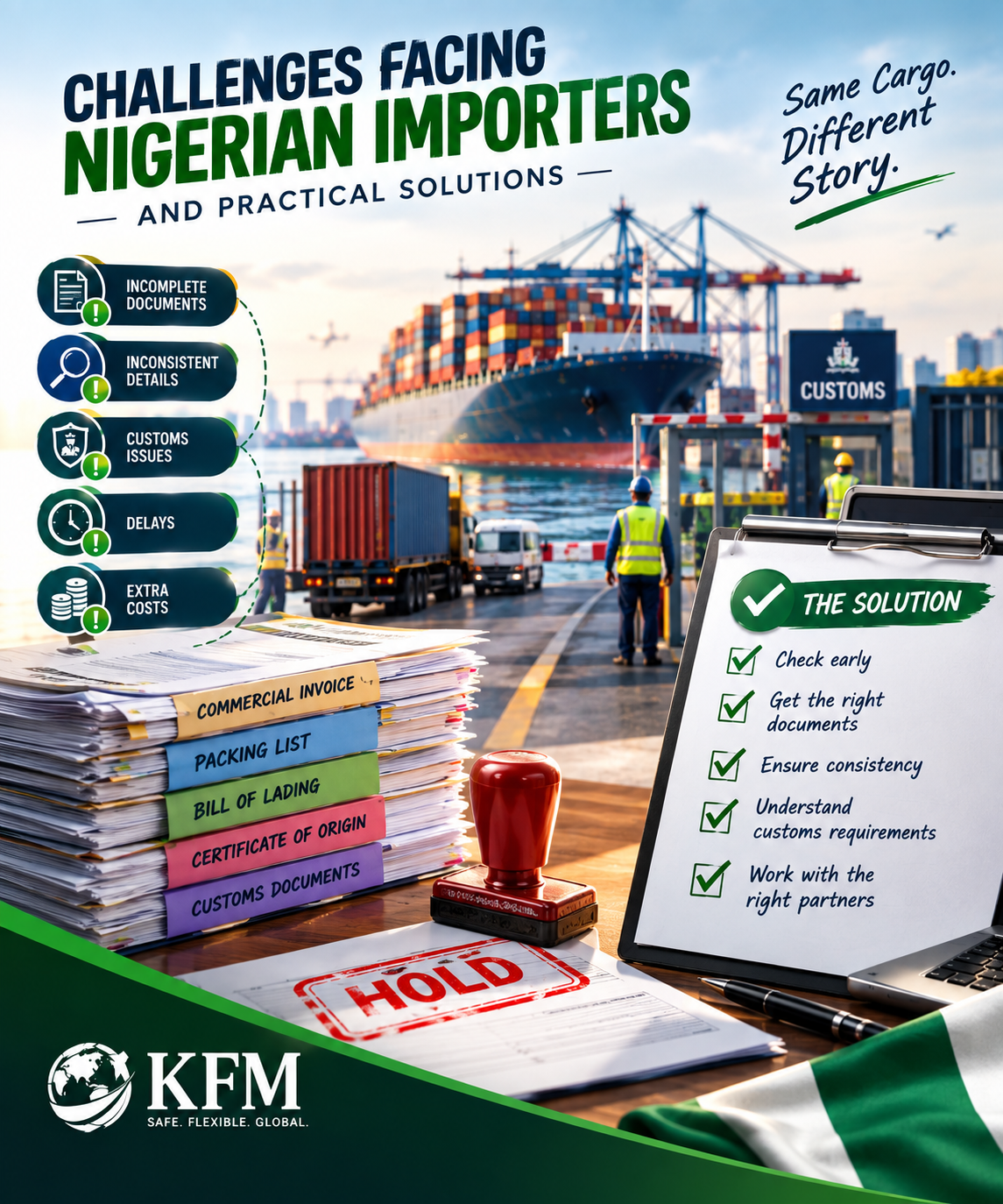
For businesses involved in international trade, understanding these steps helps avoid delays, reduce unexpected costs, and ensure smoother import operations.
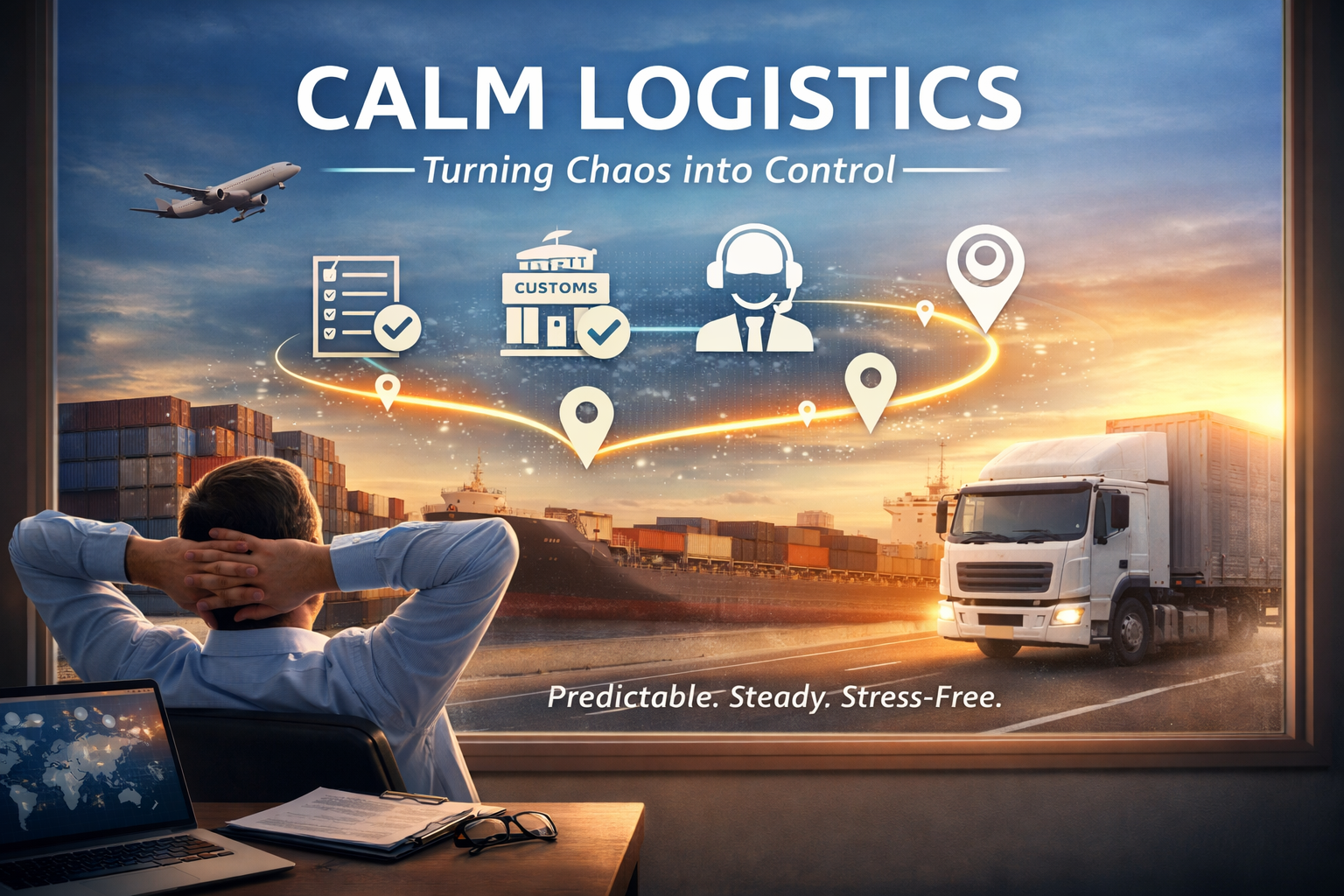
With proper documentation and the right logistics support, customs clearance in Nigeria can become a predictable and manageable process.