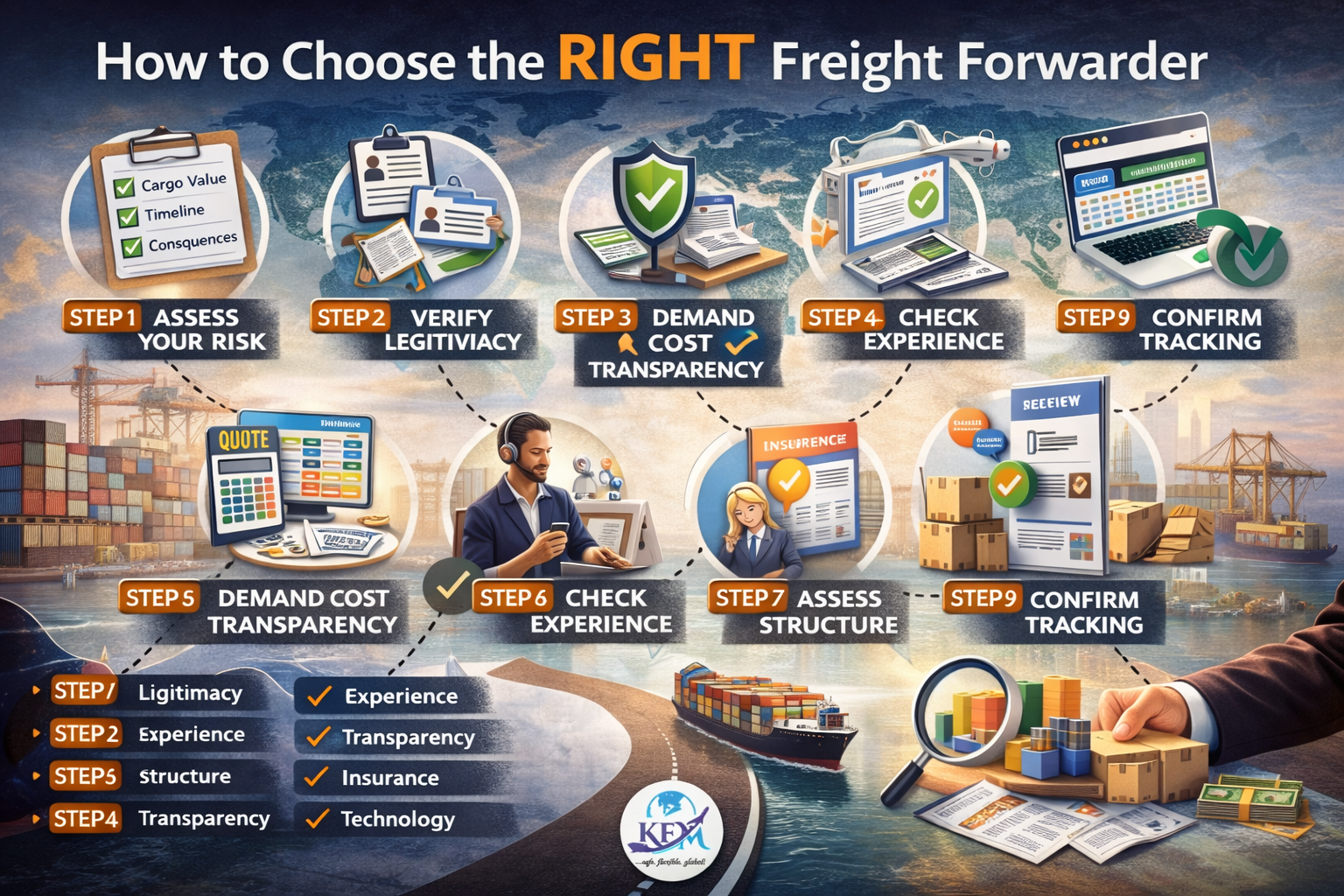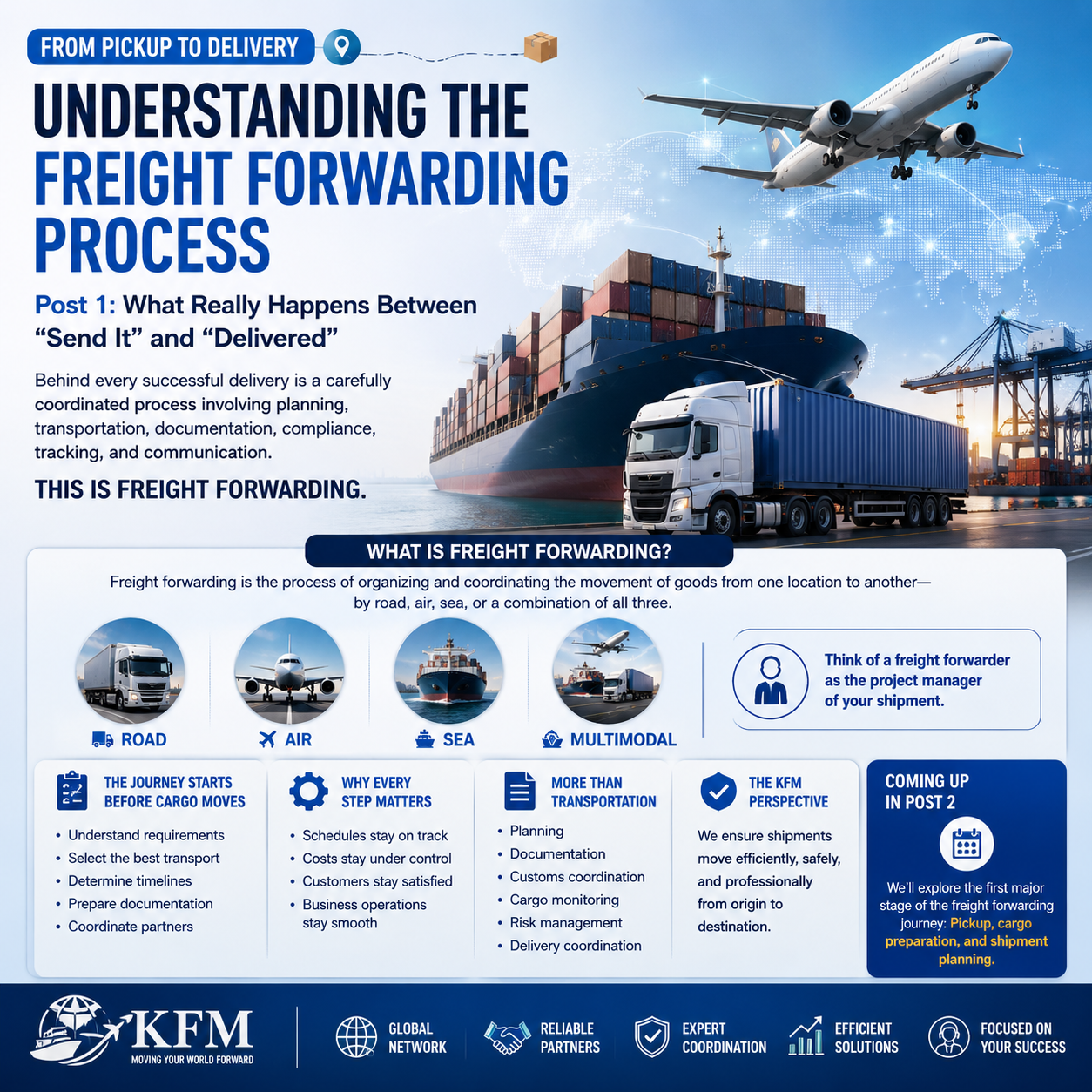
In Post 1, we introduced the role of a freight forwarder.
But what actually happens after a business decides to ship cargo?
Most people only see the final delivery.
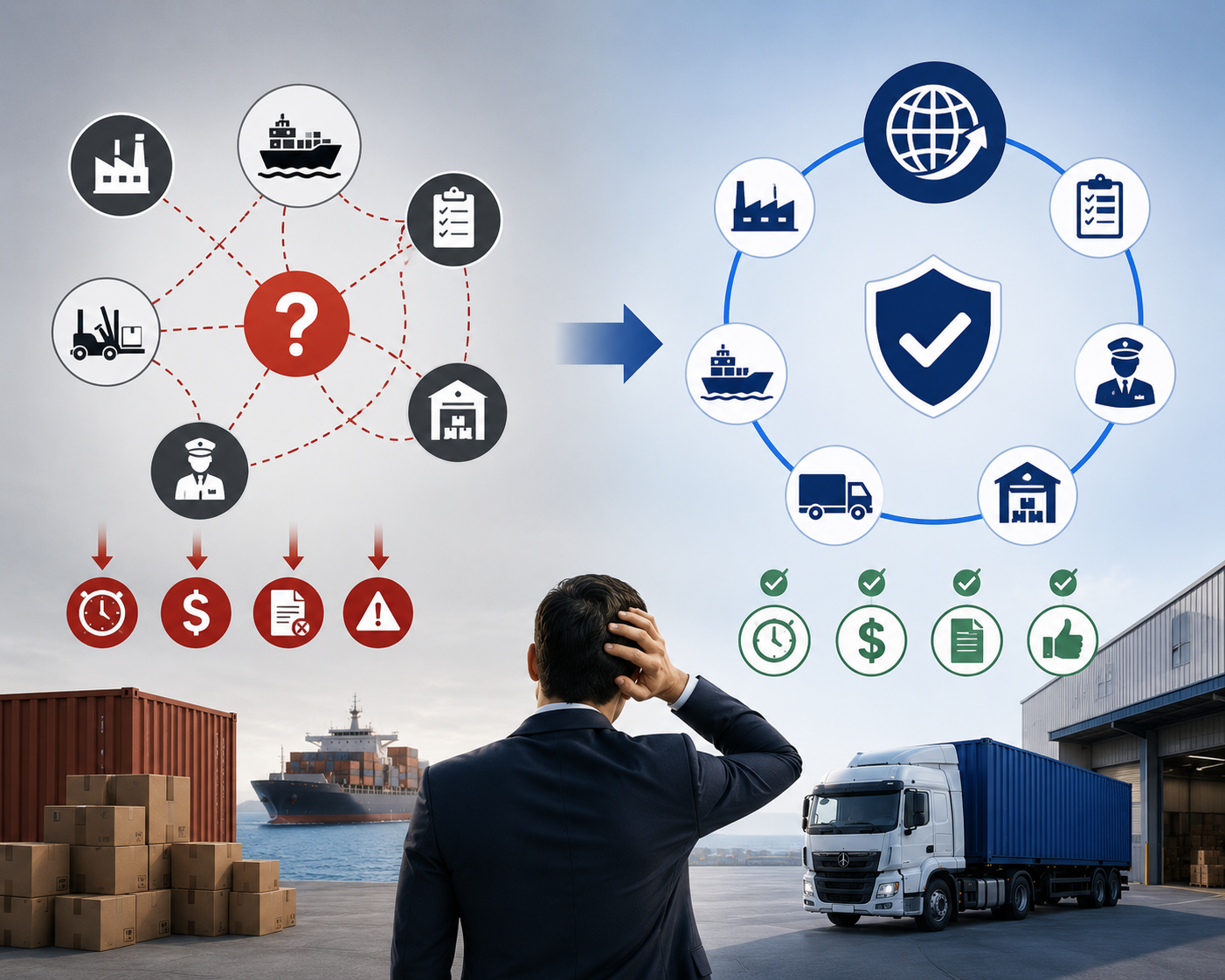
Behind the scenes, however, a freight forwarder is coordinating dozens of activities to ensure everything runs smoothly.
Let's follow the journey of a typical shipment.
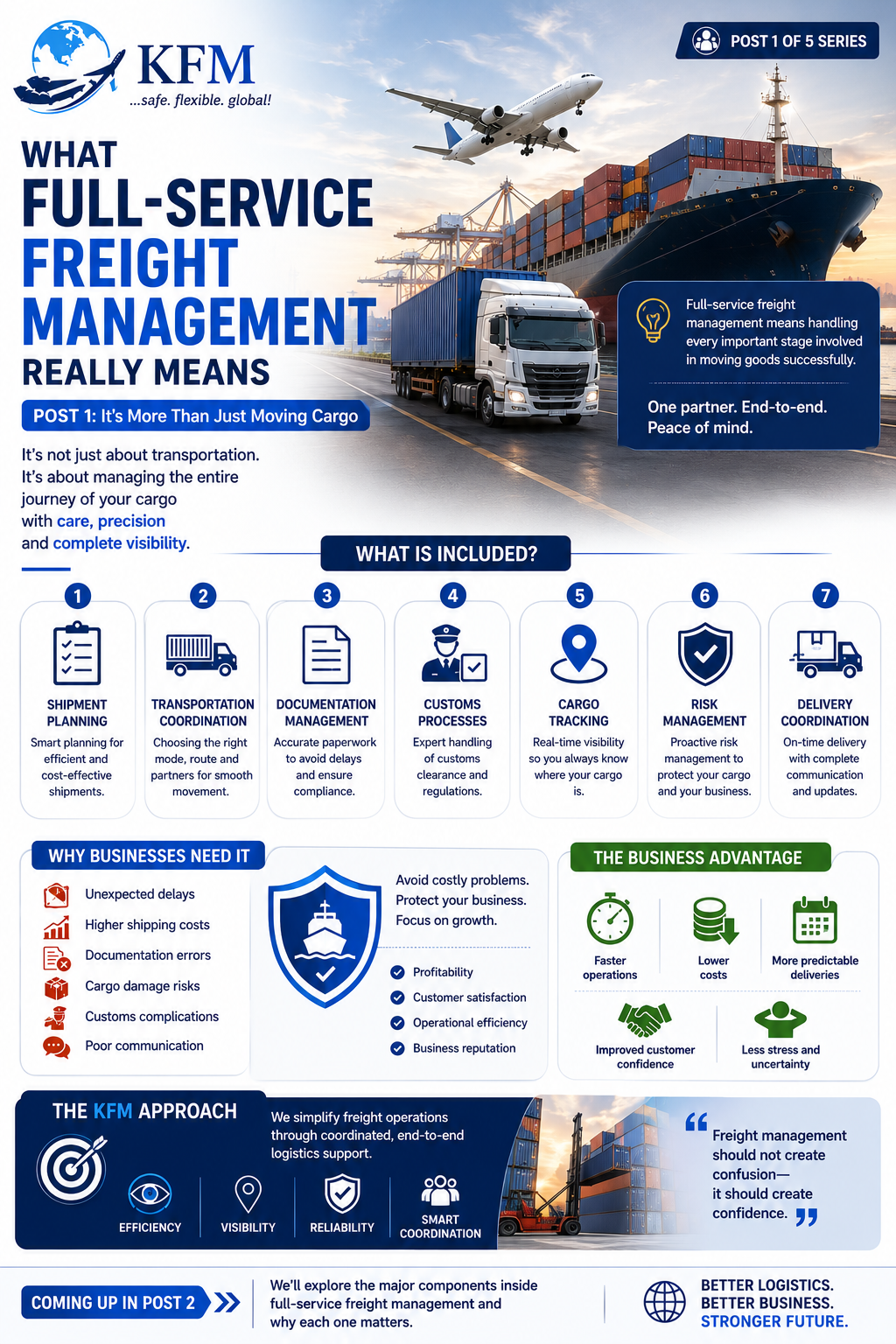
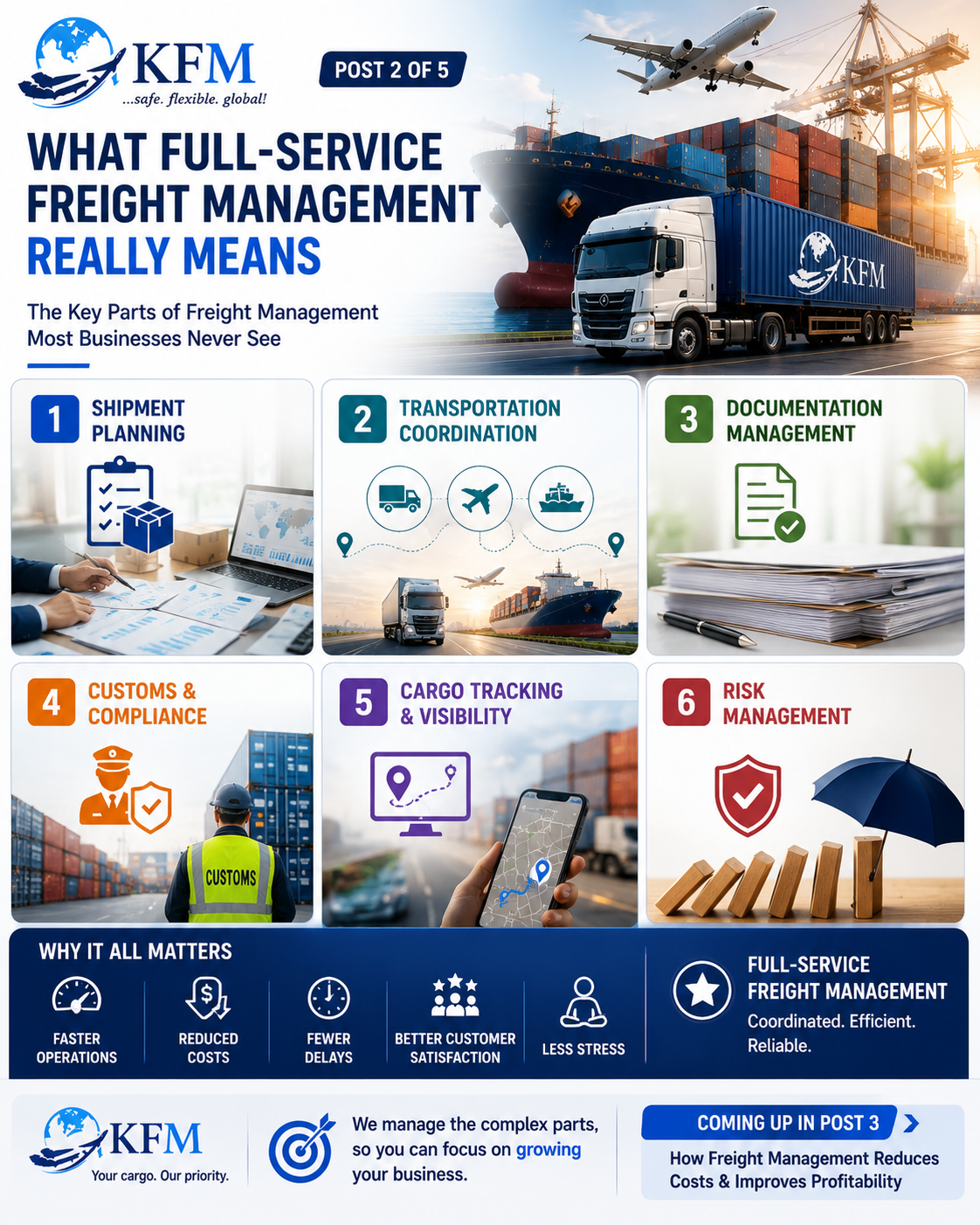
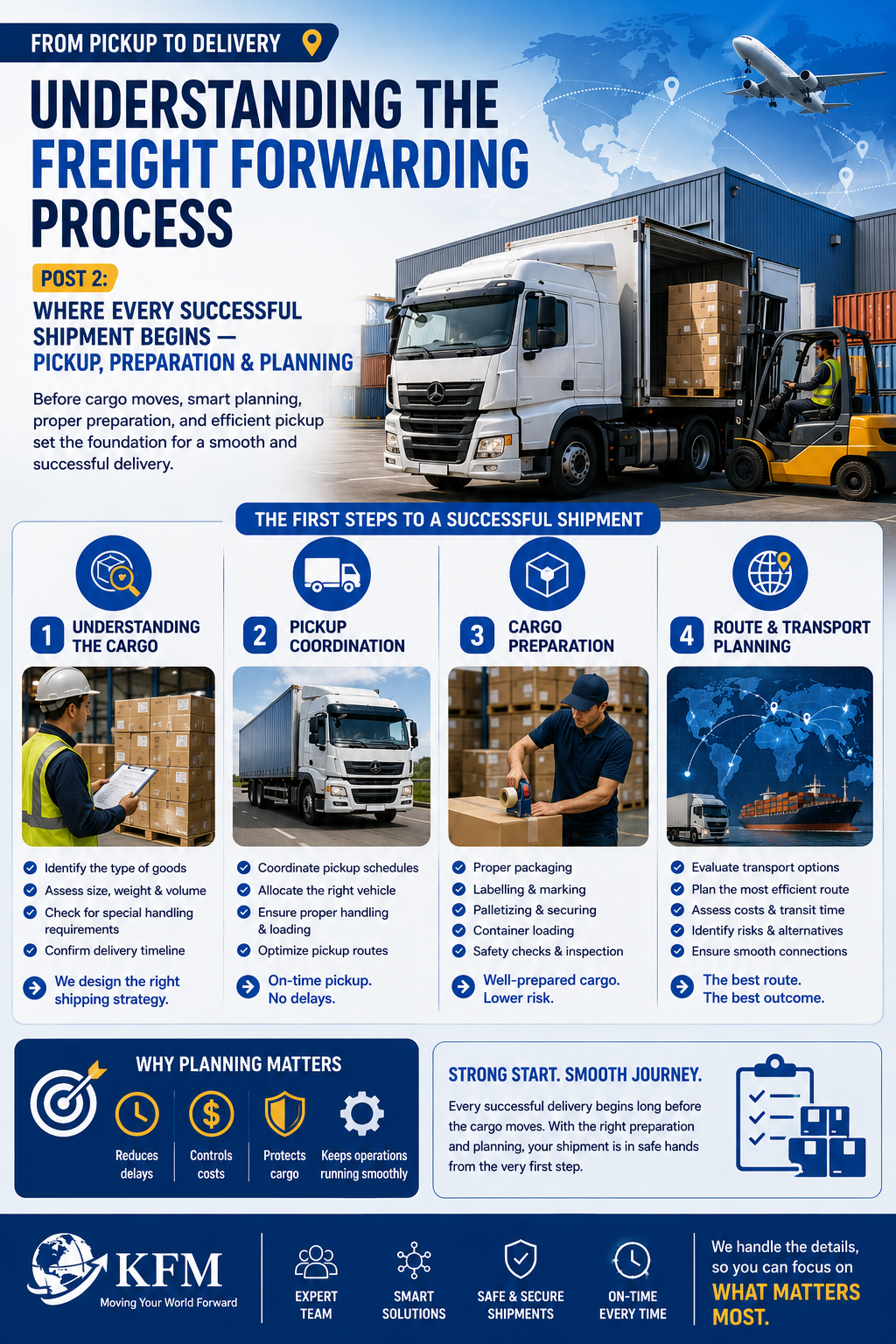
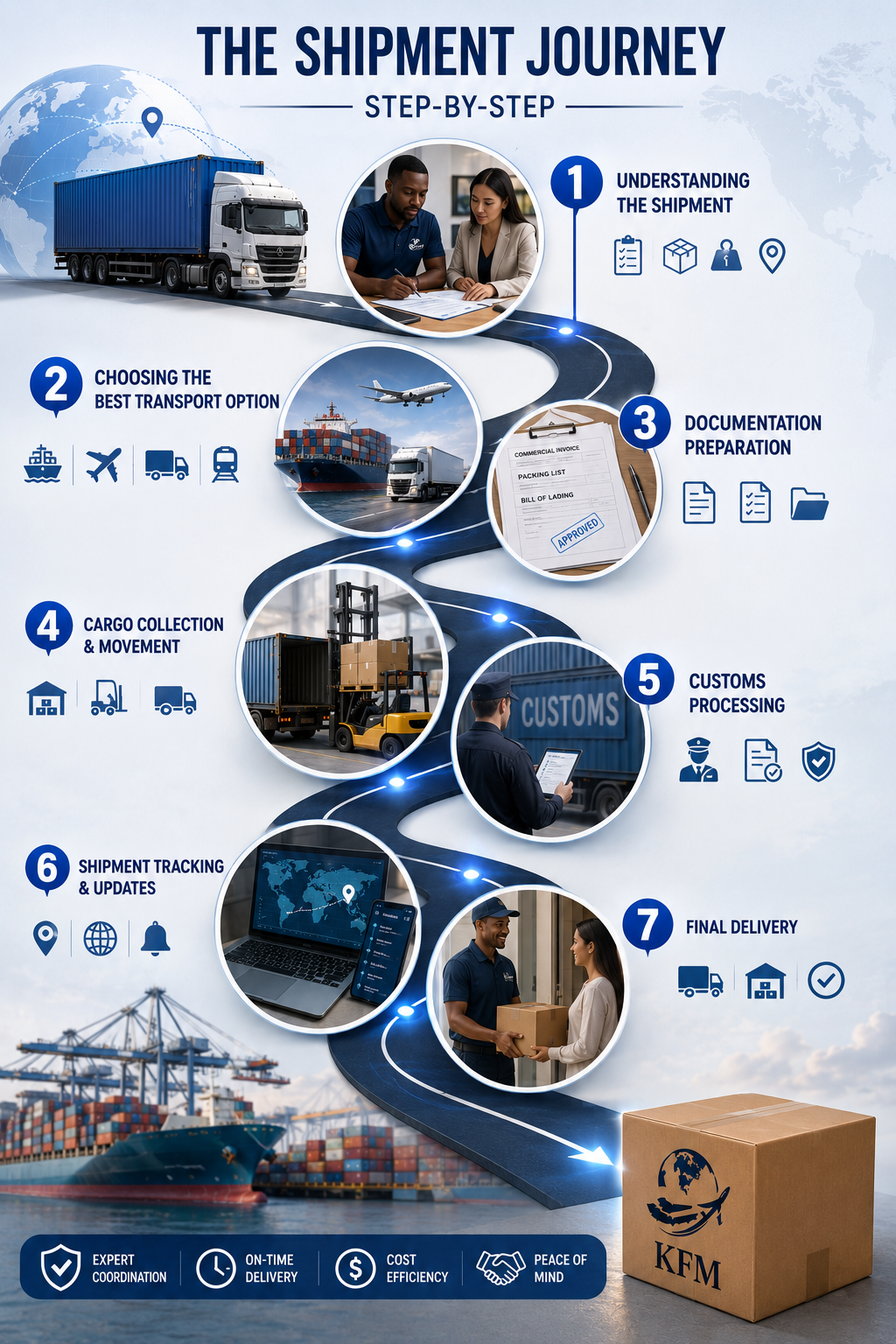
Step 1: Understanding the Shipment
Before anything moves, the freight forwarder gathers important details about the cargo.
Questions include:
- What is being shipped?
- How much does it weigh?
- Where is it going?
- How quickly must it arrive?
These answers help determine the most efficient shipping solution.
Step 2: Choosing the Best Transport Option
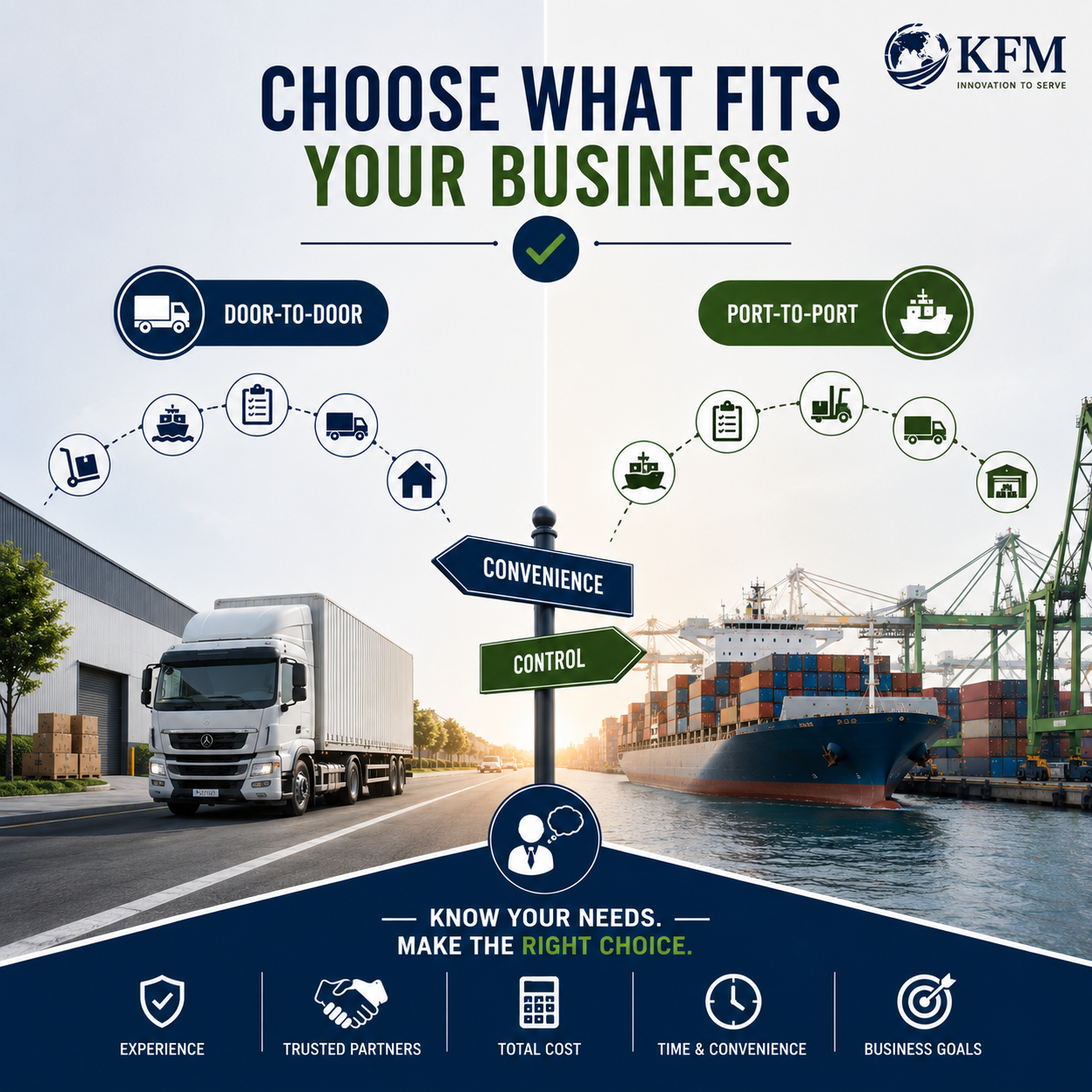
Not every shipment should travel the same way.
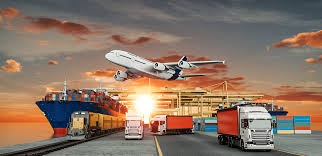
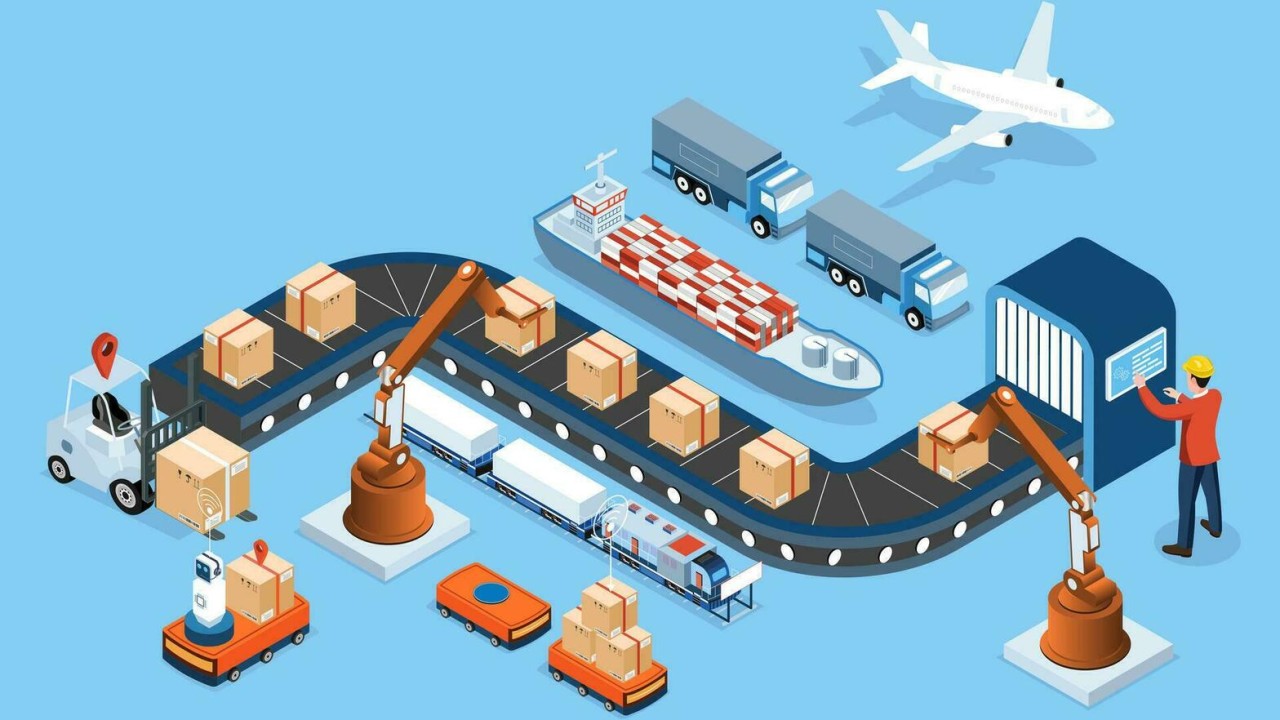
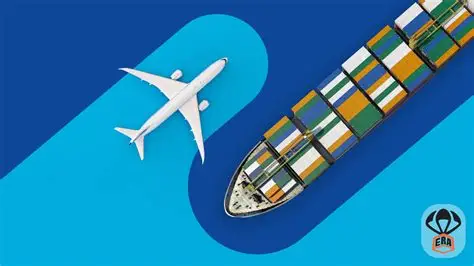
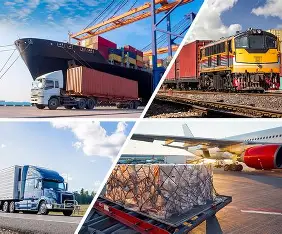
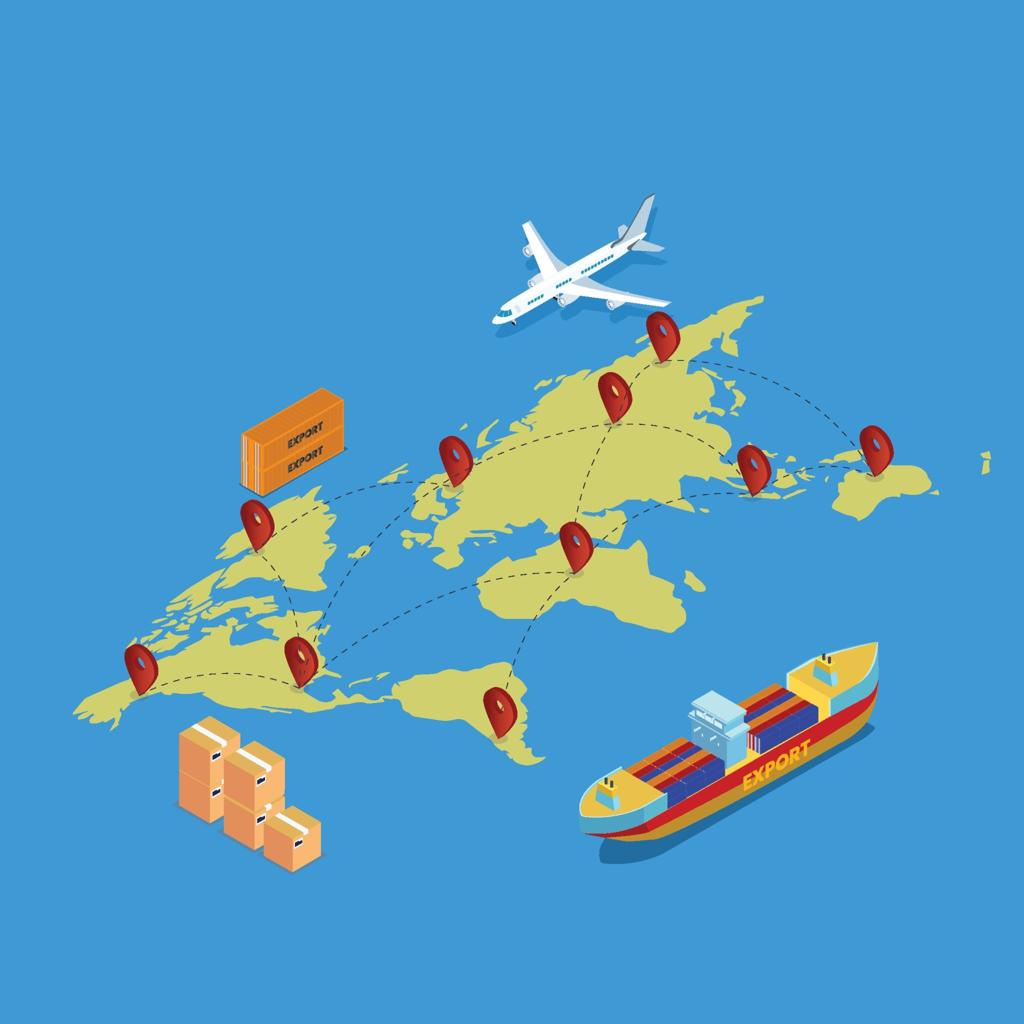
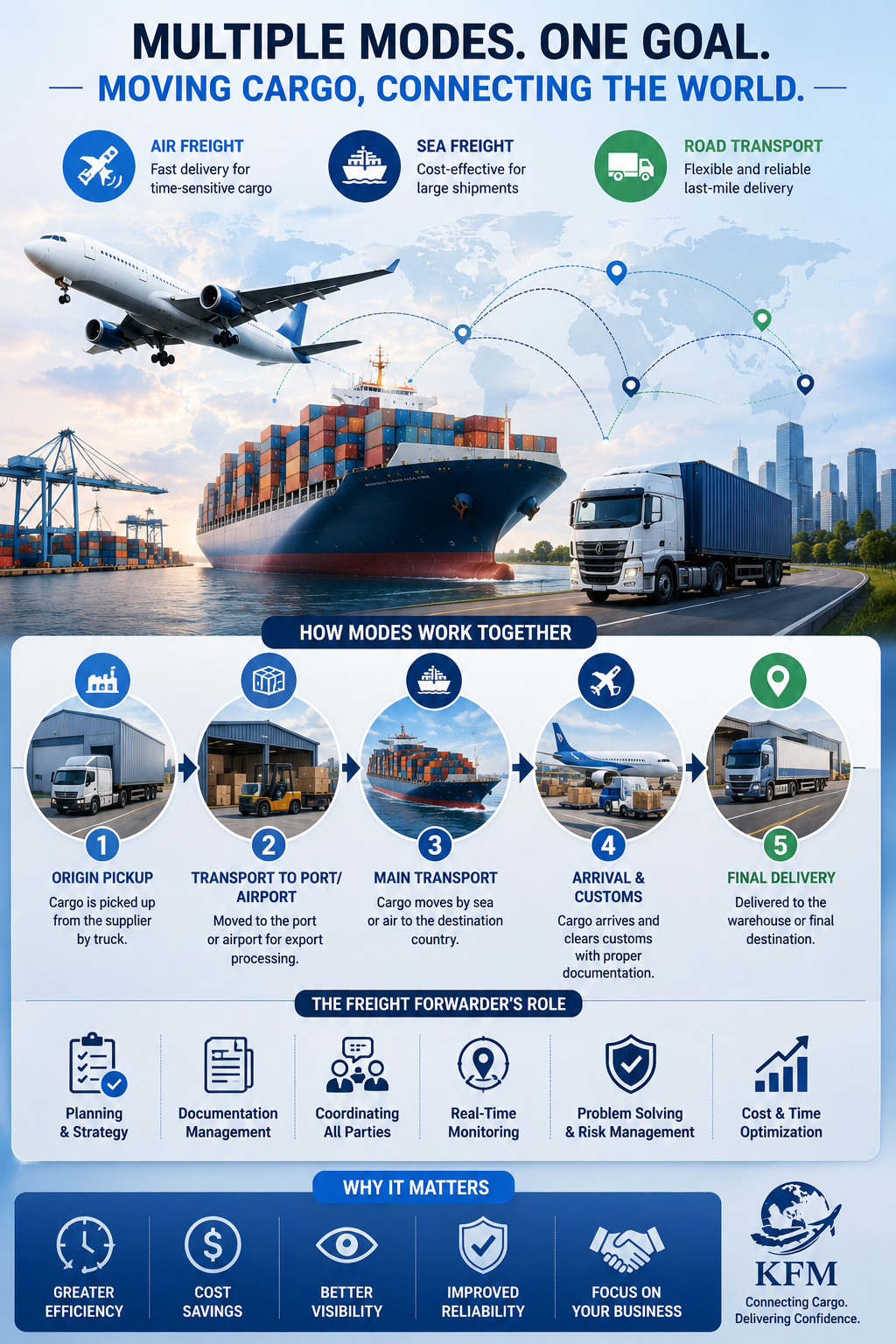
Depending on cost, urgency, and cargo type, a freight forwarder may recommend:
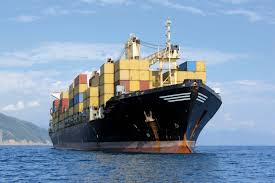
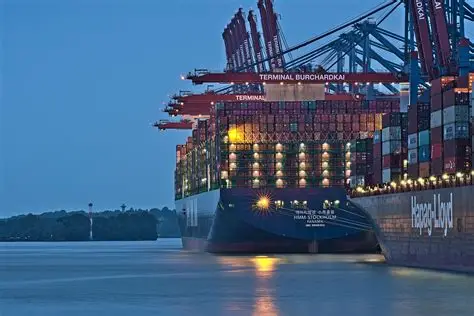
- Sea Freight for larger volumes
- Air Freight for speed
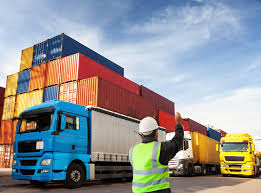
- Road Transport for local movement
- A combination of multiple modes
The goal is always to balance cost, speed, and reliability.
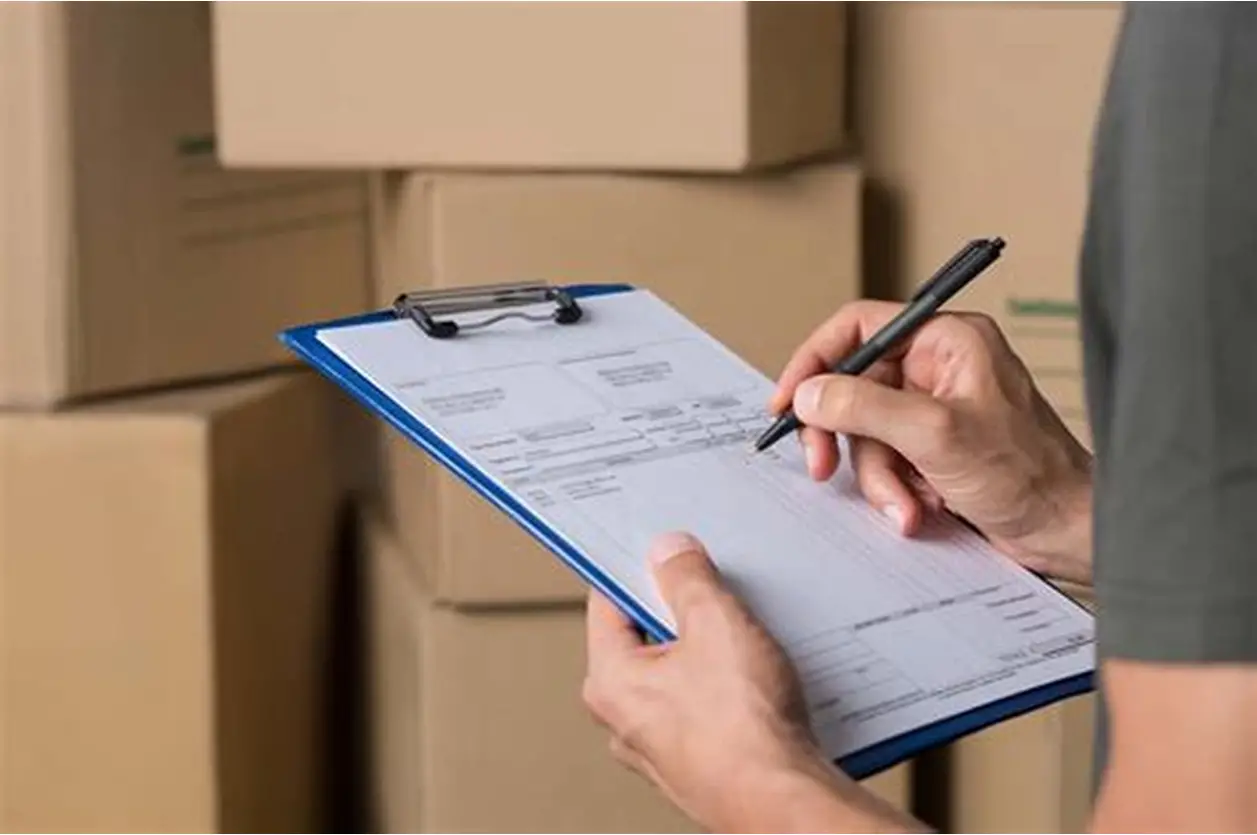
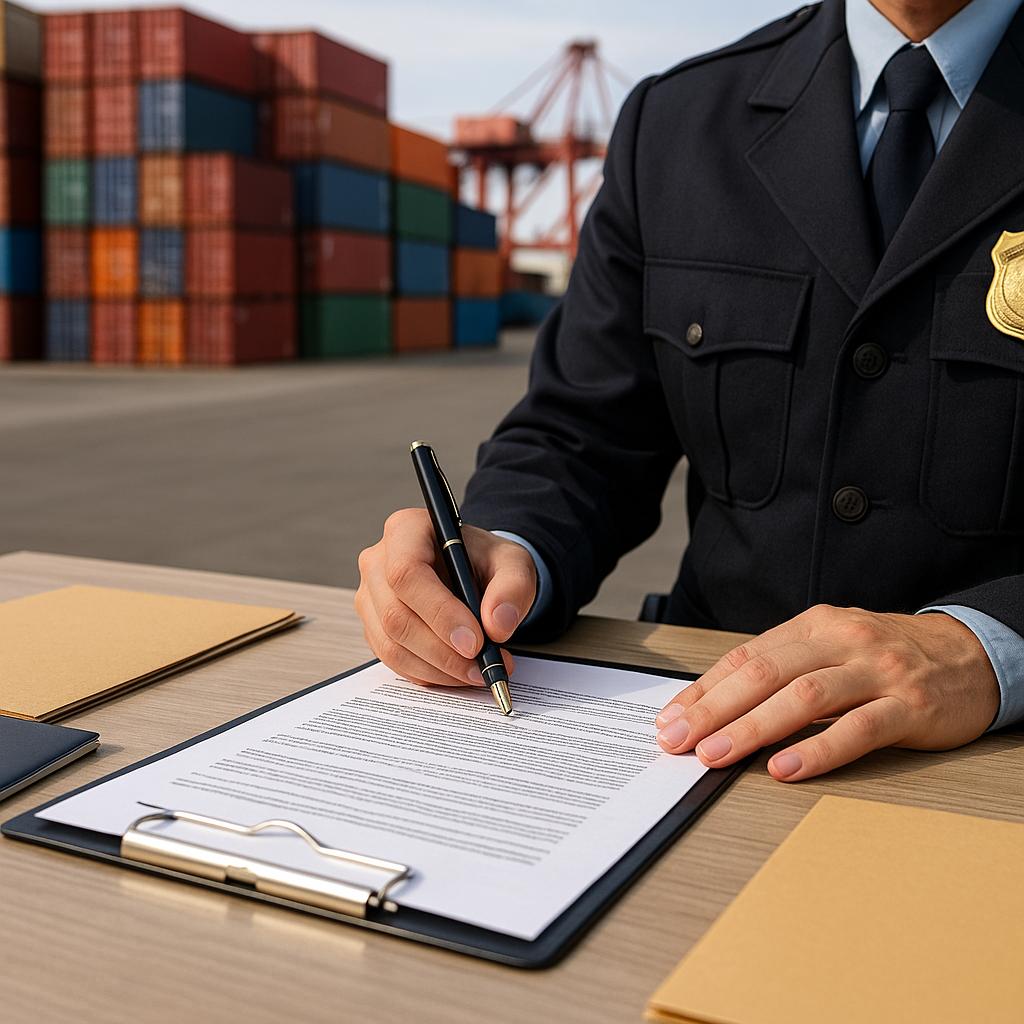
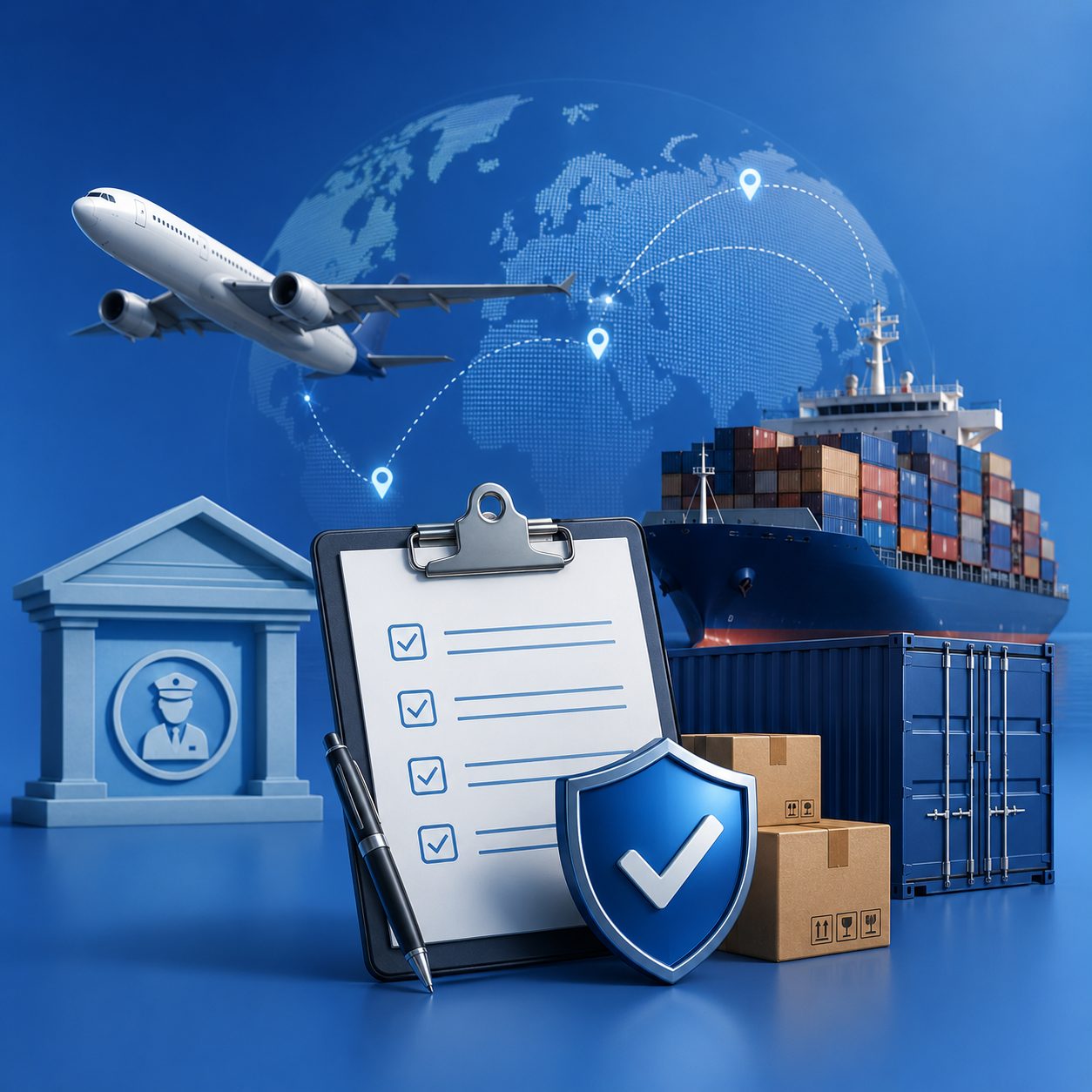
Step 3: Documentation Preparation
This is one of the most critical stages.
International shipments require accurate paperwork.
Freight forwarders help coordinate:
- Commercial invoices
- Packing lists
- Shipping documents
- Customs-related paperwork
A single mistake can delay an entire shipment.
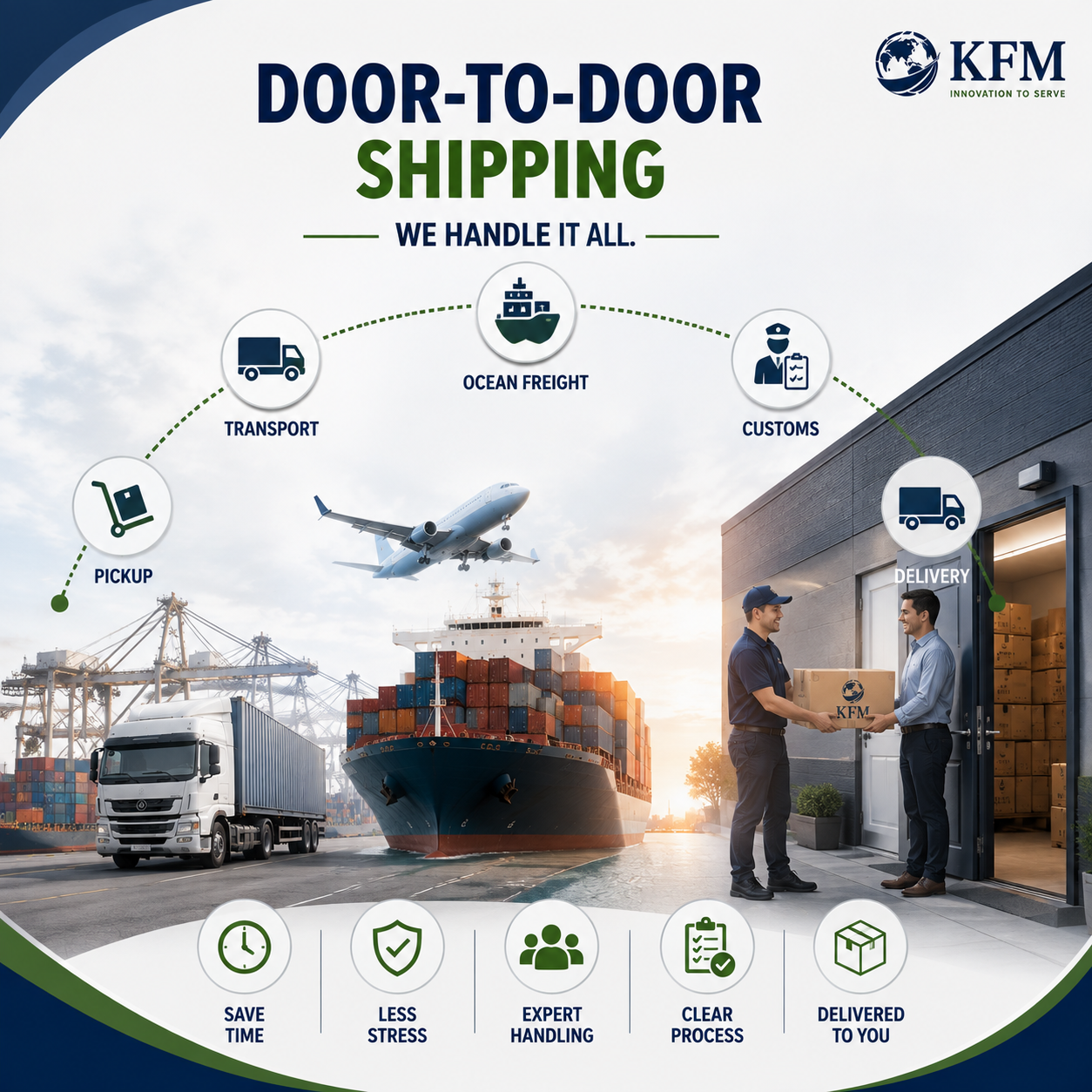
Step 4: Cargo Collection & Movement
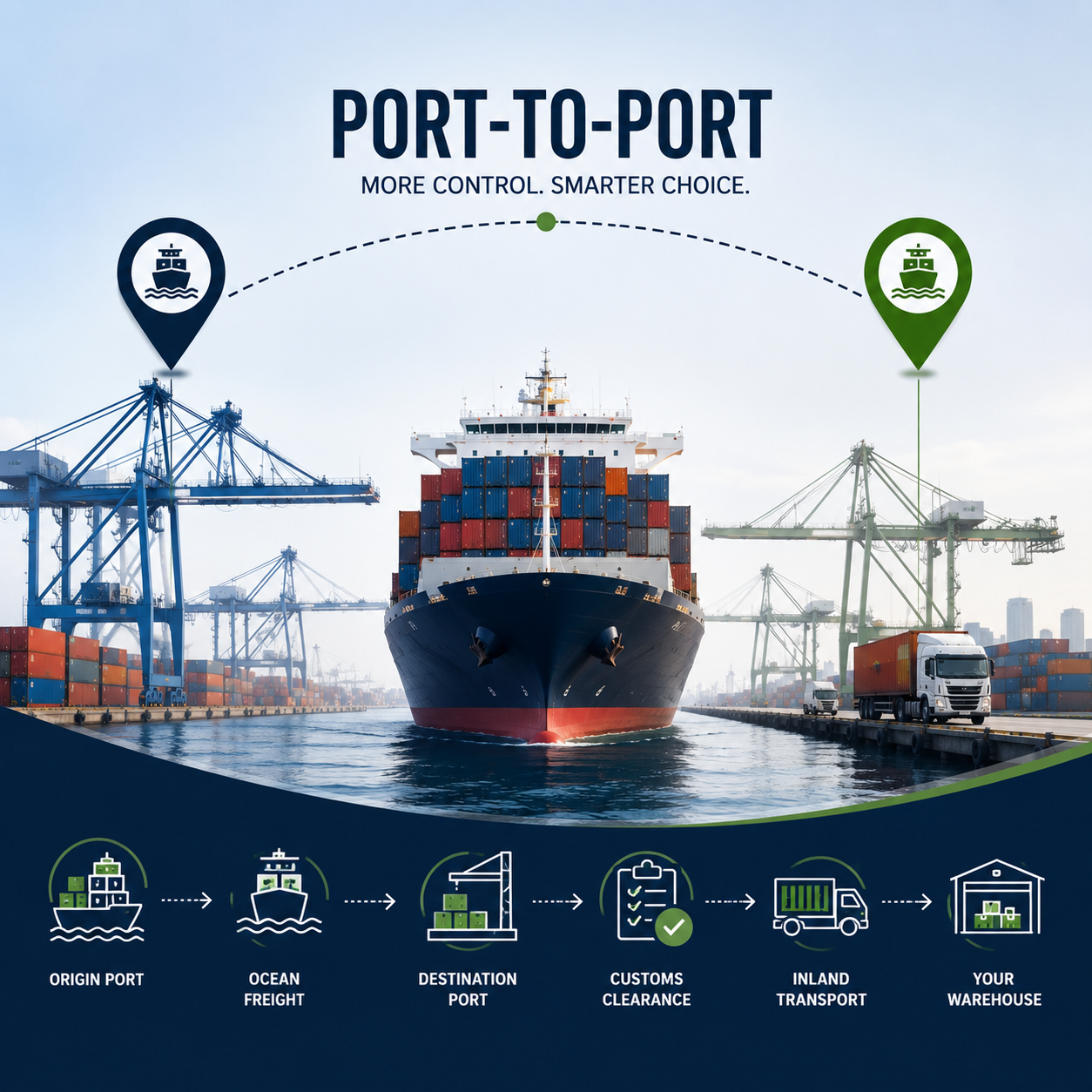
Once planning and documentation are complete, the cargo begins its journey.
Freight forwarders coordinate:
- Cargo pickup
- Warehouse handling
- Transportation scheduling
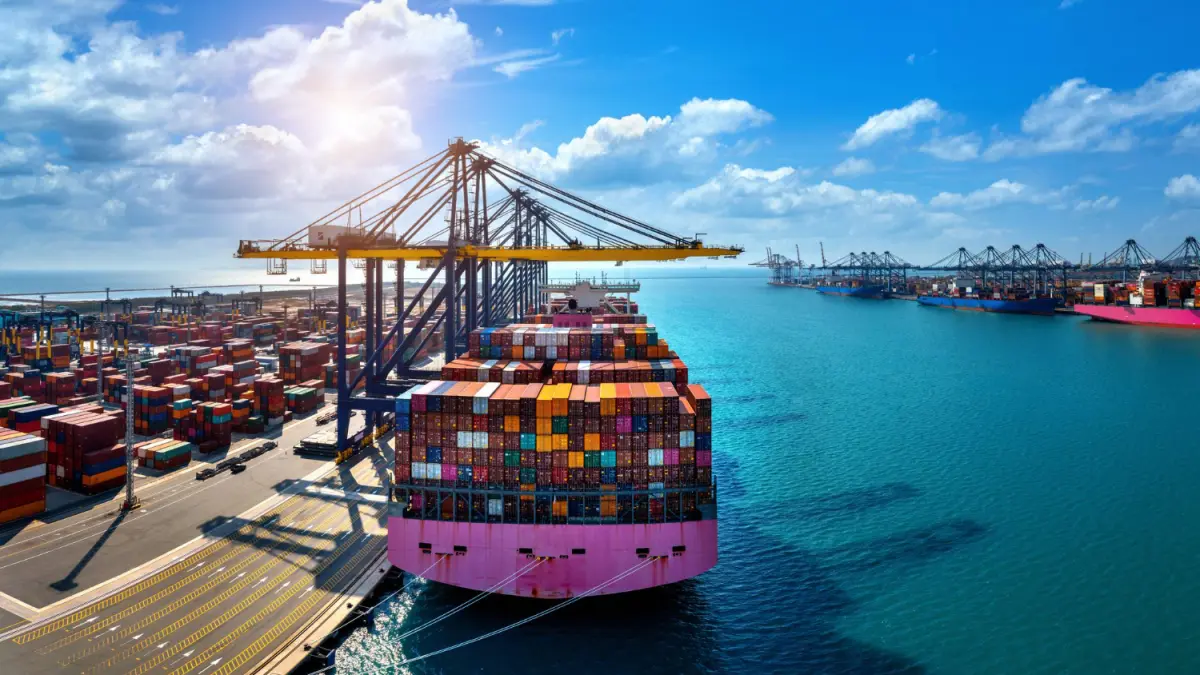
- Port or airport transfers
Timing is carefully managed to avoid unnecessary delays.
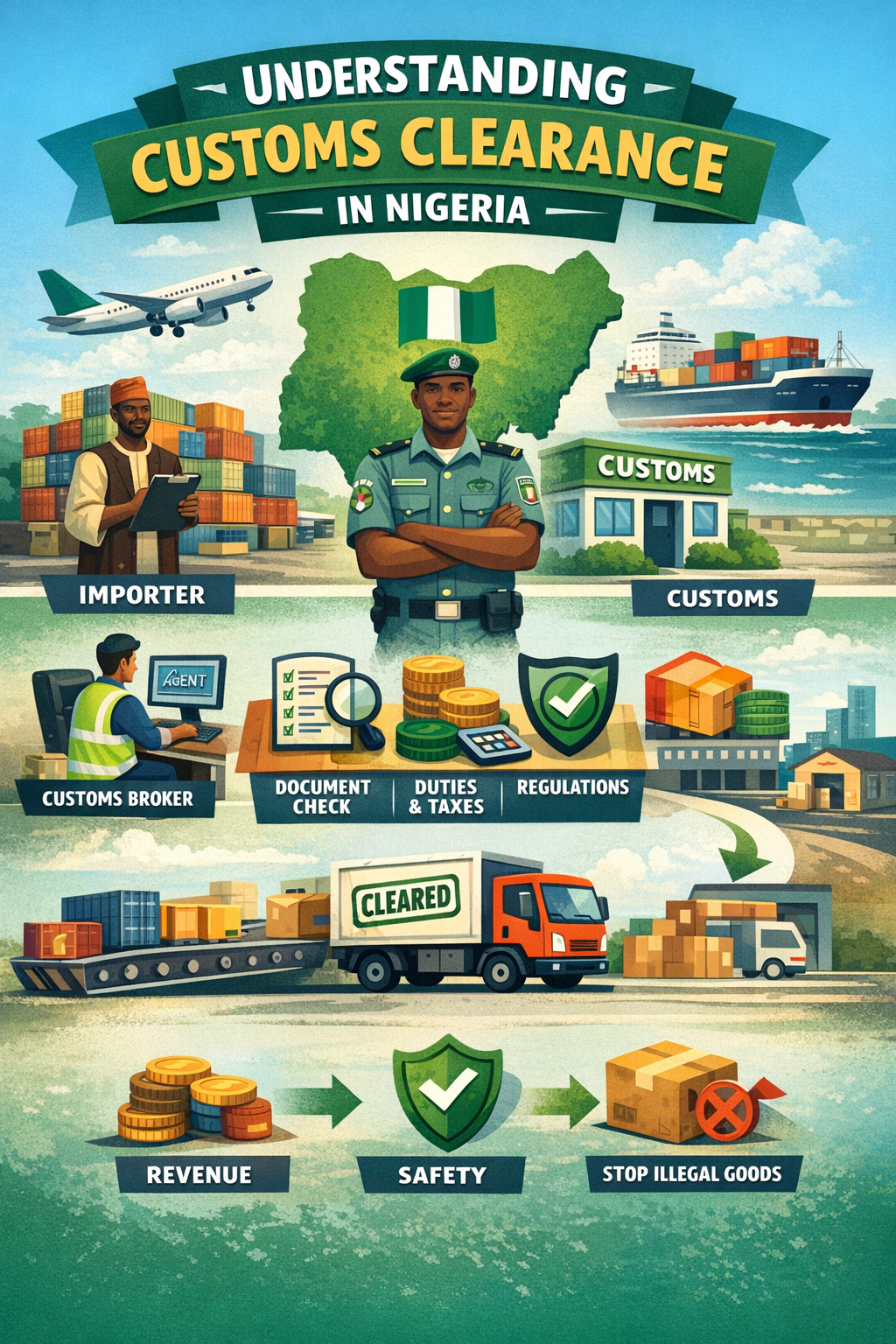
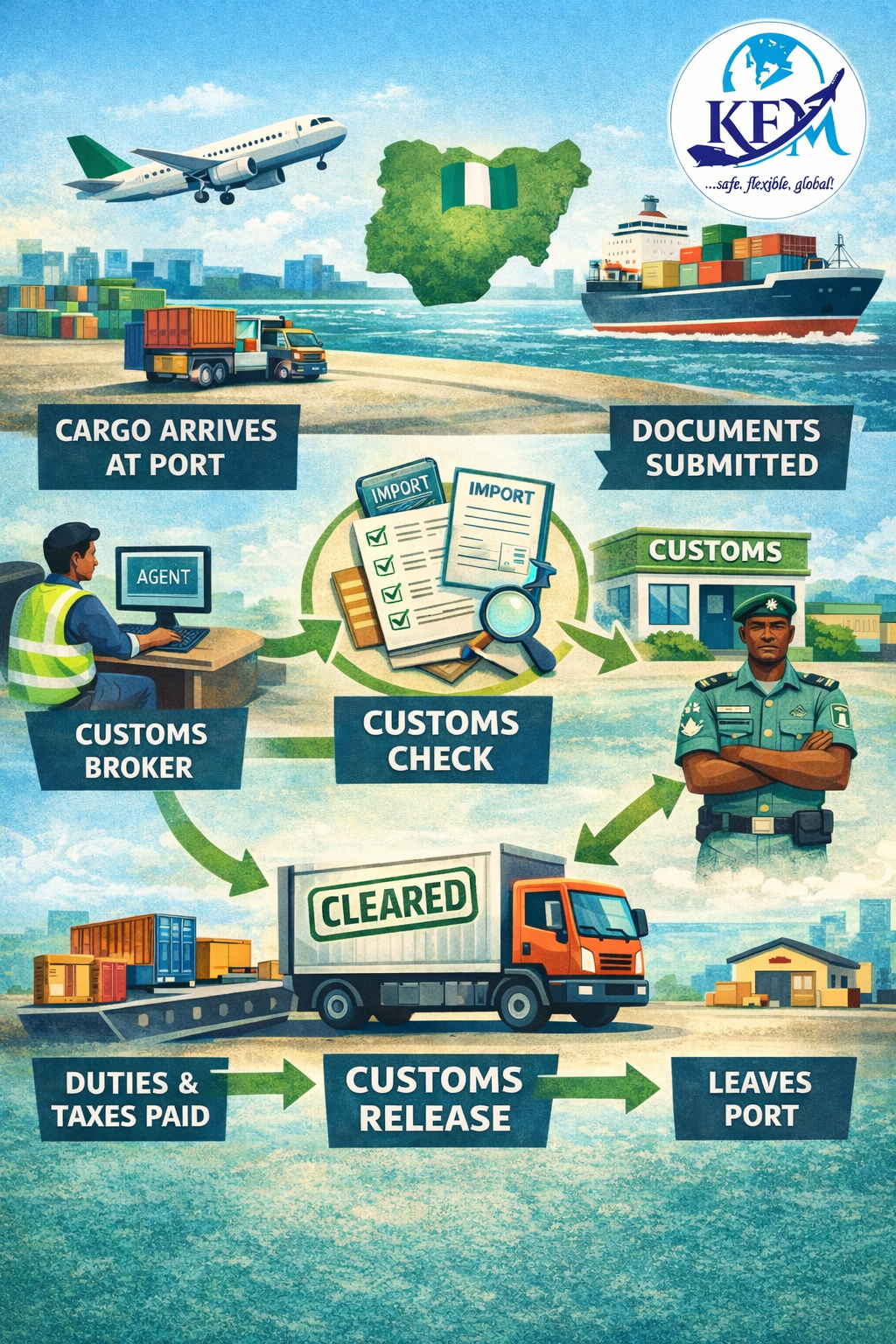
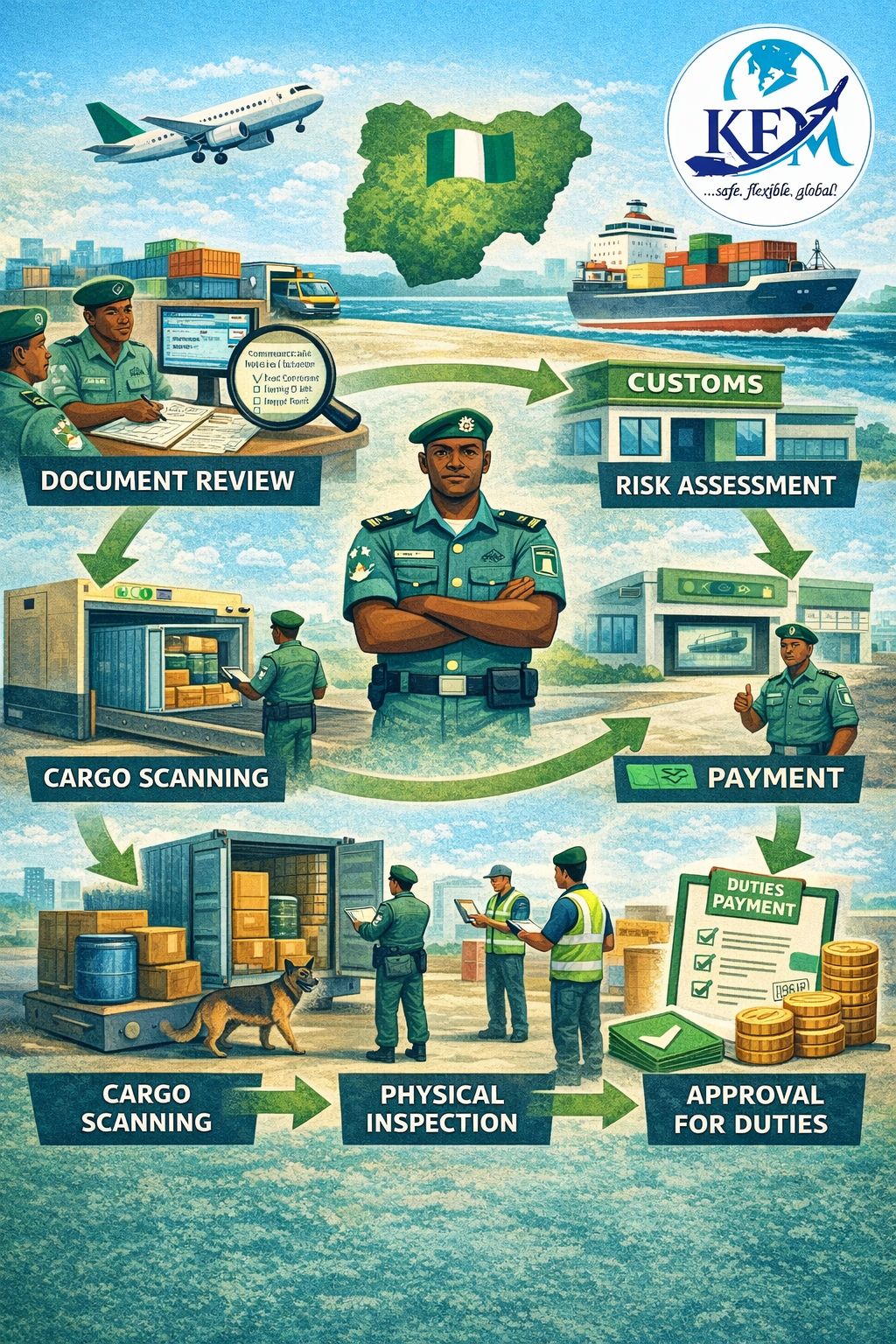
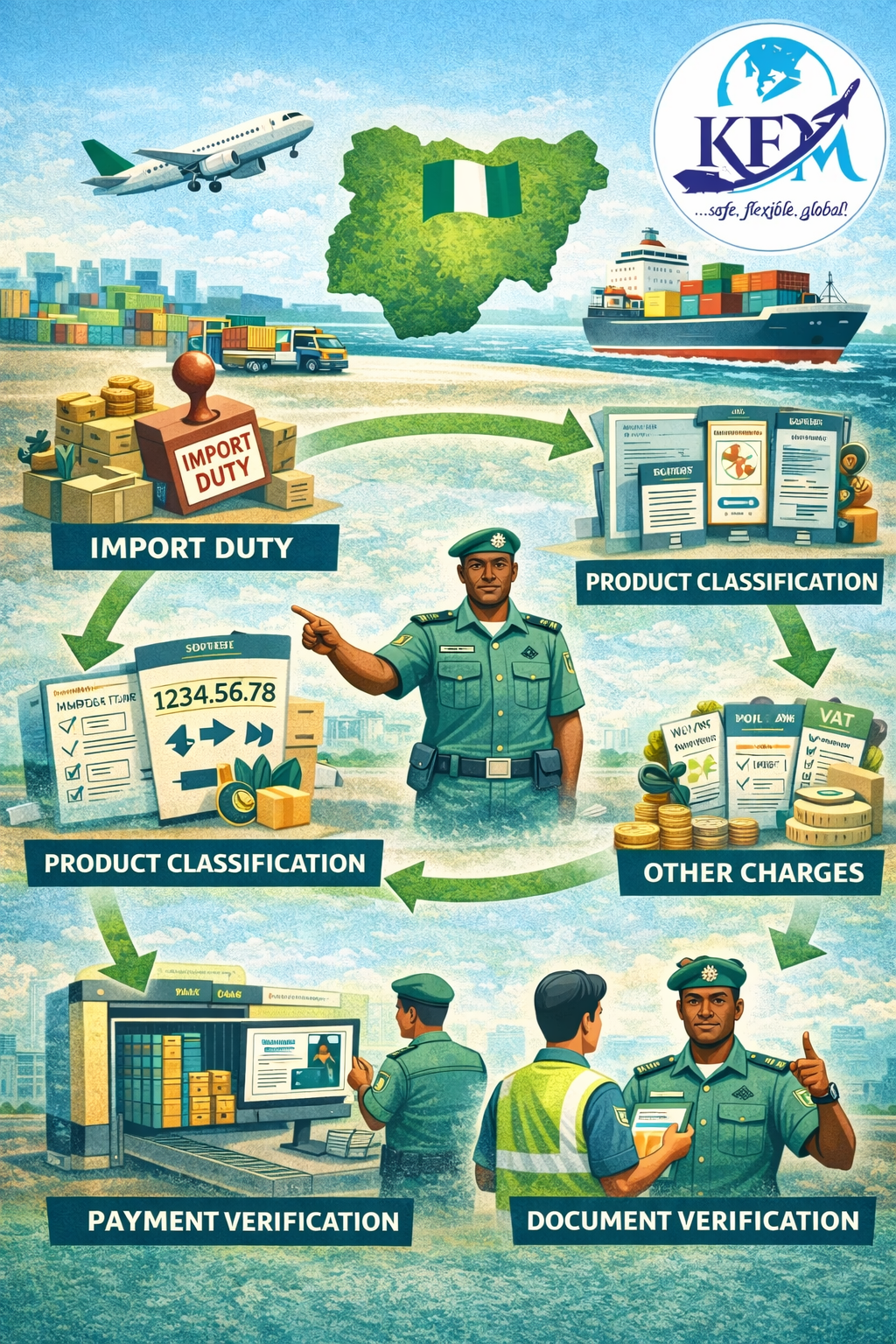
Step 5: Customs Processing
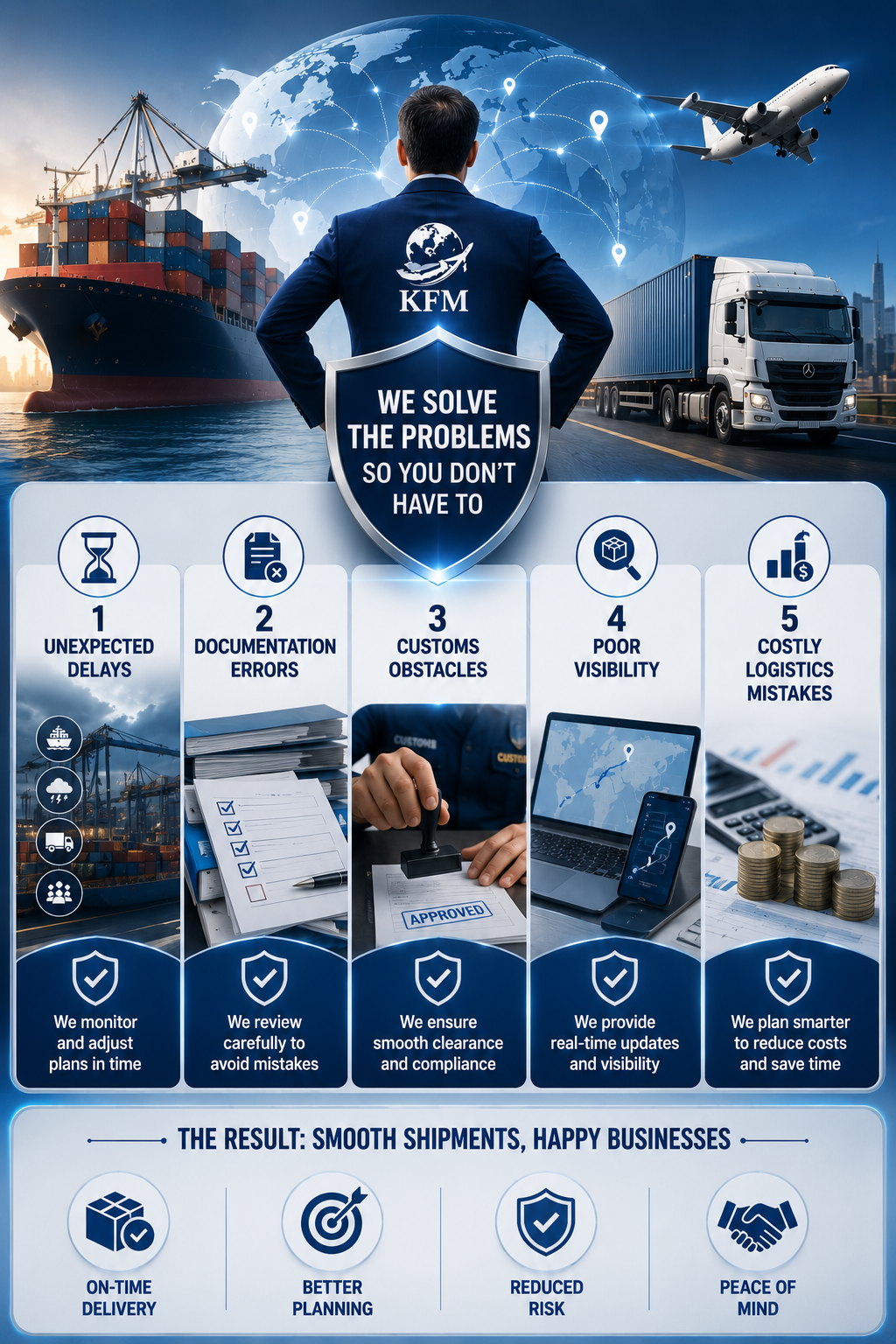
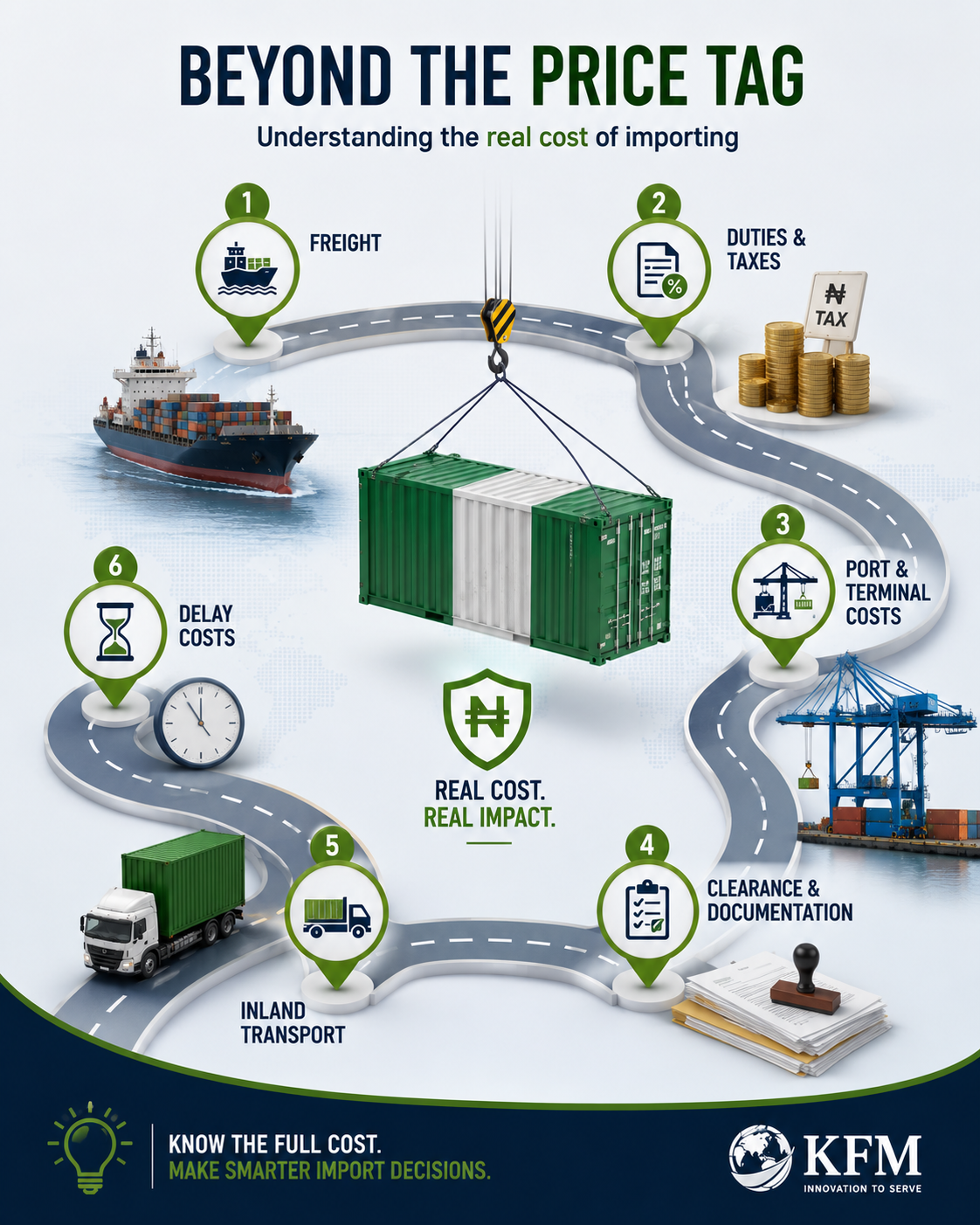
One of the biggest challenges in international logistics is customs clearance.
Freight forwarders help ensure shipments comply with applicable requirements and procedures.
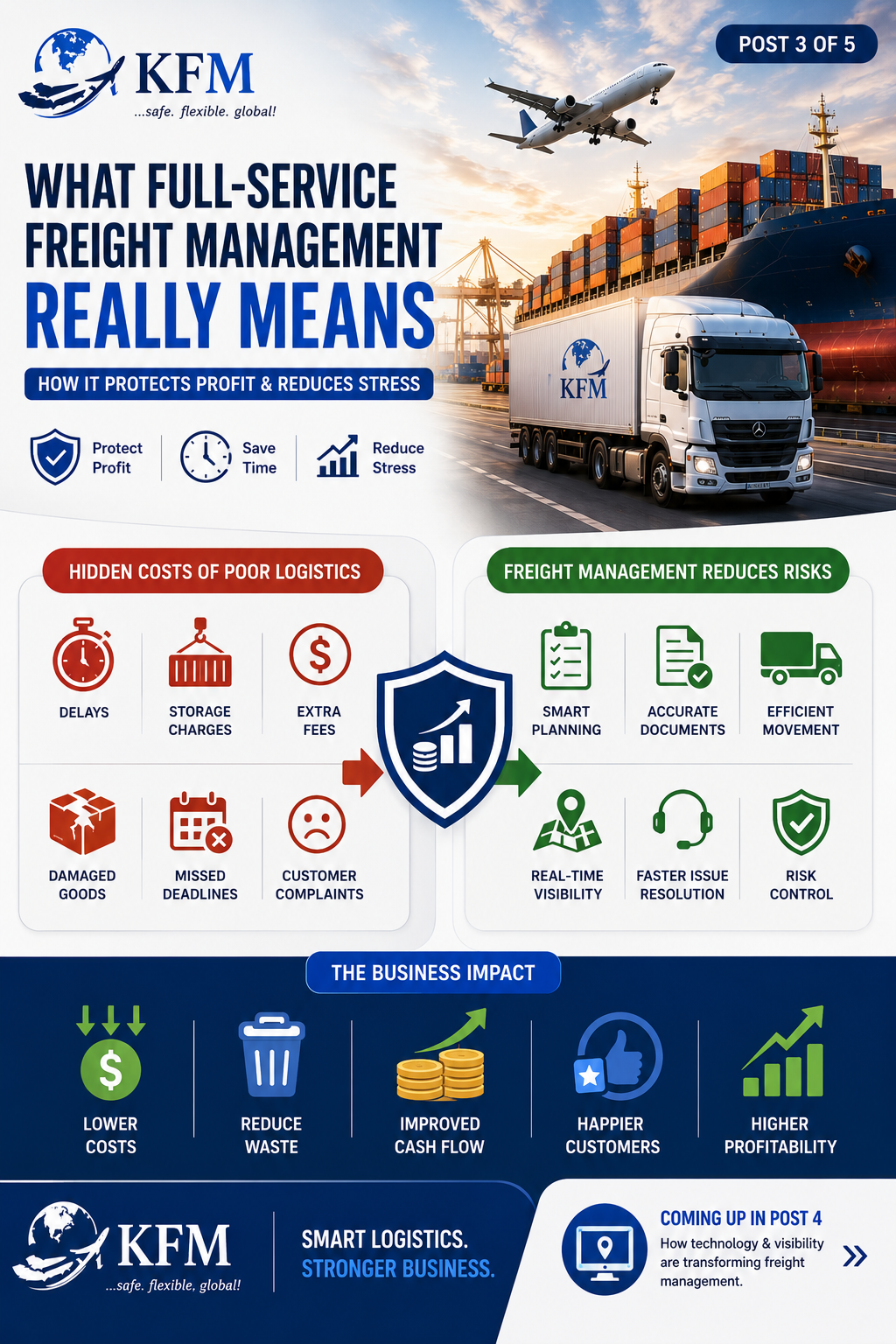
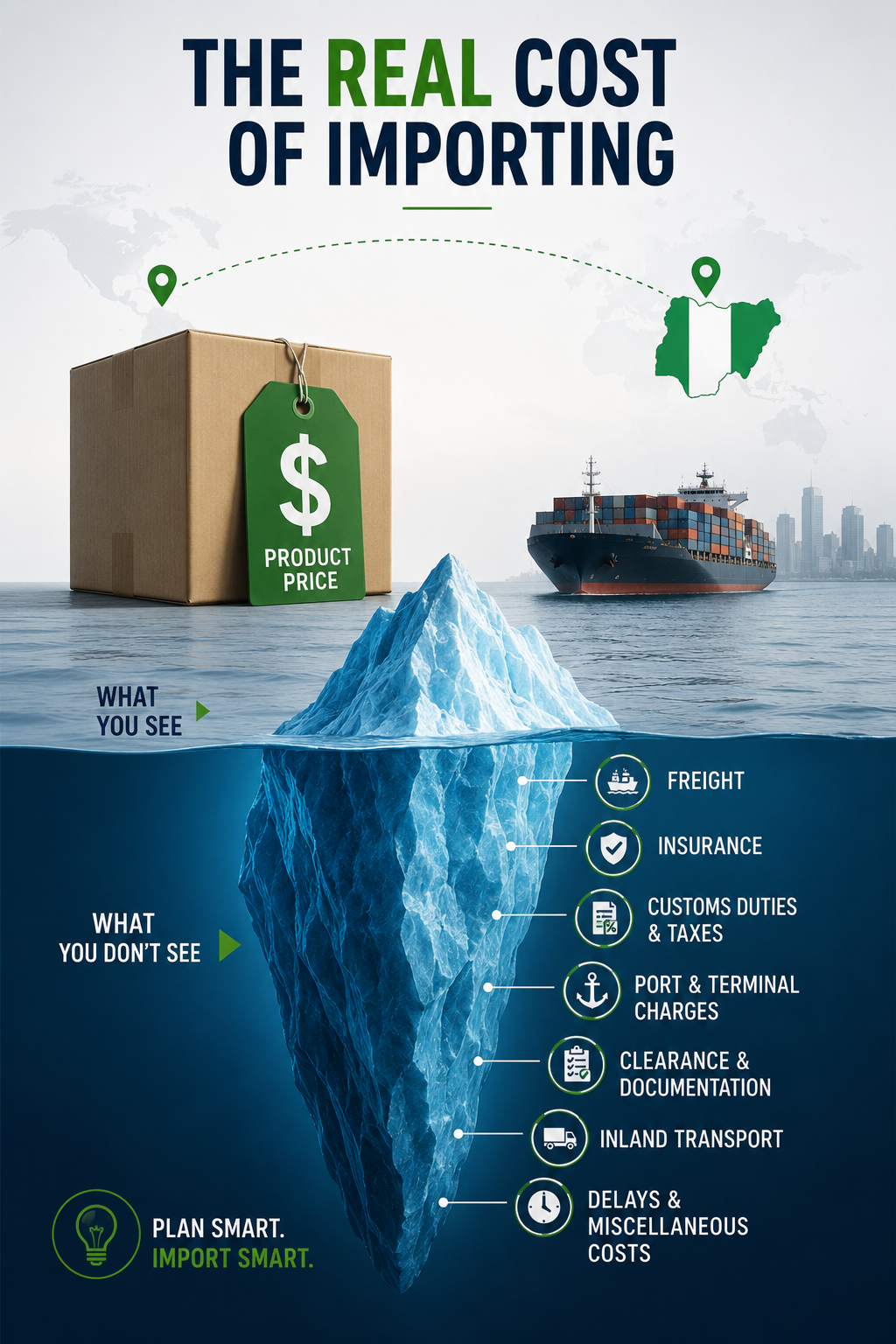
Proper preparation helps prevent:
- Unexpected delays
- Documentation issues
- Additional charges
Smooth customs processing keeps cargo moving.
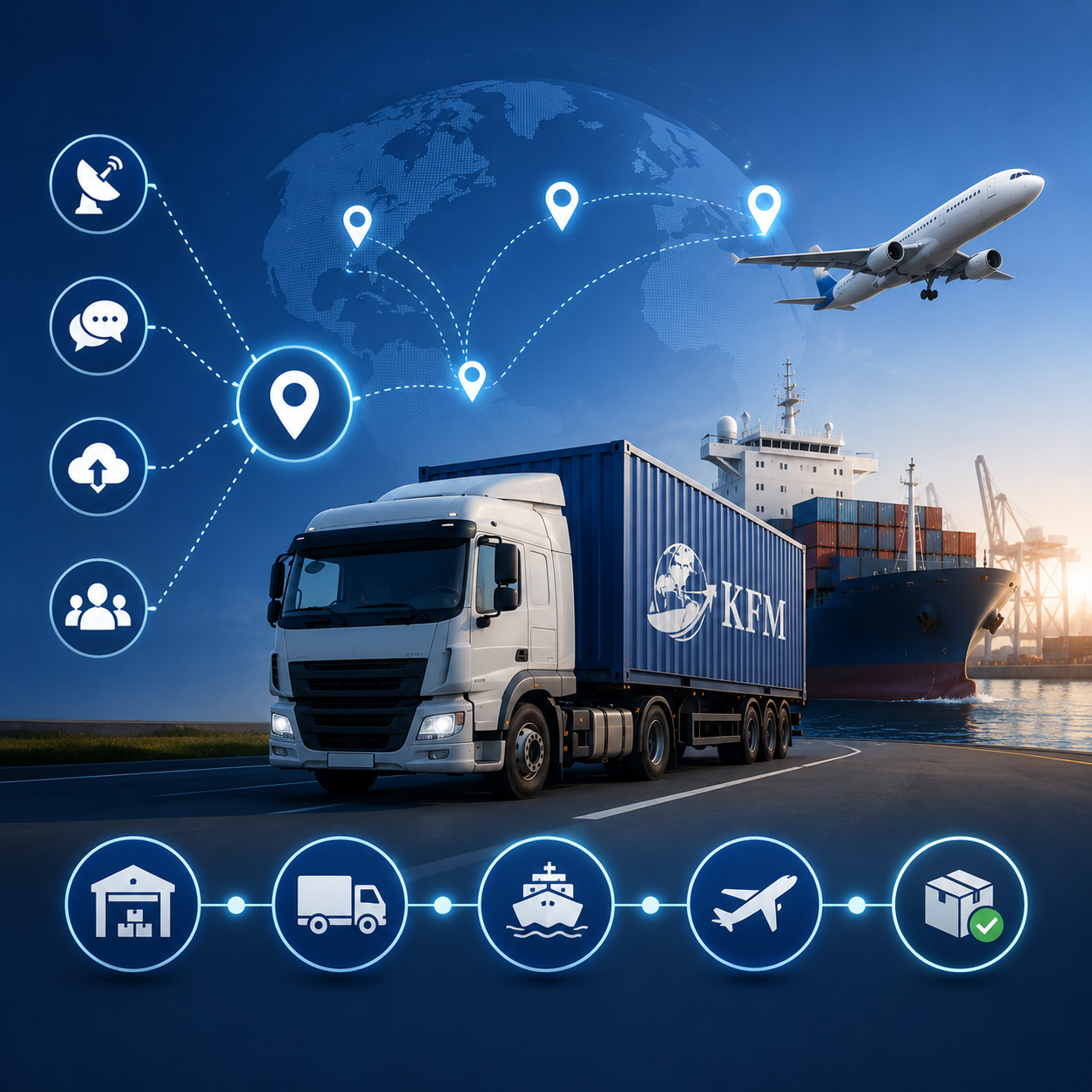
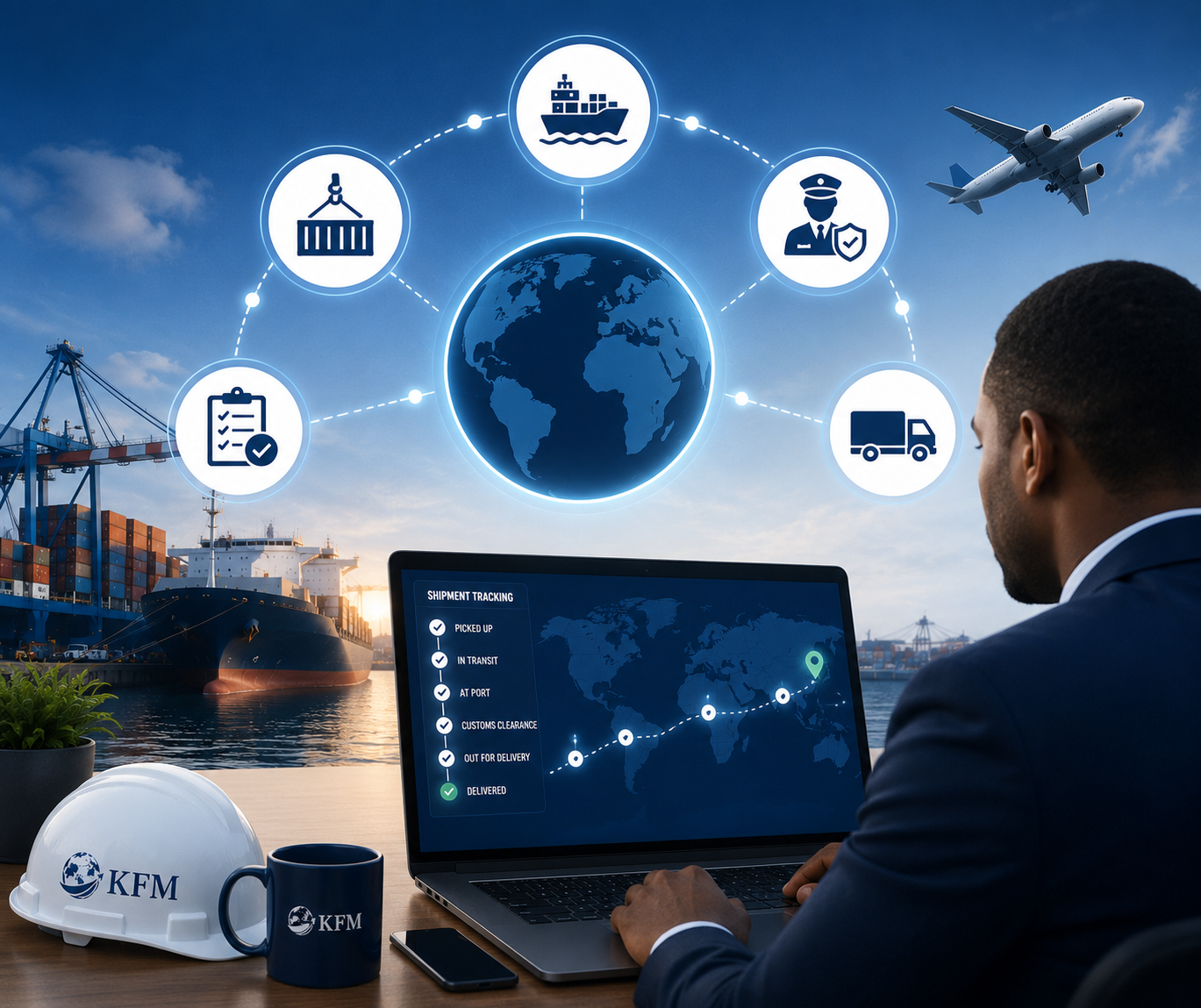
Step 6: Shipment Tracking & Updates
While cargo is in transit, freight forwarders continue monitoring progress.
Businesses gain visibility into:
- Shipment location
- Transit milestones
- Potential disruptions
Visibility creates confidence and better planning.
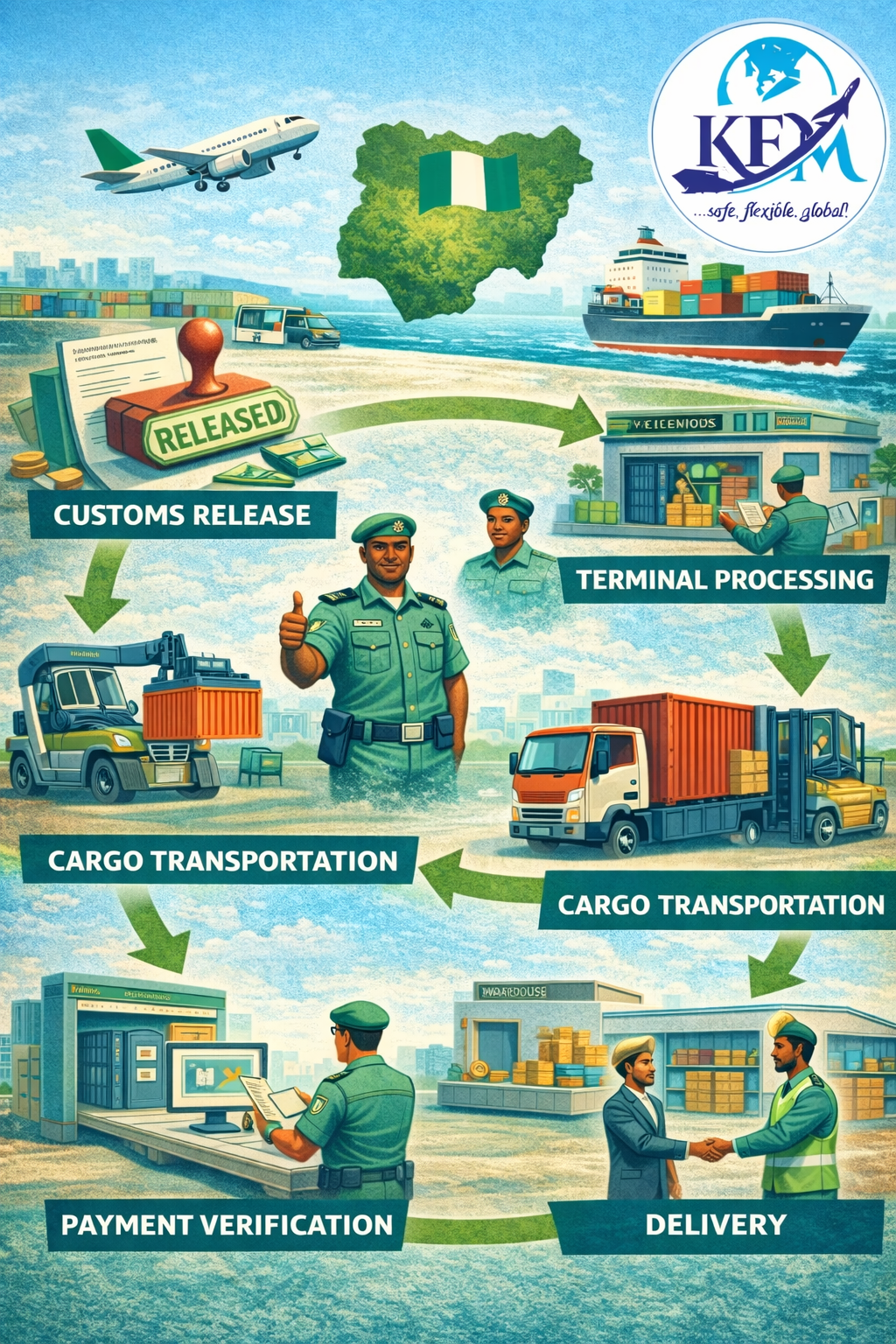
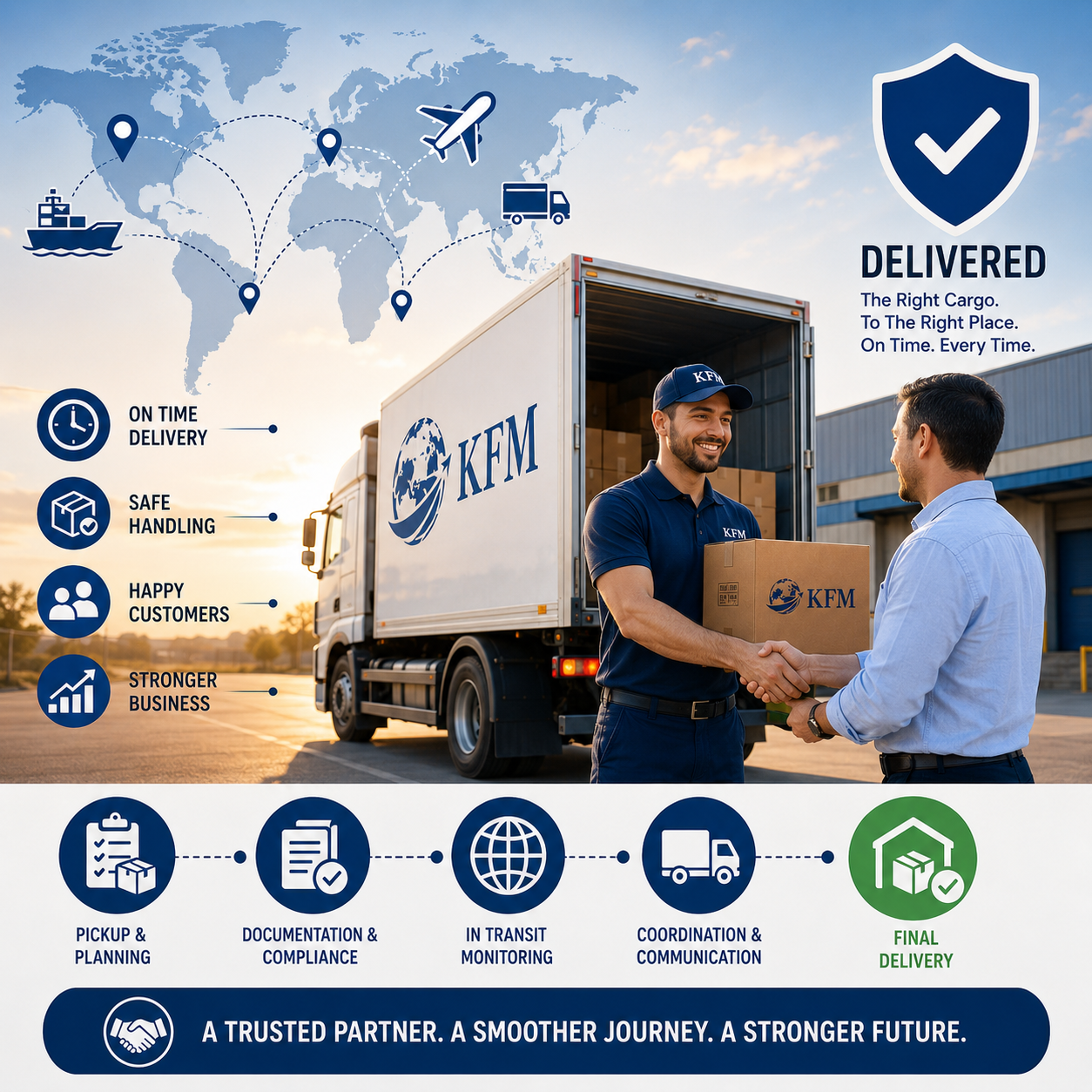
Step 7: Final Delivery
The final stage is ensuring cargo reaches its destination safely and efficiently.
This may involve:
- Local transportation
- Warehouse coordination
- Delivery scheduling
The shipment journey is only complete when the cargo reaches its intended recipient.
What Makes Professional Freight Forwarding Valuable?
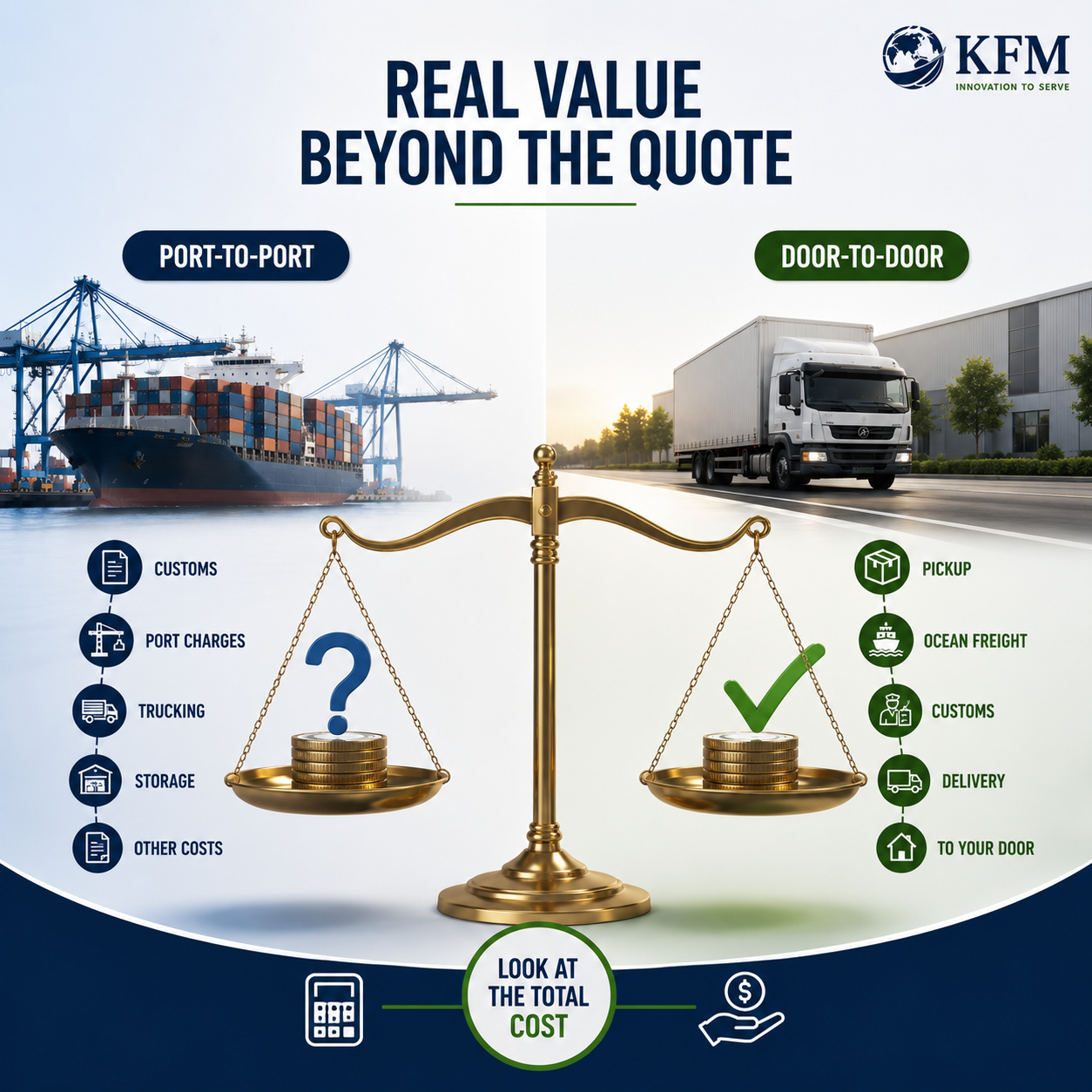
Businesses don't just pay for transportation.
They benefit from:
- Coordination
- Planning
- Visibility
- Problem-solving
- Logistics expertise
Professional freight forwarding simplifies a process that would otherwise be overwhelming.
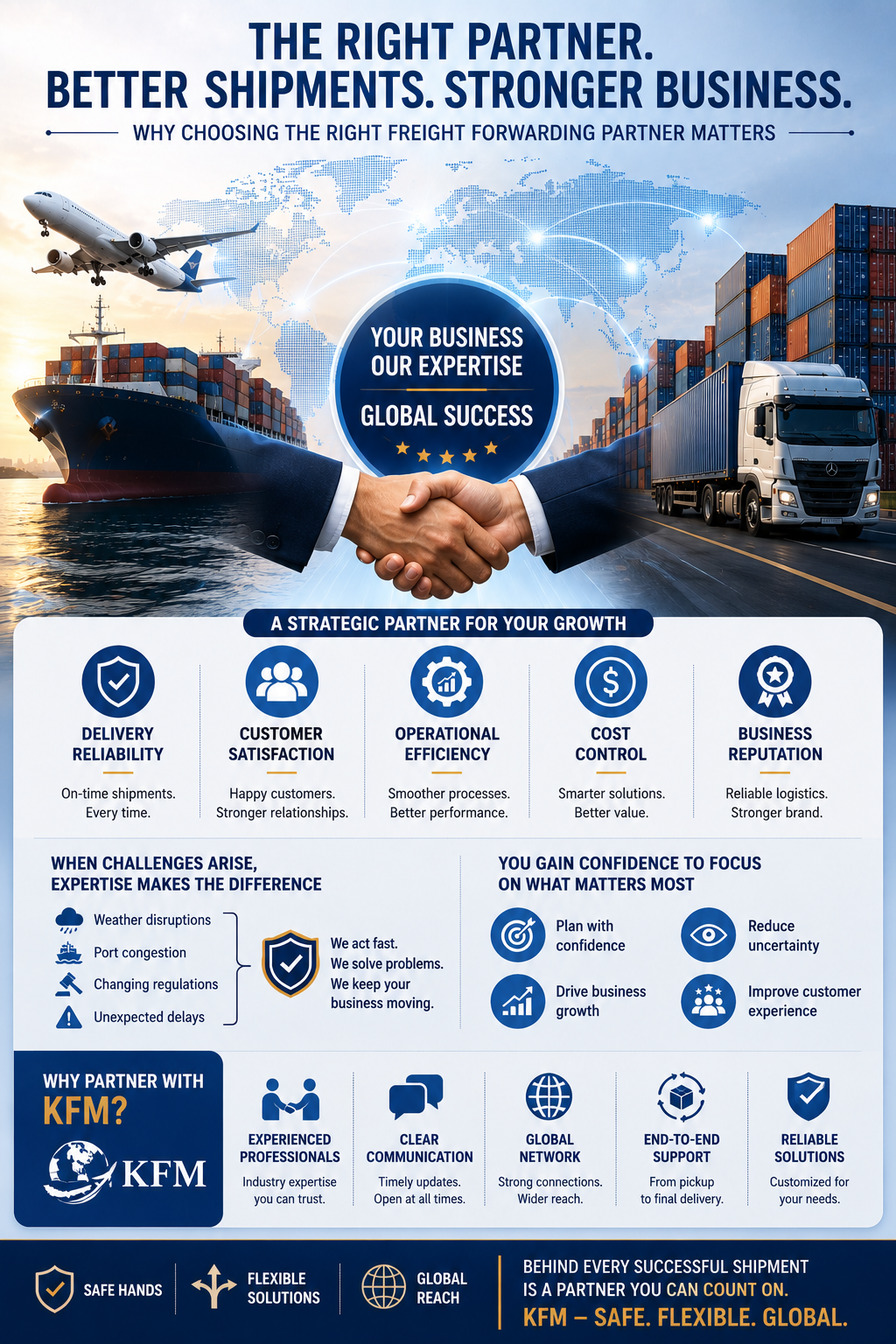
The KFM Advantage
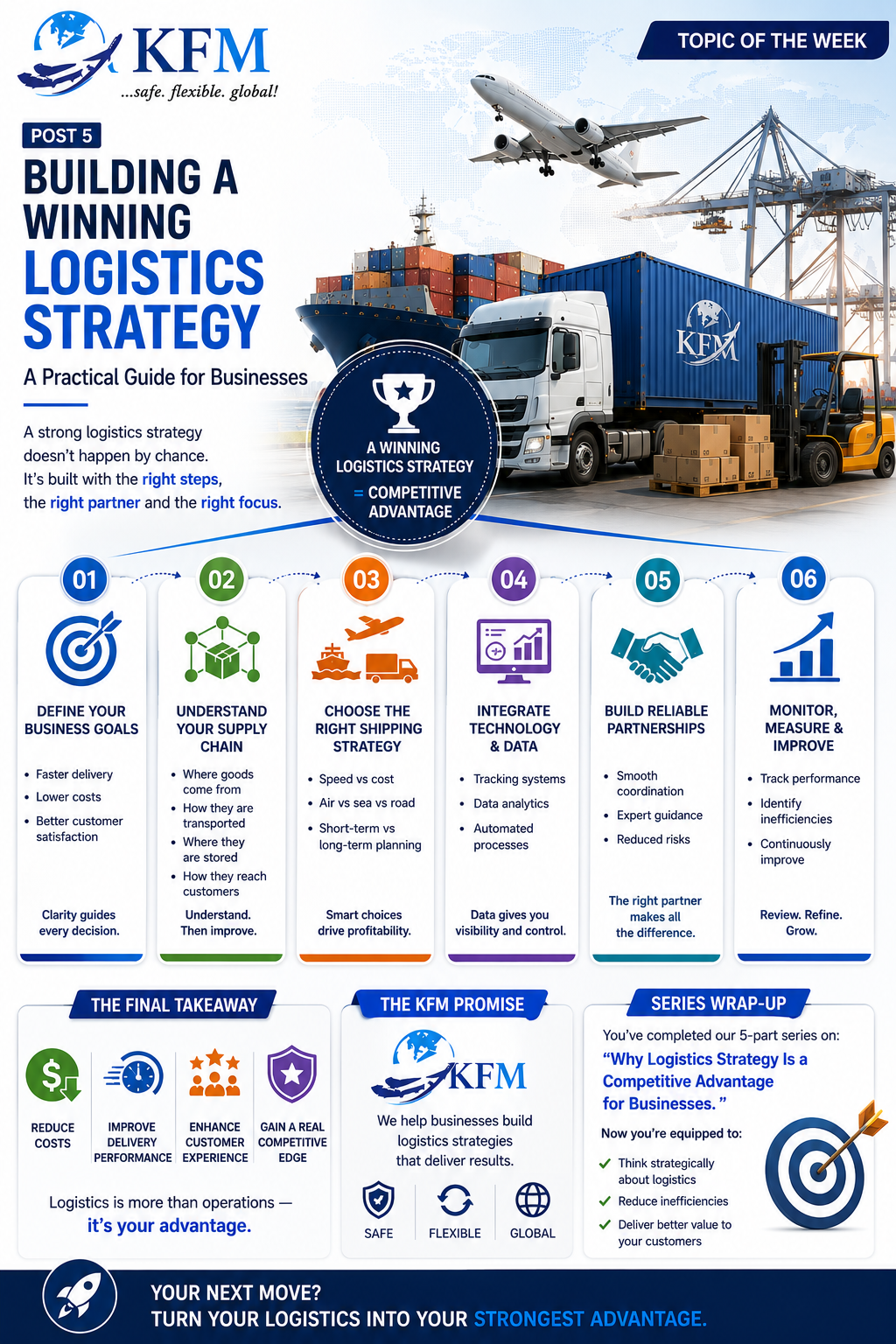
At KFM, we manage every stage of the freight journey with precision and professionalism.
Our goal is simple: make global shipping feel easy for our clients.