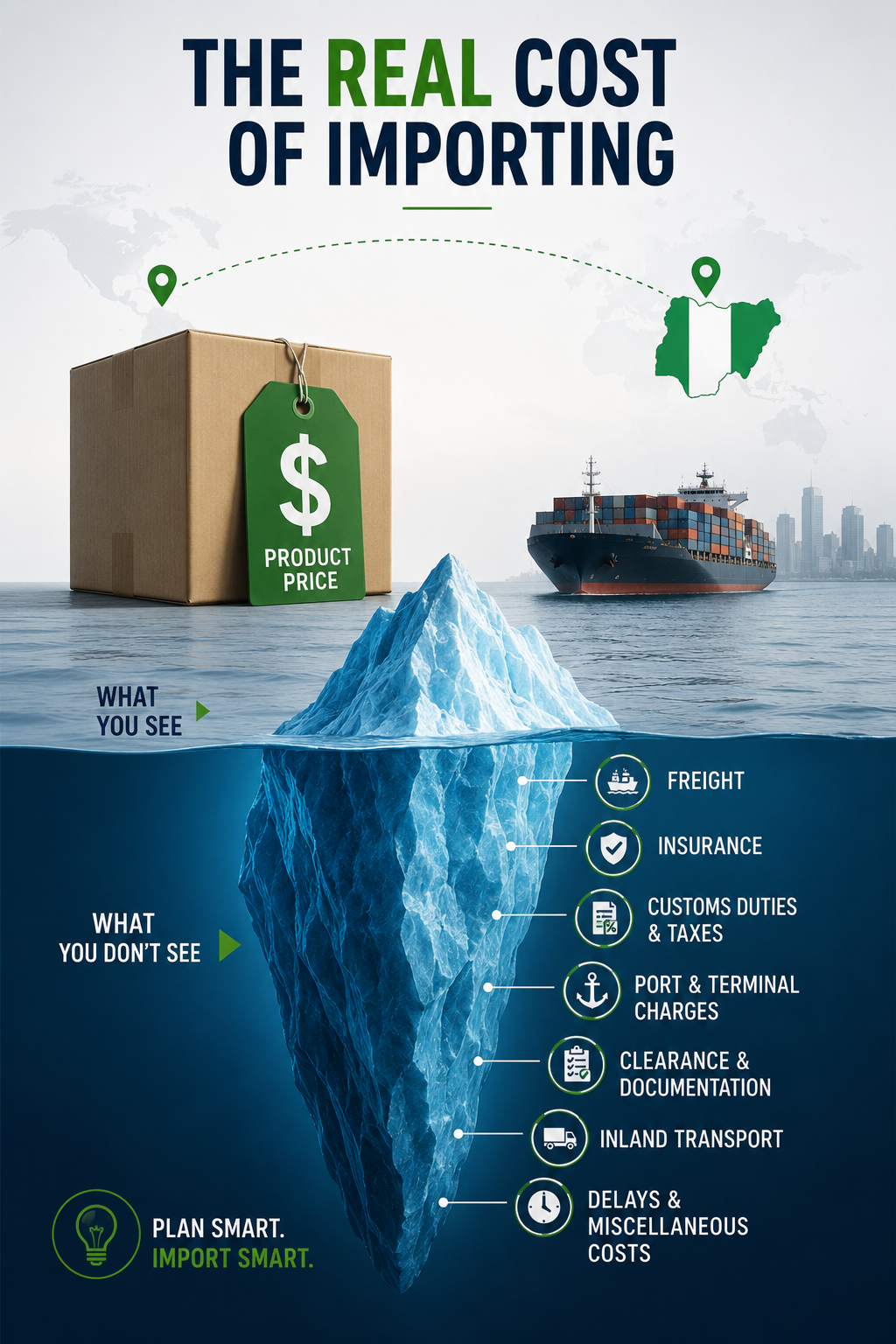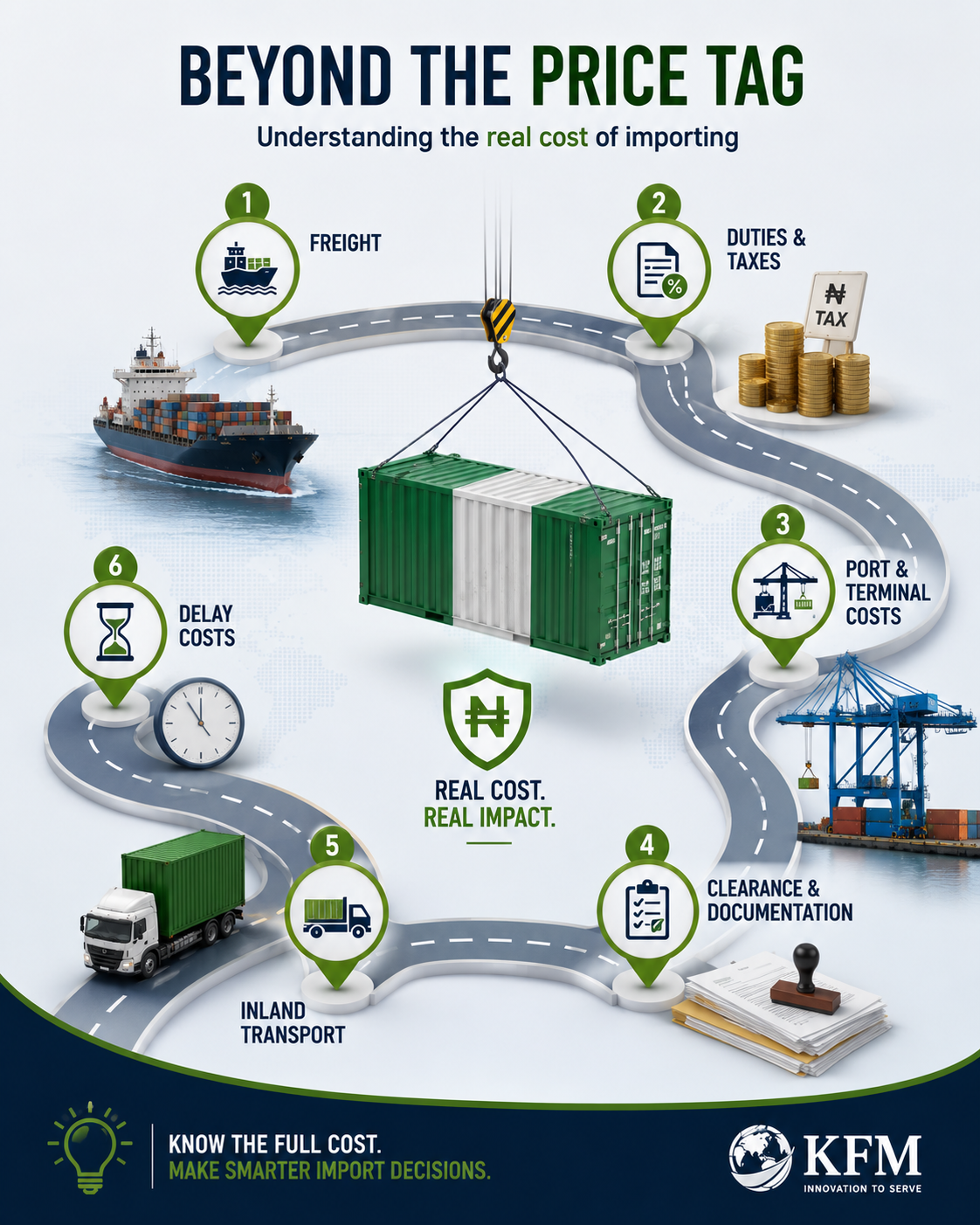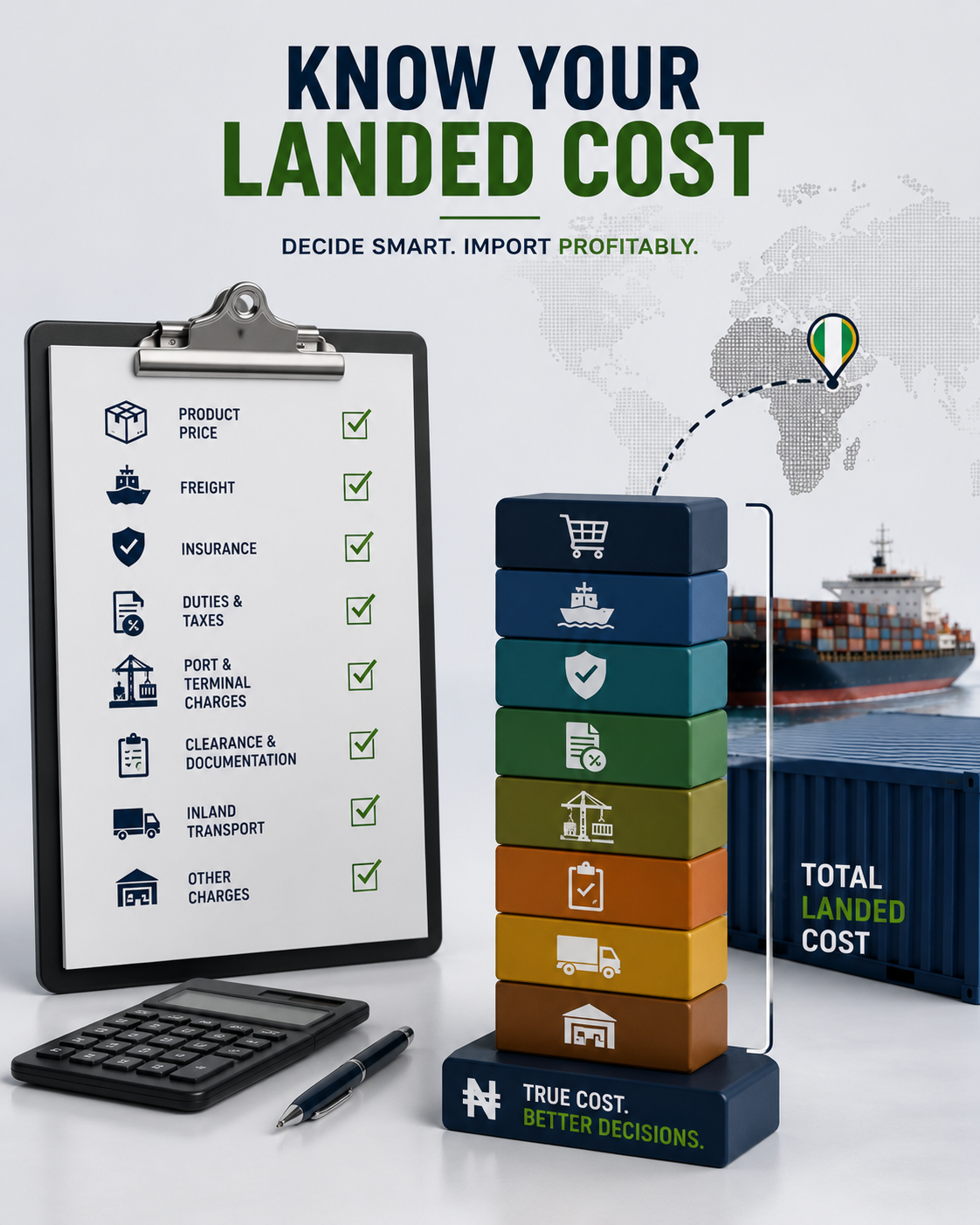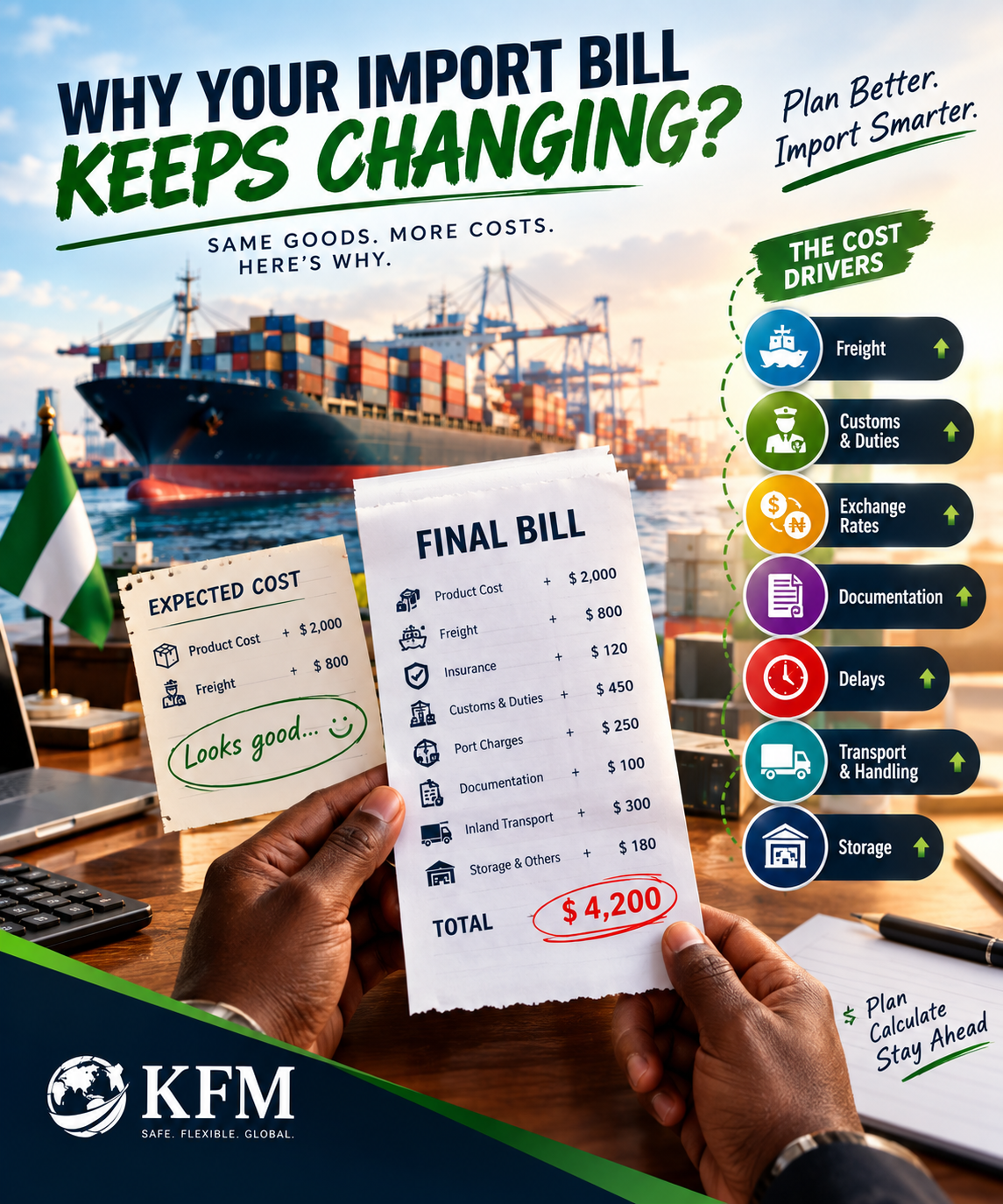
The product price is only the beginning. Here's how currency movements can affect what you actually pay.
Imagine you've found a supplier overseas and negotiated a good deal.
Your products cost $8,000, your shipping quotation looks reasonable, and you've calculated how much you expect to make when the goods arrive in Nigeria.
Then the exchange rate moves against the naira.
Suddenly, your supplier payment costs more. Your freight bill may also require more naira. And if other expenses are denominated in foreign currency, your total import budget could rise even further.
The surprising part? Your supplier may not have increased the price at all.
Let's look at how exchange rates can affect your total landed cost and what you can do to protect your business.
1. Start With Your Supplier's Invoice 💰
For many Nigerian importers, the first major foreign-currency expense is paying the overseas supplier.
Consider this example:
- Supplier invoice: $8,000
- Illustrative exchange rate: $1 = ₦1,400
- Equivalent supplier cost: ₦11,200,000
Now imagine the applicable exchange rate for your payment changes to ₦1,500 per dollar.
- Same supplier invoice: $8,000
- Illustrative exchange rate: $1 = ₦1,500
- New equivalent supplier cost: ₦12,000,000
That's an additional ₦800,000 for the same goods.
These rates are hypothetical examples, not current market quotations. Actual costs depend on the rate available to you, payment fees, and the terms of your transaction.
For a business working with tight margins, that difference can be significant.
2. Your Freight Cost Can Change Too 🚢
Suppose your international freight charge is quoted at $2,000.
At an illustrative rate of ₦1,400 per dollar, the naira equivalent is ₦2,800,000.
At ₦1,500 per dollar, the same freight charge becomes ₦3,000,000.
That's another ₦200,000 difference, even though the quoted freight rate has not changed.
This distinction matters because there are two separate things to monitor:
- Freight-rate changes: The carrier or logistics provider changes the price of the service.
- Exchange-rate changes: The foreign-currency price stays the same, but its naira equivalent changes.
Both can affect your budget, but they are not the same problem.
3. Other Import Expenses Can Add to the Difference 📋
Your supplier payment and international freight are only part of the picture.
Depending on your shipment and service agreements, you may also have foreign-currency expenses relating to insurance, handling, or other logistics services.
You must also budget for applicable customs duties, taxes, terminal charges, clearance services, and inland transportation.
However, not every charge is denominated in foreign currency, and not every expense changes directly with the exchange rate.
For example, Nigerian customs assessments follow applicable customs valuation rules. The rate used for customs assessment may differ from the rate available for your supplier payment.
The smart move is to identify each cost, its currency, and how it is calculated.
4. Let's Calculate the Bigger Picture 🧮
Imagine your import budget includes the following foreign-currency expenses:
- Goods: $8,000
- International freight: $2,000
- Other foreign-currency logistics expenses: $500
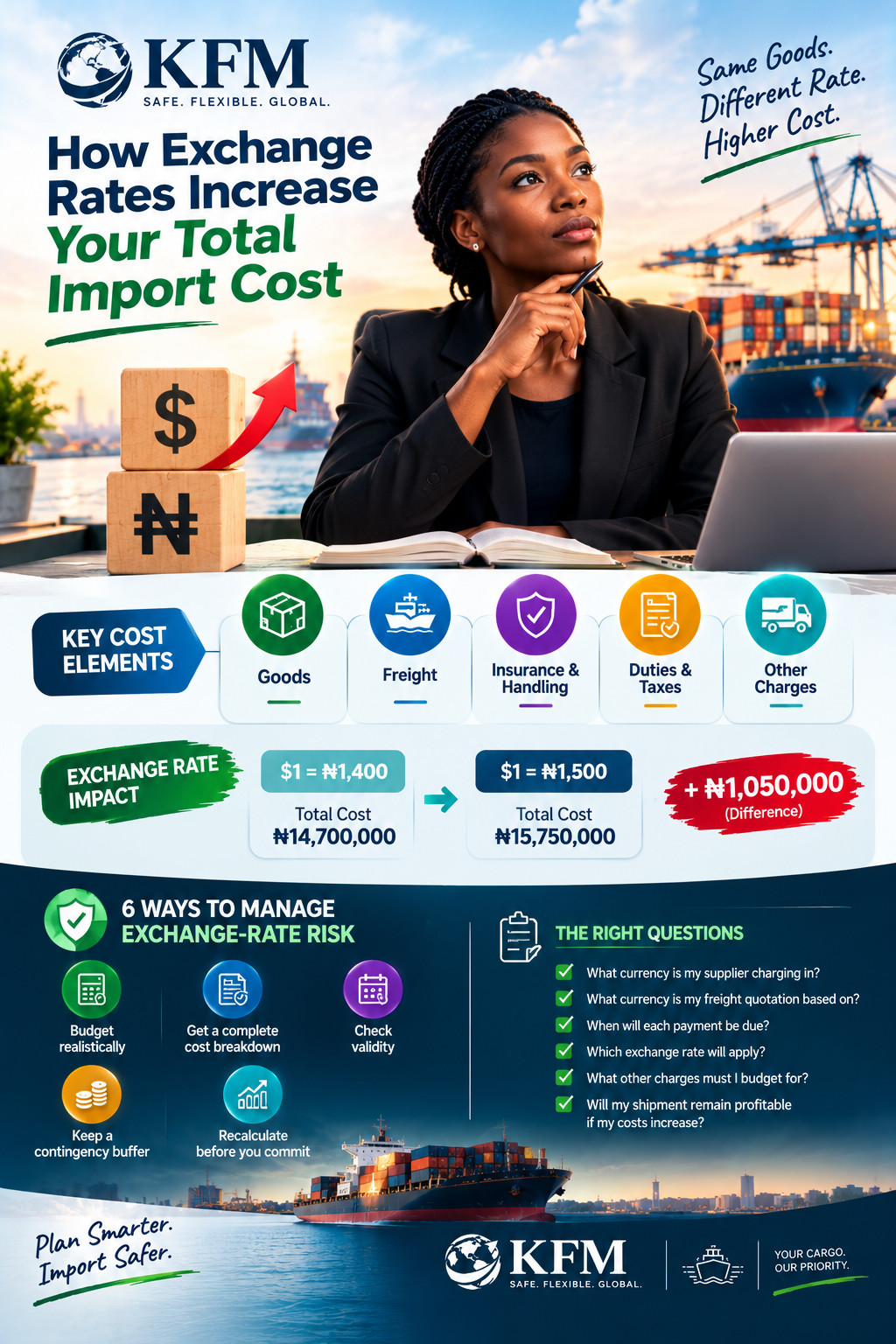
Your total foreign-currency expenses in this simplified example equal $10,500.
At ₦1,400 per dollar:
$10,500 × ₦1,400 = ₦14,700,000
At ₦1,500 per dollar:
$10,500 × ₦1,500 = ₦15,750,000
The difference is ₦1,050,000.
And remember: this calculation covers only the foreign-currency expenses listed in our example. It does not represent the full landed cost of an actual shipment.
```