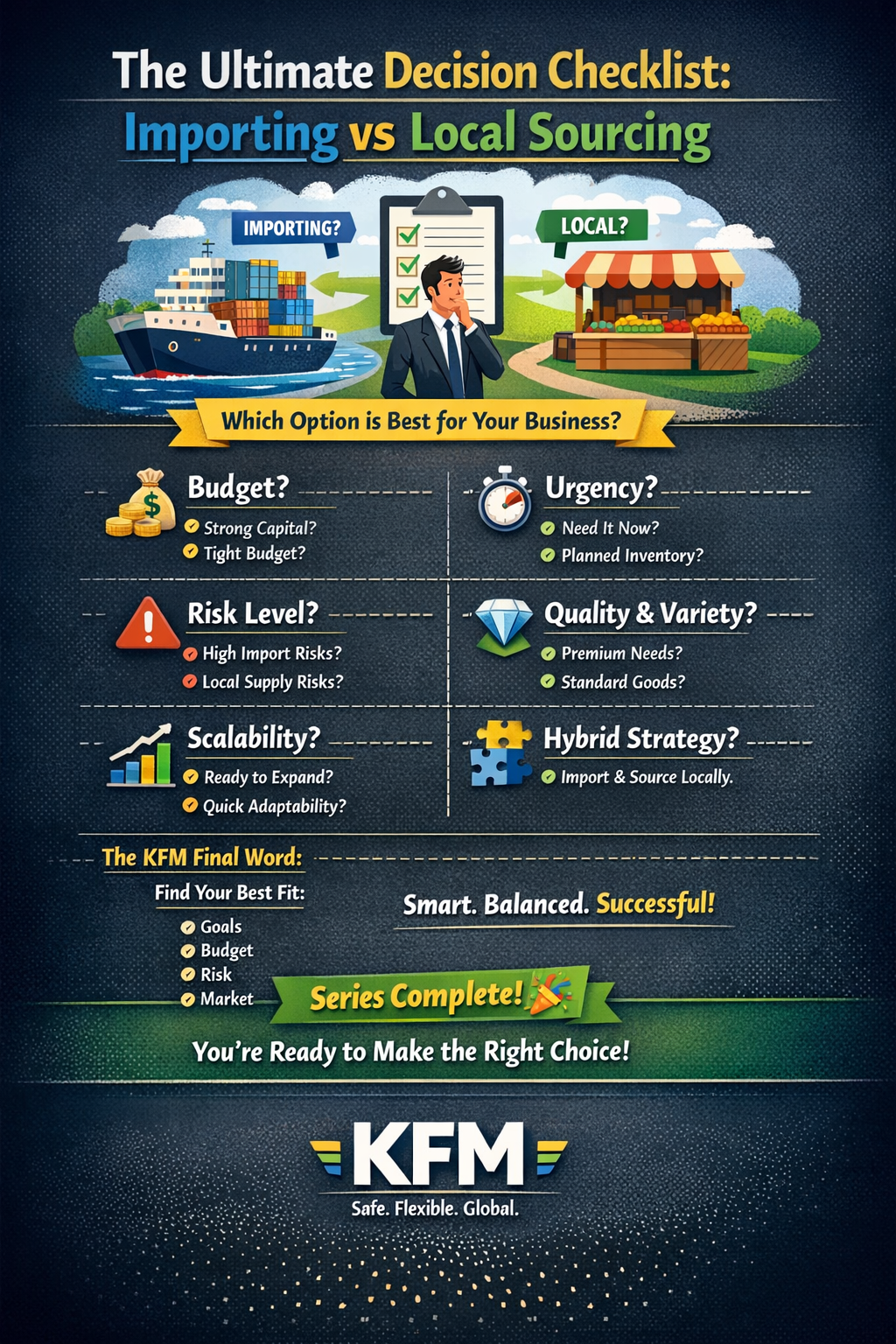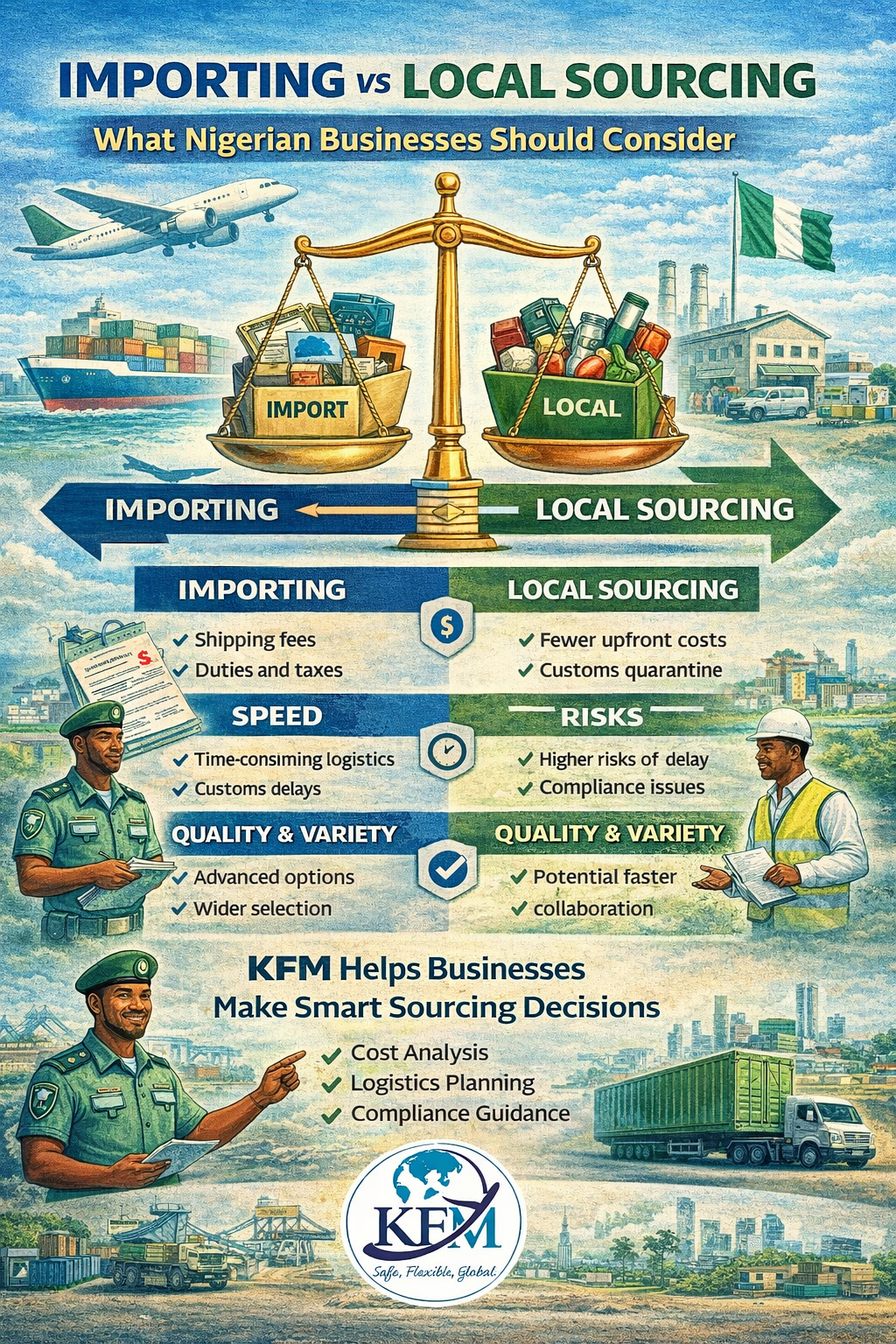
So you’ve seen the differences between importing and local sourcing… now the real question is: When should you actually choose importing?
At KFM, we work with many Nigerian businesses that rely on importing — not because it’s trendy, but because in certain situations, it is simply the smarter choice.
1. When You Need Better Pricing at Scale
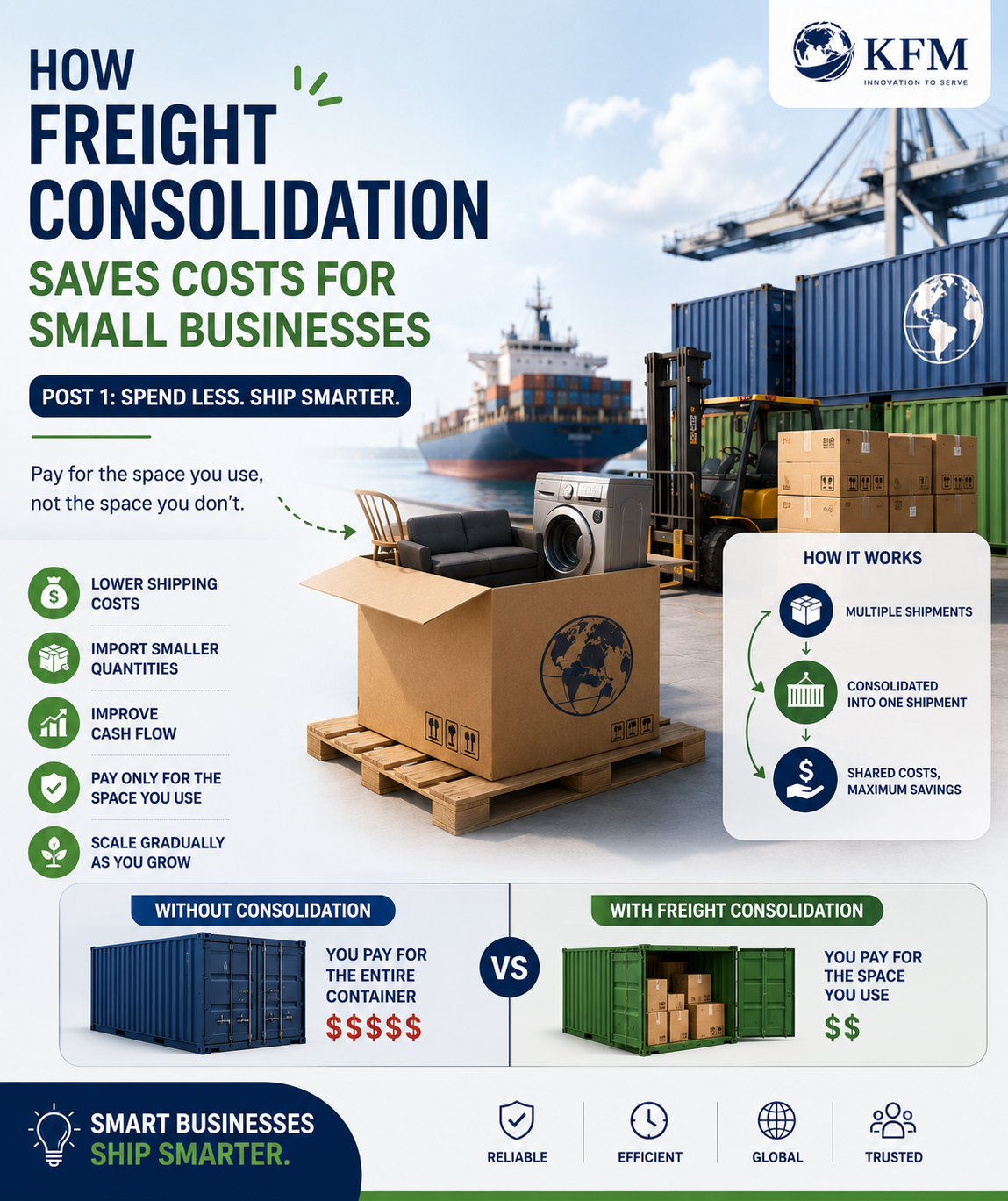
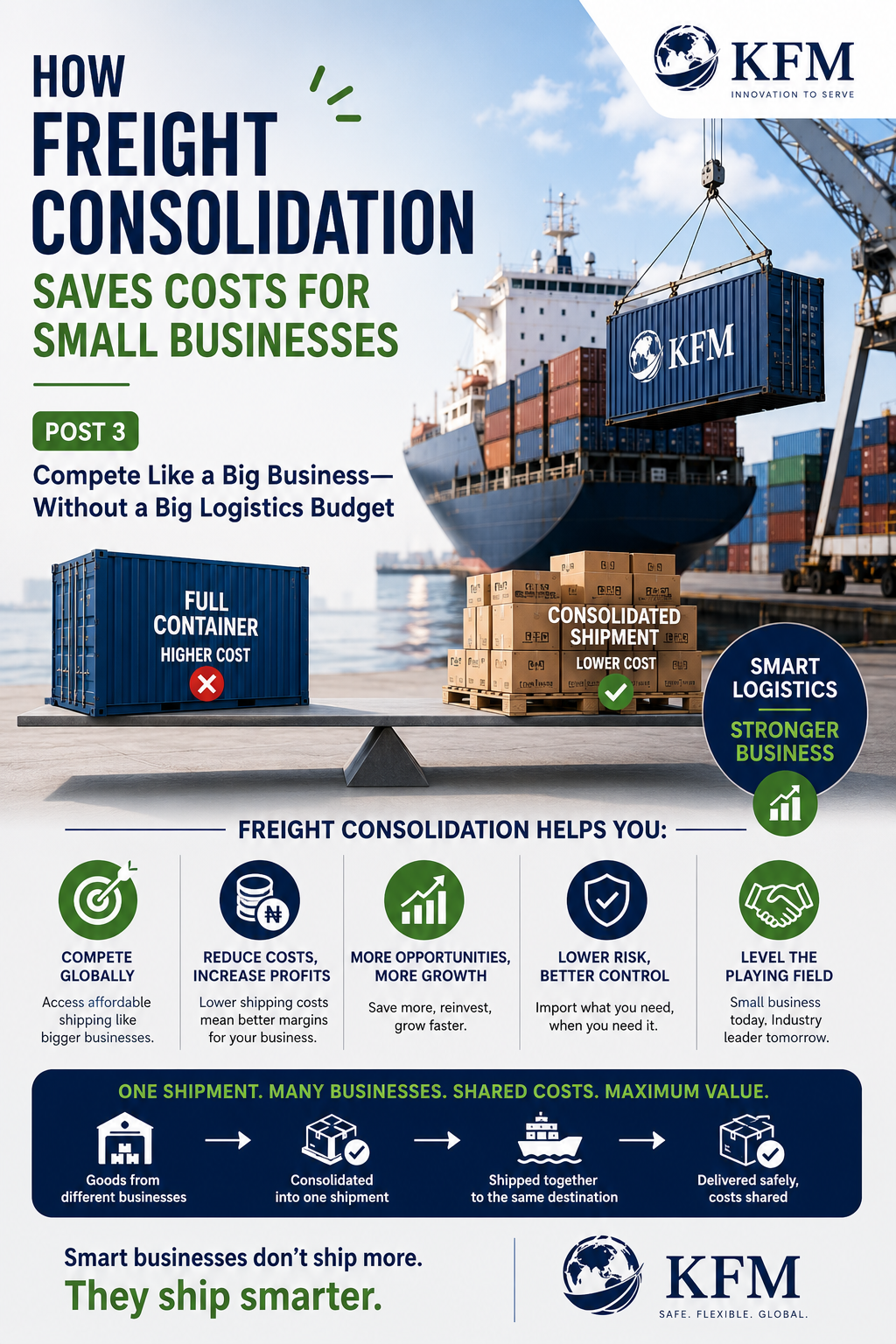
If you’re buying in large quantities, importing can significantly reduce your cost per unit.
Even after adding shipping and customs costs, bulk importing often leads to higher profit margins — especially for wholesalers and large retailers.
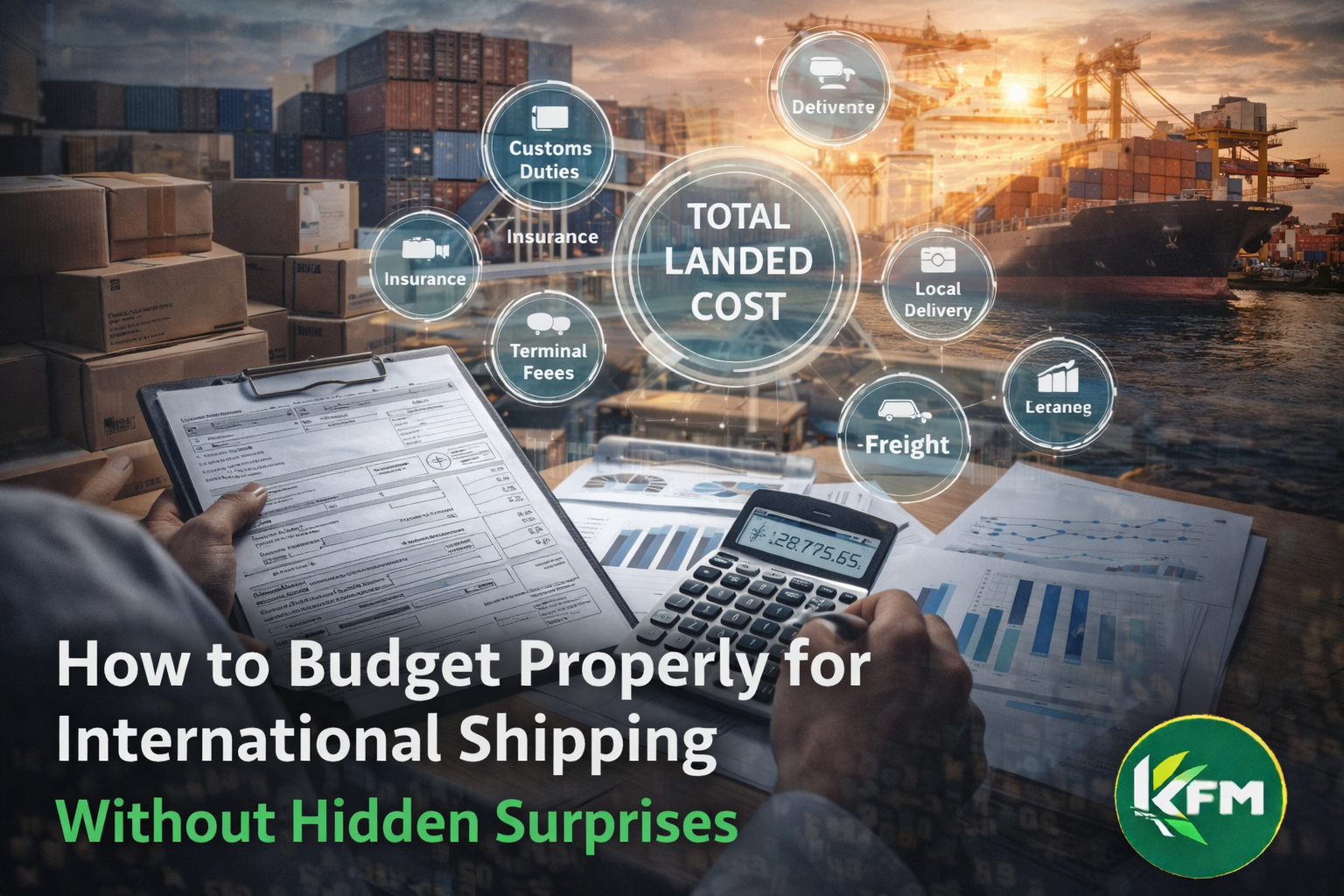
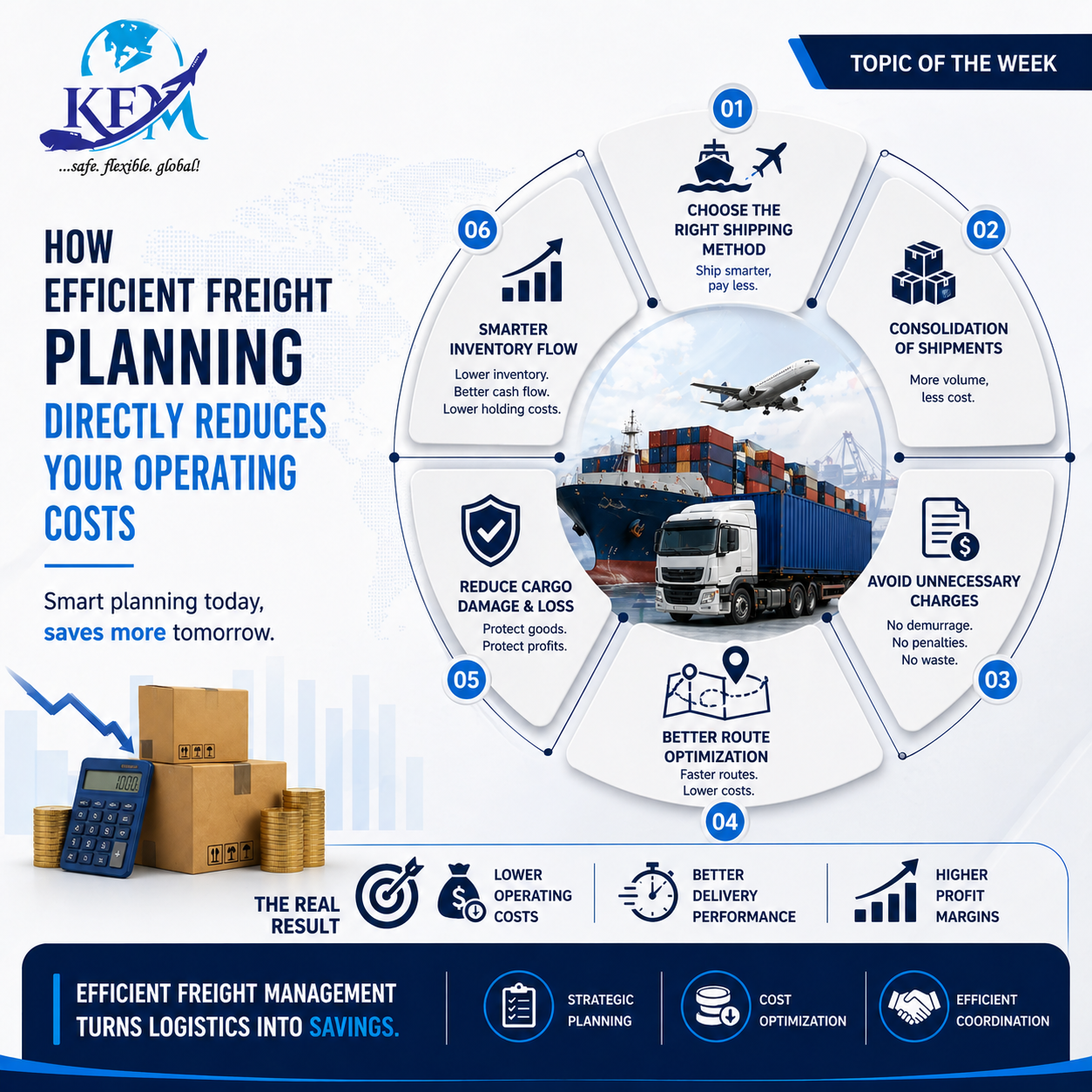
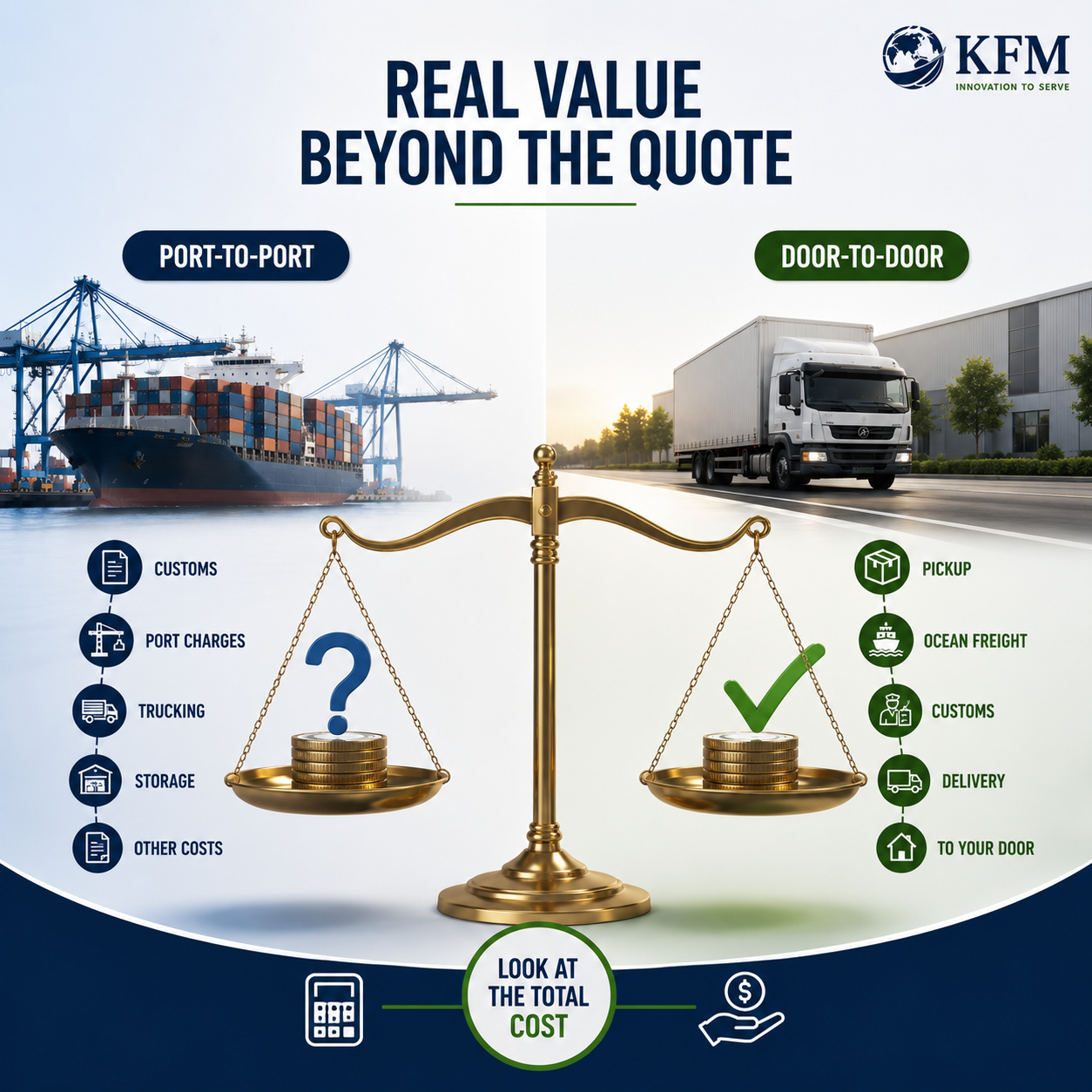
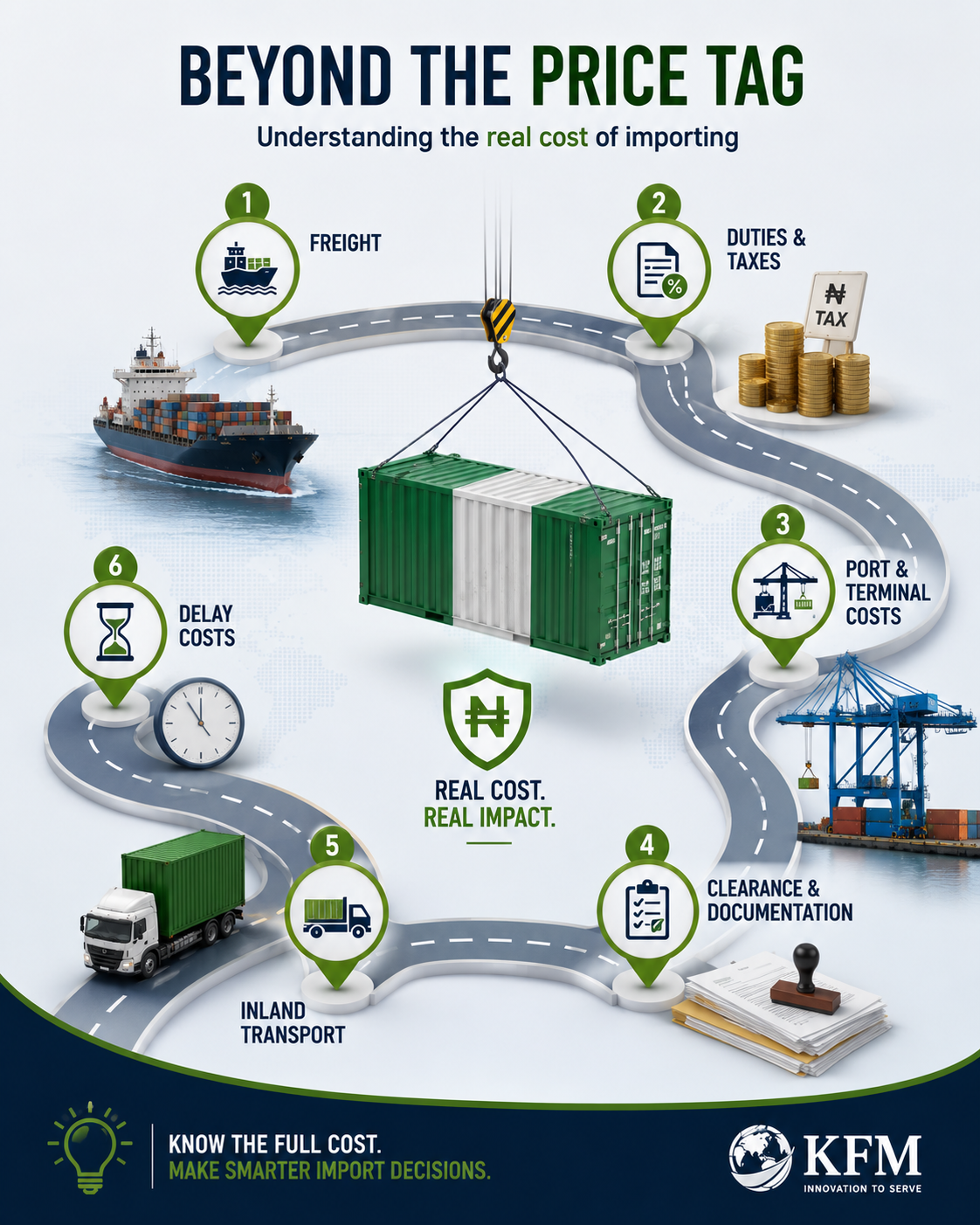
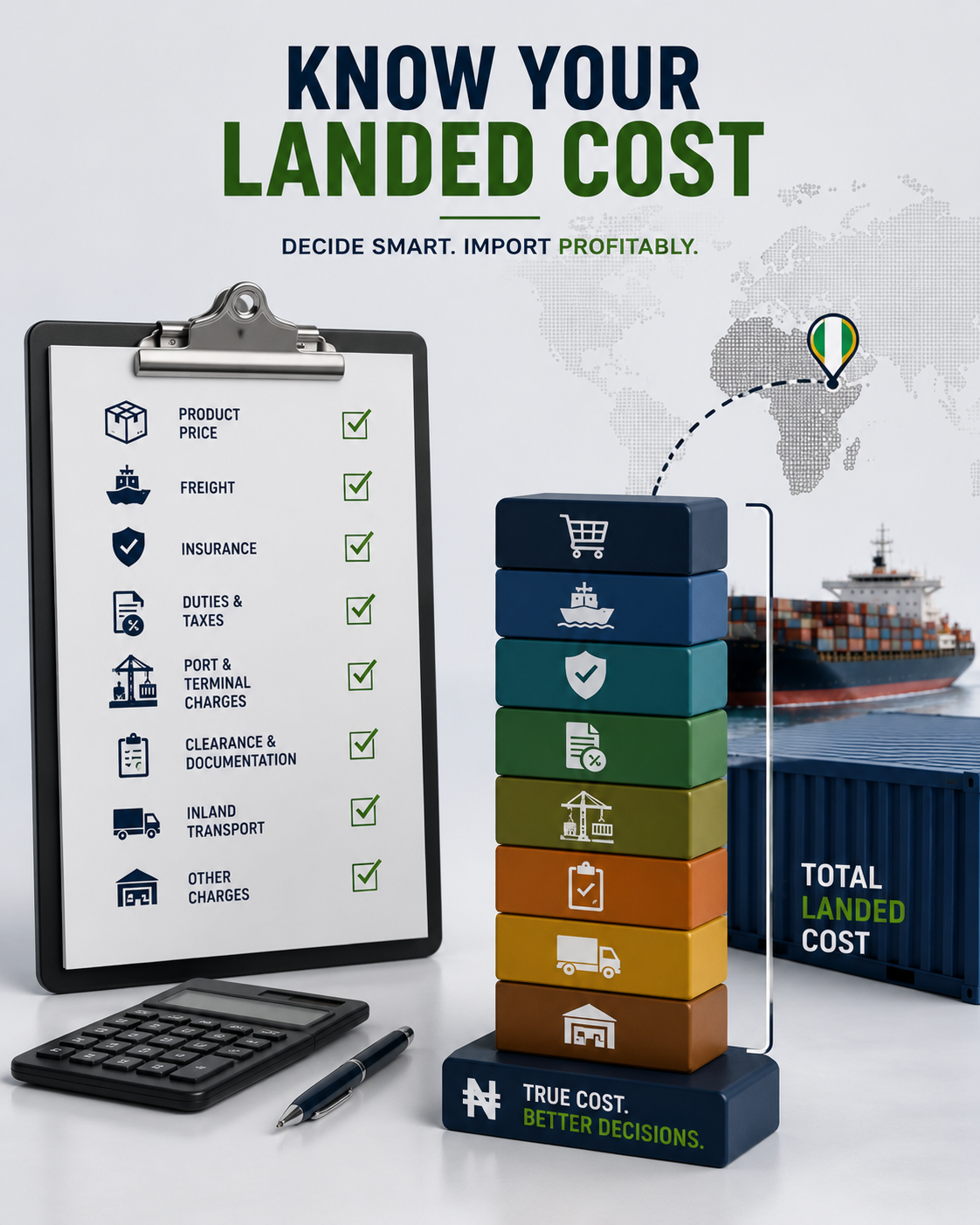
At KFM, we help businesses calculate total landed cost to ensure importing truly gives them a pricing advantage.
2. When Local Supply Is Limited
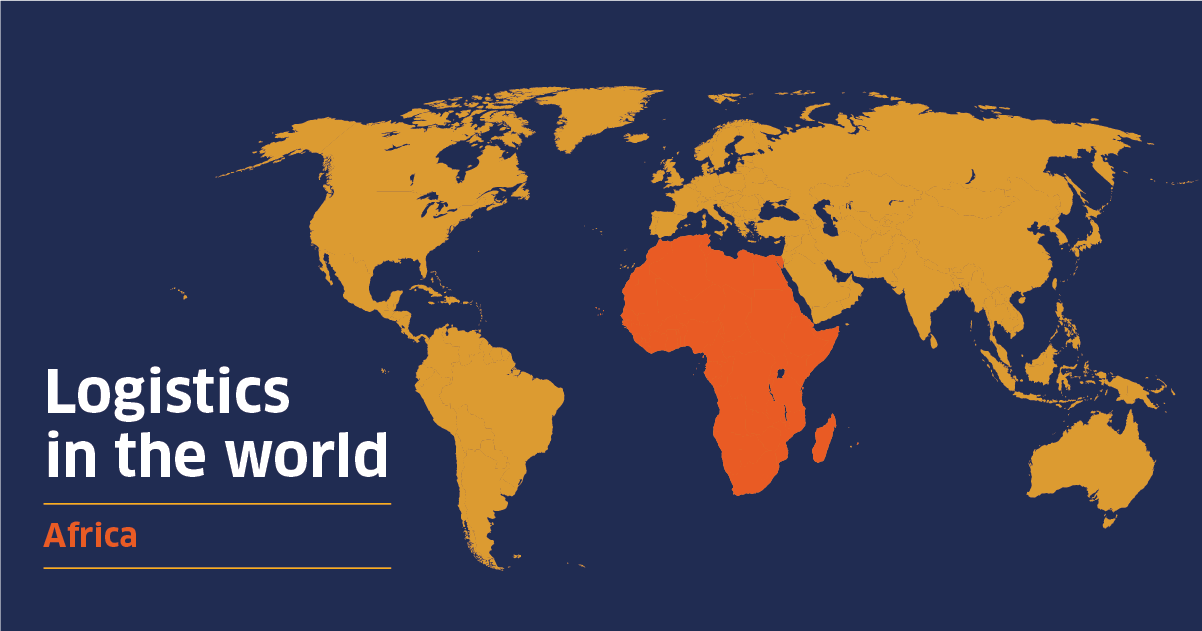
Some products are simply not available in Nigeria — or not in sufficient quantity.
- Specialized machinery
- Advanced electronics
- Certain raw materials
In these cases, importing is not just an option — it’s a necessity.
3. When You Need Higher Quality or Variety
Global markets often offer a wider range of products and sometimes higher manufacturing standards.
If your business depends on:
- Premium product quality
- Unique designs or features
- Access to global trends
Then importing can give you a strong competitive advantage.
4. When You Want to Scale Your Business
As businesses grow, local sourcing alone may not meet demand.
Importing allows companies to:
- Expand product lines
- Meet large customer demand
- Enter new markets
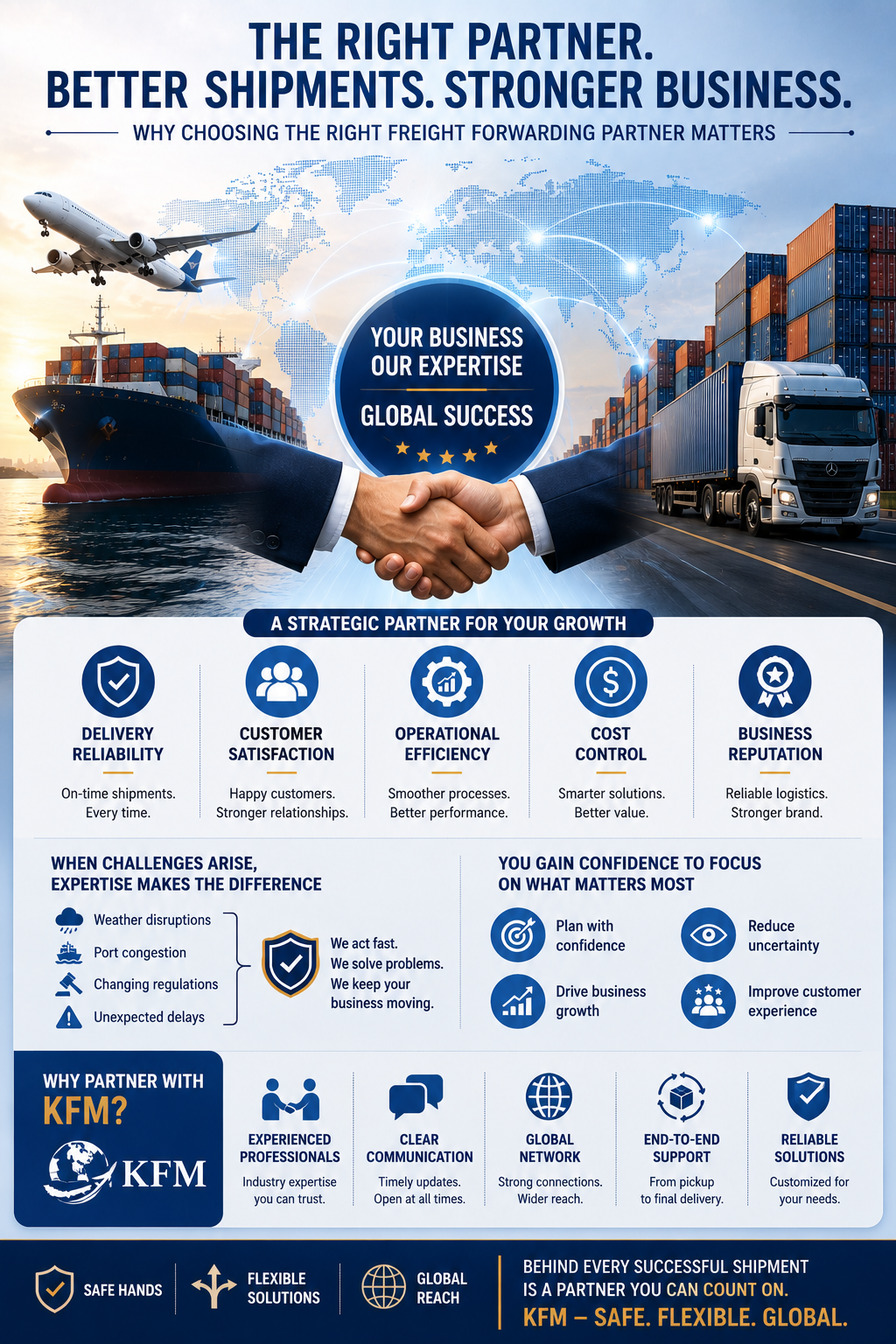
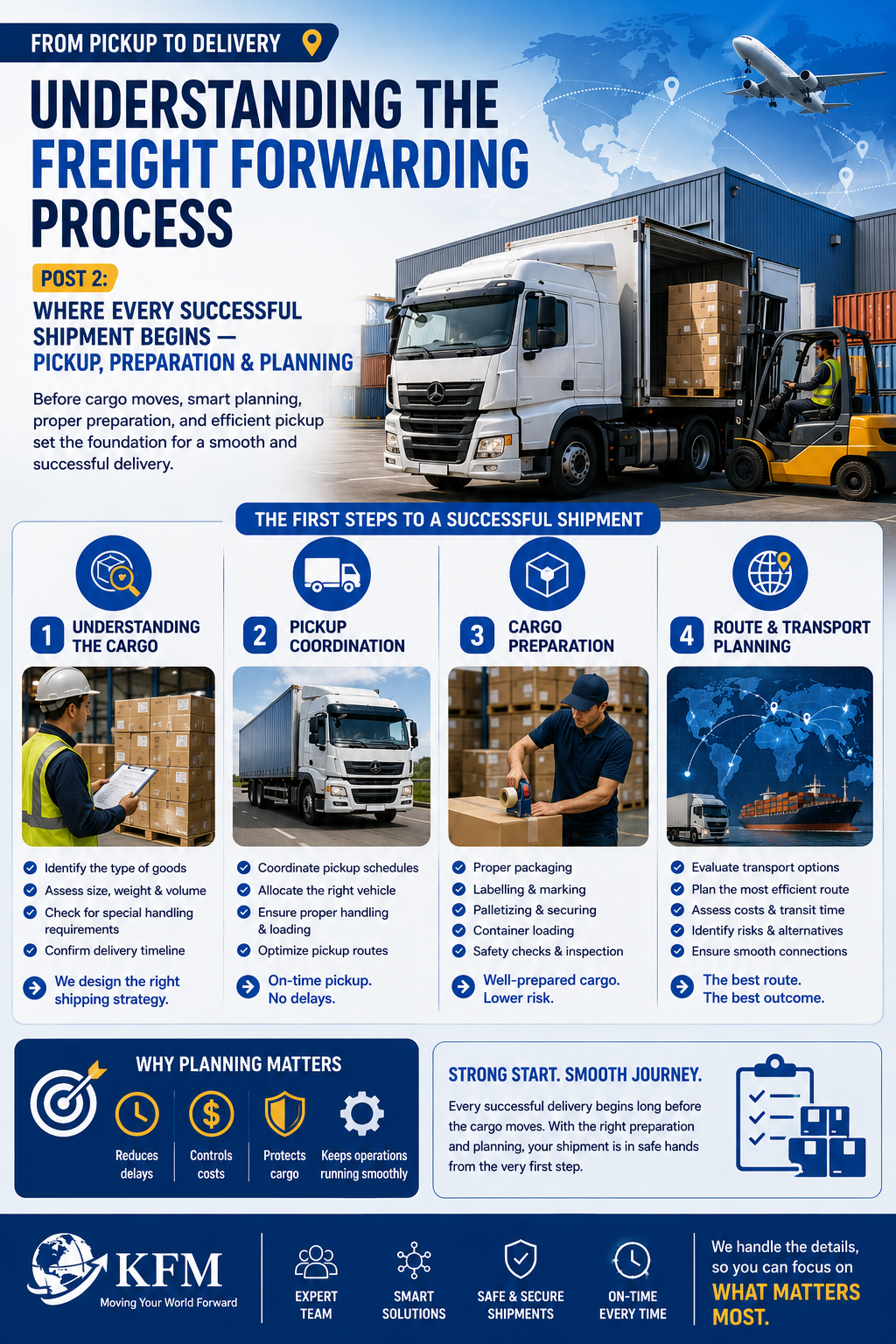
With the right logistics partner like KFM, scaling through importing becomes more structured and less risky.
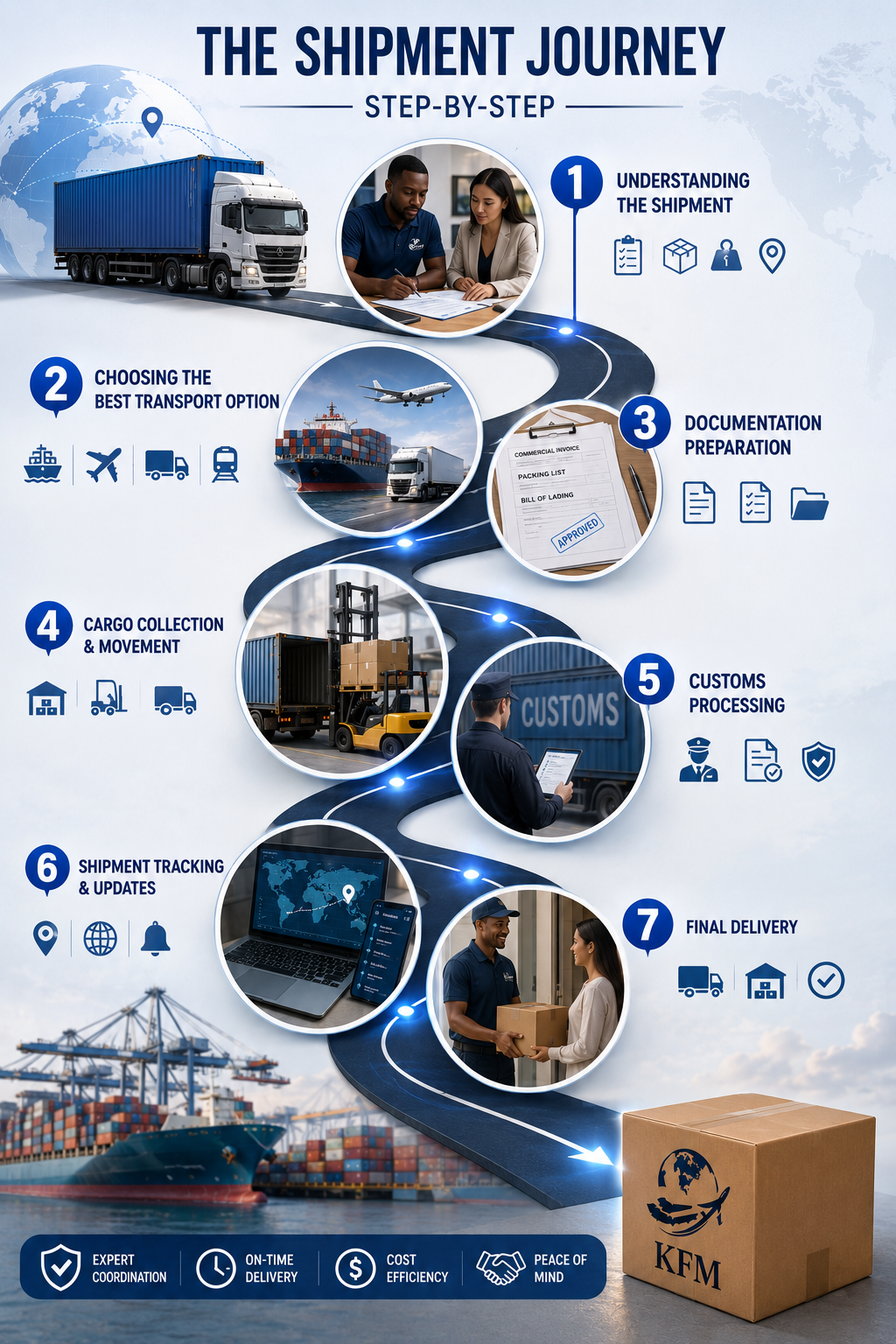
5. When You Have a Reliable Logistics Partner
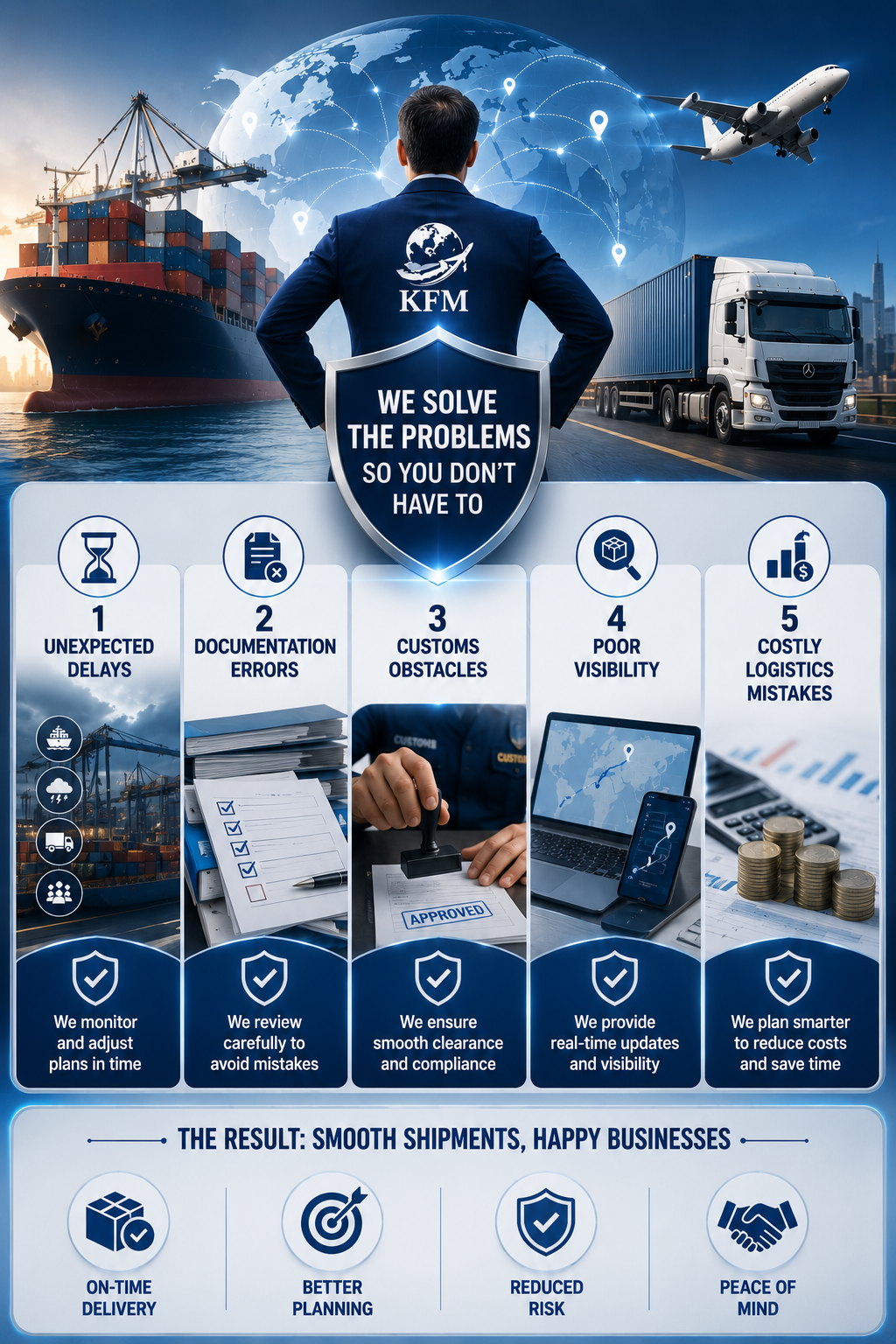
Let’s be honest — importing without proper guidance can be risky.
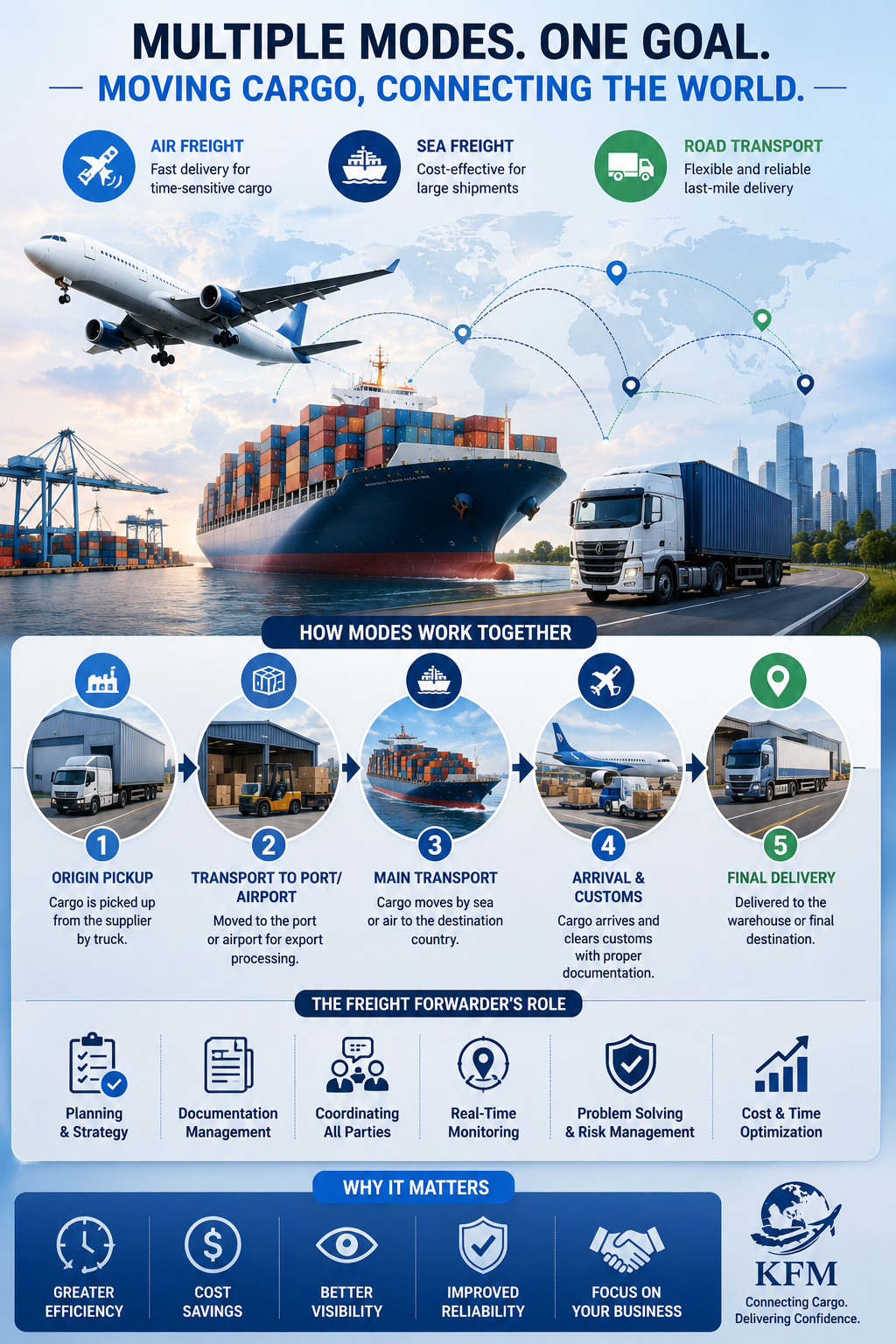
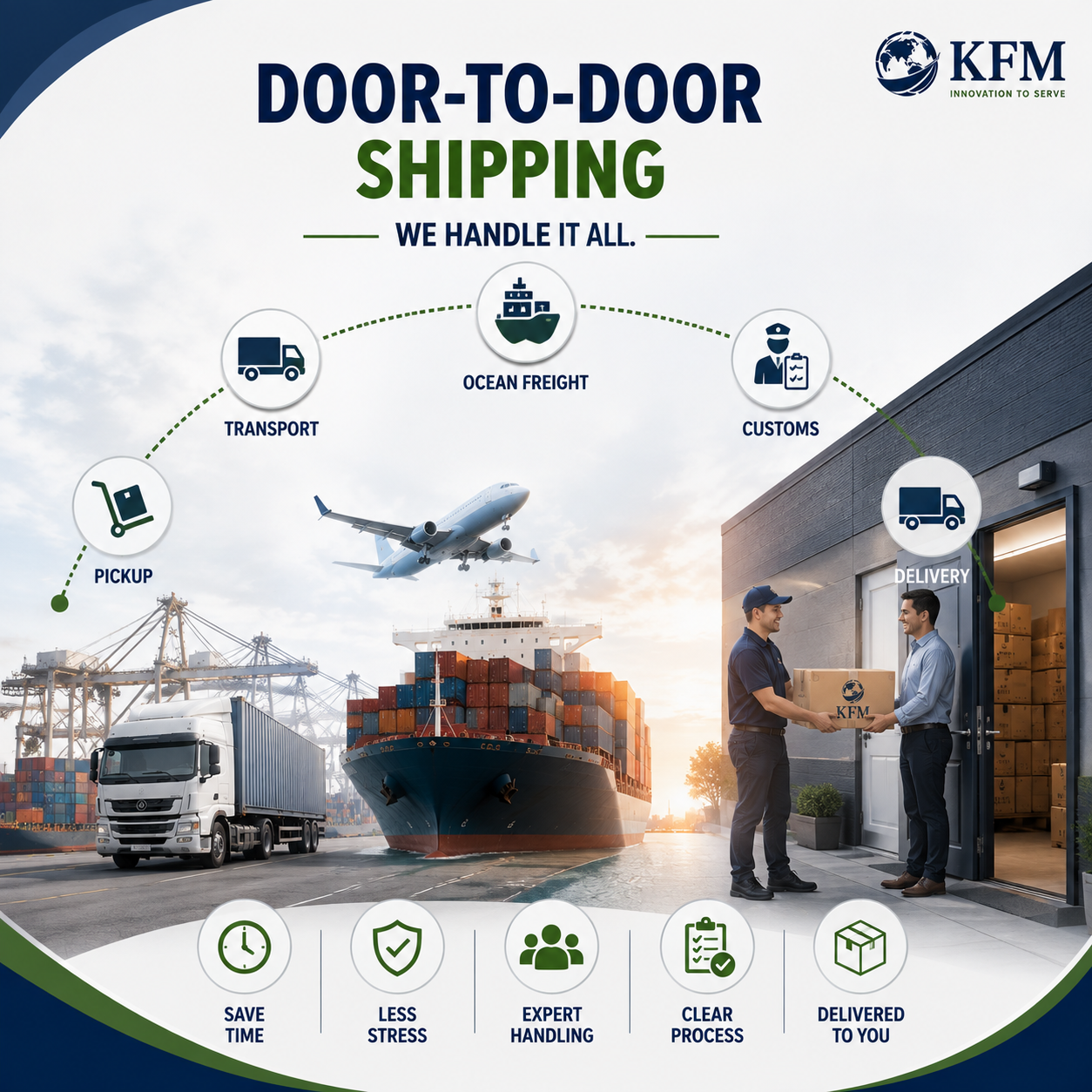
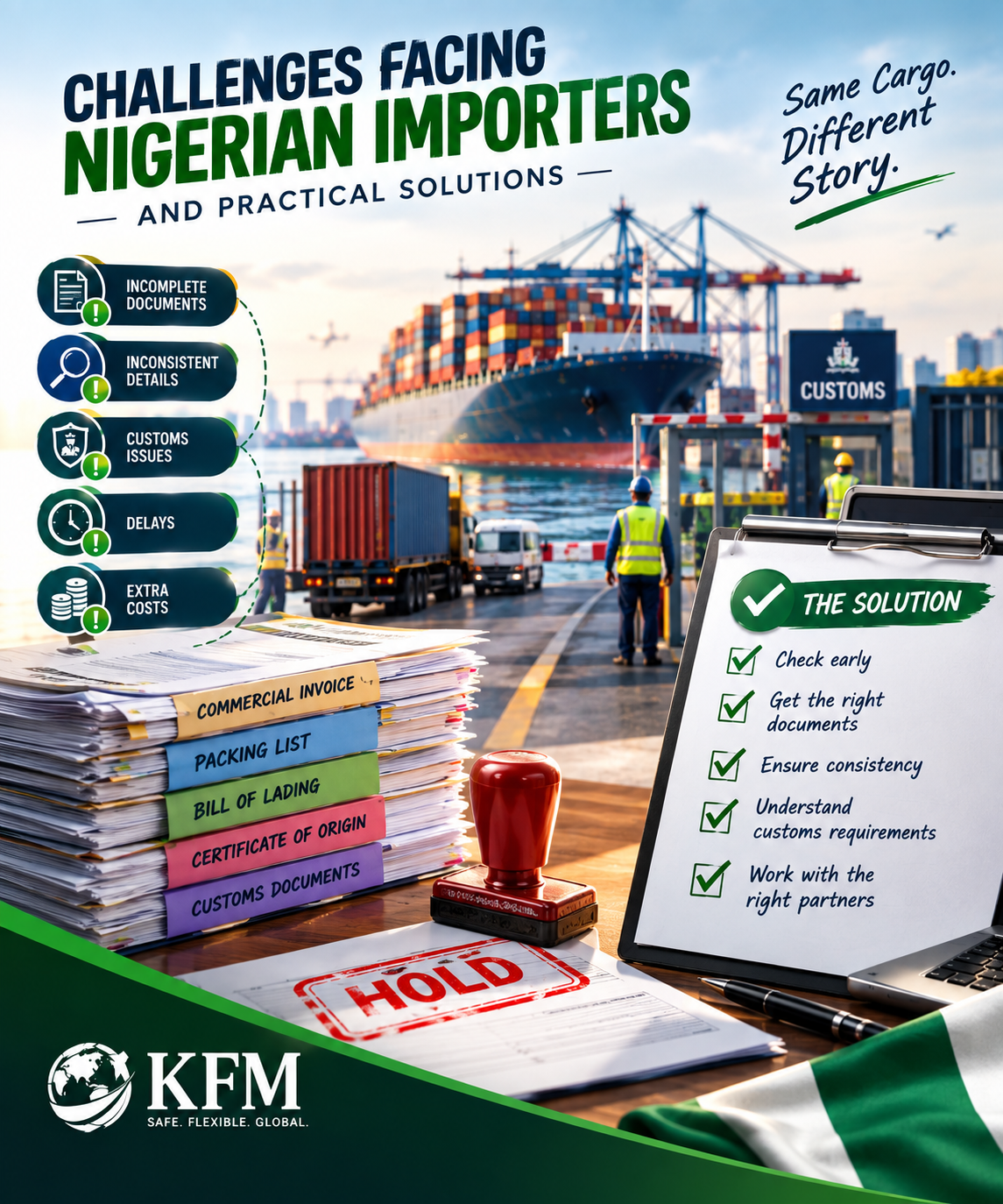
But with experienced professionals managing:
- Documentation
- Customs clearance
- Cargo tracking
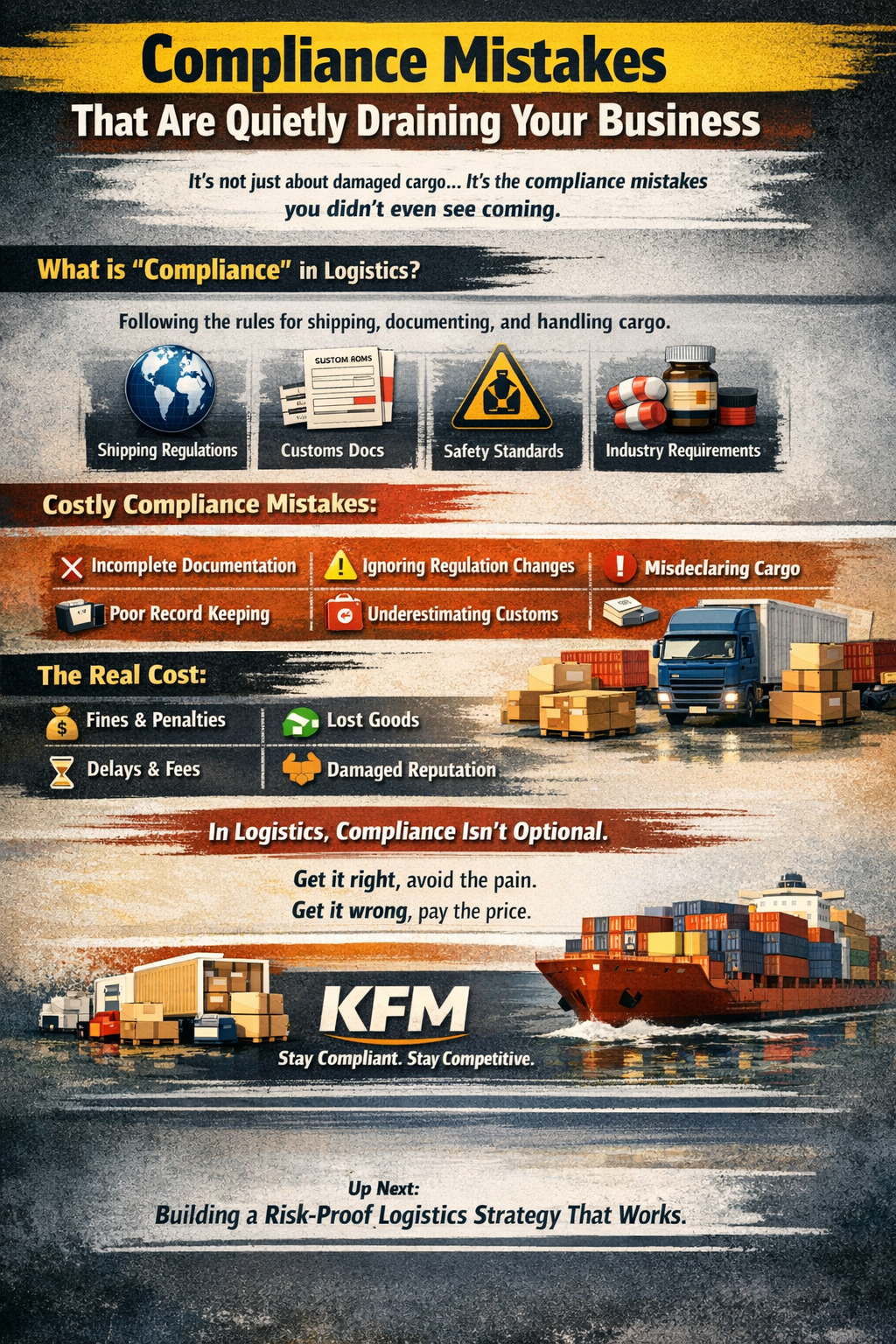
- Compliance requirements
The process becomes smoother and more predictable.
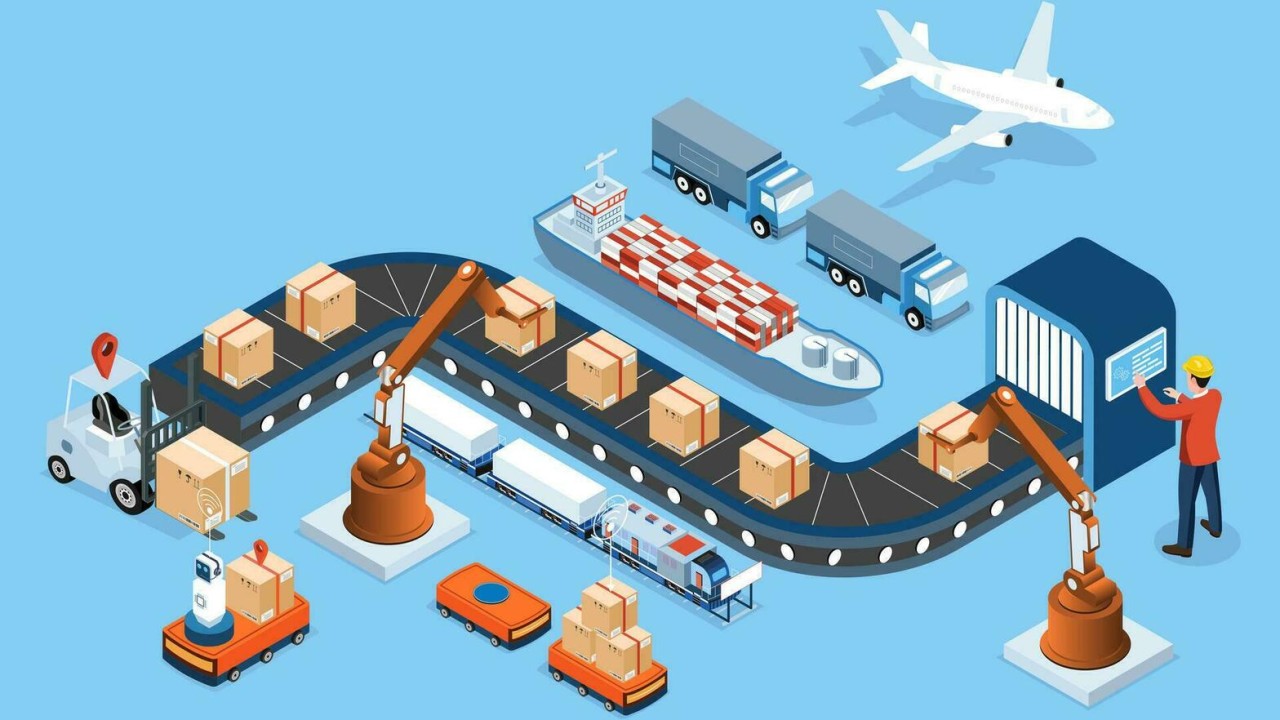
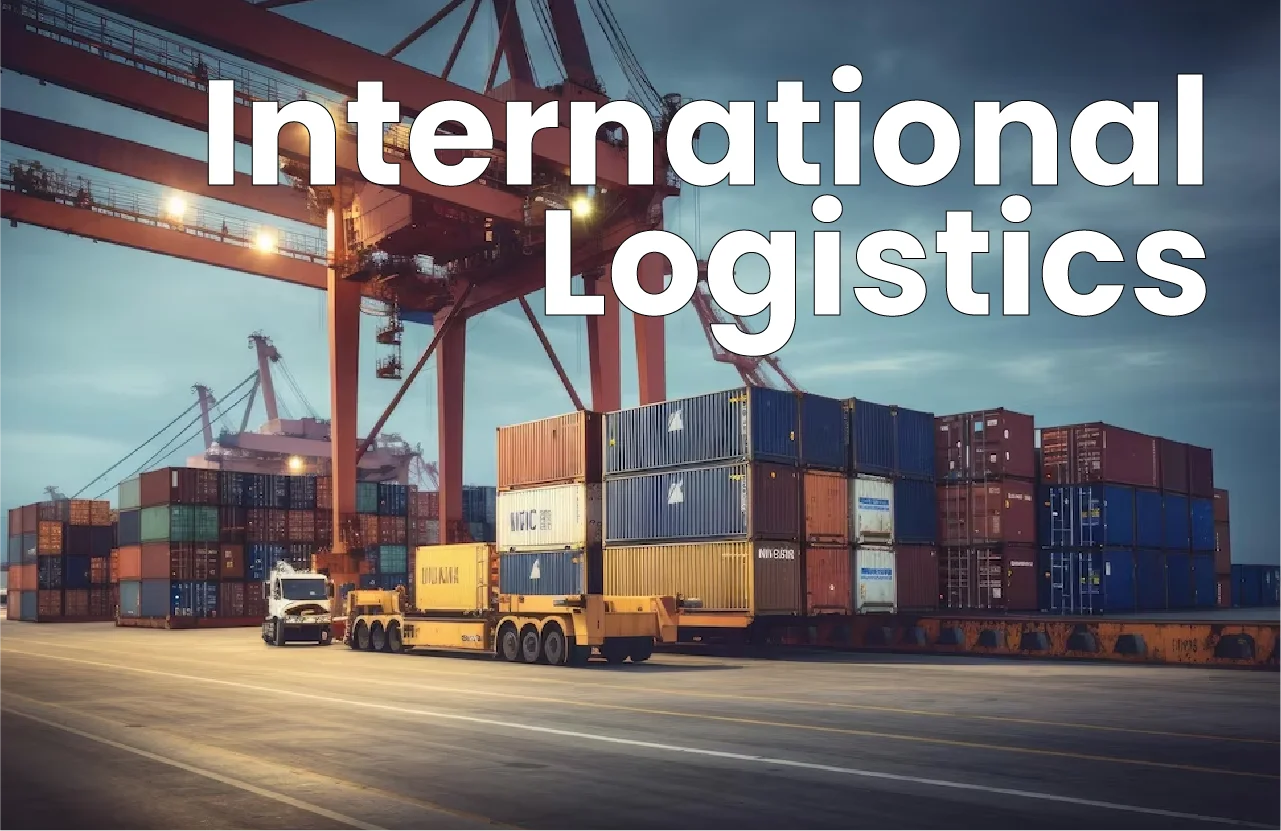
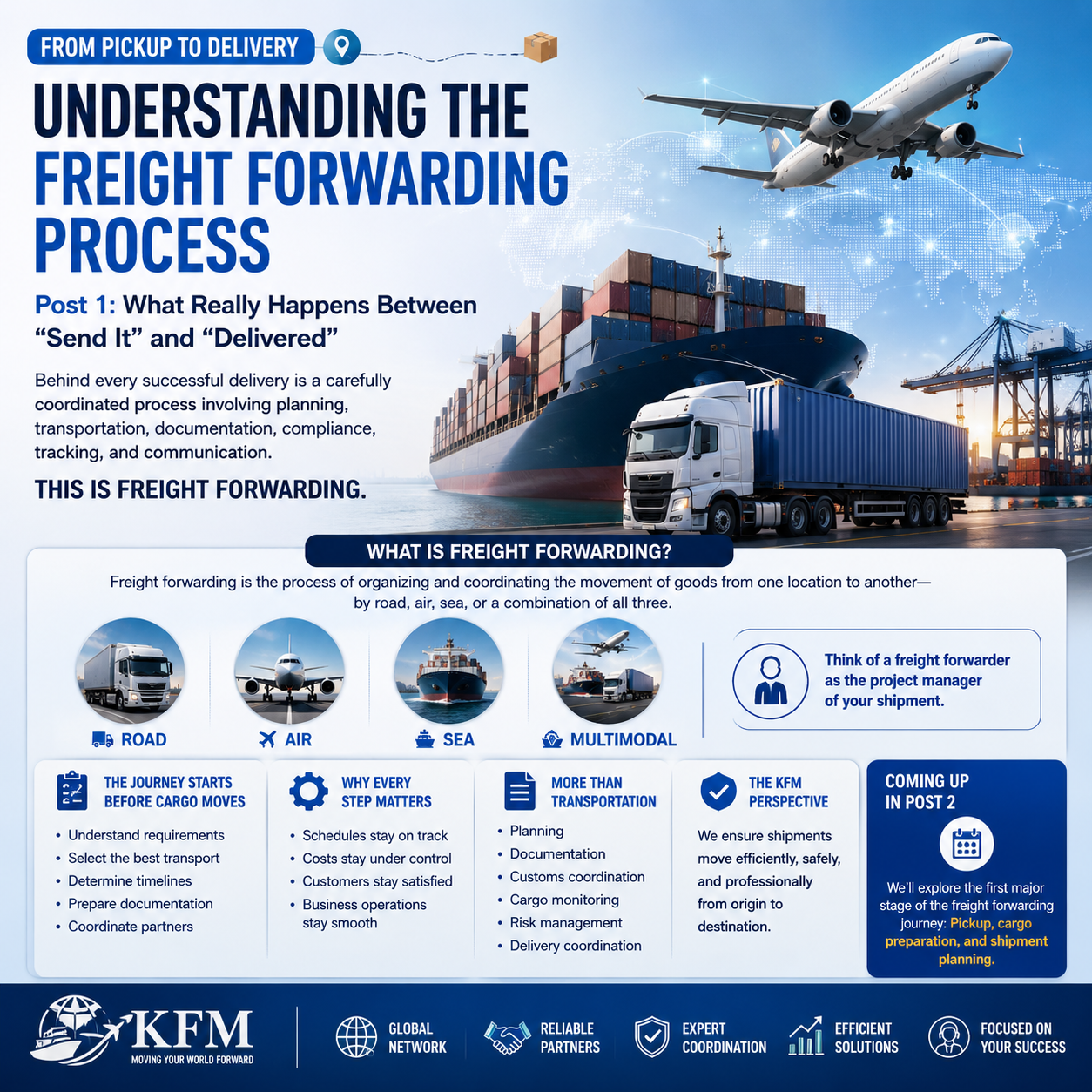
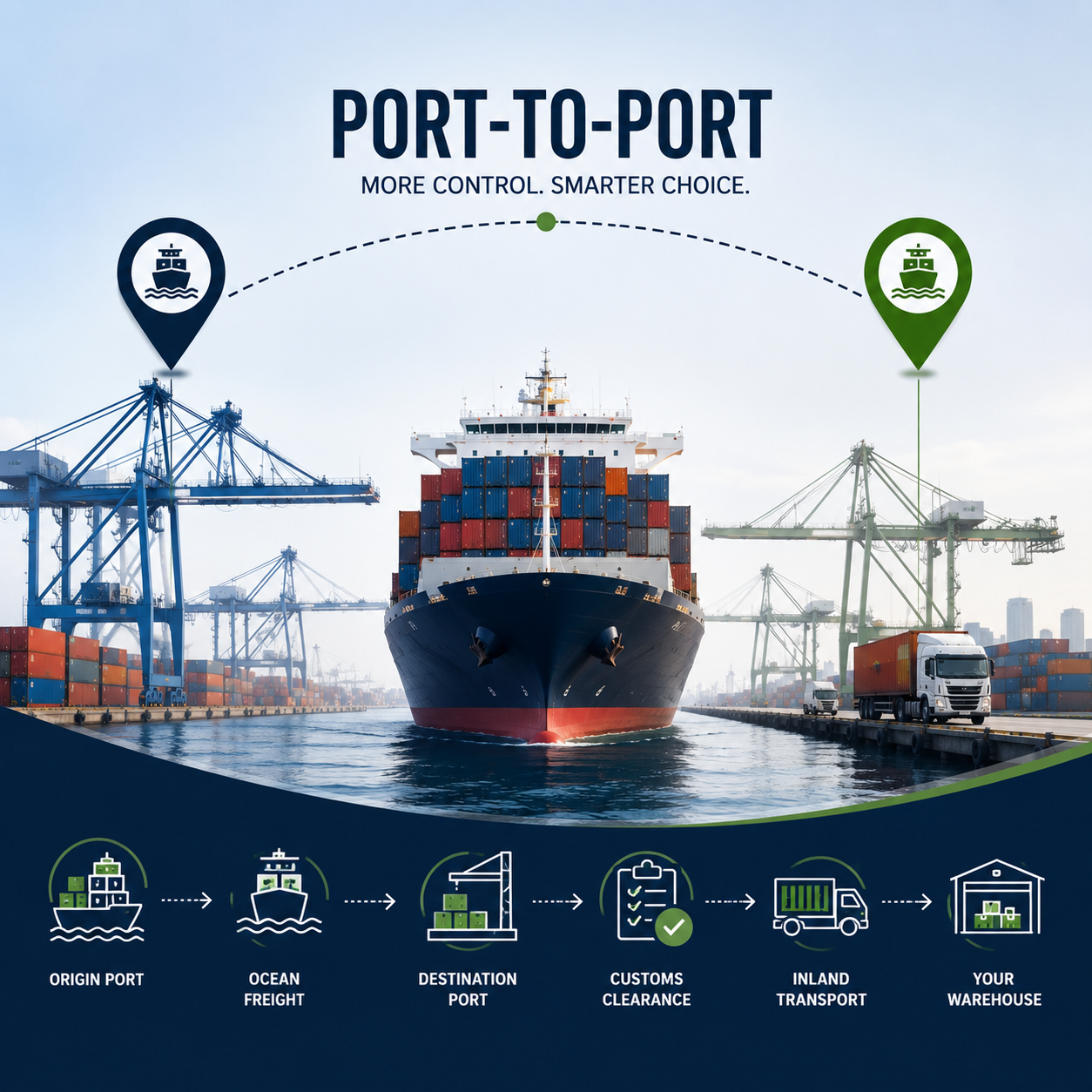
That’s where KFM comes in — ensuring your cargo moves efficiently from origin to destination.
Important Things to Watch Out For
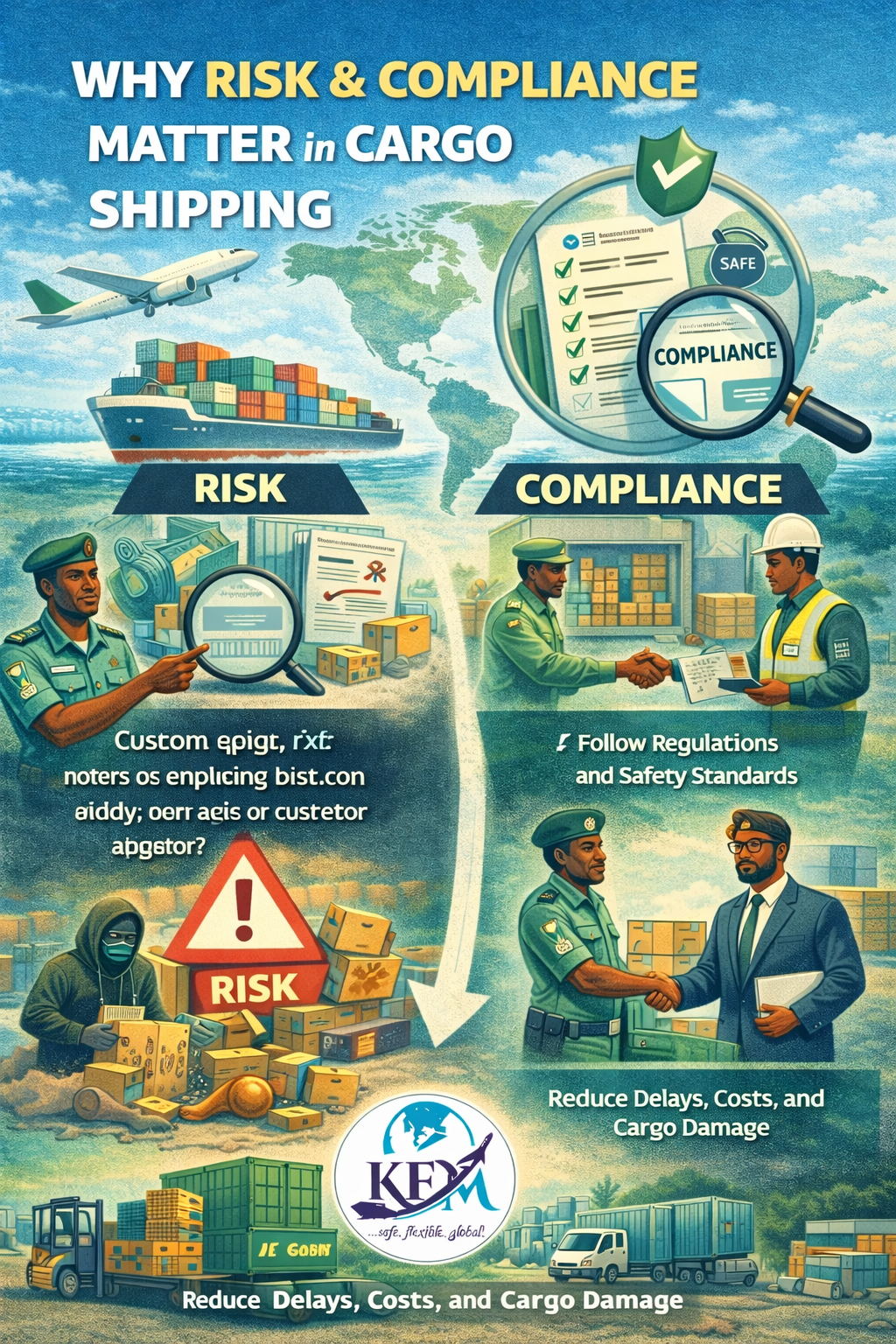
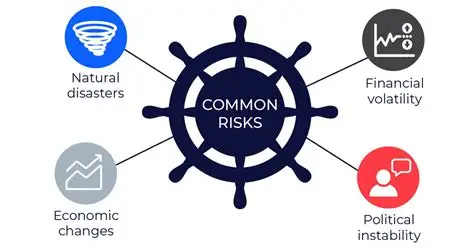
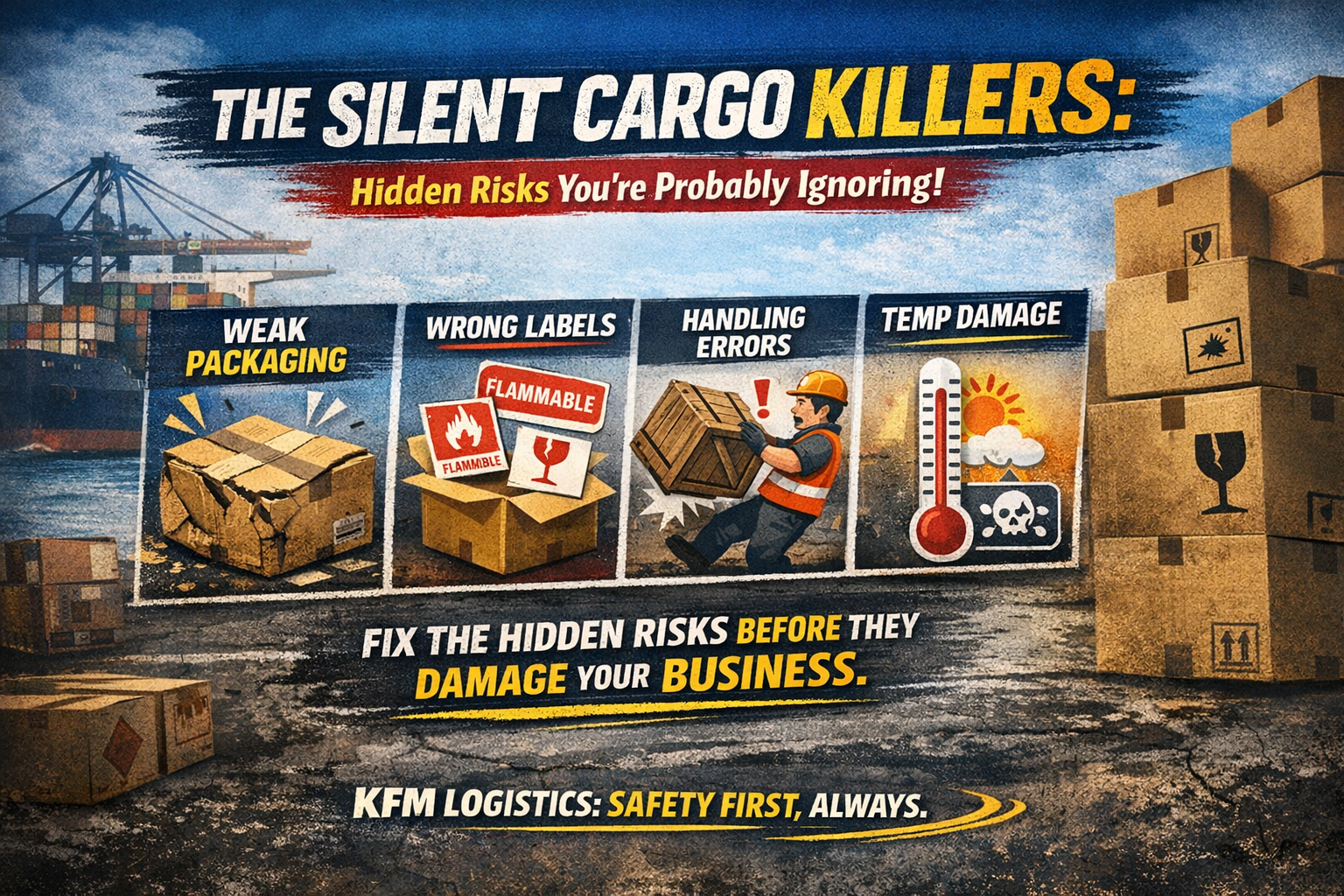
Even when importing makes sense, businesses should still be careful about:
- Exchange rate fluctuations
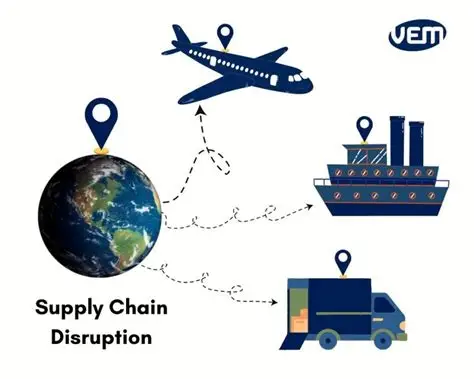
- Shipping delays
- Regulatory changes
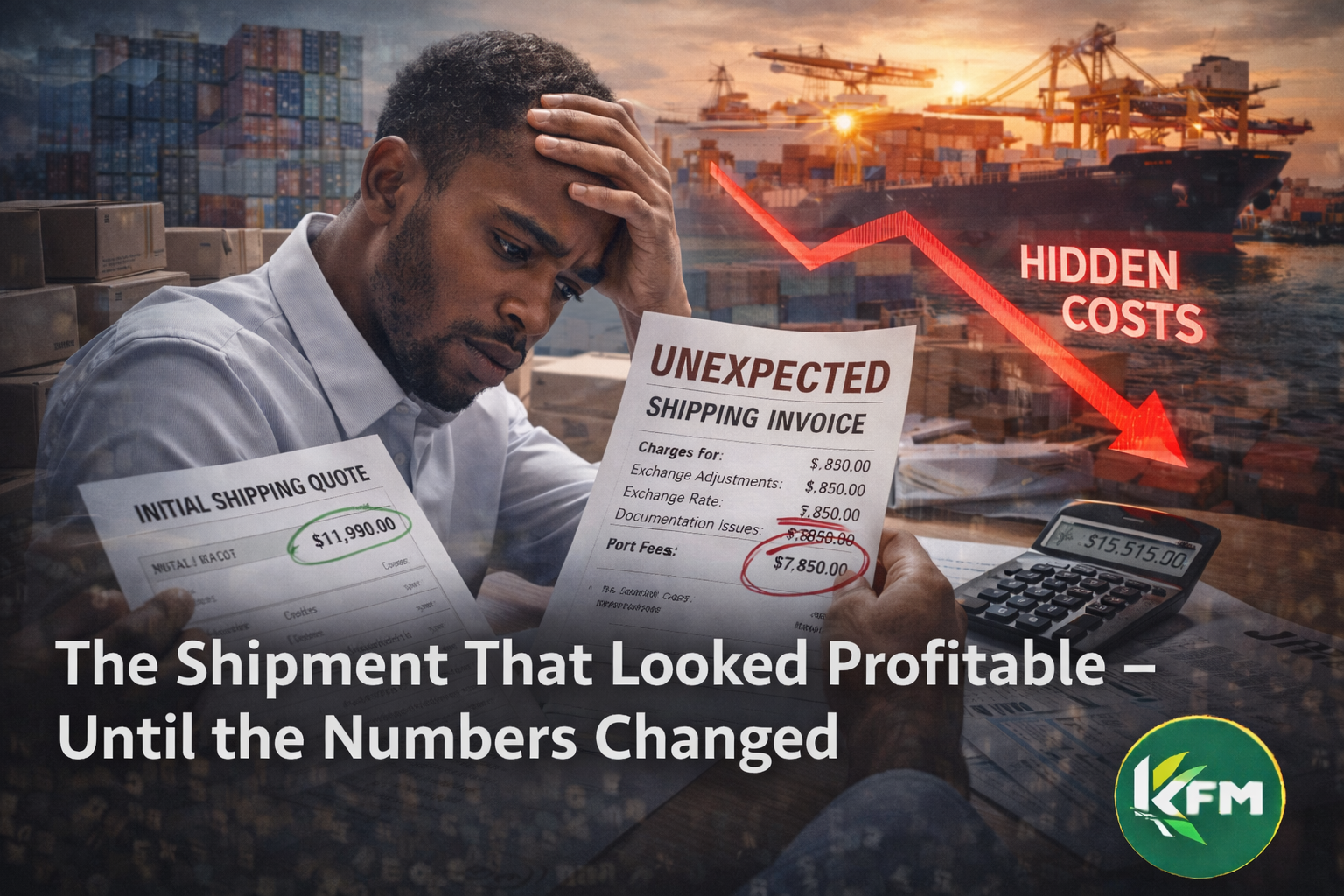
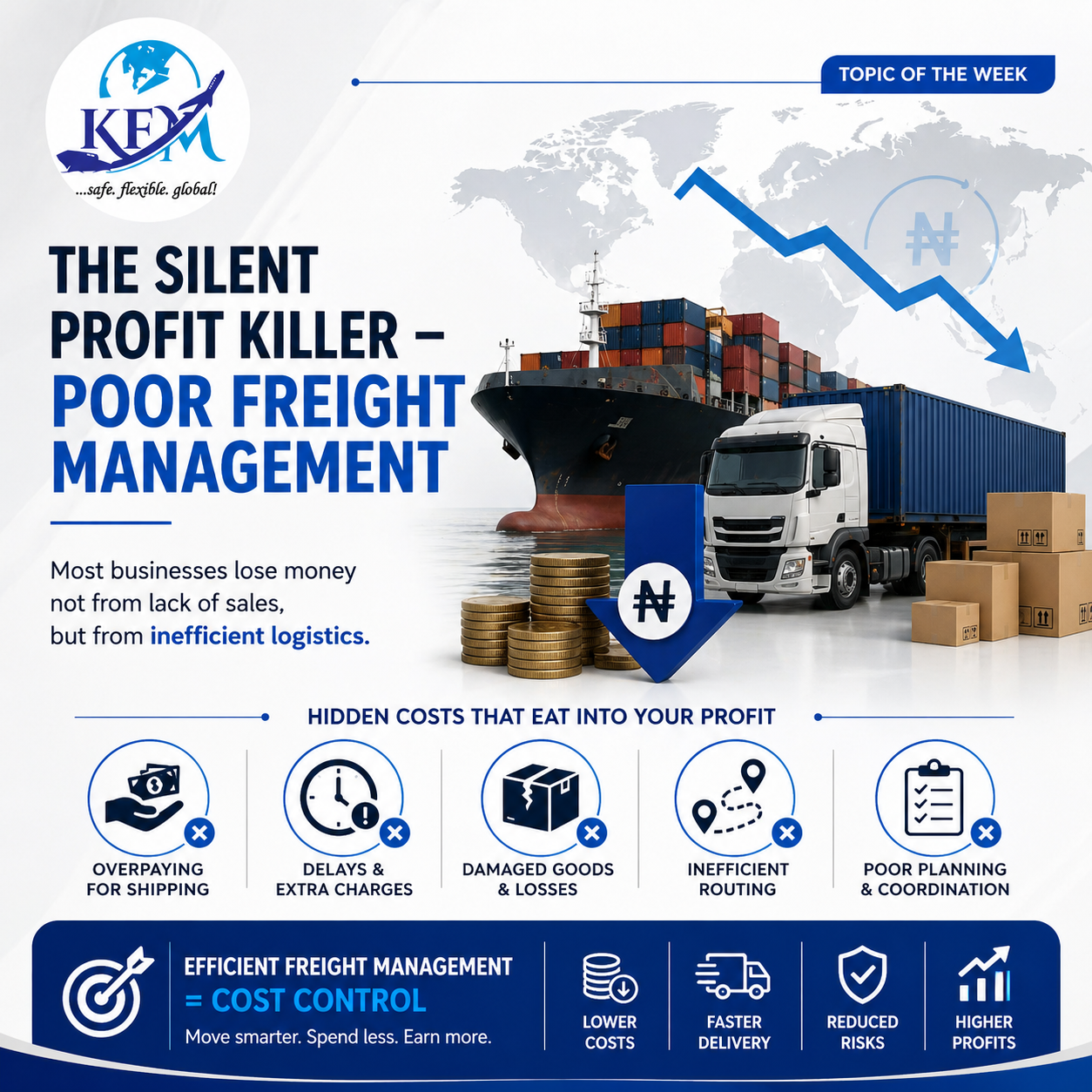
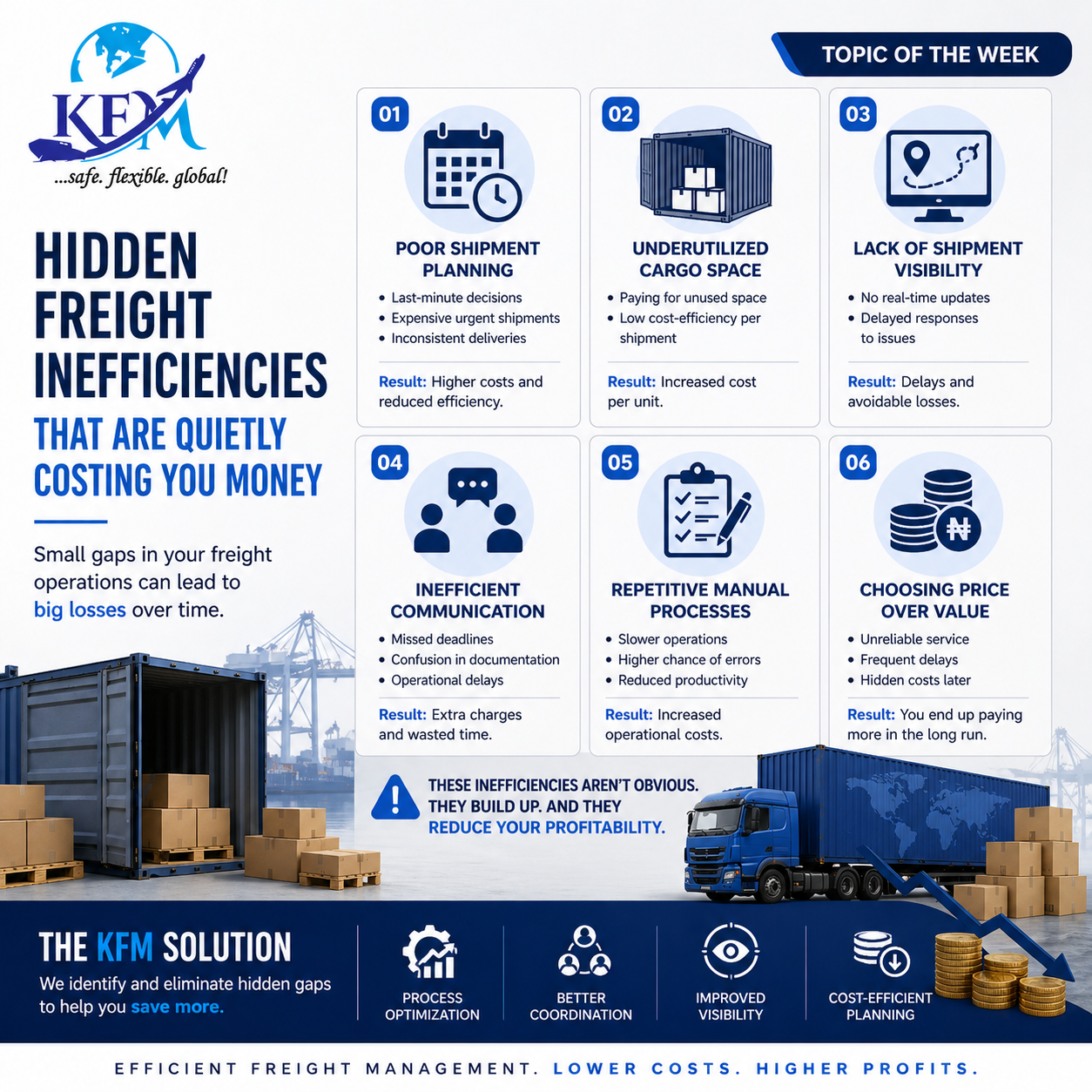
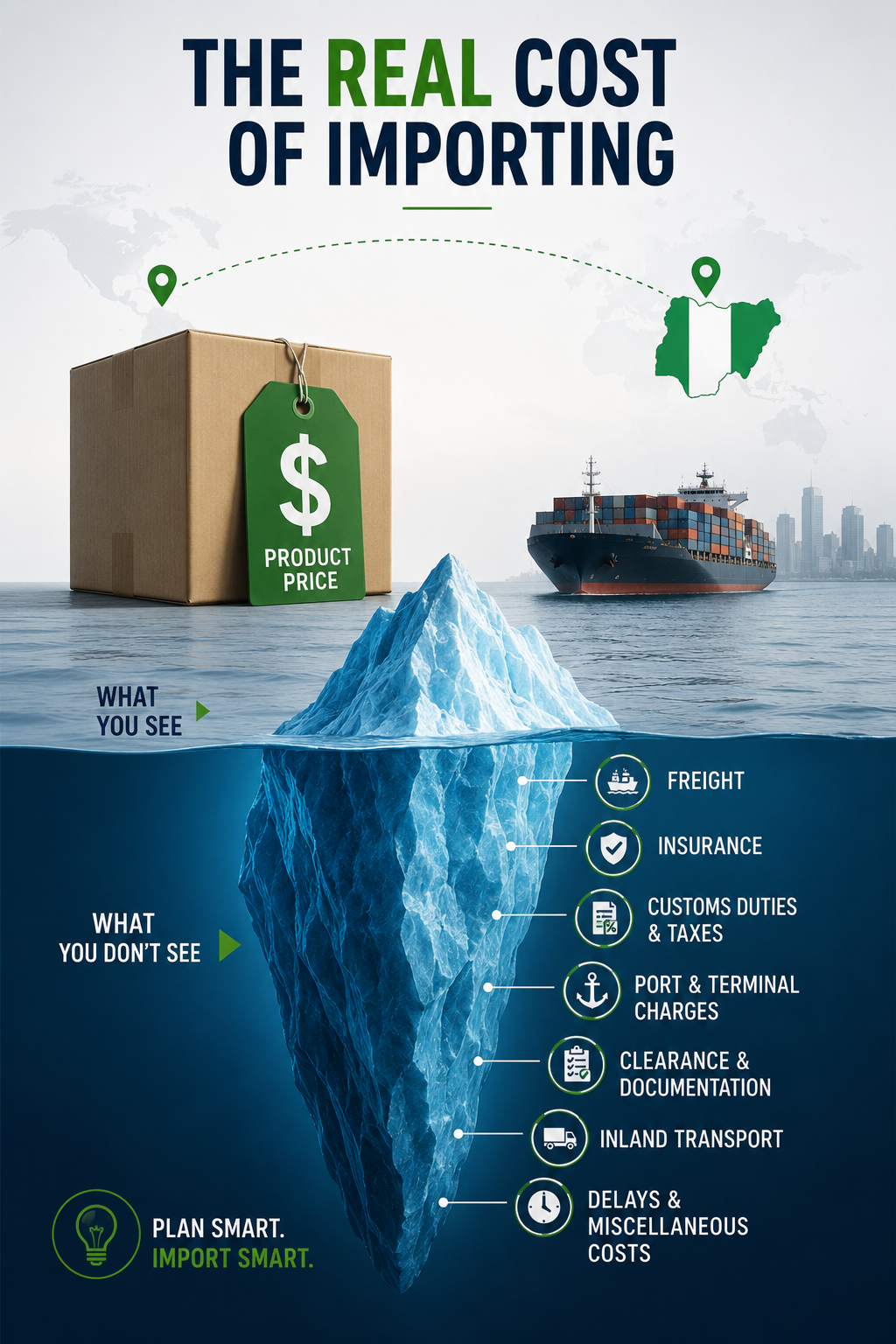
- Hidden logistics costs
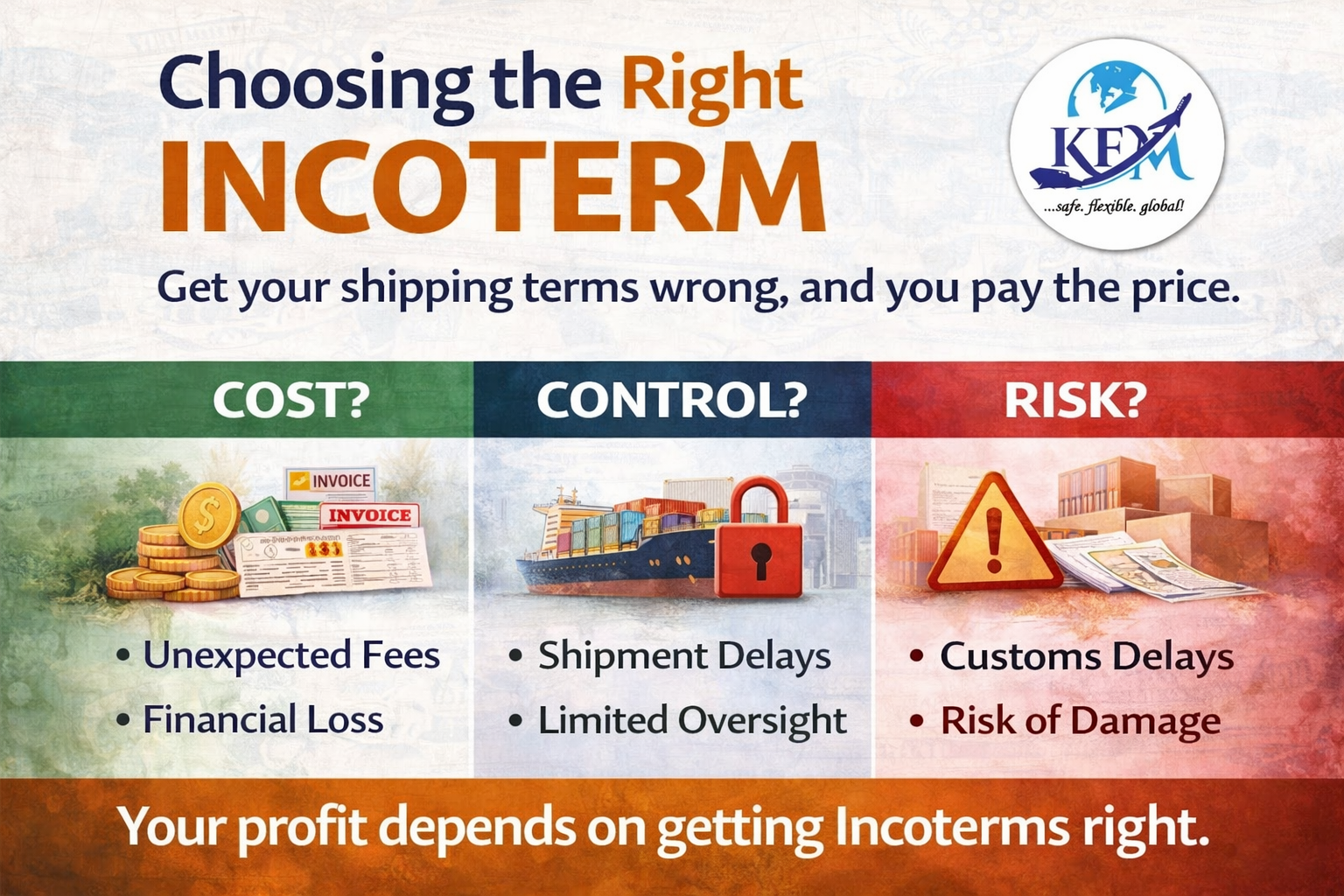
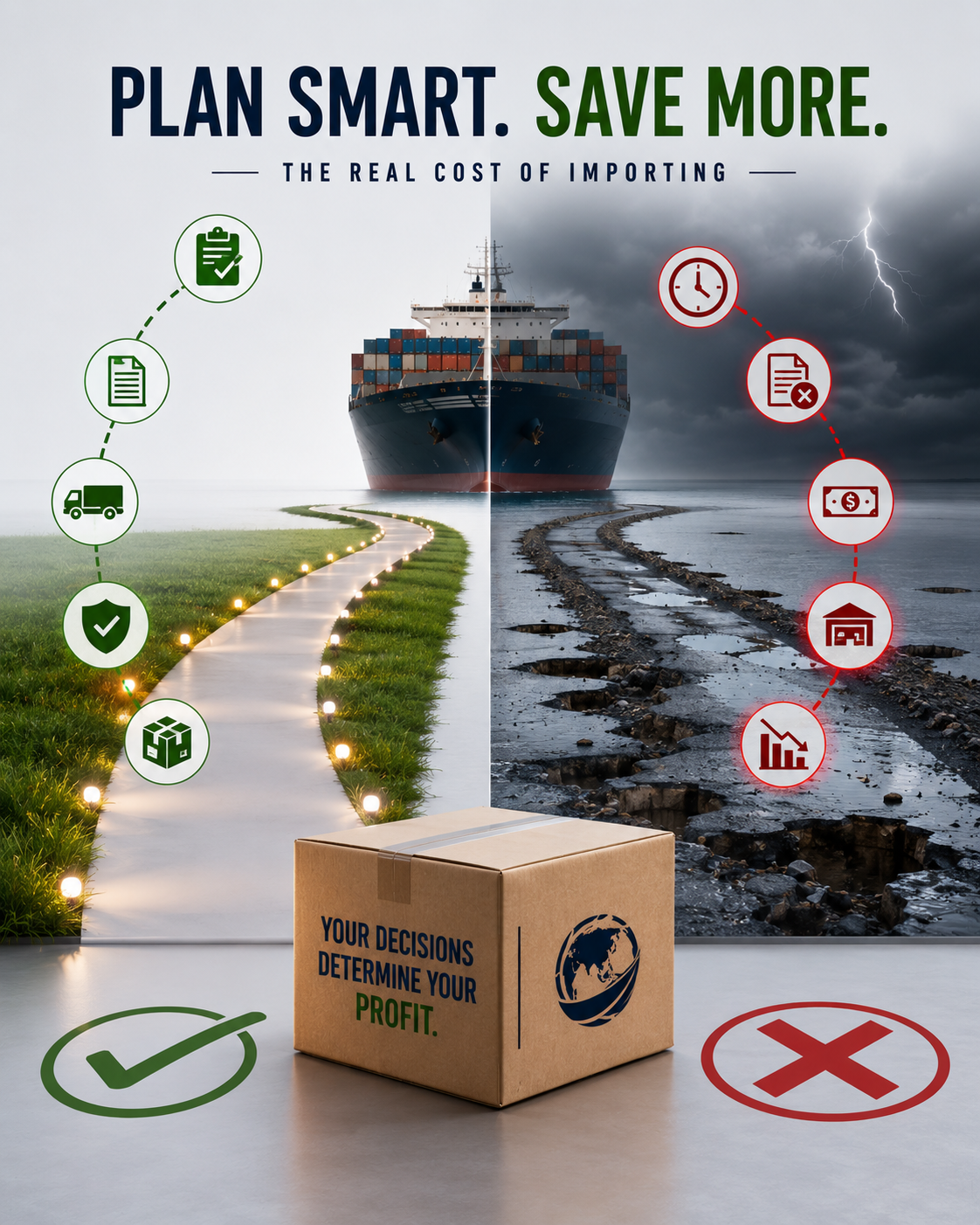
Proper planning helps you avoid surprises and protect your profit.
The Smart Approach
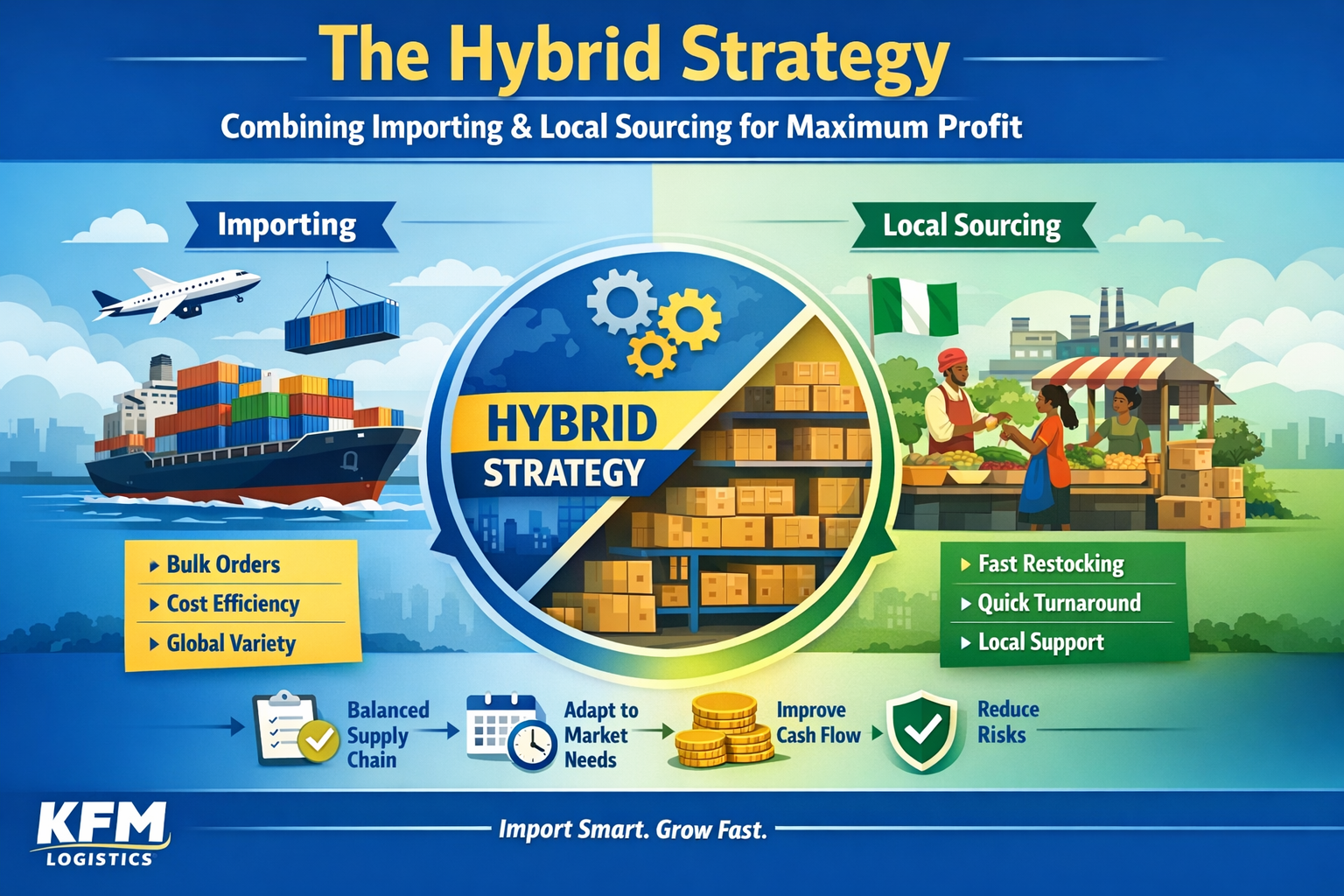
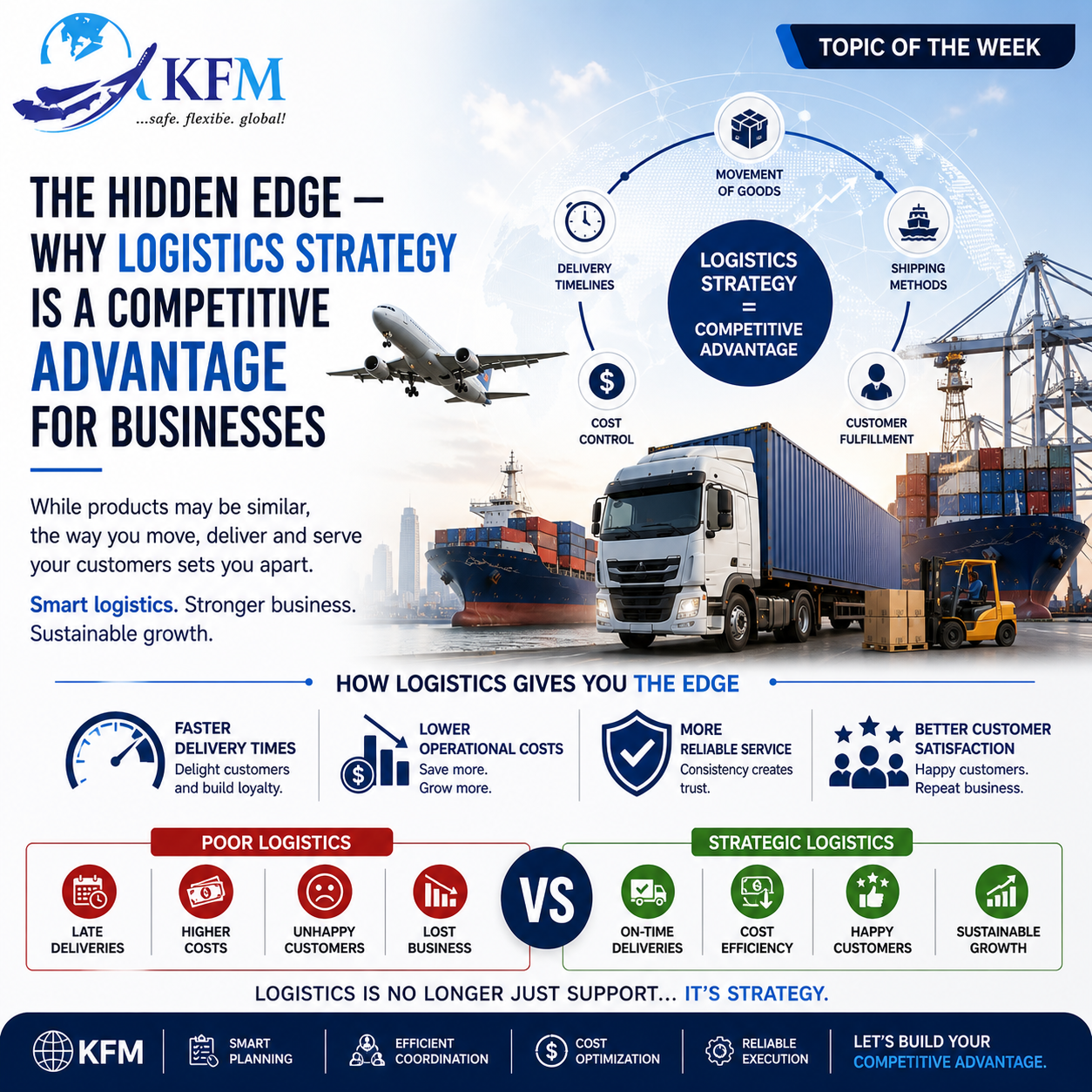
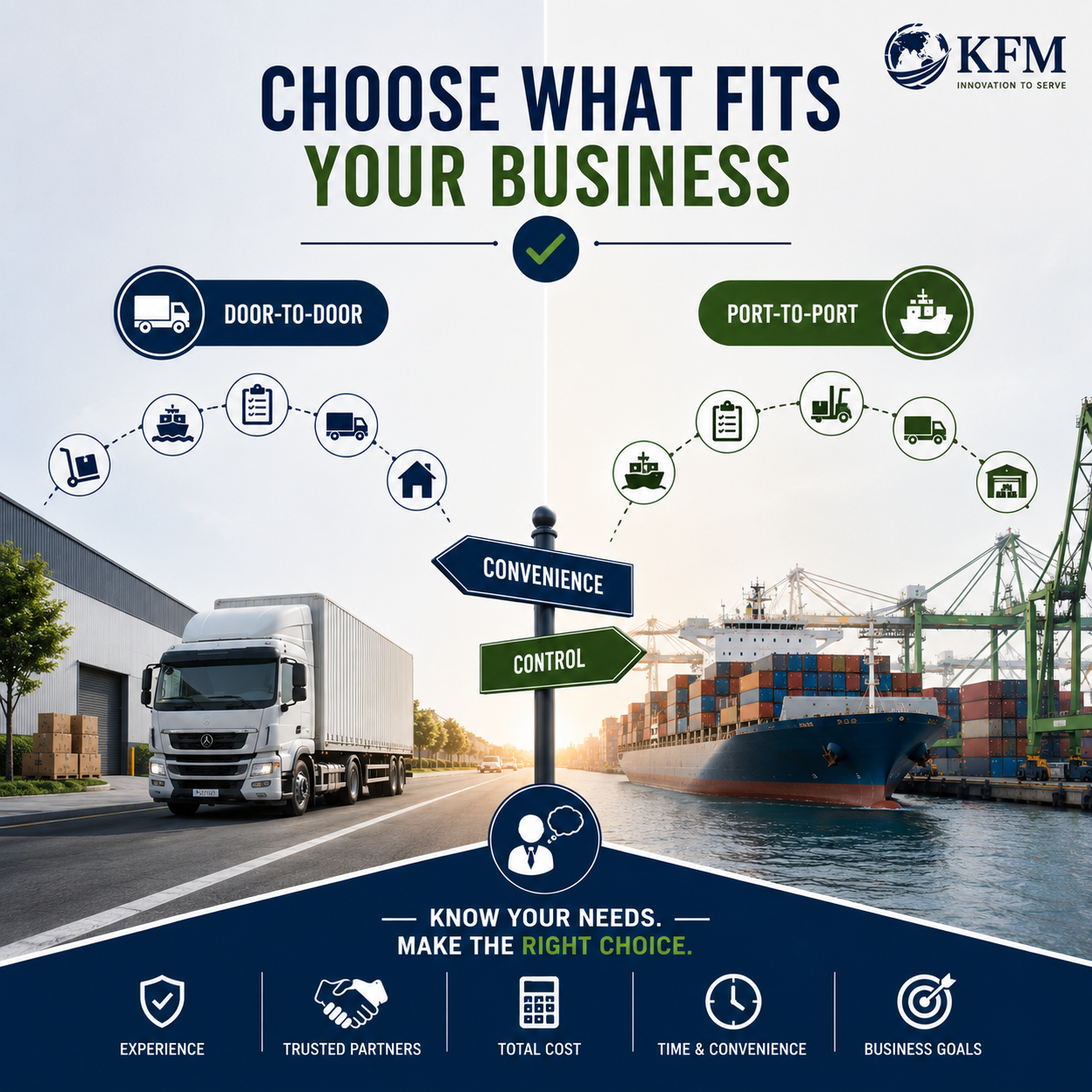
Importing works best when it is done strategically, not blindly.
Successful Nigerian businesses don’t just import — they plan, calculate, and partner with experts like KFM to manage risks.
Coming Up in Post 3
Next, we’ll explore the flip side: When local sourcing is the better option — and how to maximize its benefits.