One common mistake small businesses make is importing more than they actually need.
Why?
Because they feel pressured to fill an entire container to make shipping "worth it."
Unfortunately, that often leads to shelves full of slow-moving inventory and money tied up in stock that isn't selling.
Freight consolidation offers a better approach.
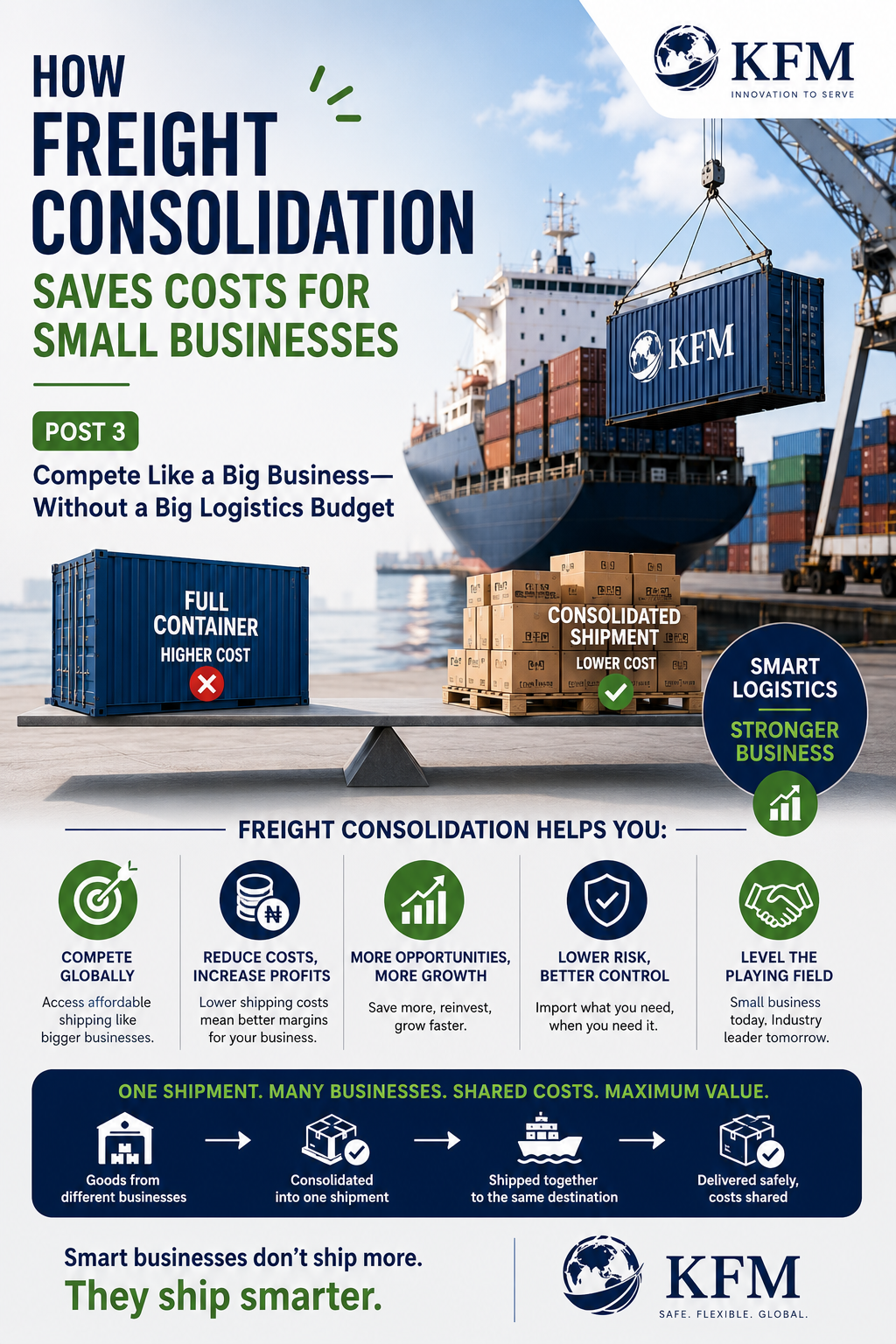
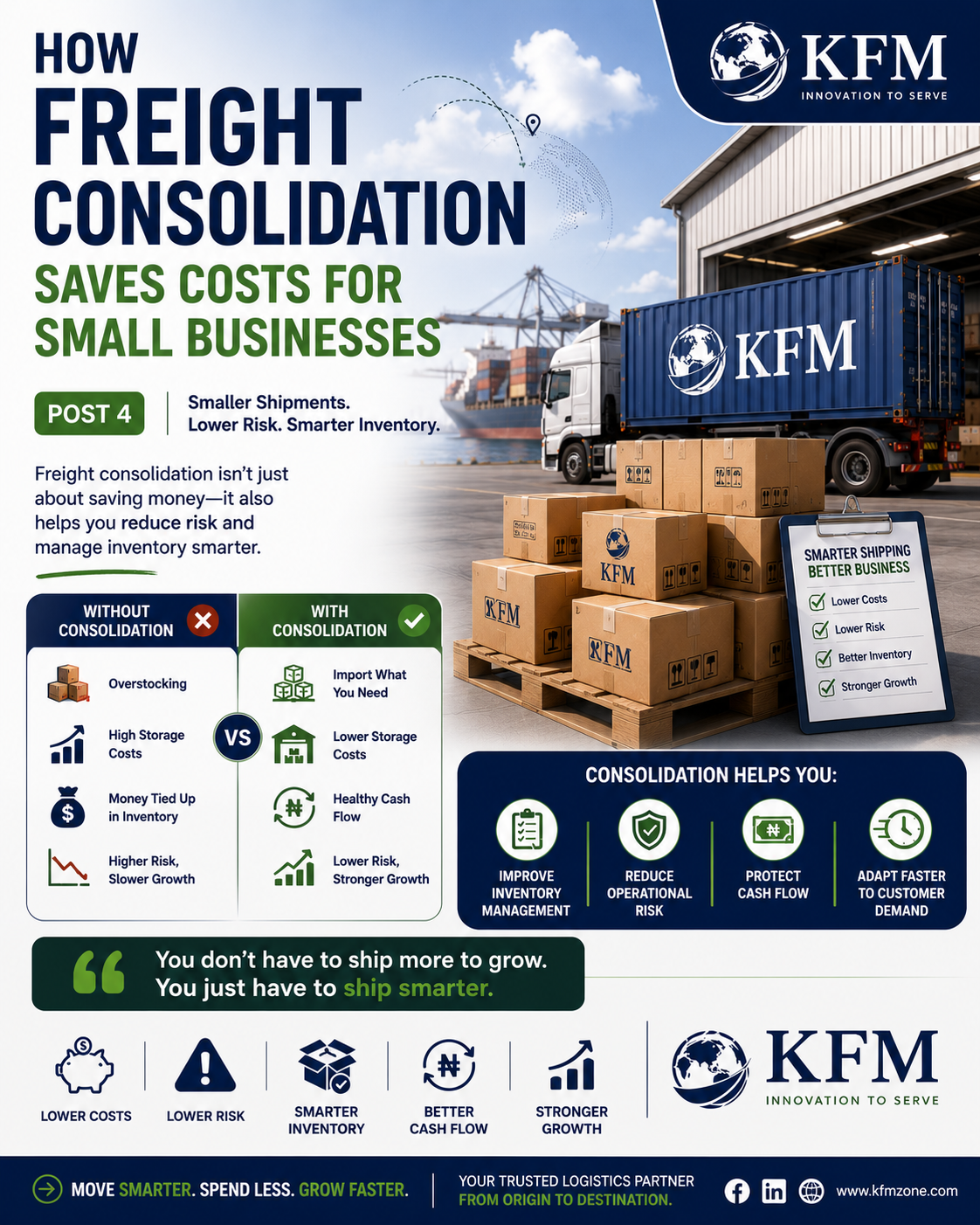
Import What You Need—When You Need It
With freight consolidation, businesses can import smaller quantities more frequently.
Instead of waiting until you can afford a full container, you move products as demand grows.
This creates a healthier and more flexible supply chain.
Less Inventory. Less Financial Pressure
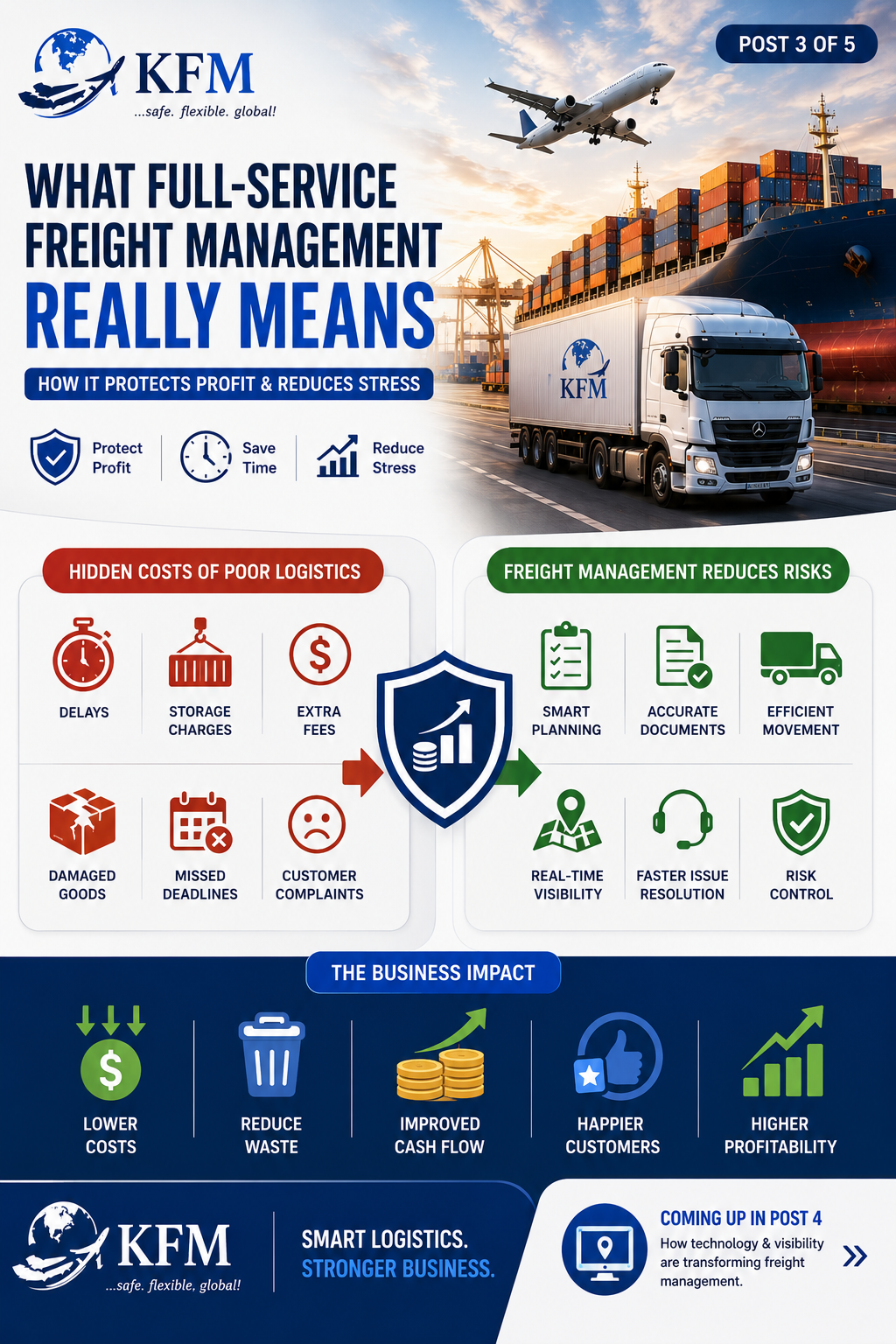
Holding excessive inventory comes with hidden costs:
- Storage expenses
- Capital tied up in stock
- Product obsolescence
- Cash flow limitations
Freight consolidation allows businesses to avoid overstocking while keeping products available when customers need them.
Agility Is a Competitive Advantage
Markets change quickly.
Customer preferences evolve.
Businesses that import in smaller, well-planned shipments can respond faster to market demand than those holding months of inventory.
Flexibility often beats volume.
Smarter Logistics, Stronger Growth
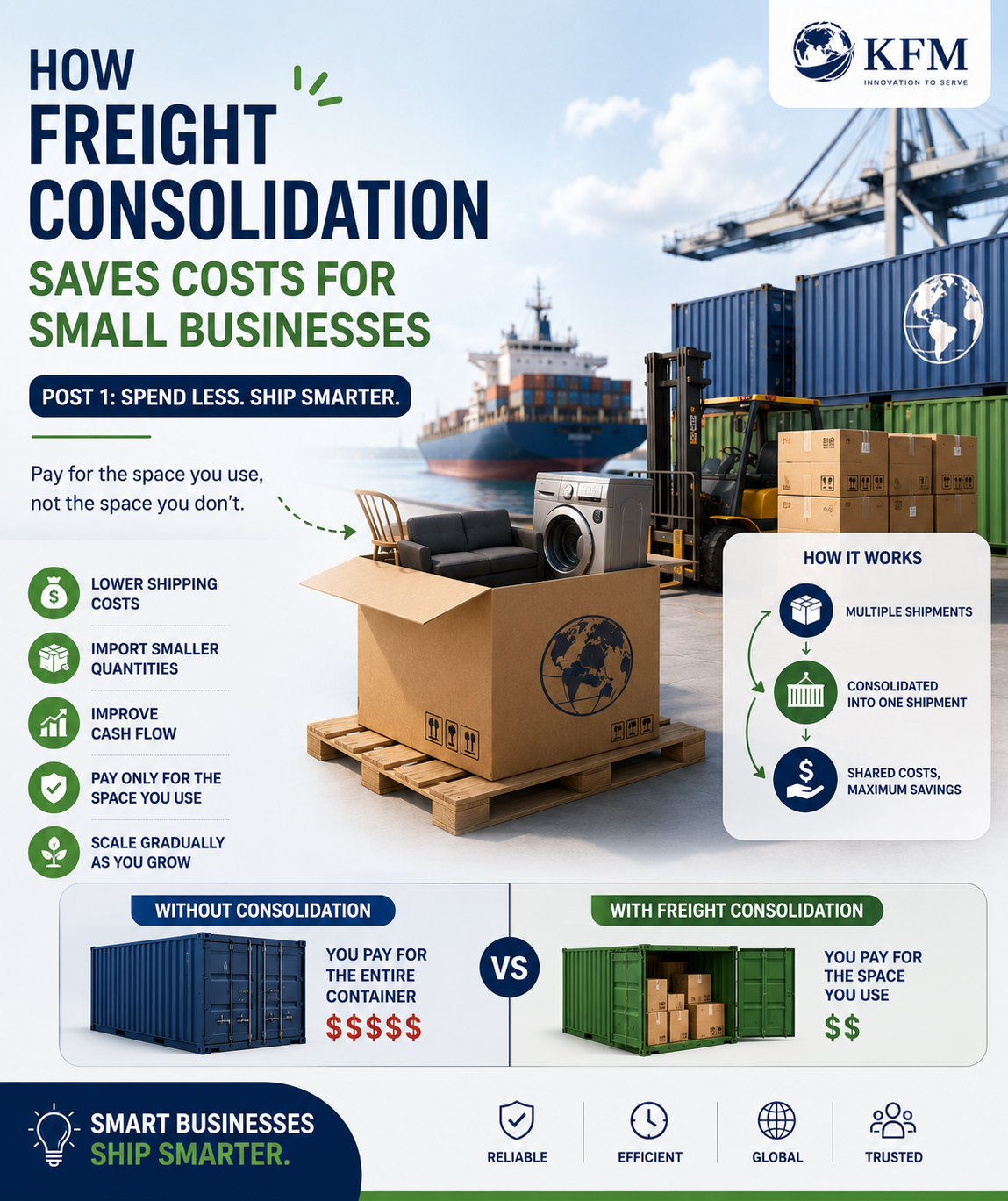
Freight consolidation isn't simply about reducing shipping costs.
It also helps businesses:
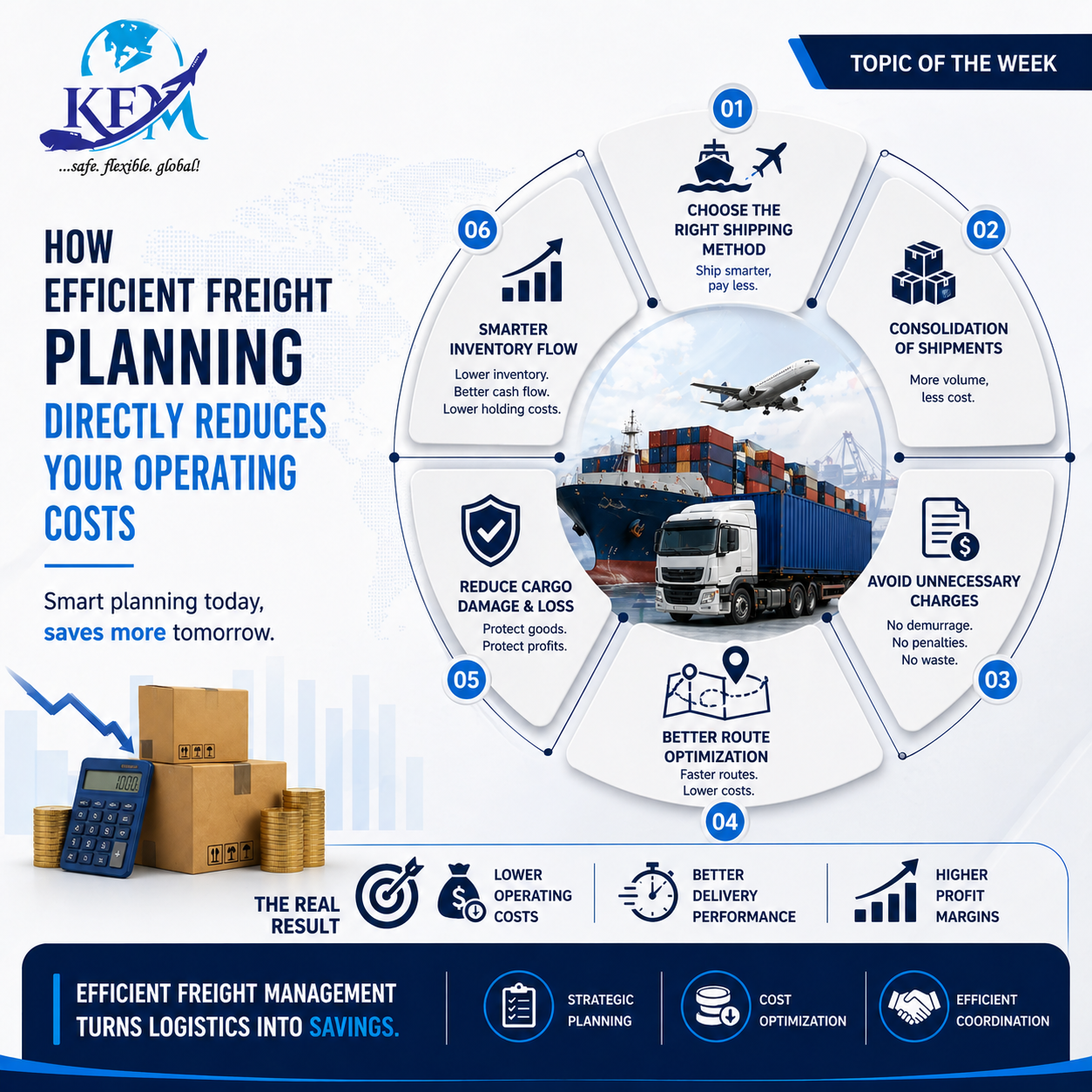
- Improve inventory management
- Protect cash flow
- Reduce operational risk
- Adapt faster to customer demand
That's how smarter logistics supports long-term business growth.
At KFM, we help businesses import efficiently—not excessively.
Through professionally coordinated freight consolidation, we enable SMEs to move the right quantity of goods at the right time, while keeping logistics costs under control.
Because successful businesses don't just ship more—they ship smarter.
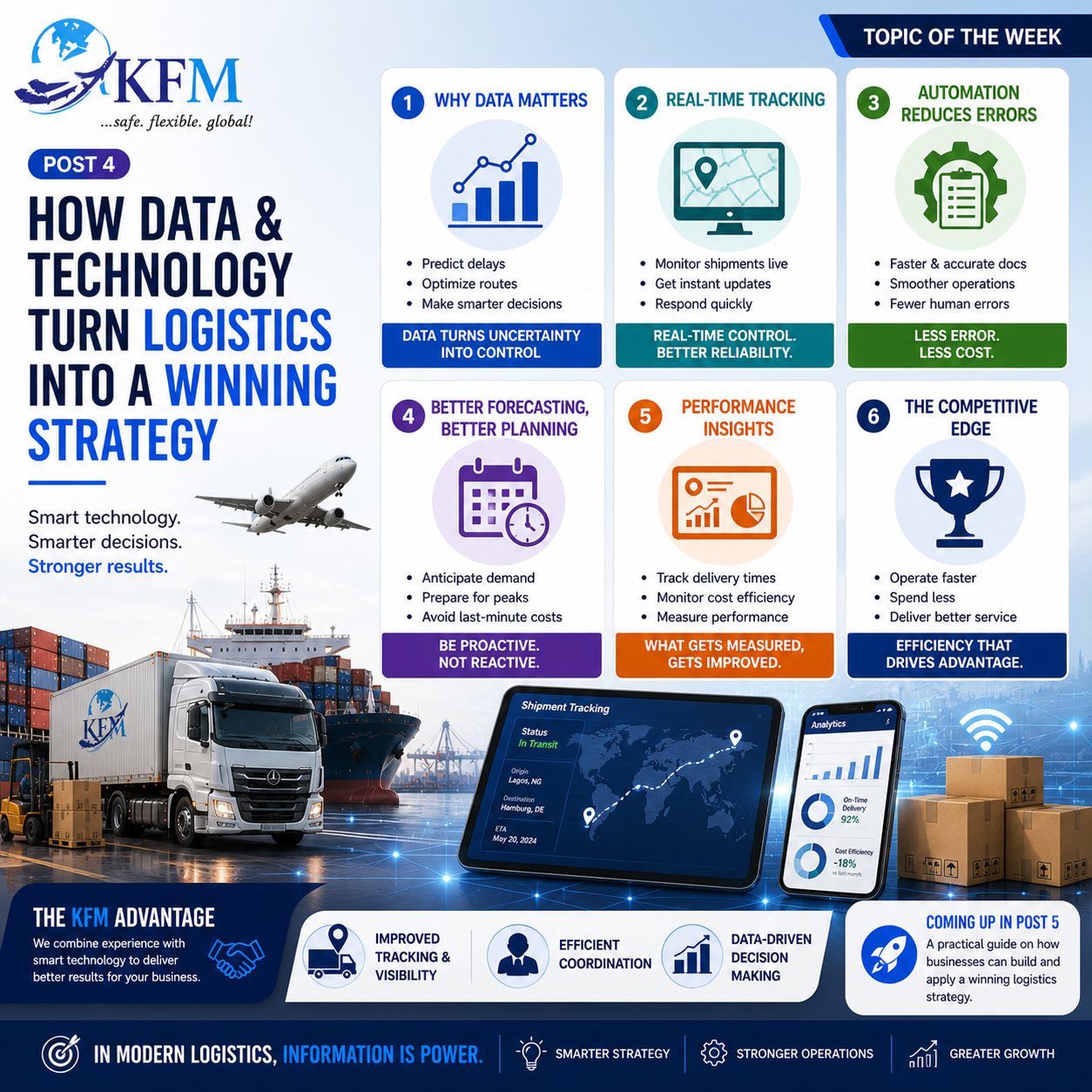
Coming Up in Post 5
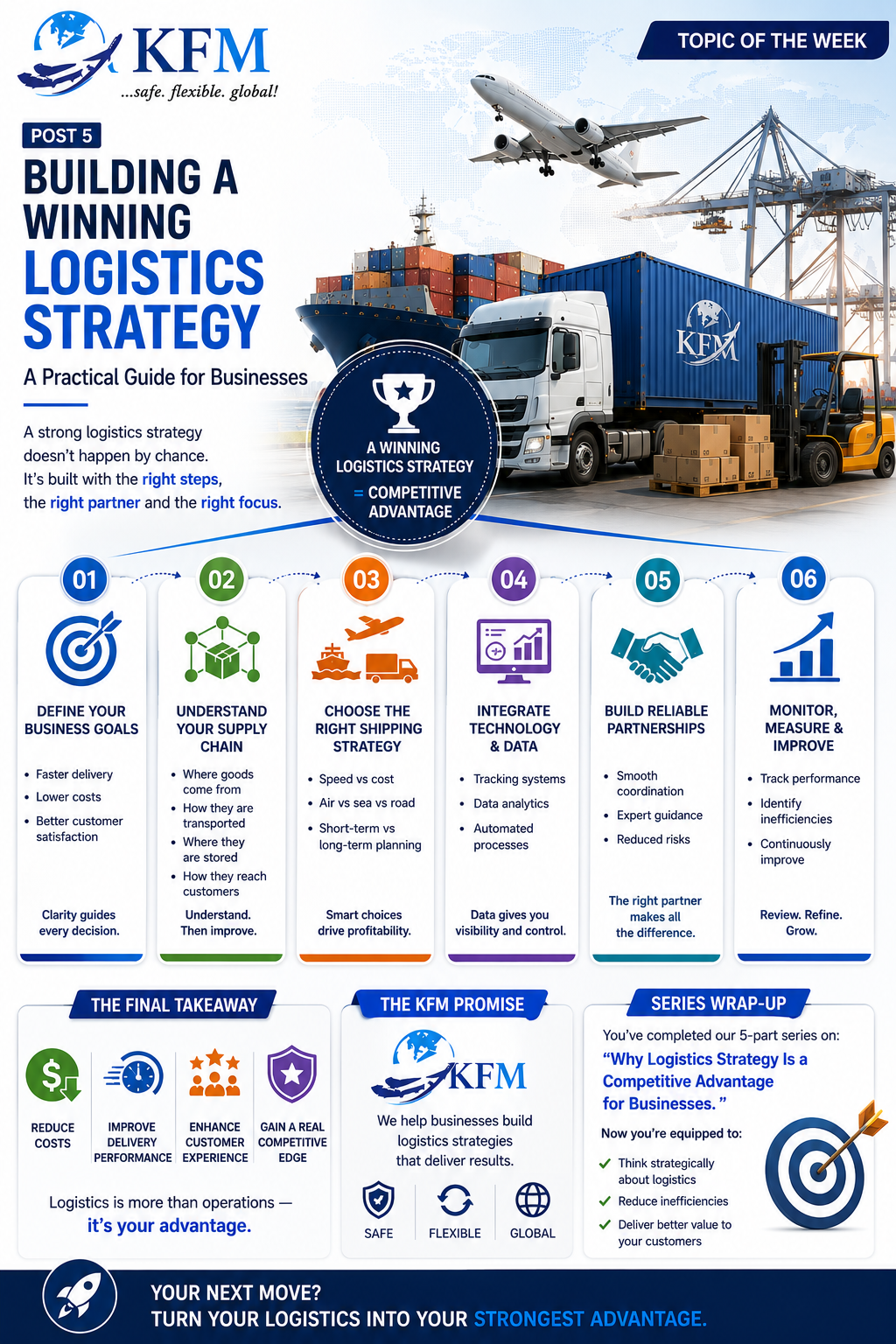
In our final post, we'll bring everything together by showing why freight consolidation is one of the smartest logistics strategies any growing business can adopt.
Smart inventory starts with smart shipping.