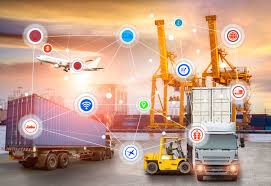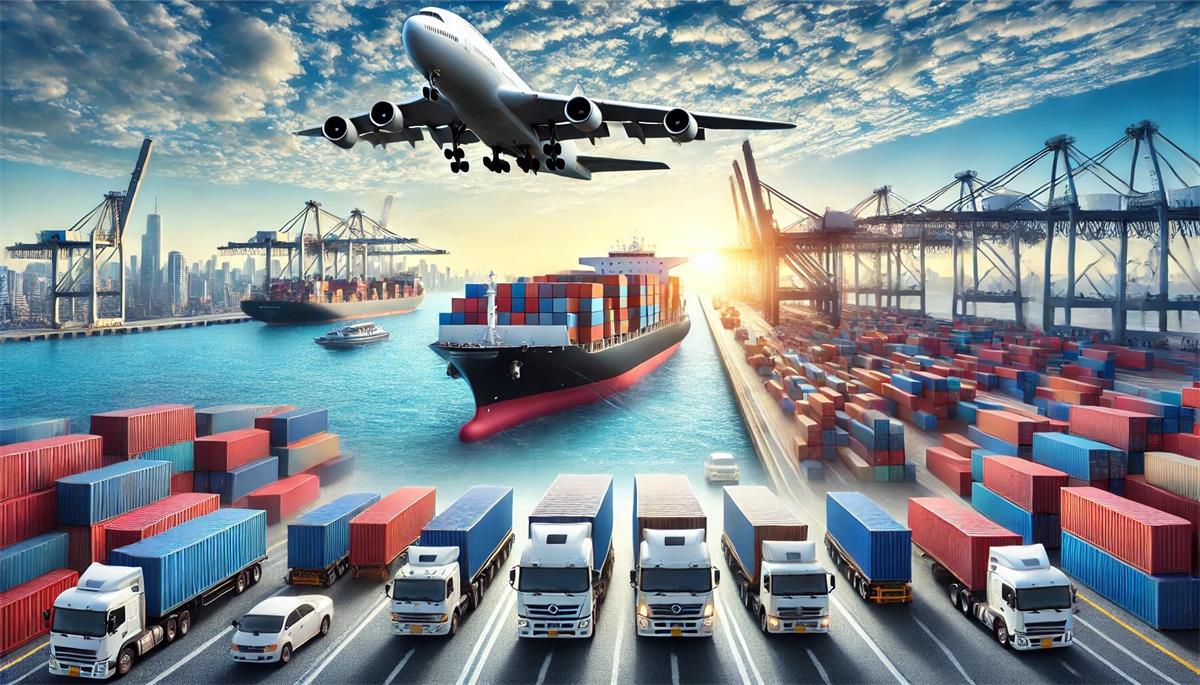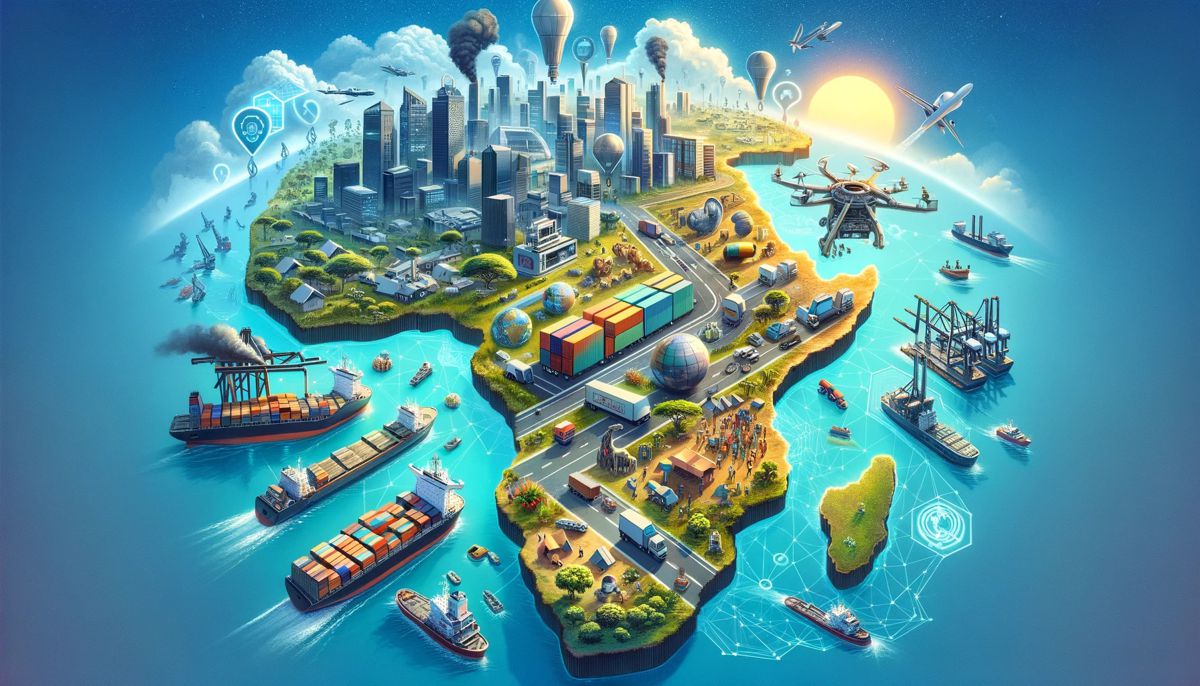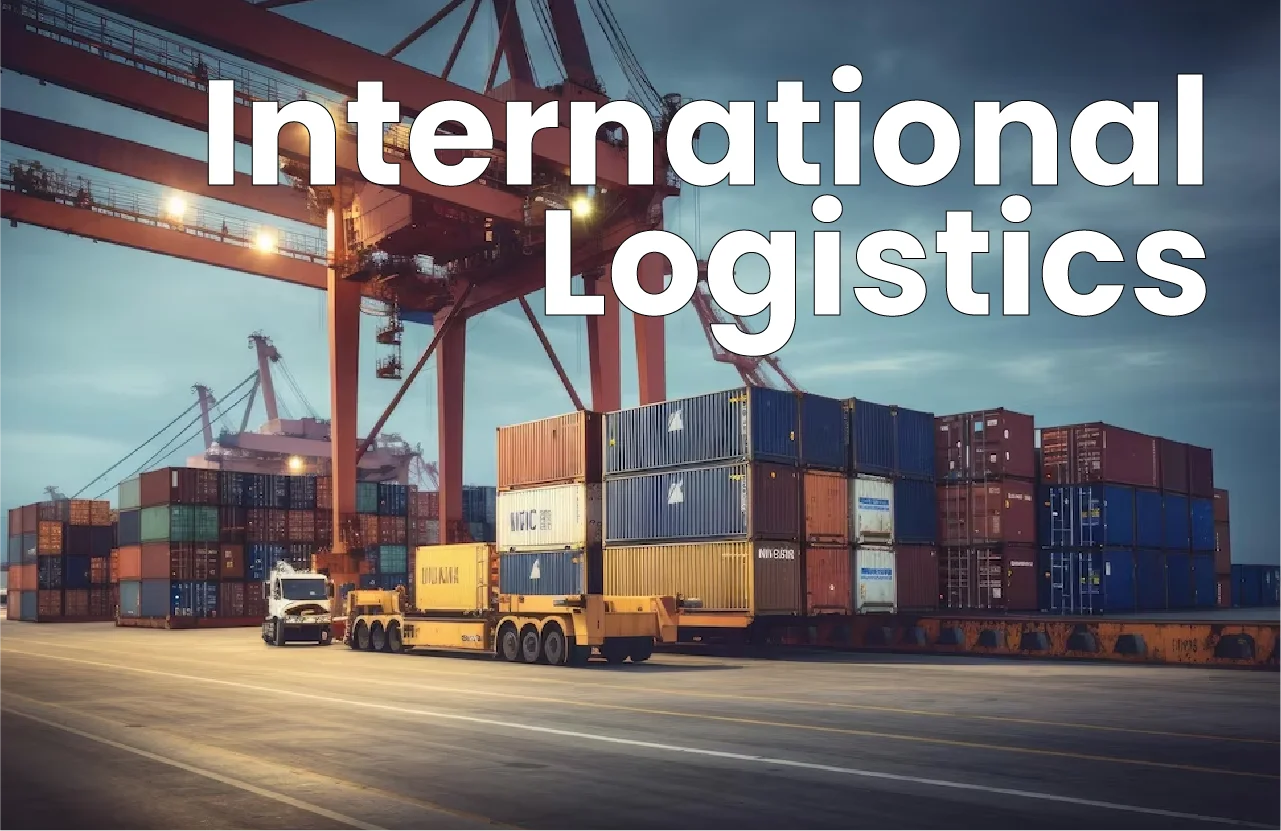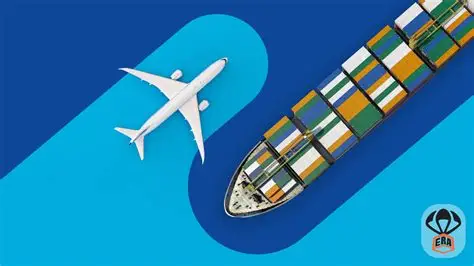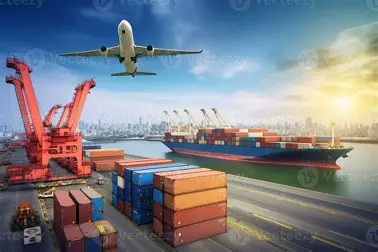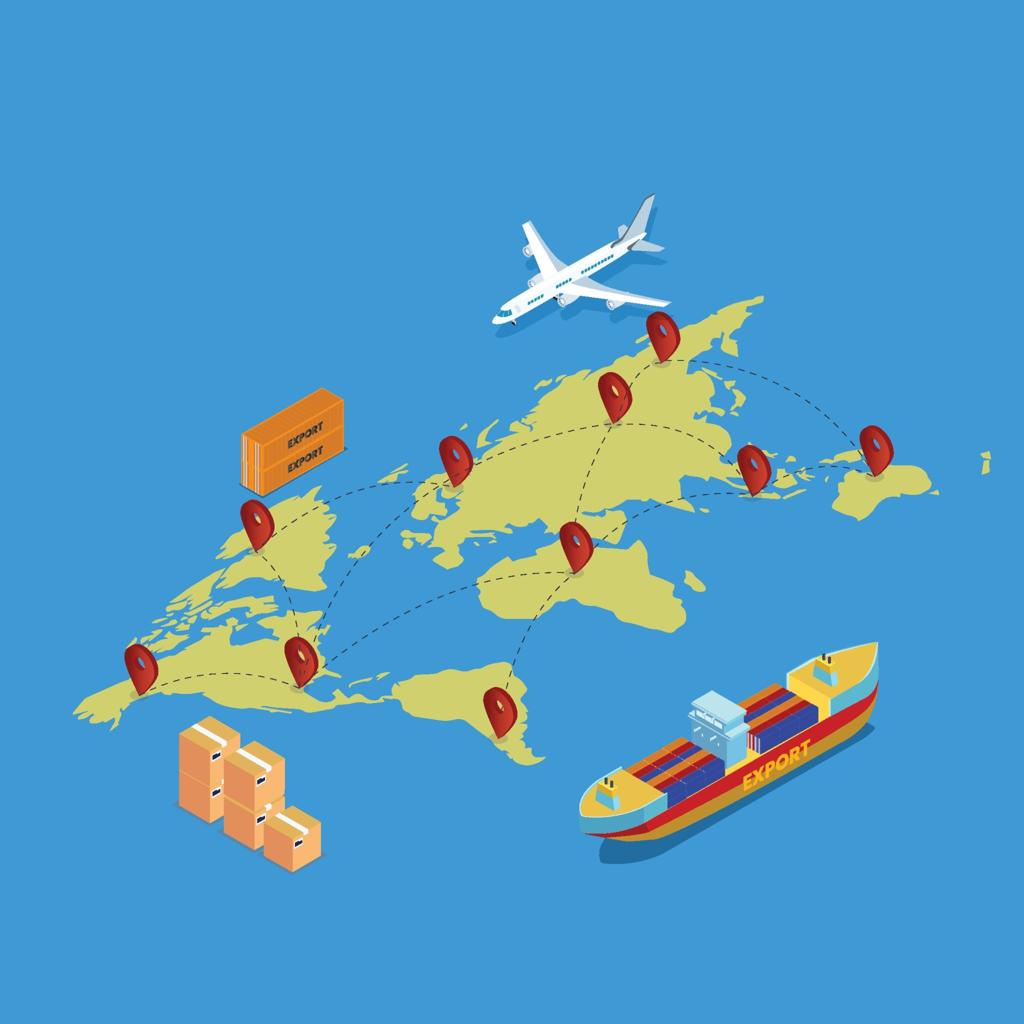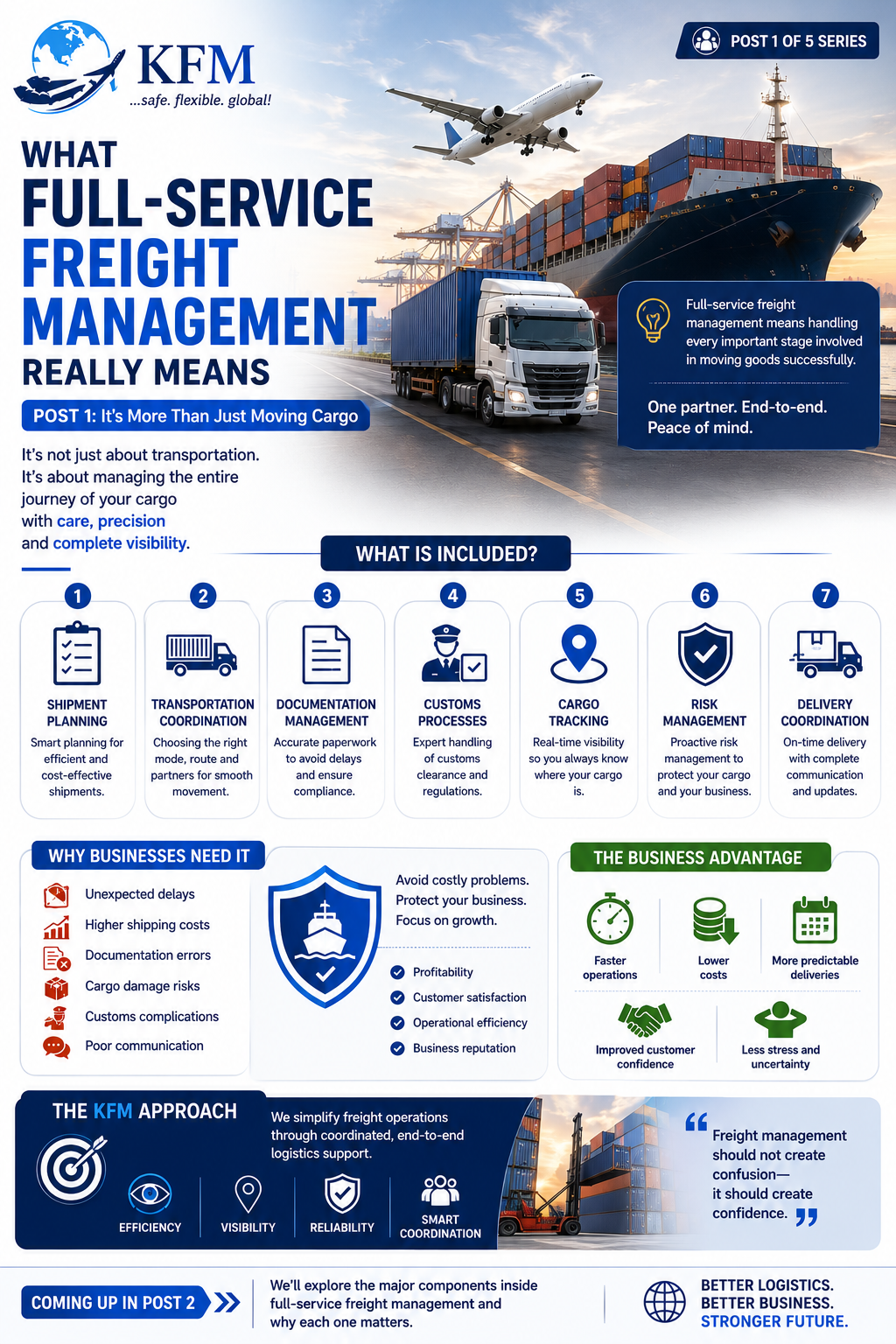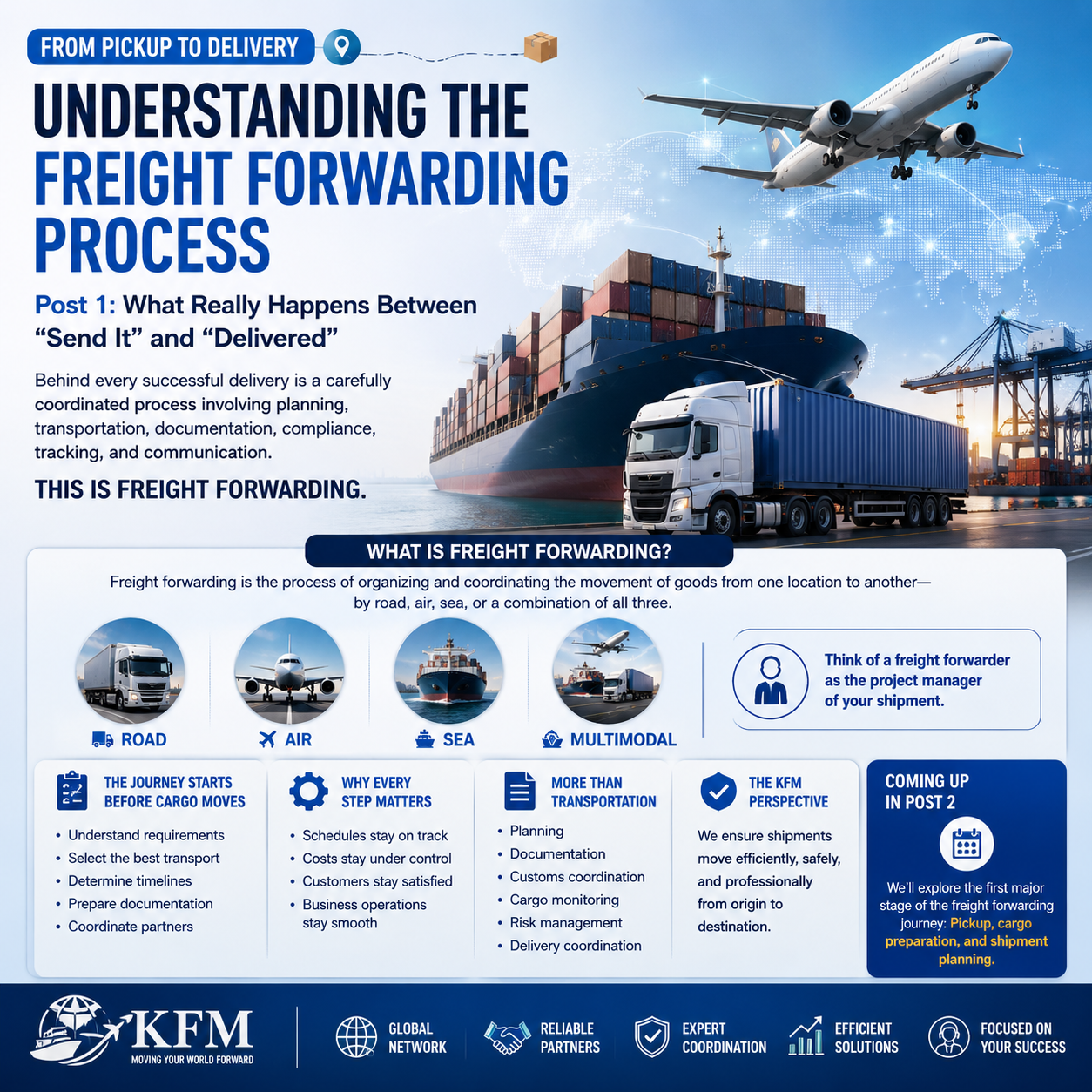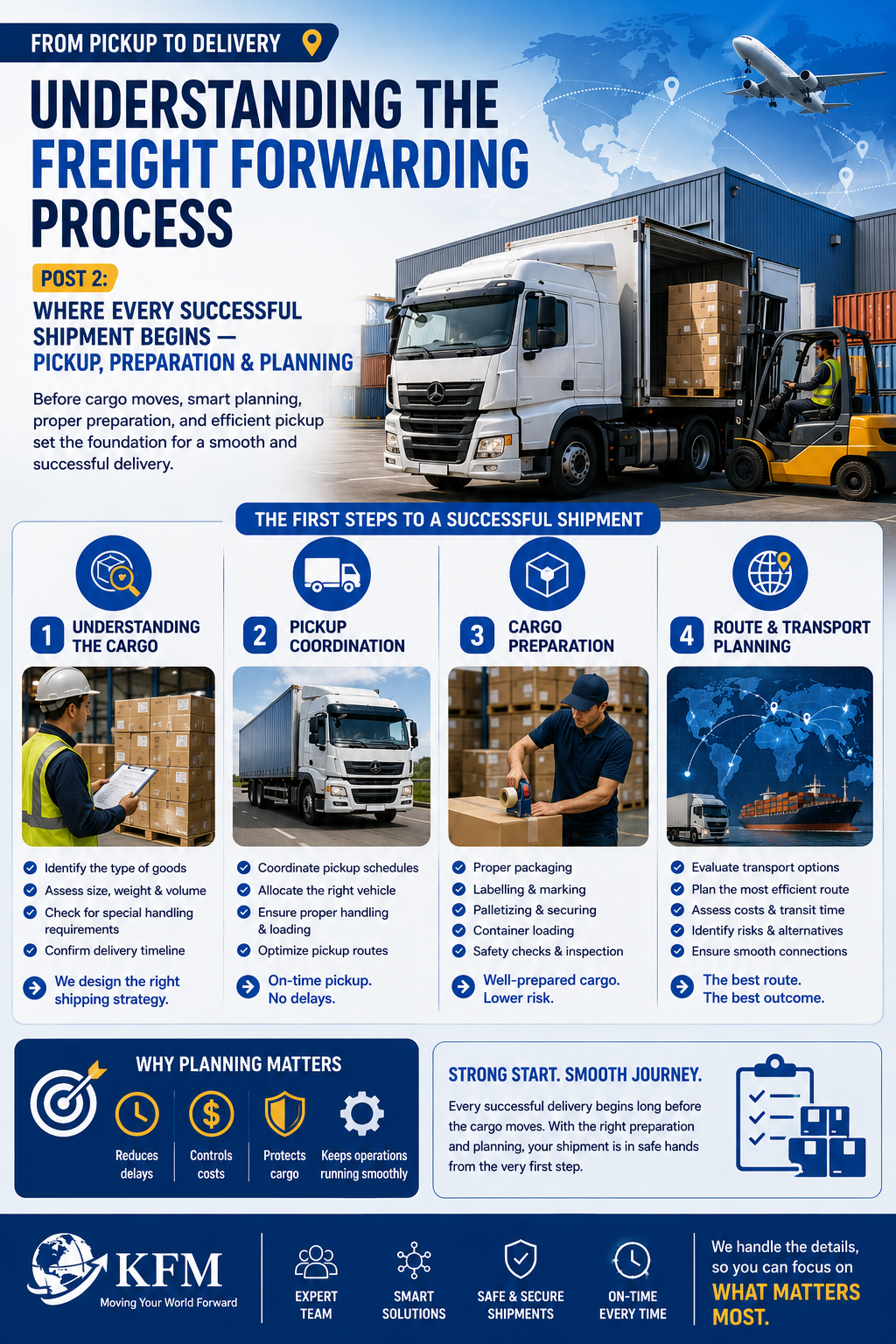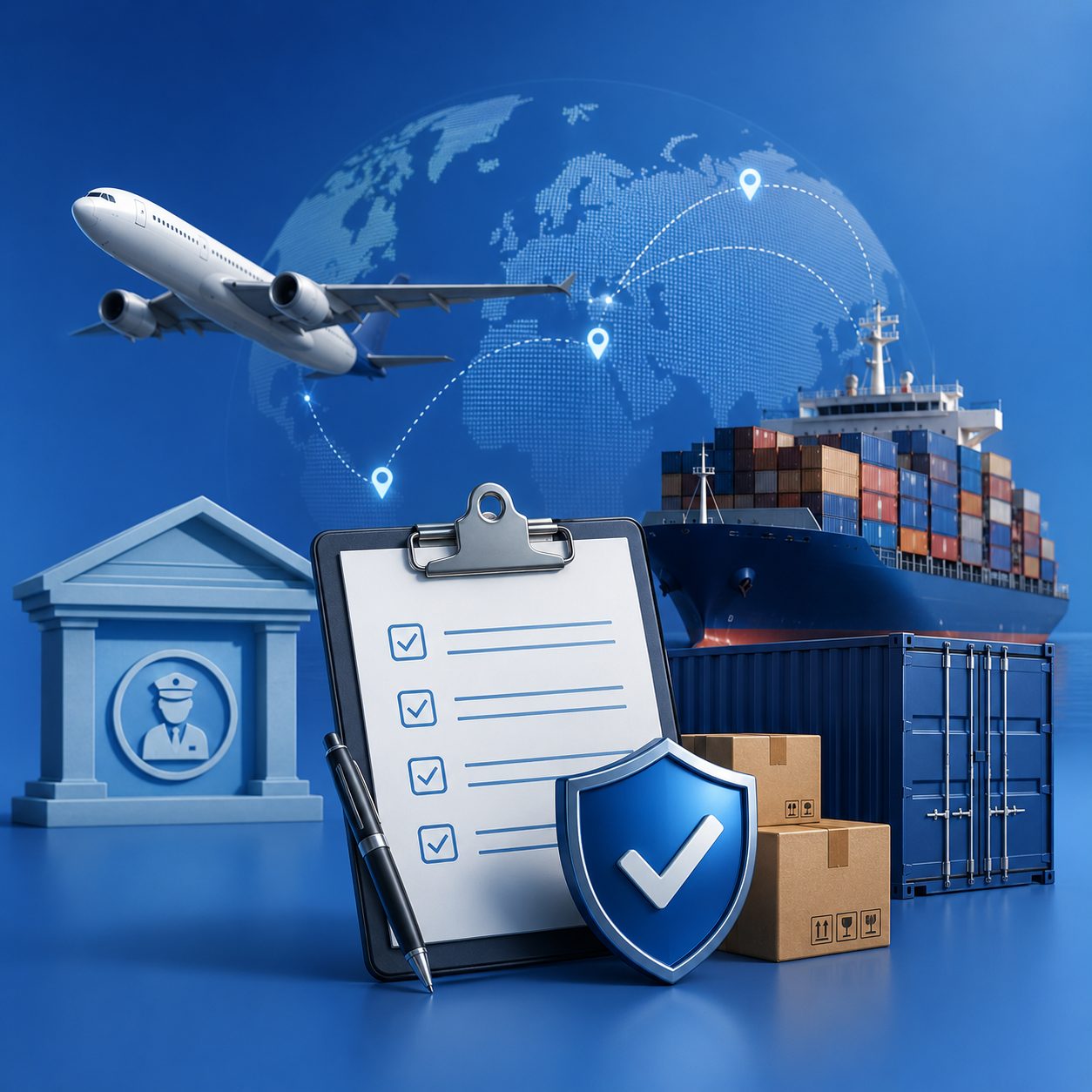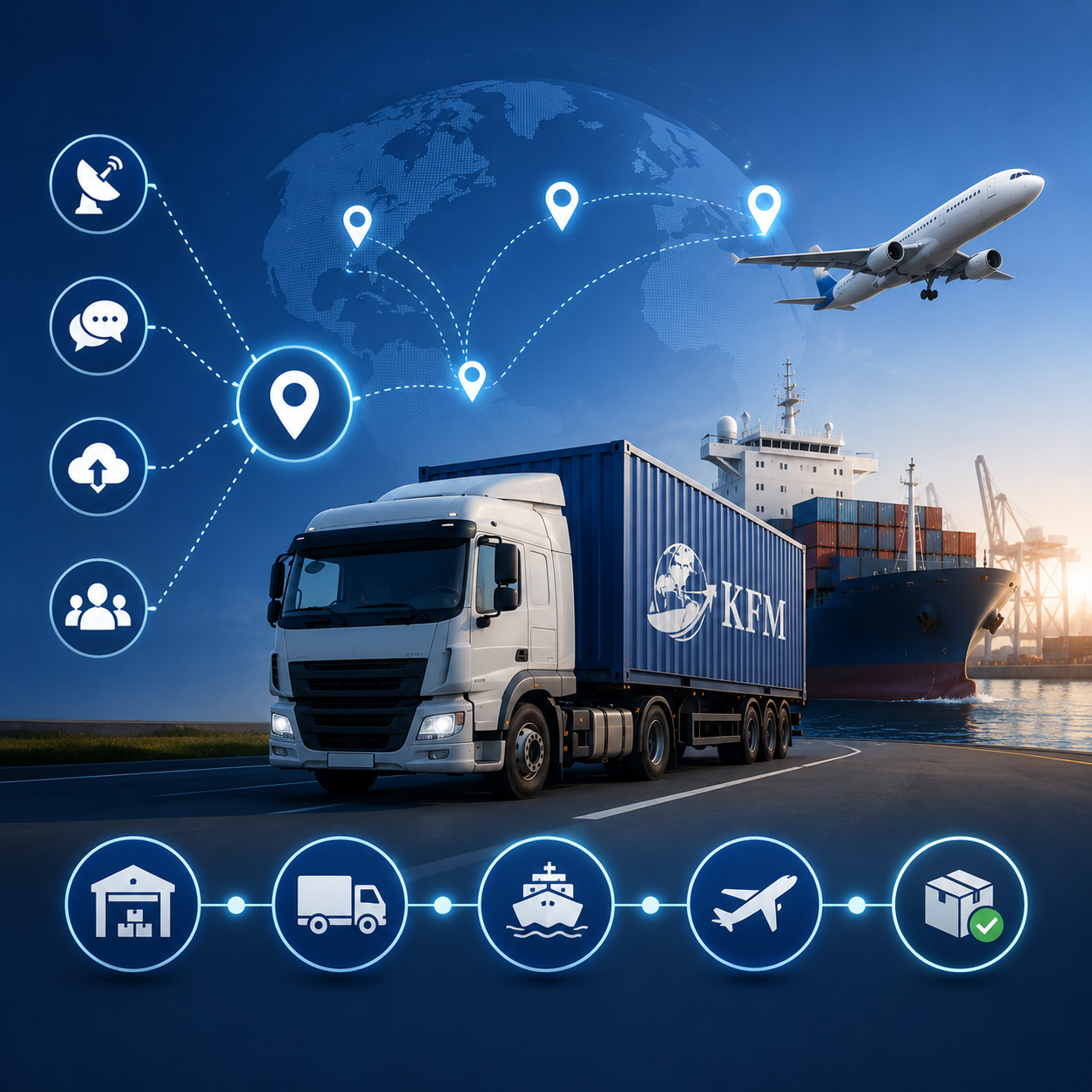
When people think about shipping, they often imagine a single truck, ship, or airplane carrying cargo from one place to another.
In reality, global logistics is rarely that simple.
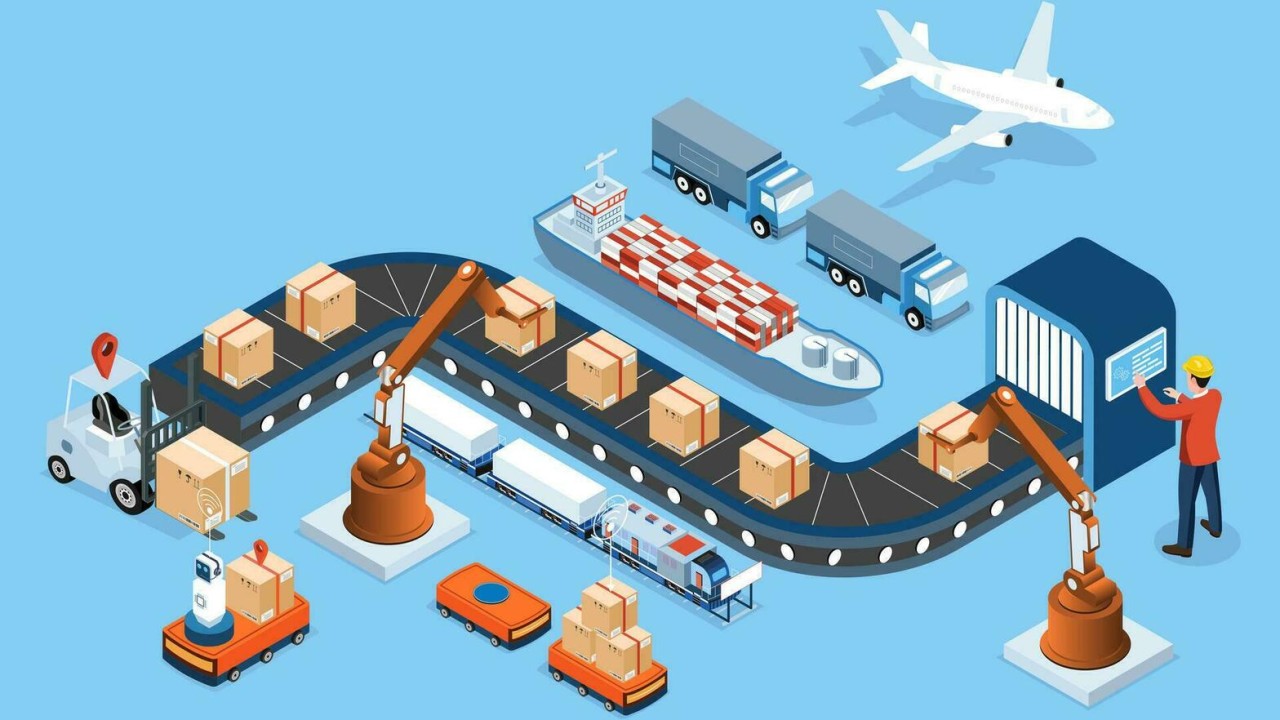
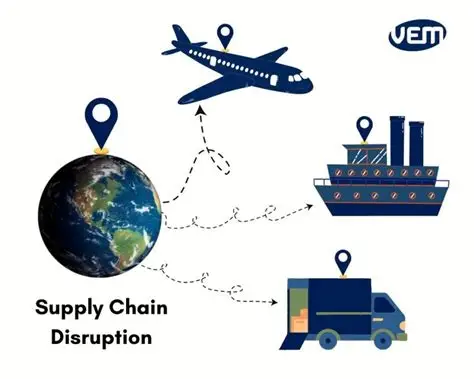
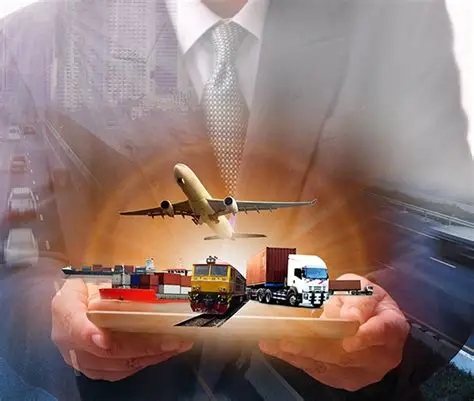
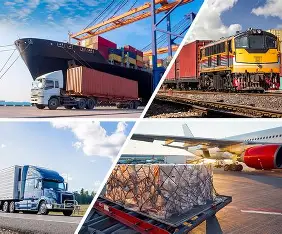
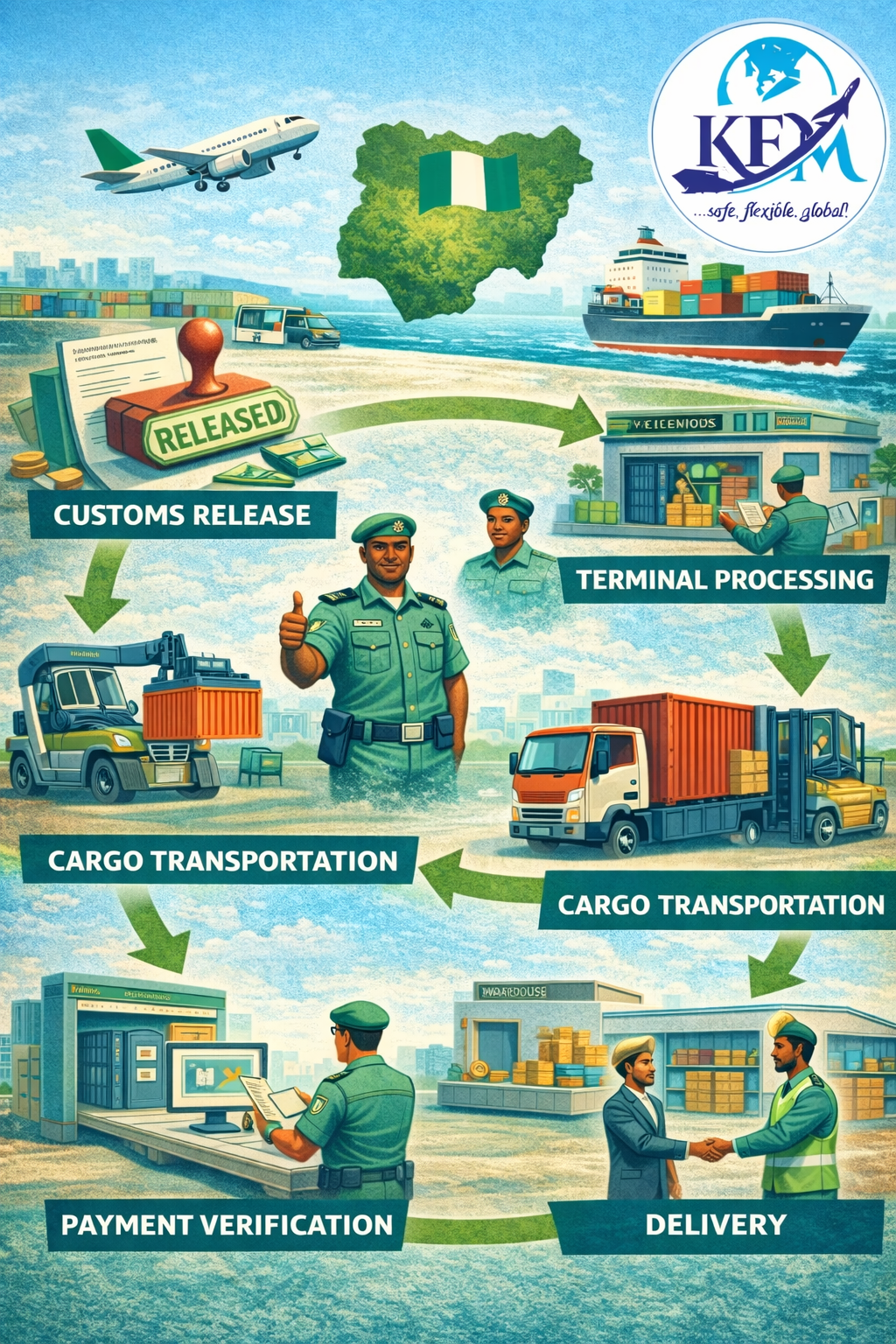
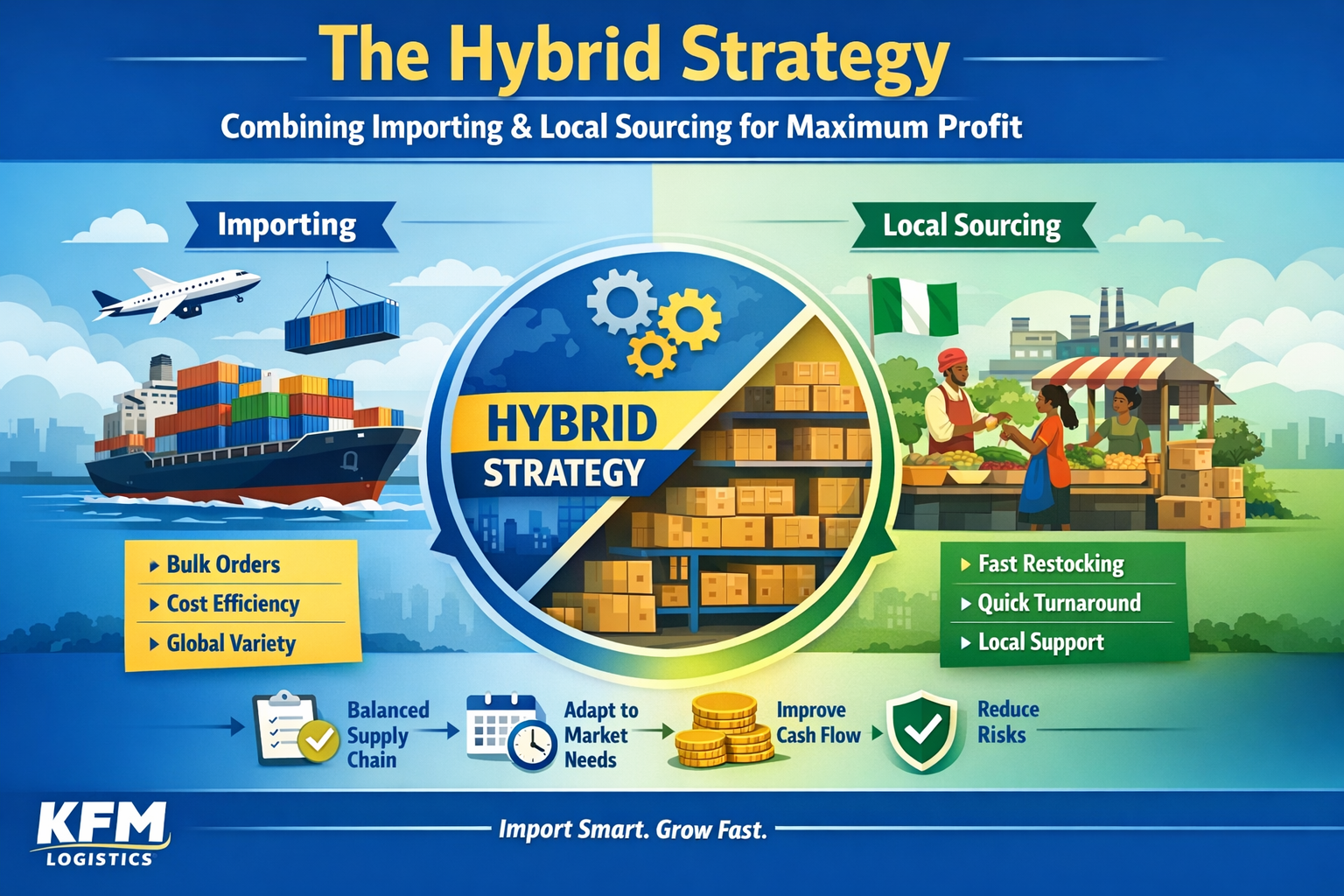
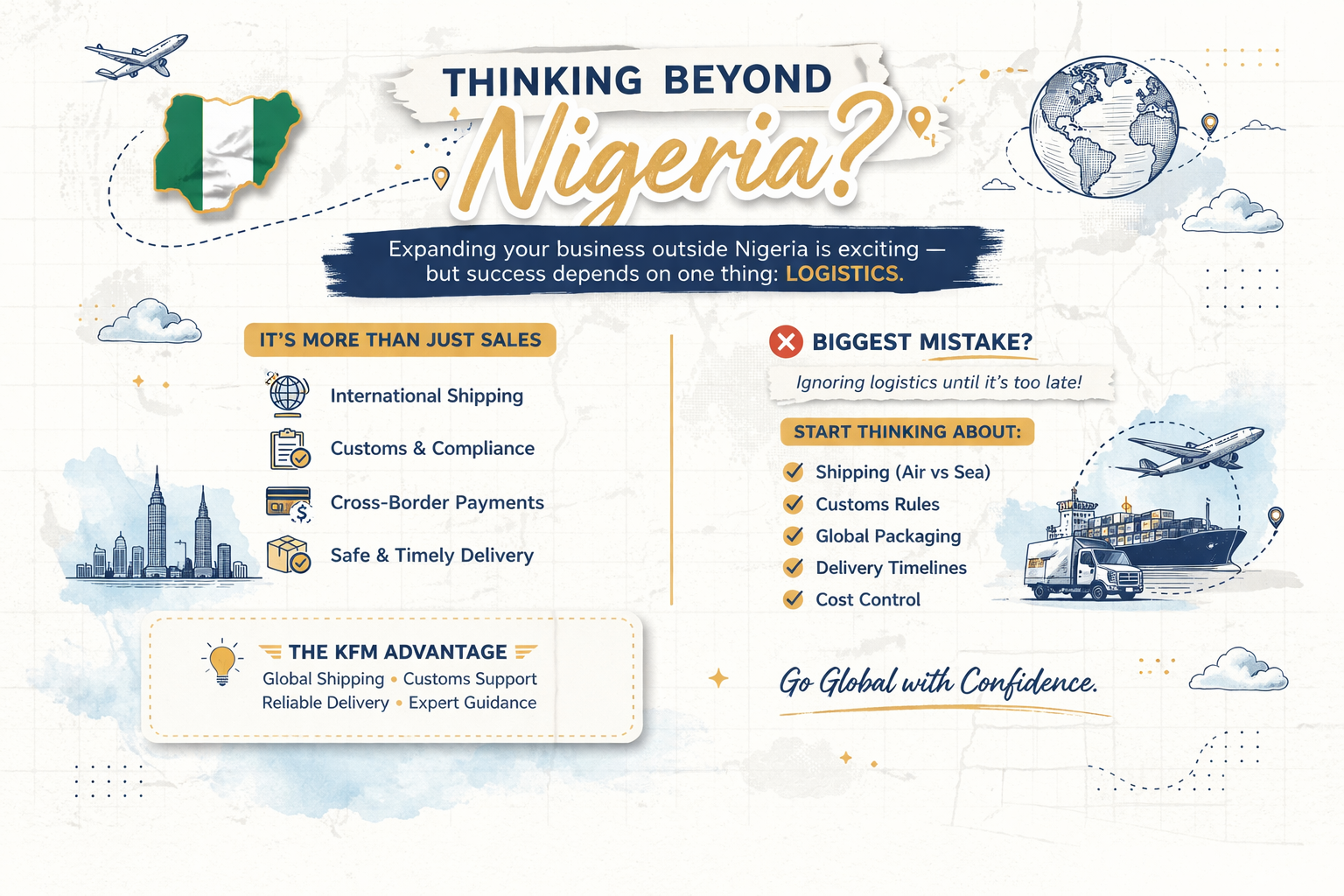
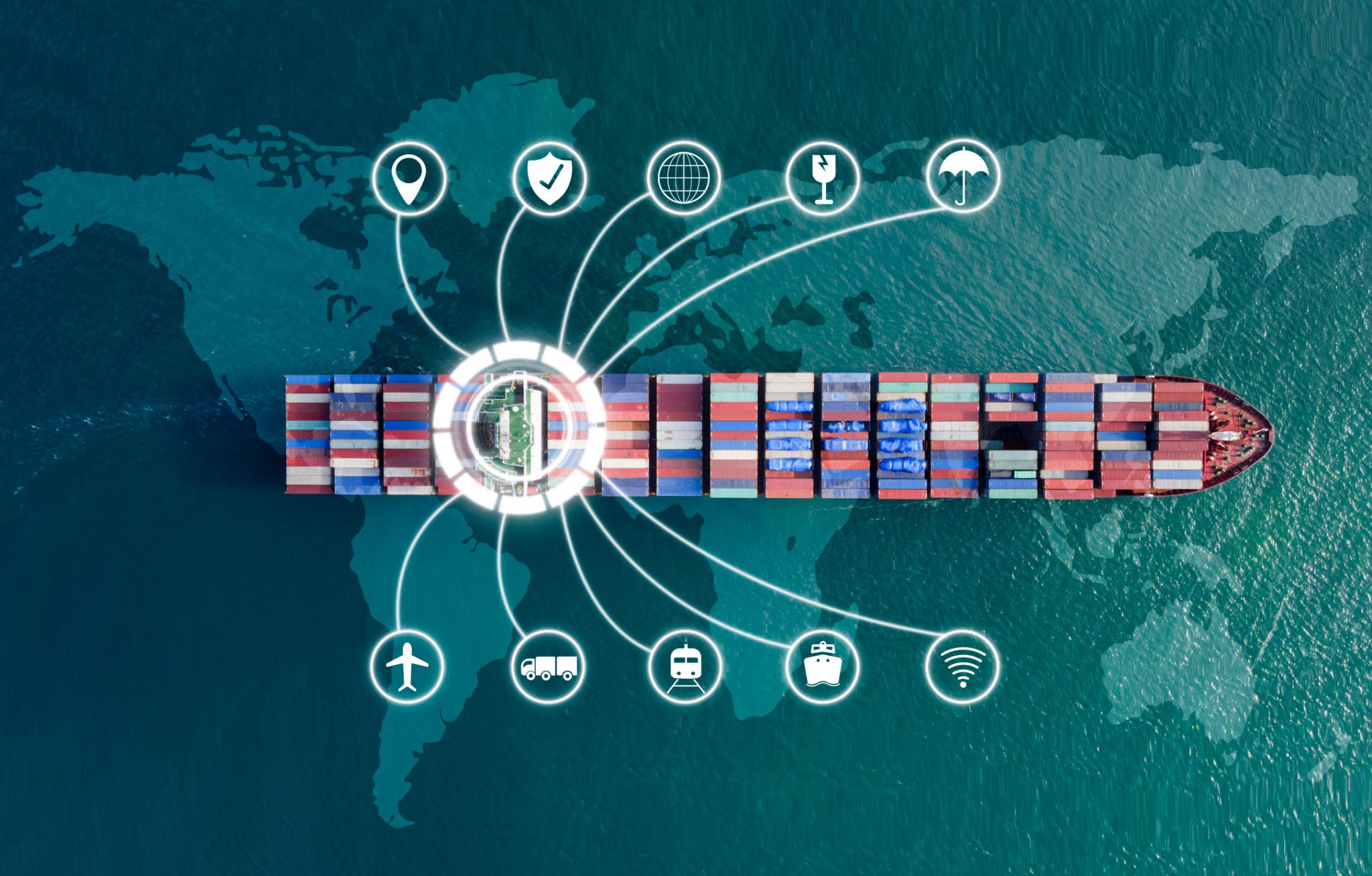
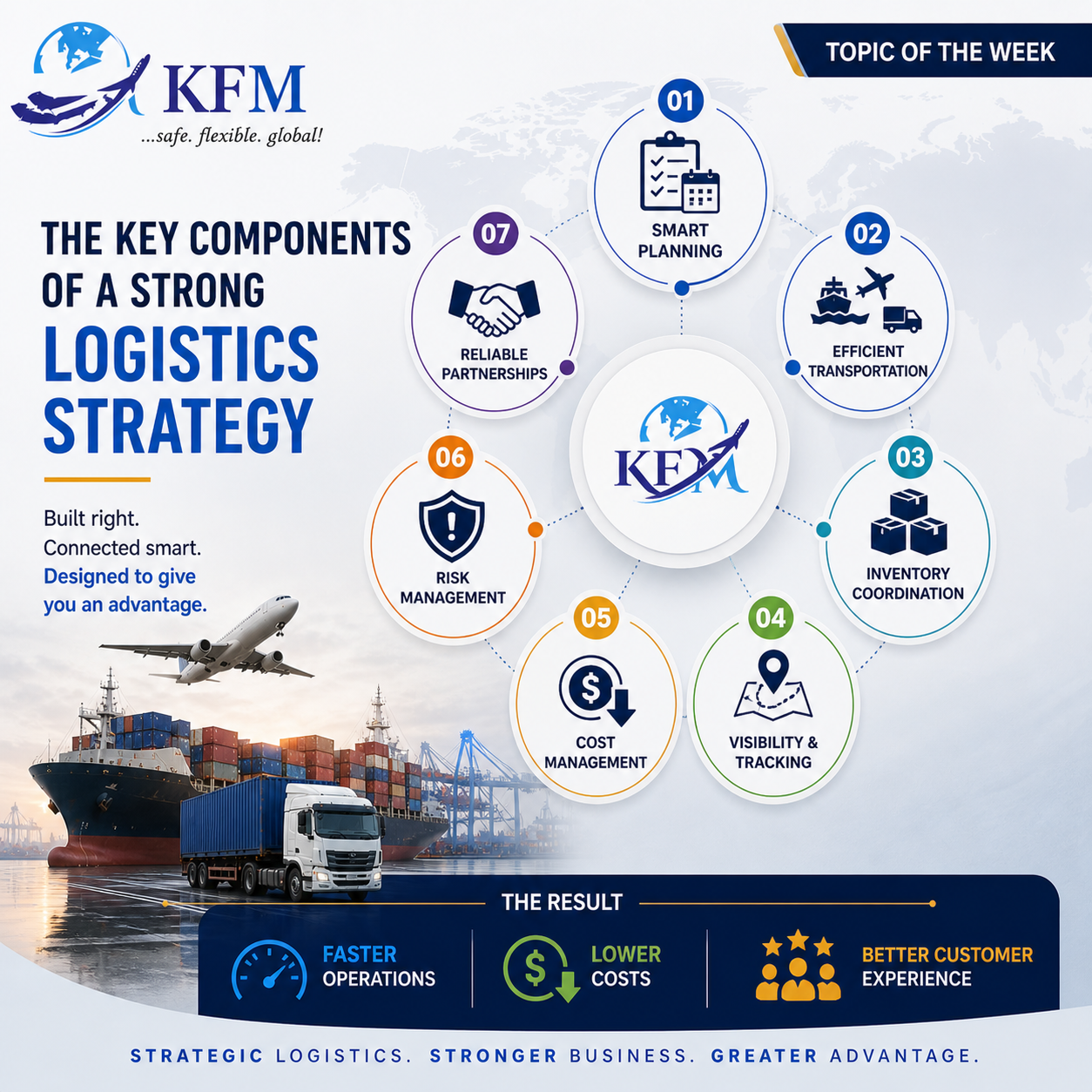
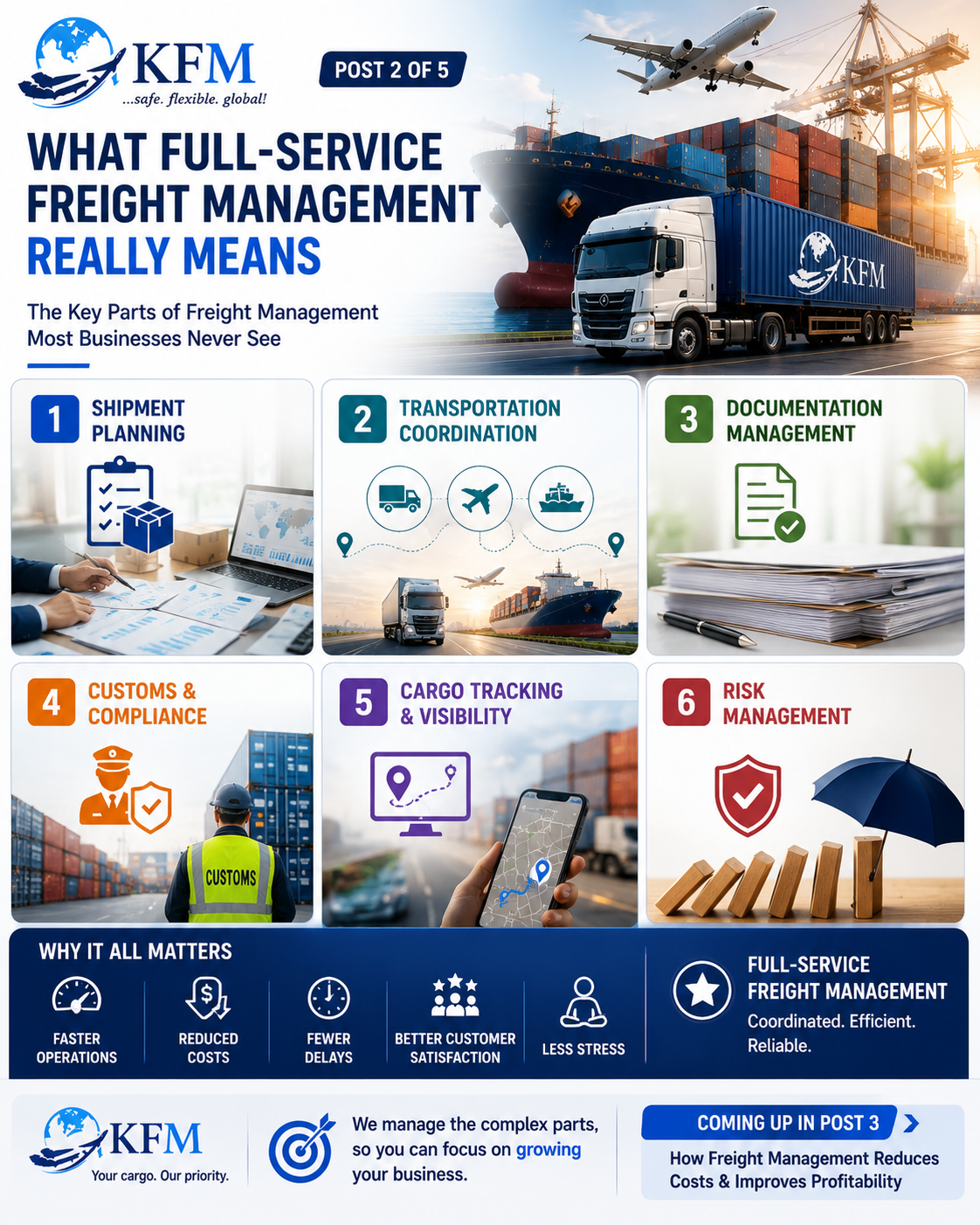
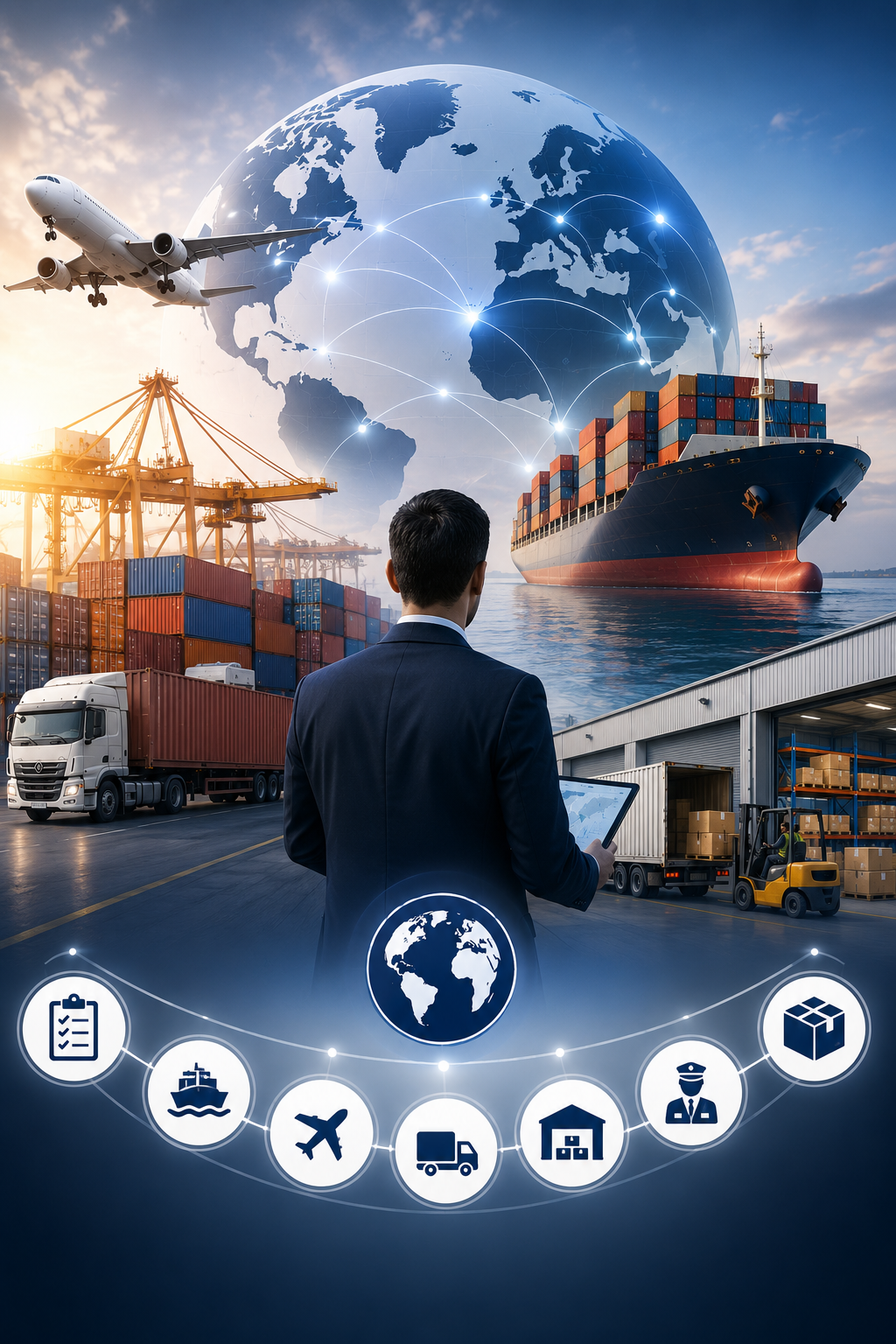
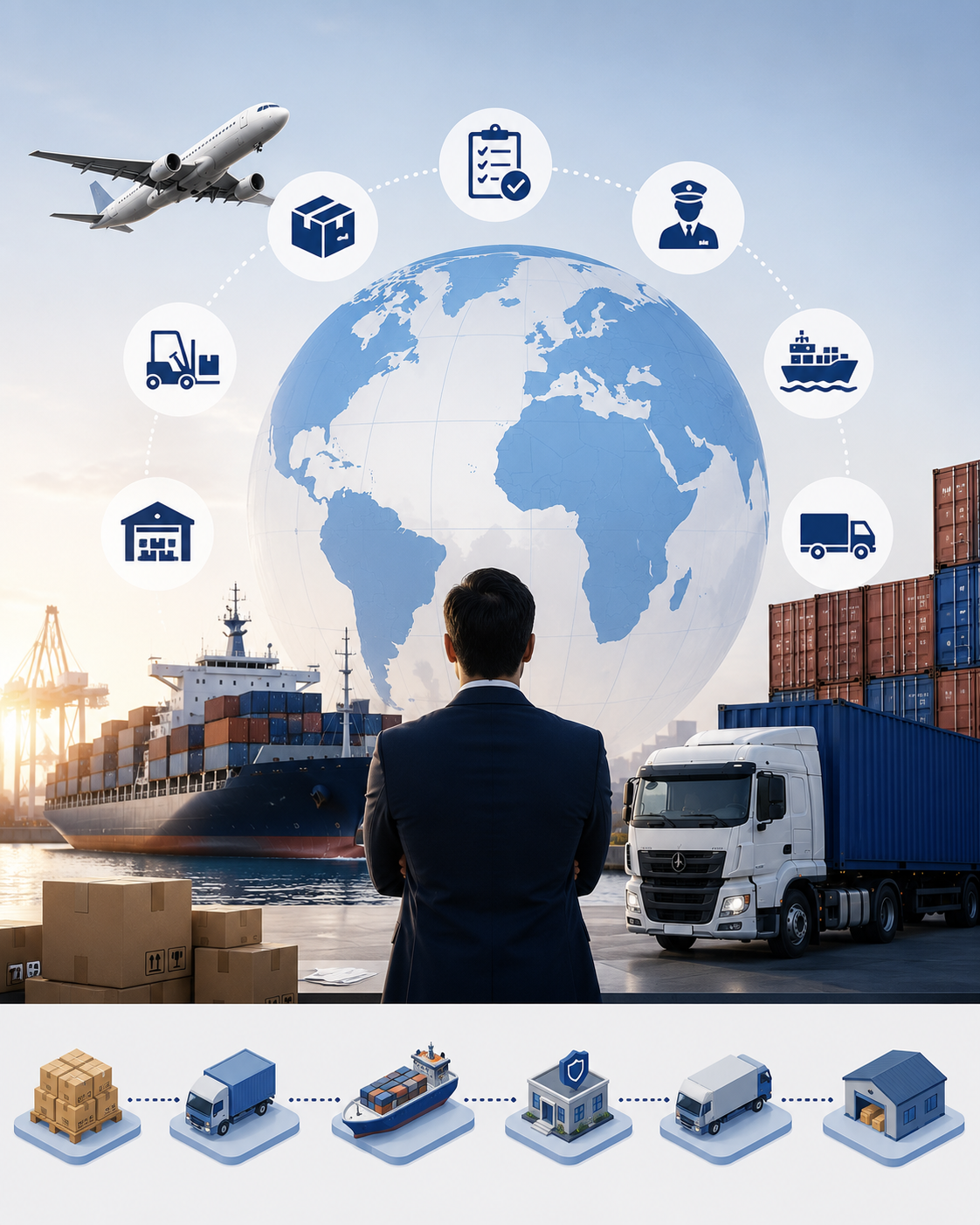
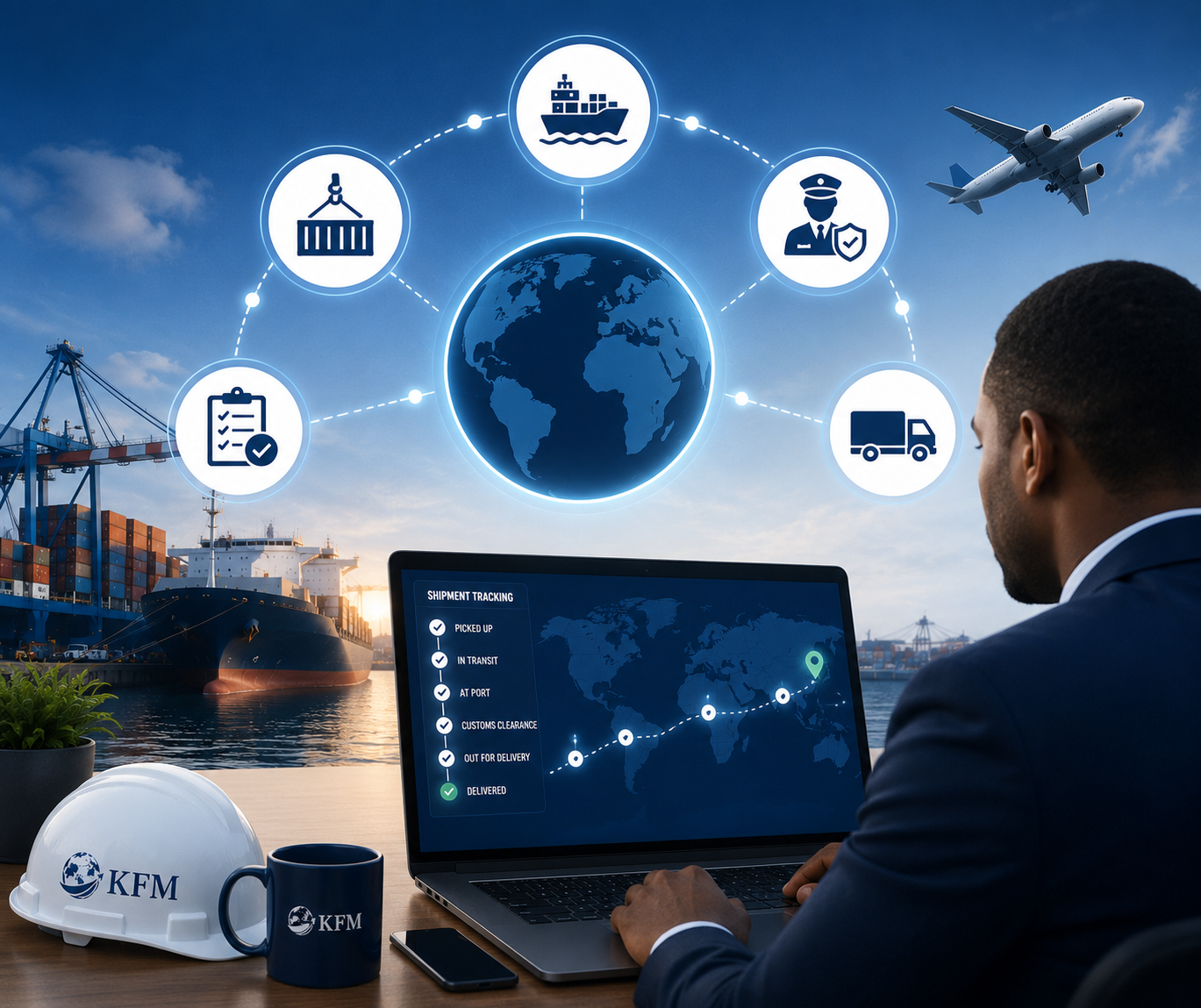
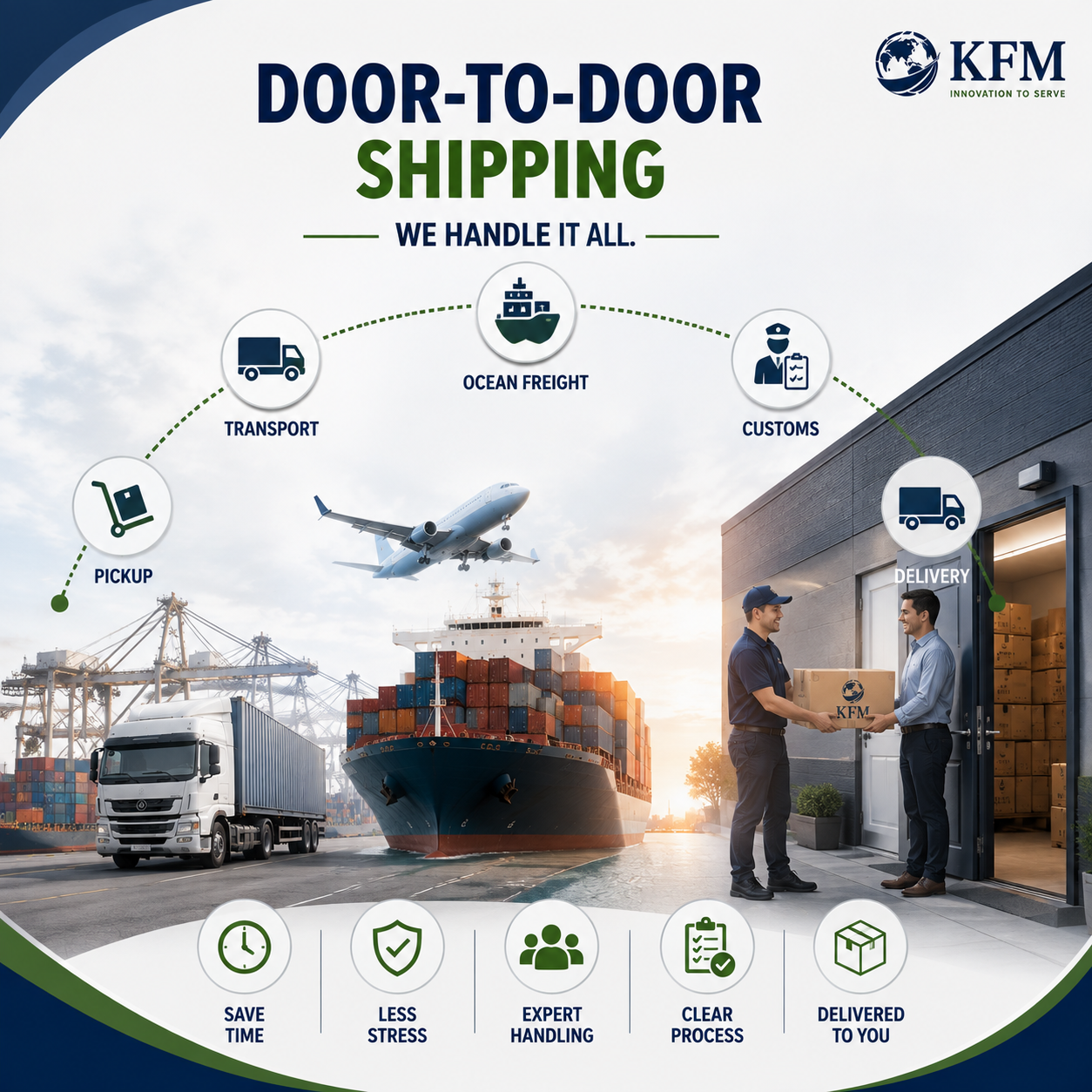
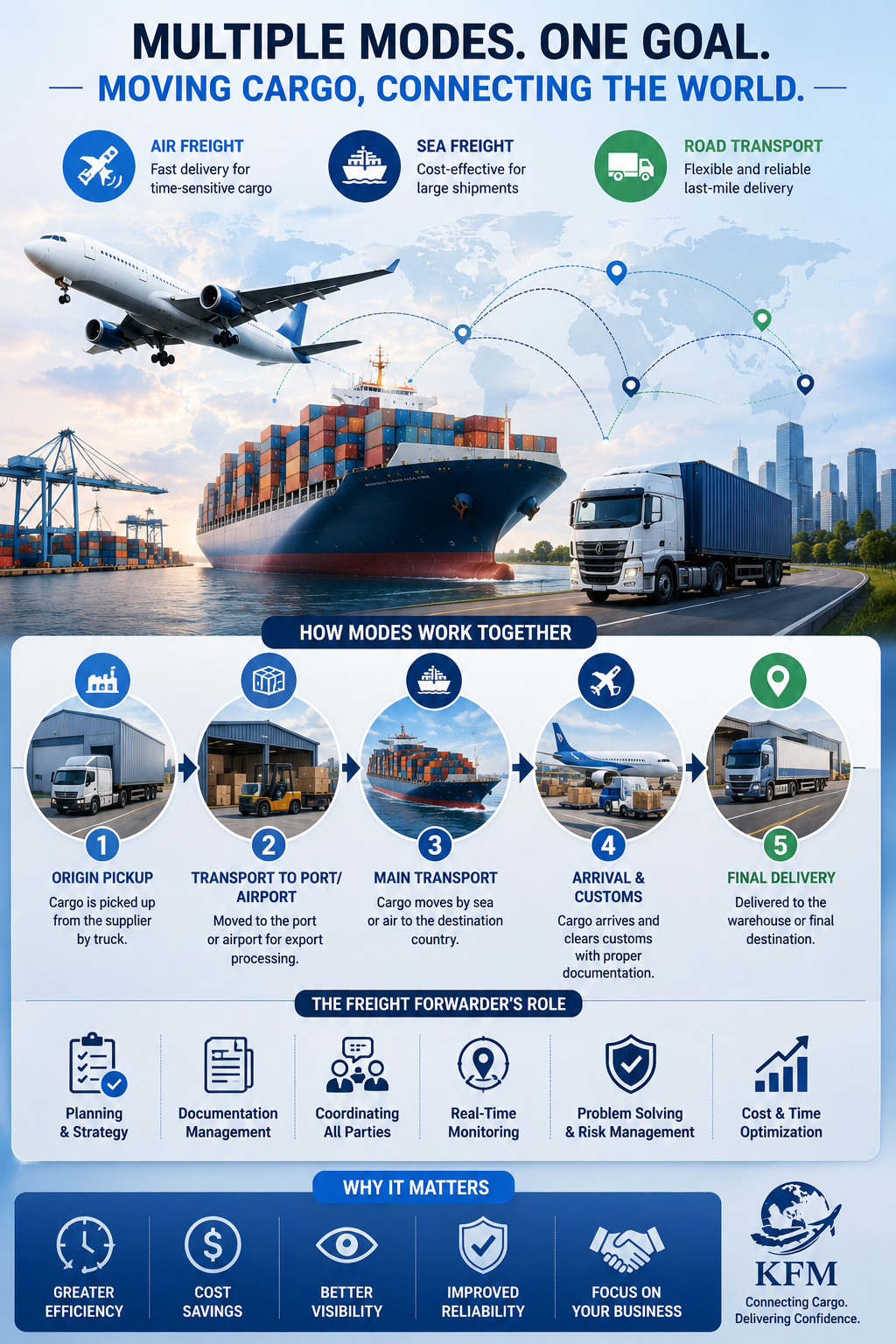
Most international shipments involve multiple modes of transportation working together seamlessly.
This is where professional freight forwarders truly shine.
At KFM, one of our key responsibilities is coordinating these different transport networks to ensure cargo reaches its destination efficiently.
No Single Transport Method Does Everything
Every transport mode has strengths and limitations.
For example:
- Air Freight offers speed.
- Sea Freight offers cost efficiency for large cargo volumes.
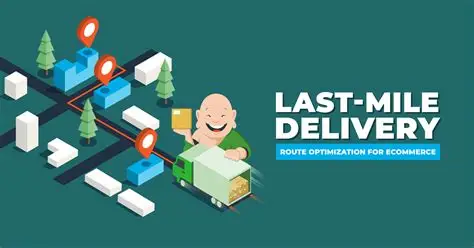
- Road Transport provides flexibility and last-mile delivery.
Freight forwarders determine how to combine these options for the best result.
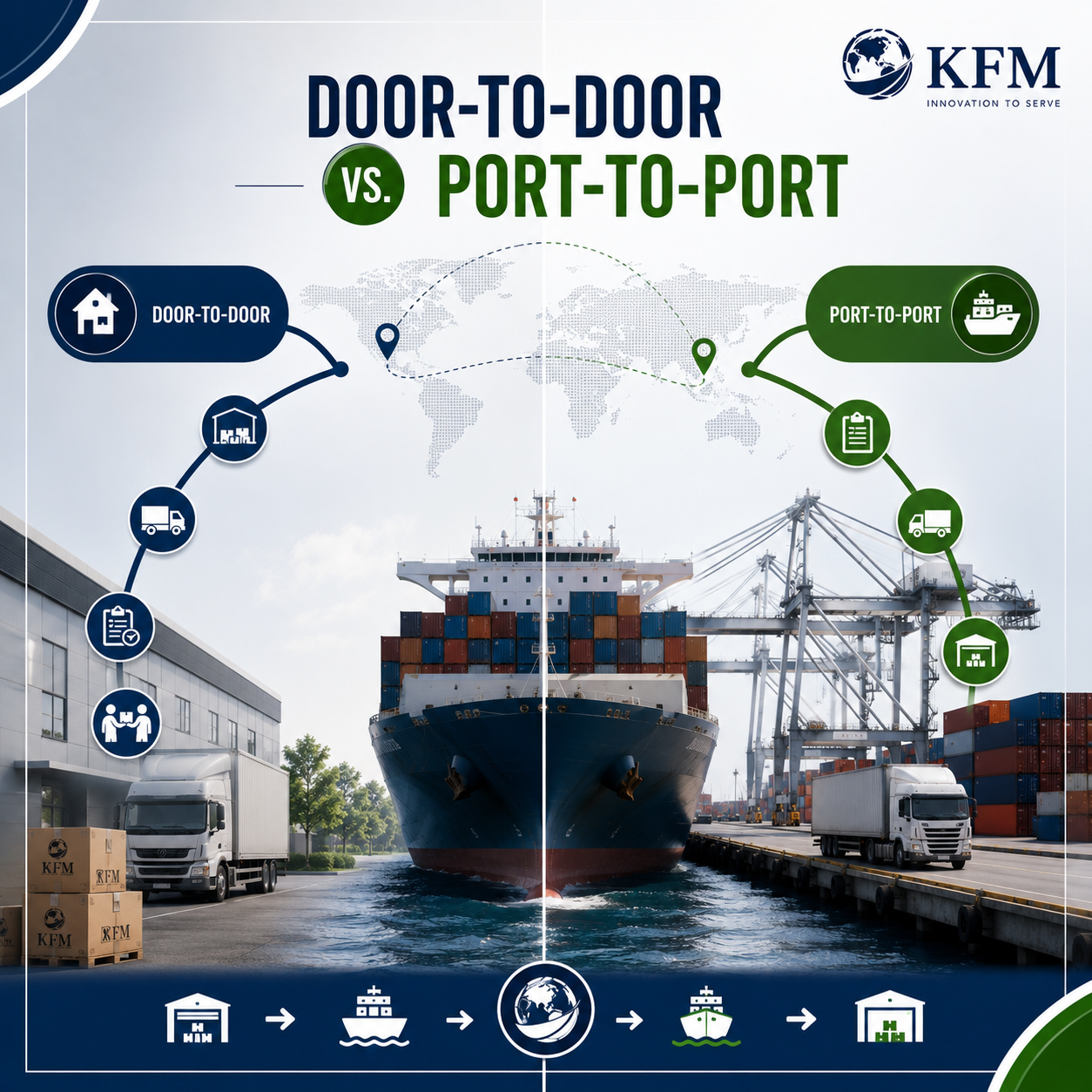
The Journey Often Starts on the Road
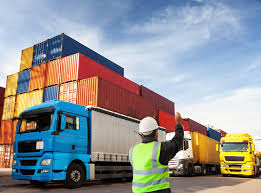
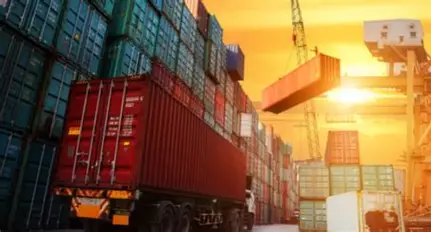
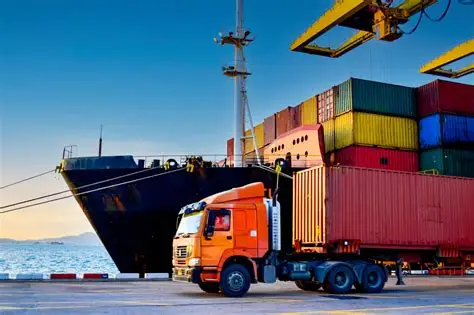
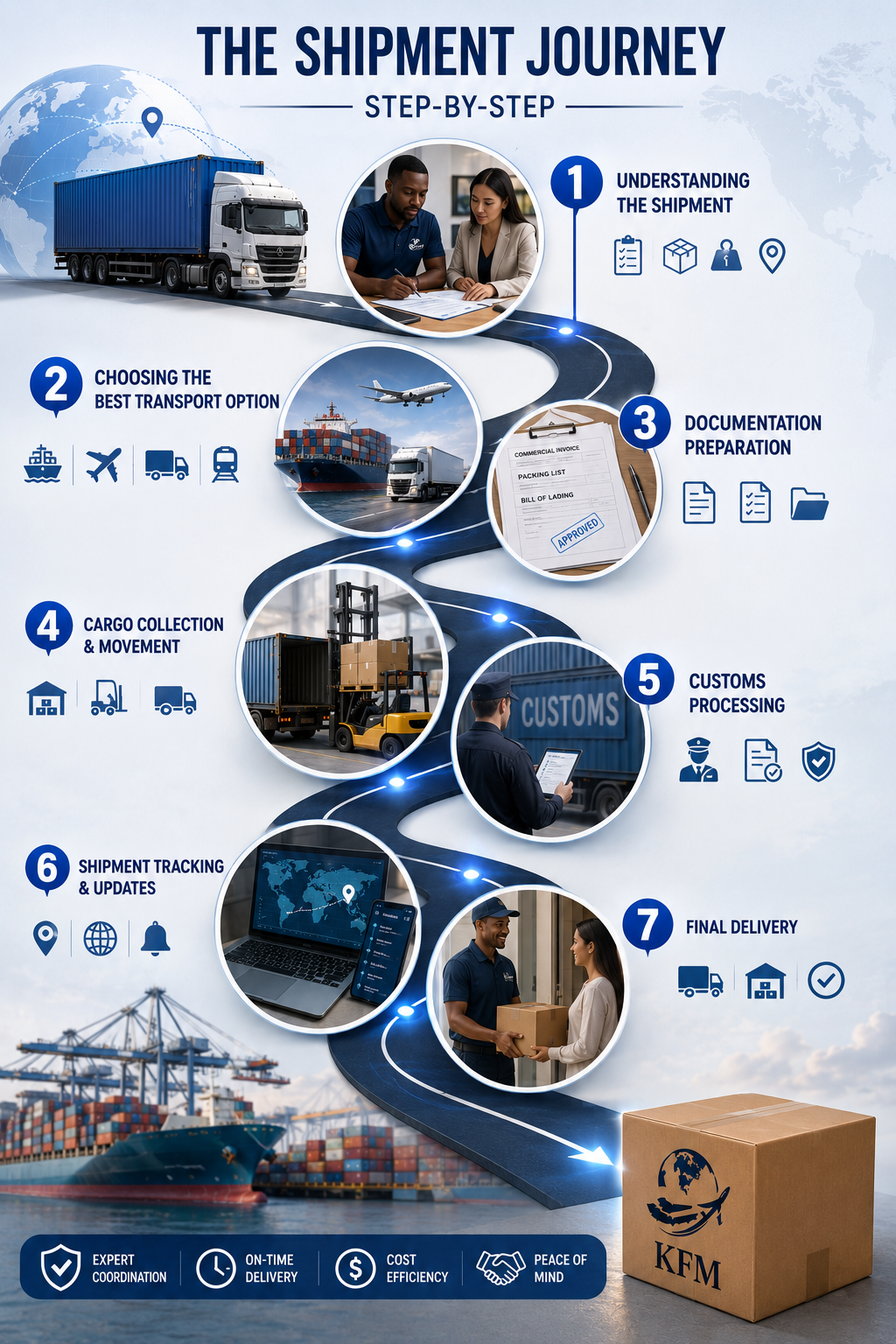
Before cargo reaches a port or airport, it usually begins its journey by road.
Trucks transport goods from:
- Factories
- Warehouses
- Distribution centers
to the next stage of the logistics chain.
Proper scheduling at this point is crucial.
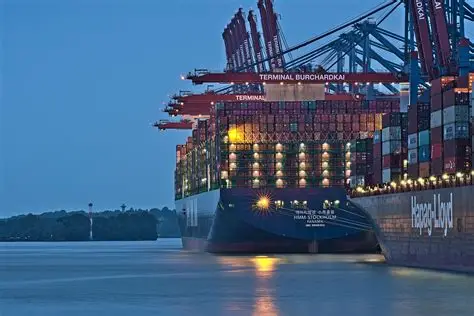
Sea Freight: The Backbone of Global Trade
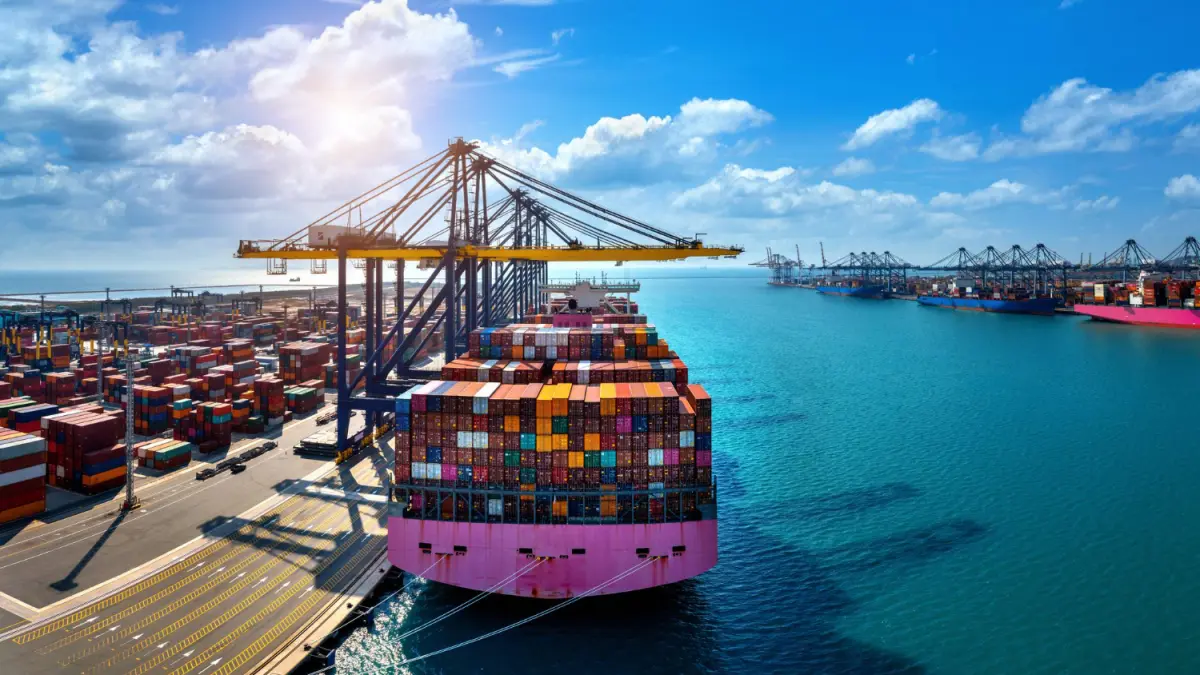
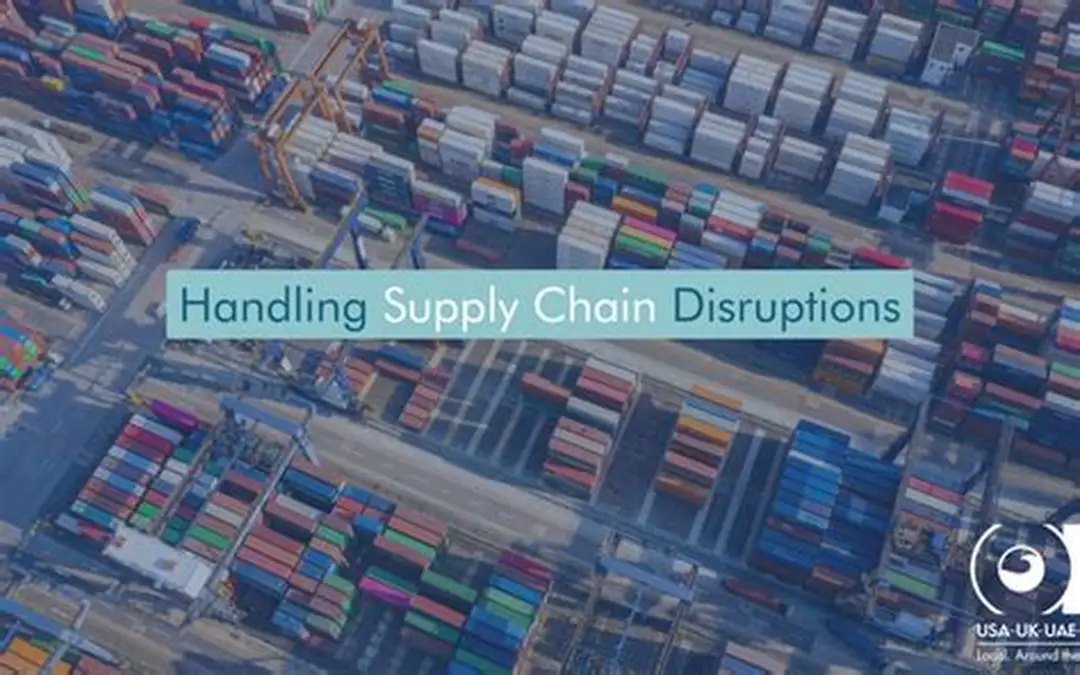
The majority of global trade moves by sea.
Sea freight is often preferred because it can handle:
- Large cargo volumes
- Heavy equipment
- Bulk shipments
While it may take longer than air freight, it remains one of the most economical transportation methods.
Air Freight: When Time Matters
Some shipments simply cannot wait.
Air freight is often used when:
- Delivery speed is critical
- Inventory shortages must be avoided
- High-value goods require rapid movement
Although typically more expensive, it can save businesses significant time.
The Real Skill Is Coordination
Moving cargo isn't the difficult part.
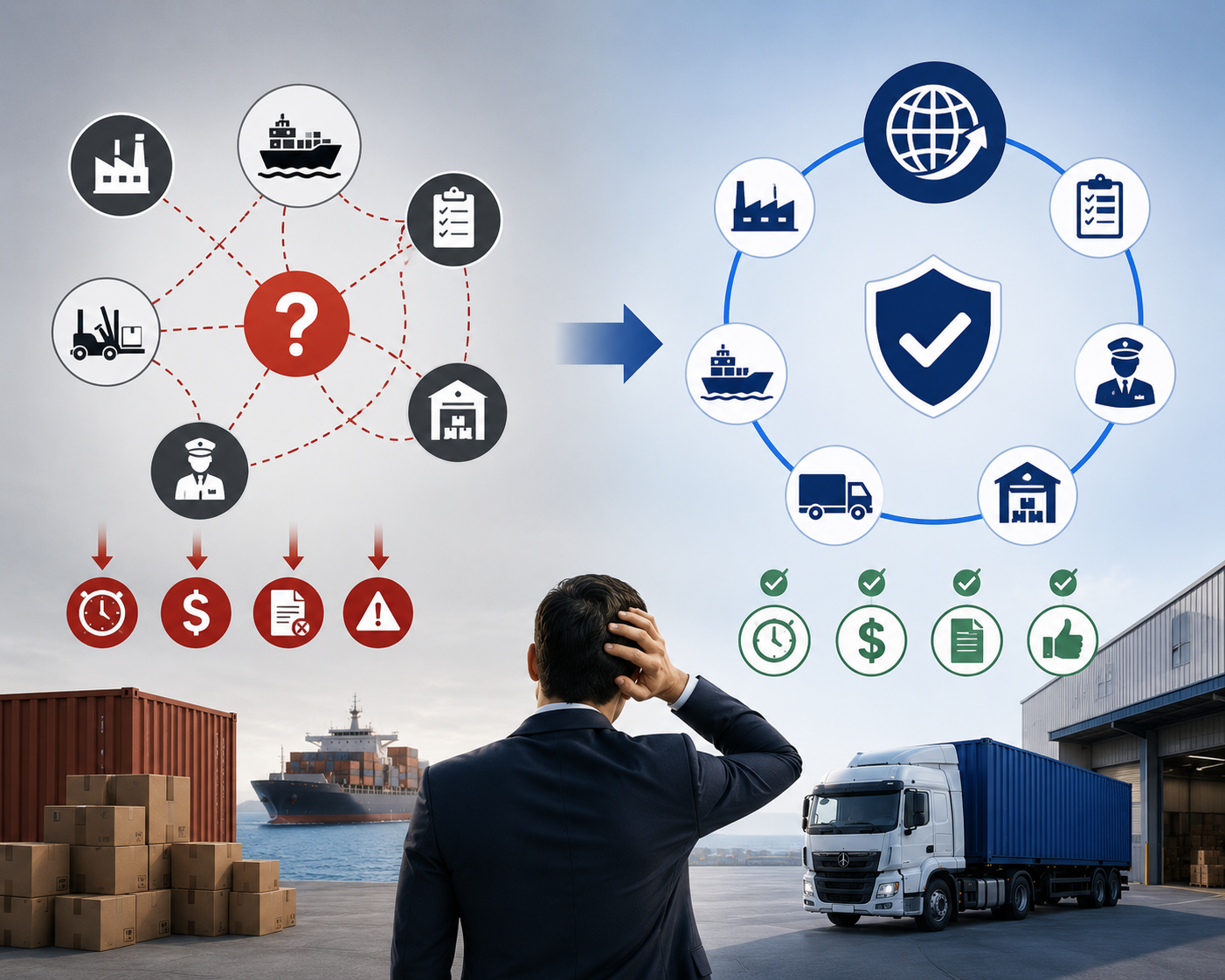
Coordinating multiple transportation systems is.
Freight forwarders constantly manage:
- Schedules
- Transfers
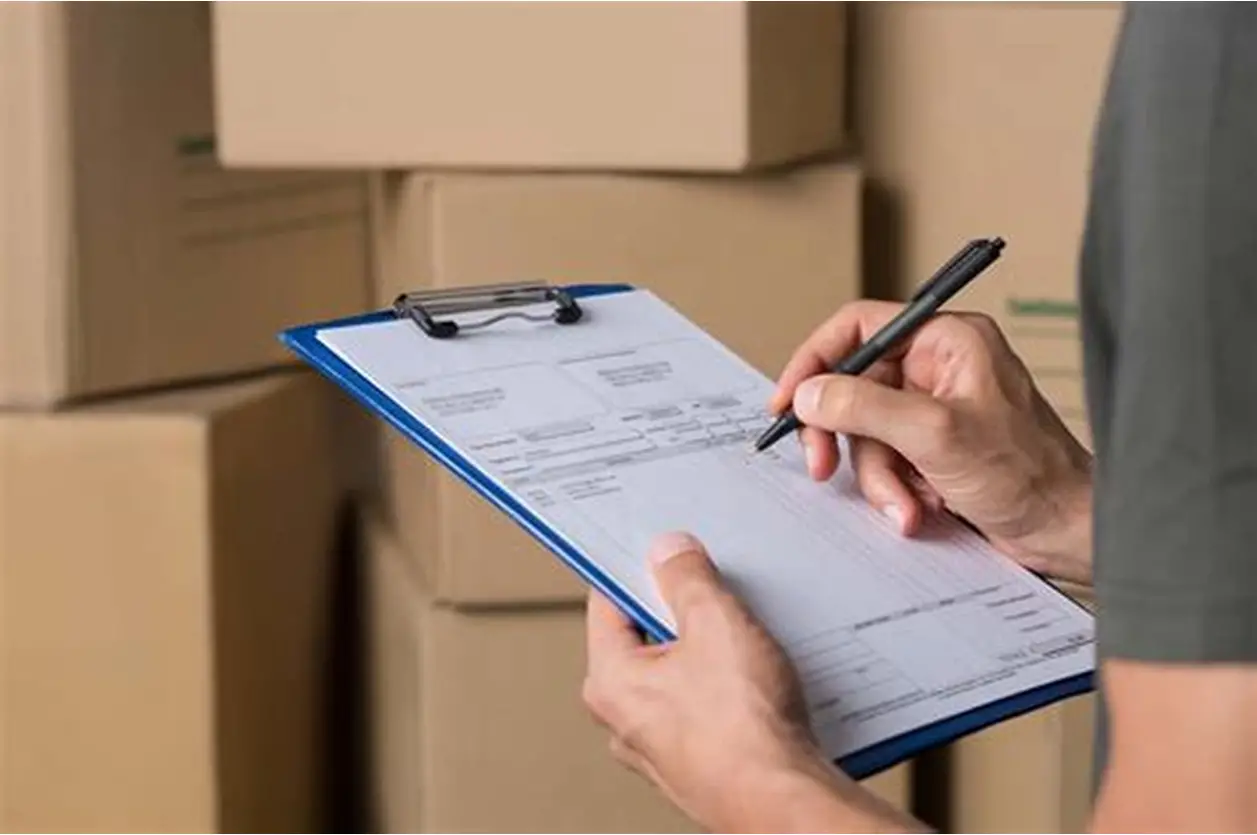
- Documentation
- Cargo handling
- Communication between providers
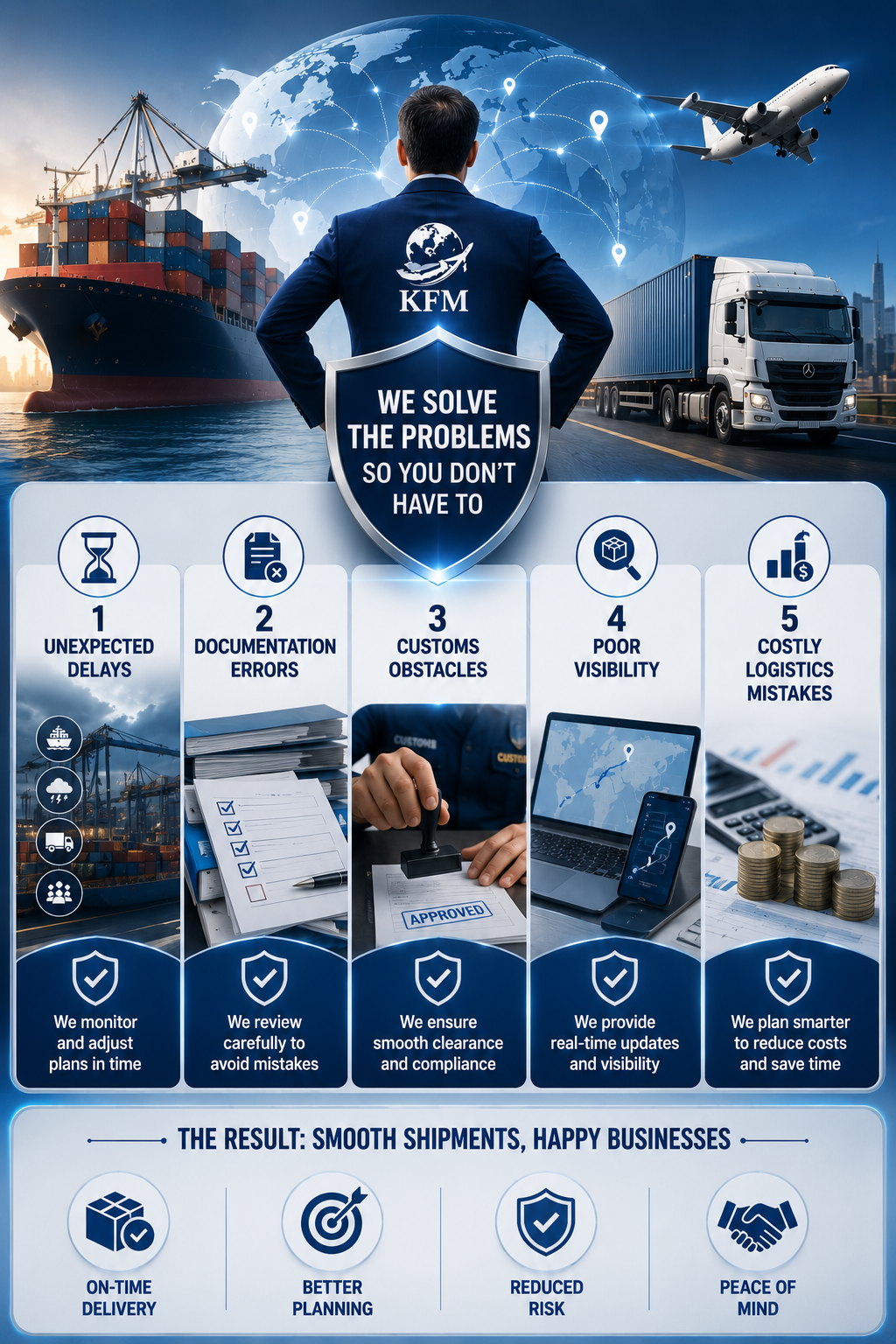
One delay in one stage can affect the entire shipment.
That's why coordination is at the heart of professional freight forwarding.
Why Businesses Benefit
By having a professional freight forwarder coordinate these moving parts, businesses gain:
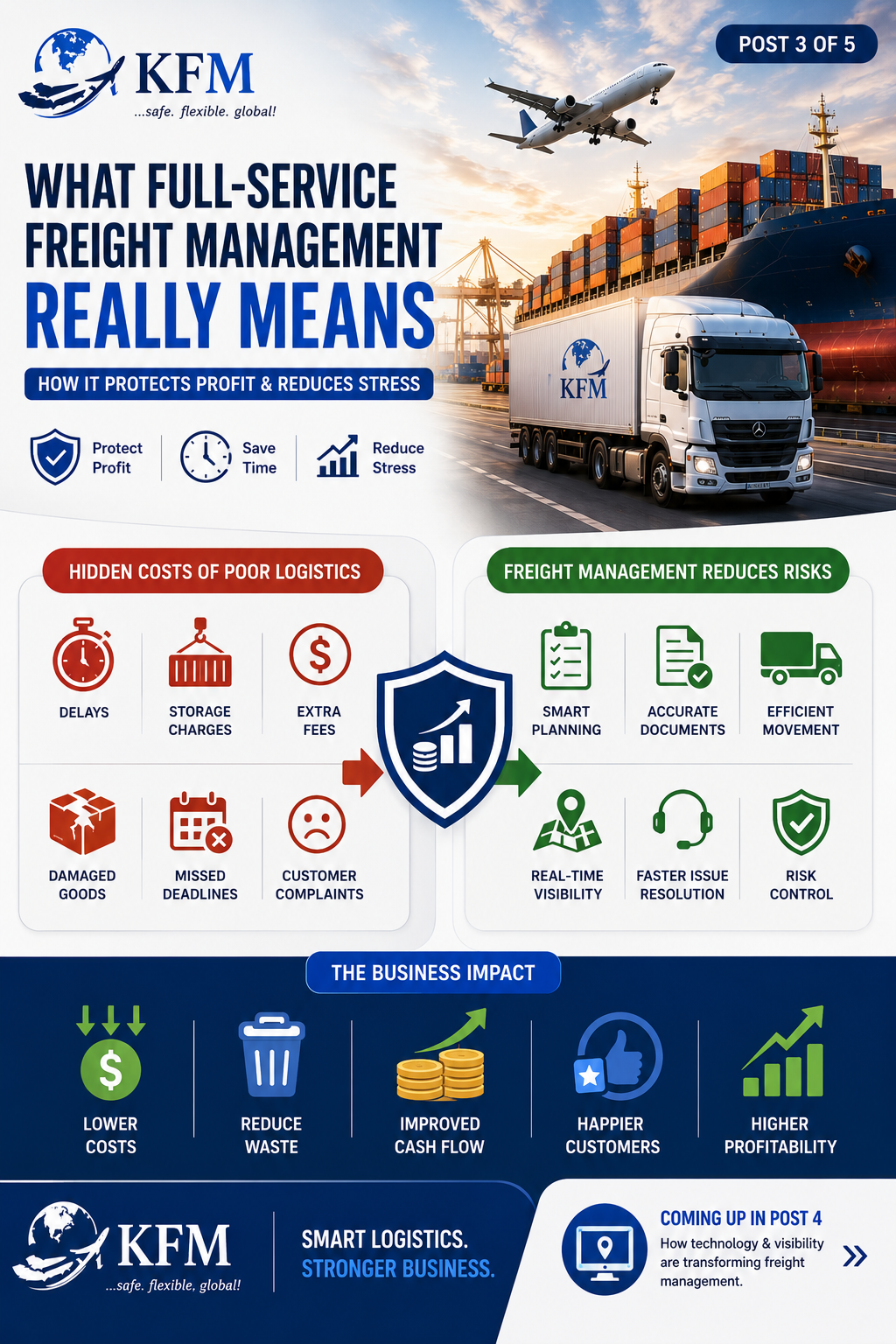
- Greater efficiency
- Reduced logistics complexity
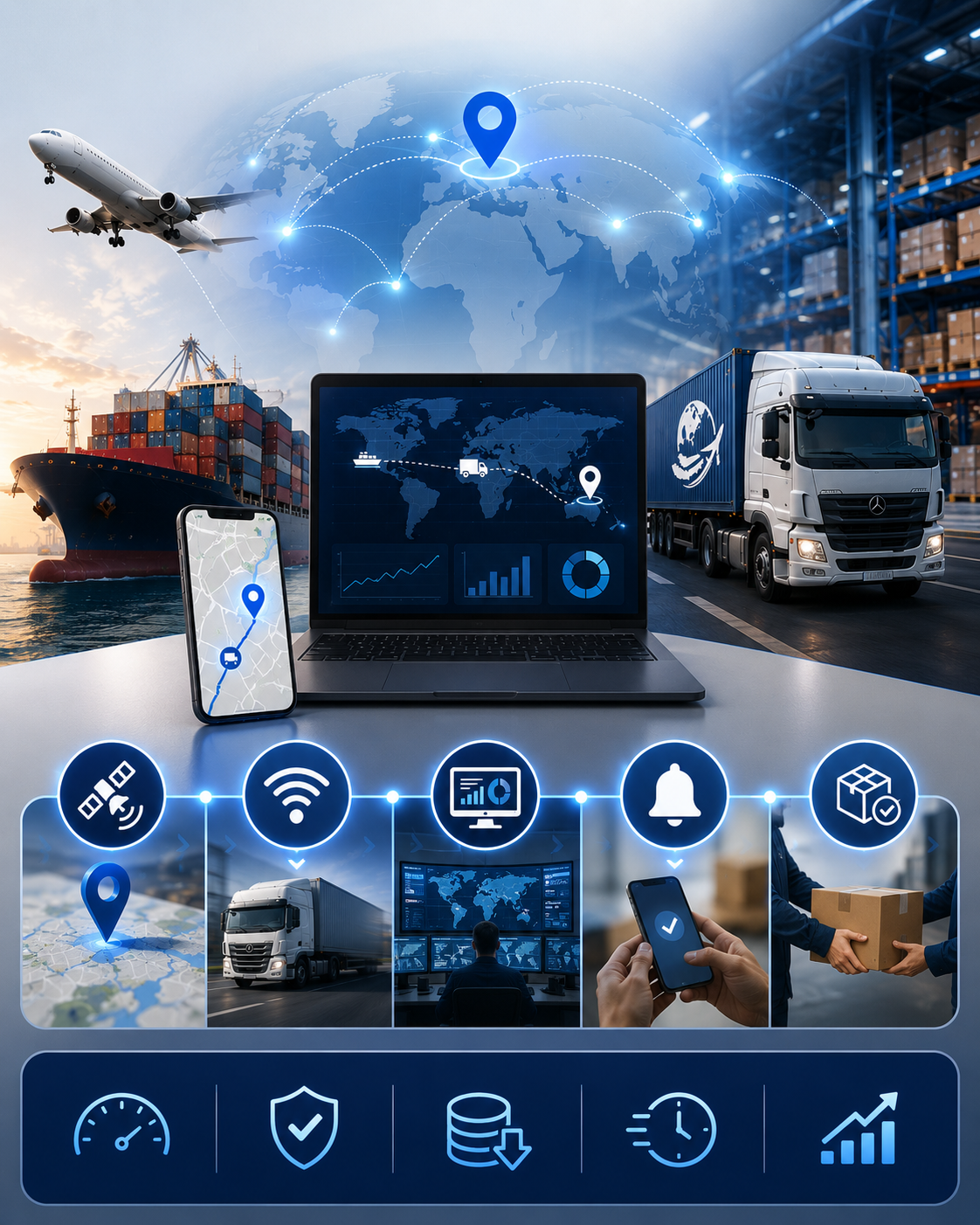
- Better shipment visibility
- Improved reliability
- Less operational stress
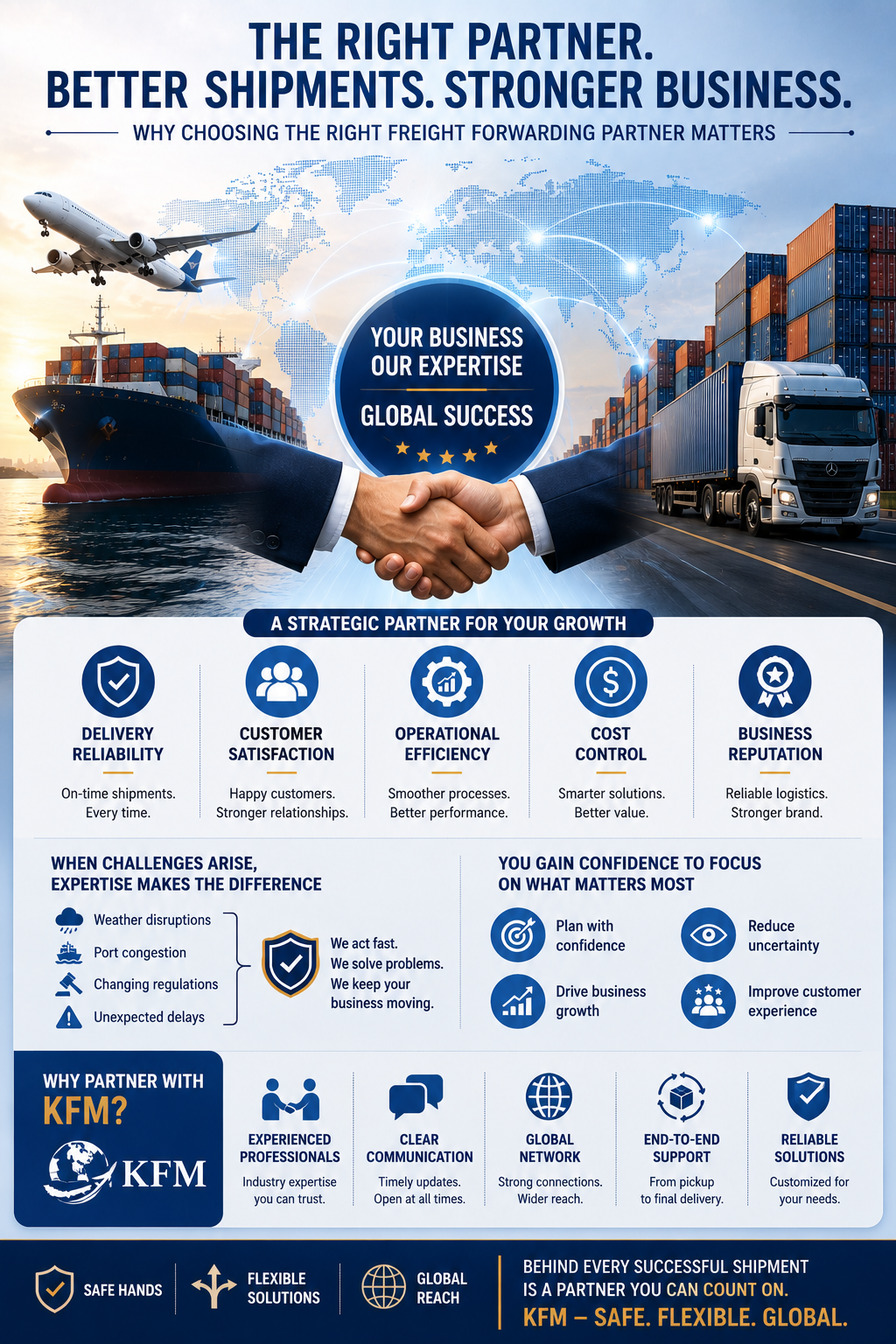
Instead of managing multiple logistics providers, businesses can focus on growth.
The KFM Approach
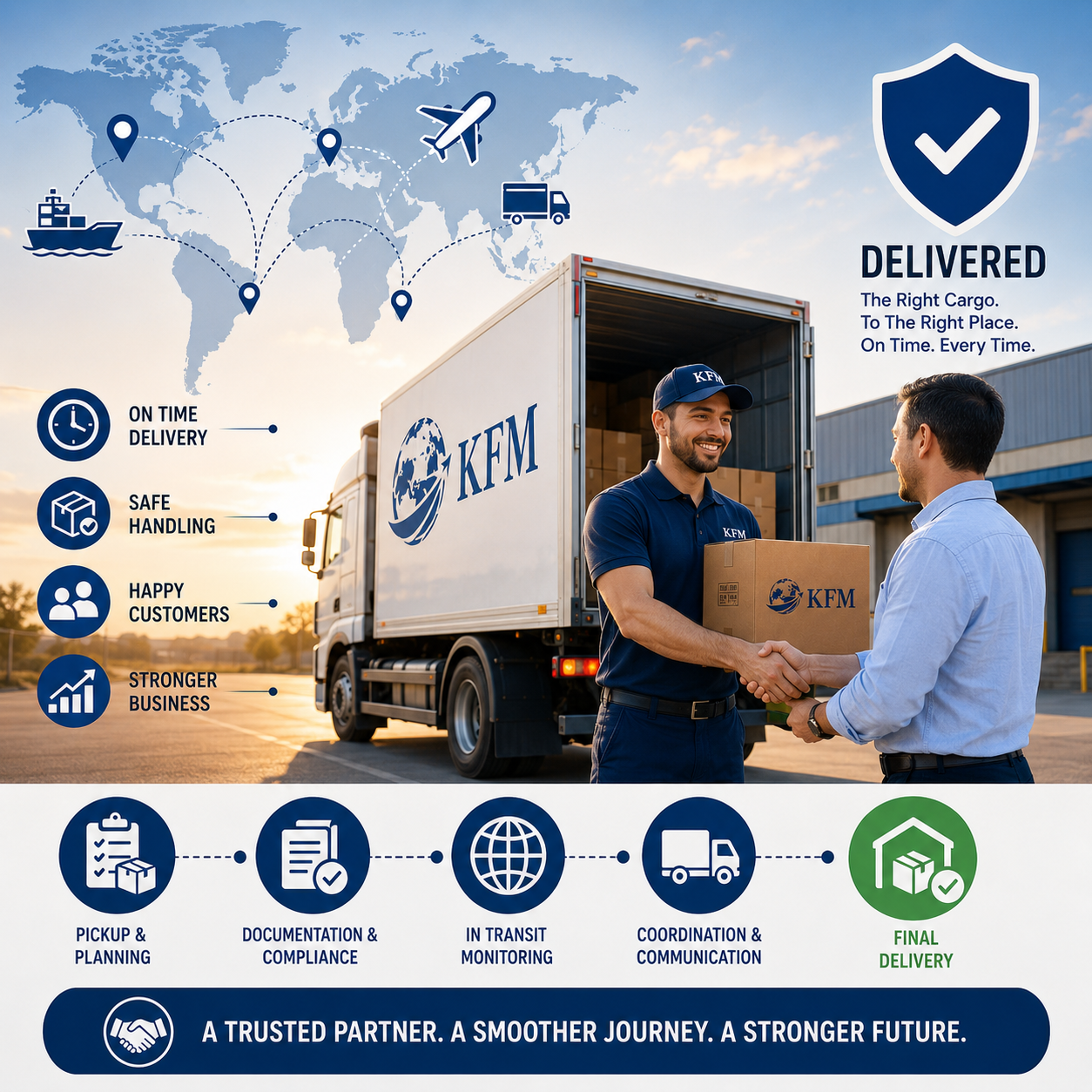
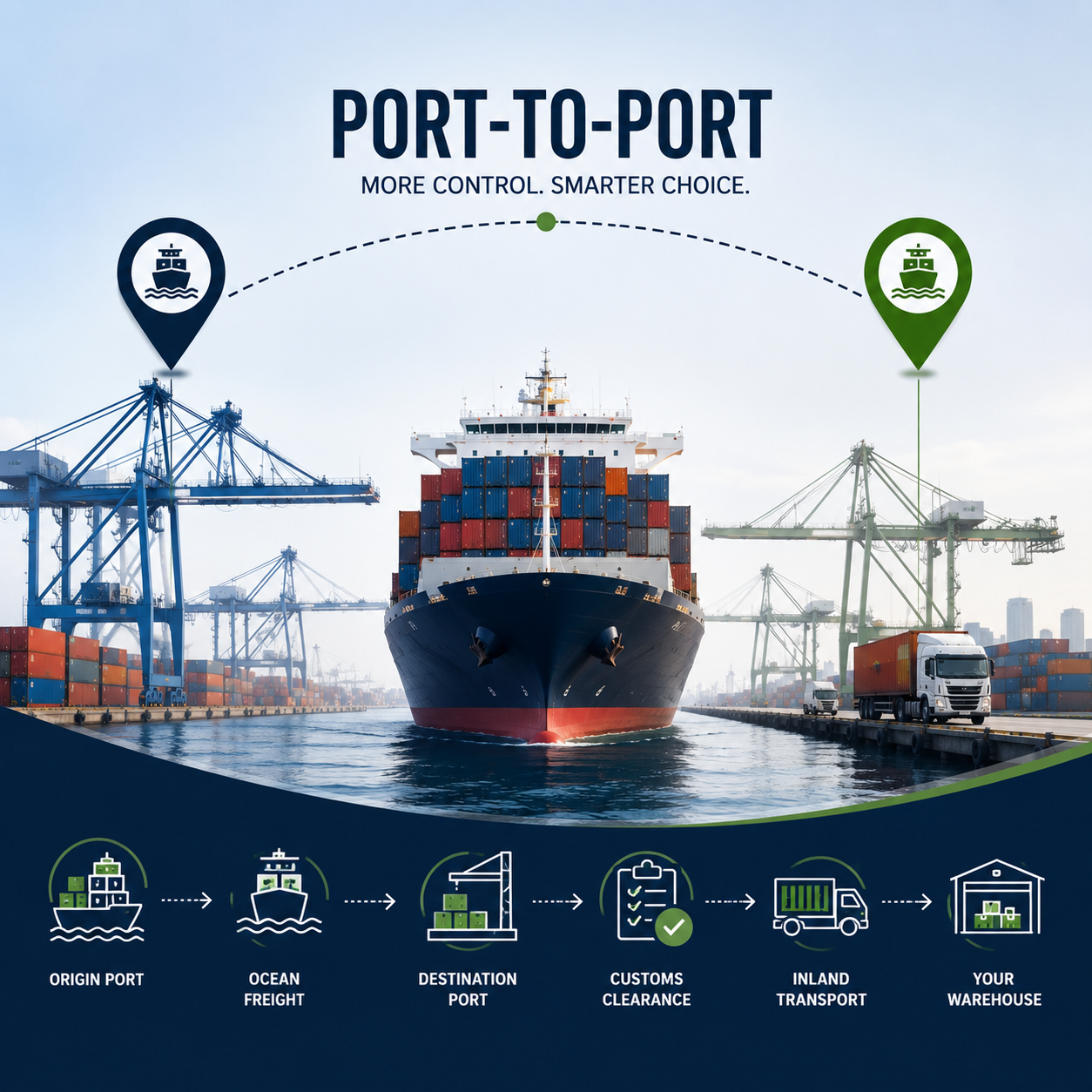
At KFM, we connect every stage of the freight journey.
Whether cargo moves by road, sea, air, or a combination of all three, our focus is ensuring smooth coordination from origin to destination.
Because successful logistics isn't about a single shipment — it's about creating a connected system that works.