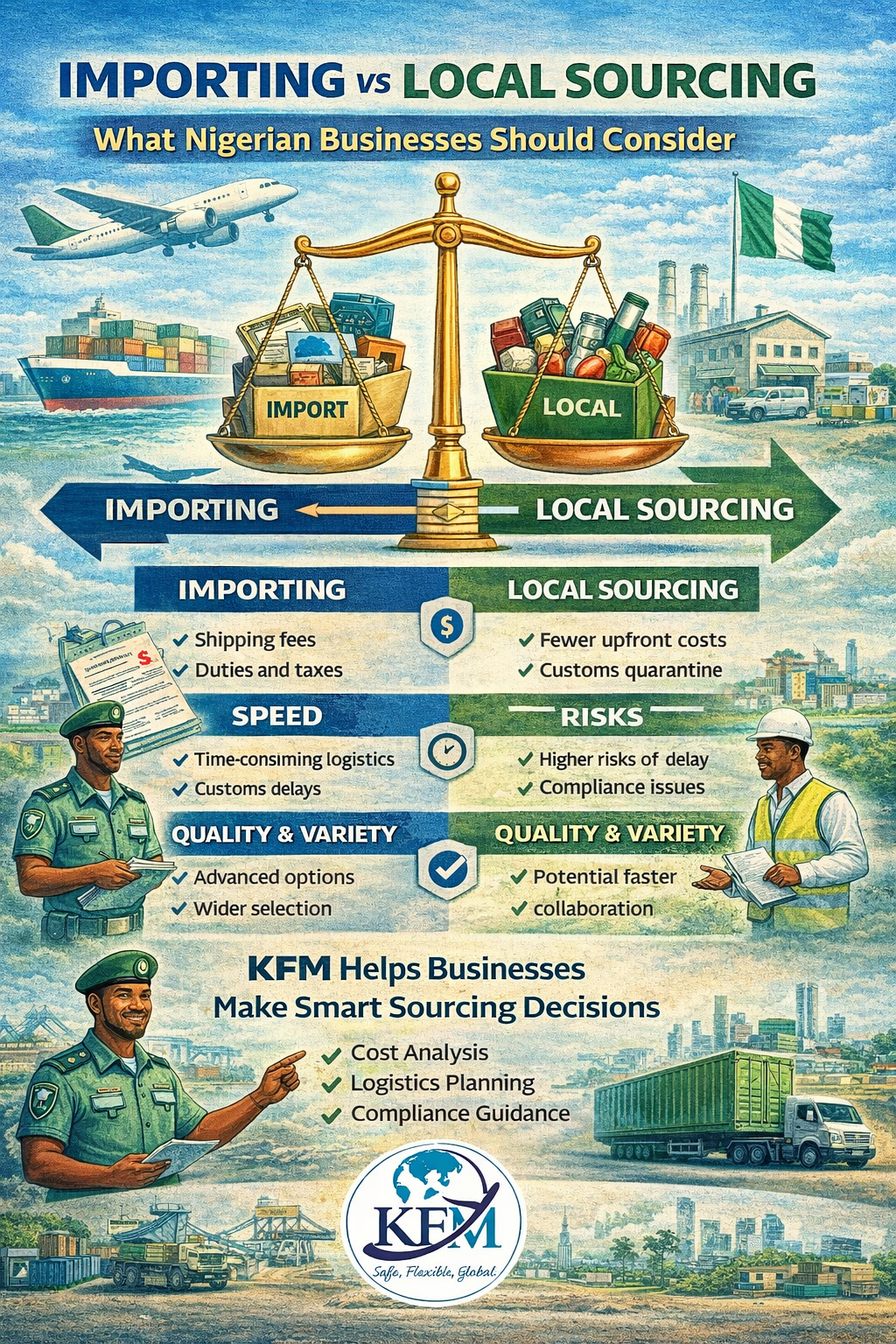
We’ve talked about when importing makes sense… but here’s the truth: importing isn’t always the best option.
In many situations, local sourcing can actually give your business a stronger advantage — especially in a dynamic market like Nigeria.
At KFM, we’ve seen businesses grow faster and operate more efficiently simply by choosing the right local suppliers.
1. When Speed Matters Most
If your business depends on quick turnaround and fast restocking, local sourcing is a clear winner.
- No international shipping delays
- No customs clearance waiting time
- Faster delivery to your store or warehouse
This means you can meet customer demand quickly and avoid stock shortages.
2. When You Want to Avoid Import Risks
Importing comes with risks — from port congestion to regulatory issues.
Local sourcing helps you avoid:
- Customs delays
- Exchange rate fluctuations
- Unexpected import duties
For many small and medium businesses, reducing these risks is a big advantage.
3. When You Have a Limited Budget
Importing often requires significant upfront capital.
With local sourcing, you can:
- Buy in smaller quantities
- Reduce logistics costs
- Maintain better cash flow
This flexibility is especially useful for startups and growing businesses.
4. When Supporting Local Gives You a Market Edge
Consumers are increasingly supporting Nigerian-made products.
By sourcing locally, you can:
- Build a “Made in Nigeria” brand identity
- Appeal to socially conscious customers
- Strengthen local partnerships
This can improve your brand reputation and customer loyalty.
5. When Communication and Control Are Important
Working with local suppliers makes communication easier and faster.
- Easier quality checks
- Better negotiation opportunities
- Stronger business relationships
You’re also more in control of your supply chain compared to dealing with overseas suppliers.
Challenges to Keep in Mind
While local sourcing has many advantages, it’s not without challenges.
- Limited product variety
- Inconsistent supply in some industries
- Quality variations between suppliers
This is why businesses must carefully select and manage their local partners.
The KFM Perspective
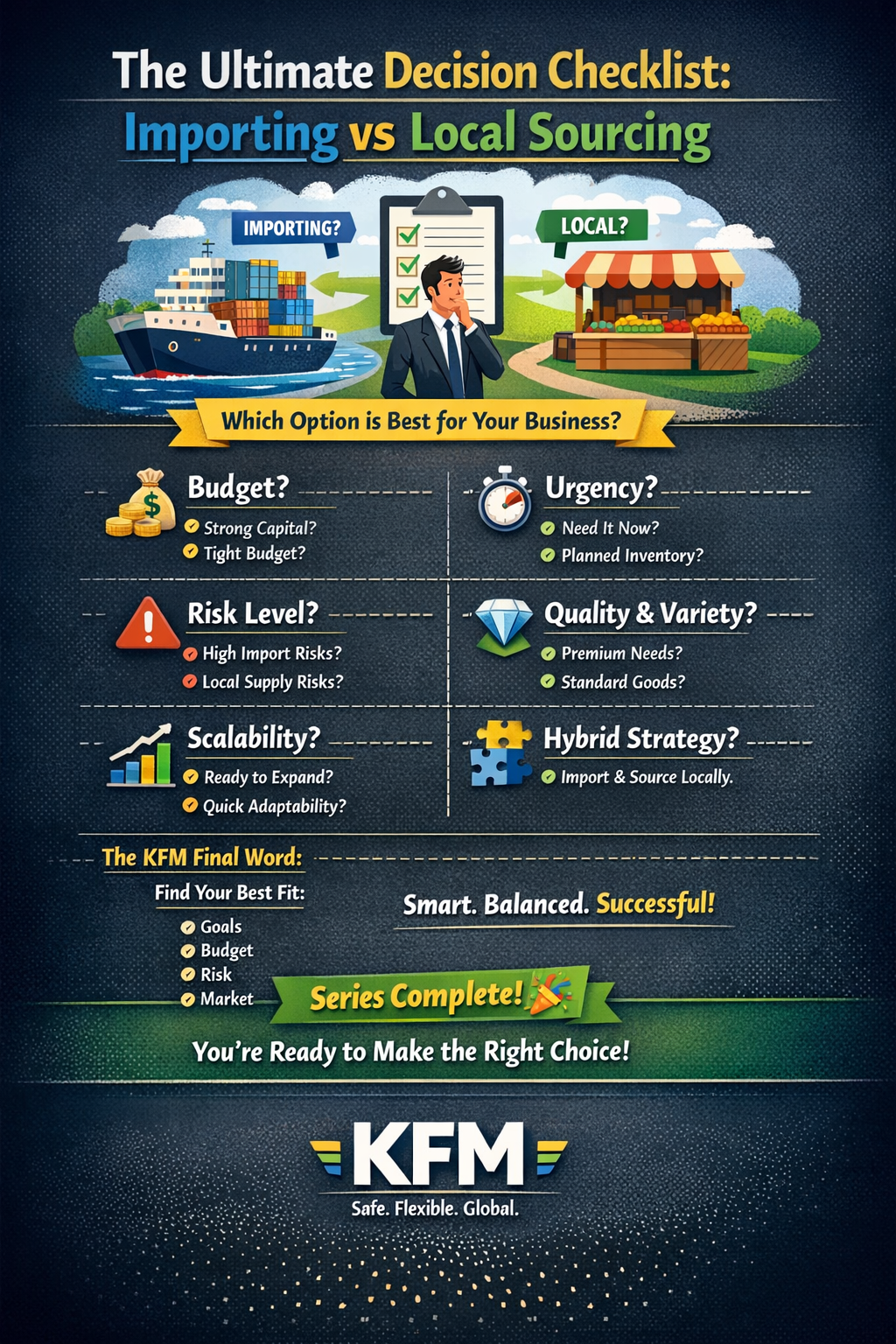
At KFM, we always advise businesses to choose based on strategy — not assumptions.
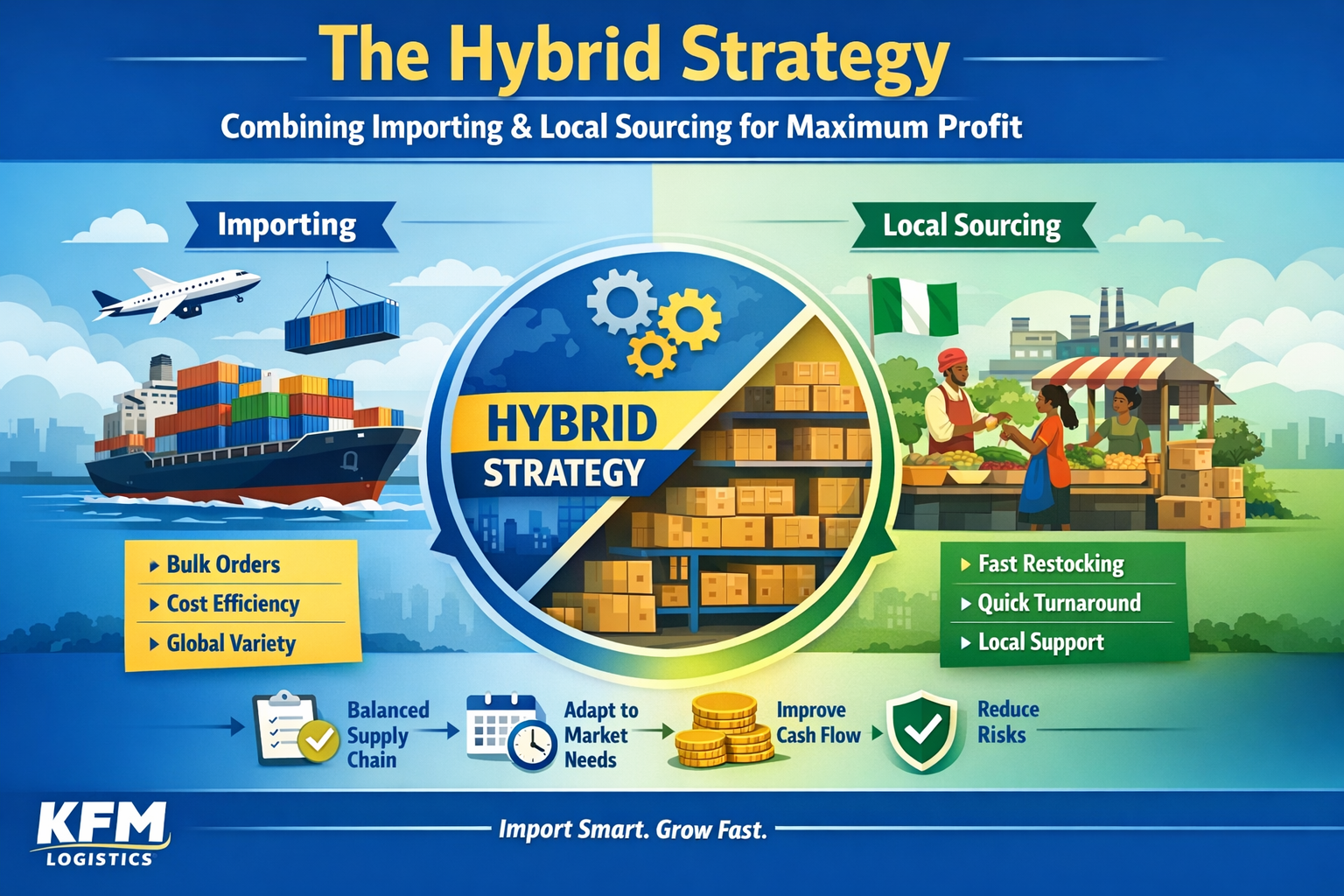
In many cases, the smartest move is not choosing one over the other, but combining both.
Local sourcing can handle speed and flexibility, while importing can support scale and variety.
Coming Up in Post 4
Next, we’ll show you how to combine importing and local sourcing effectively using a hybrid strategy that reduces risk and maximizes profit.