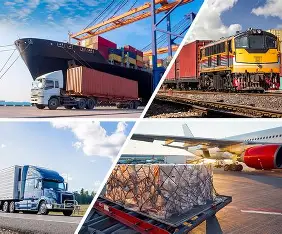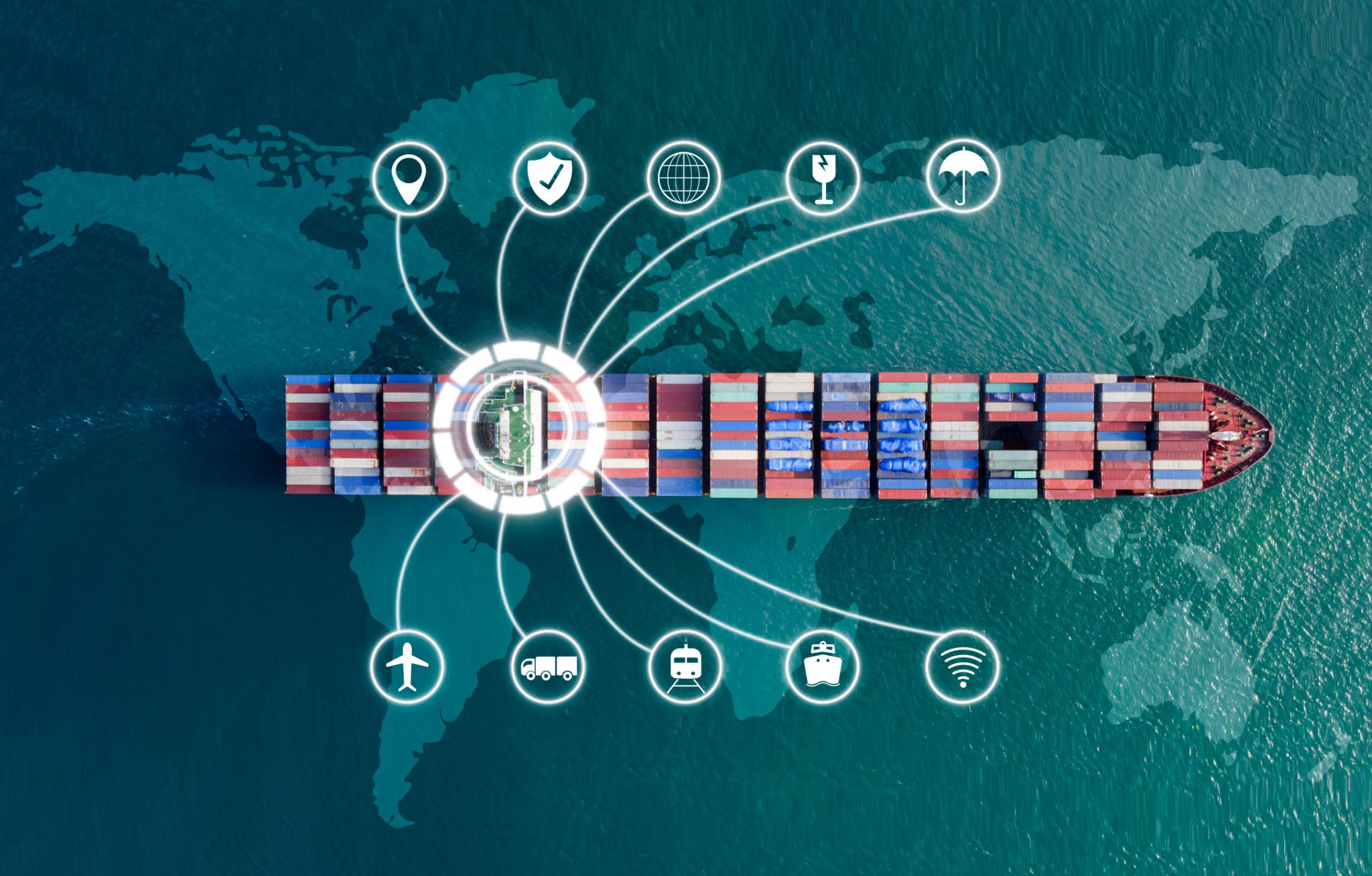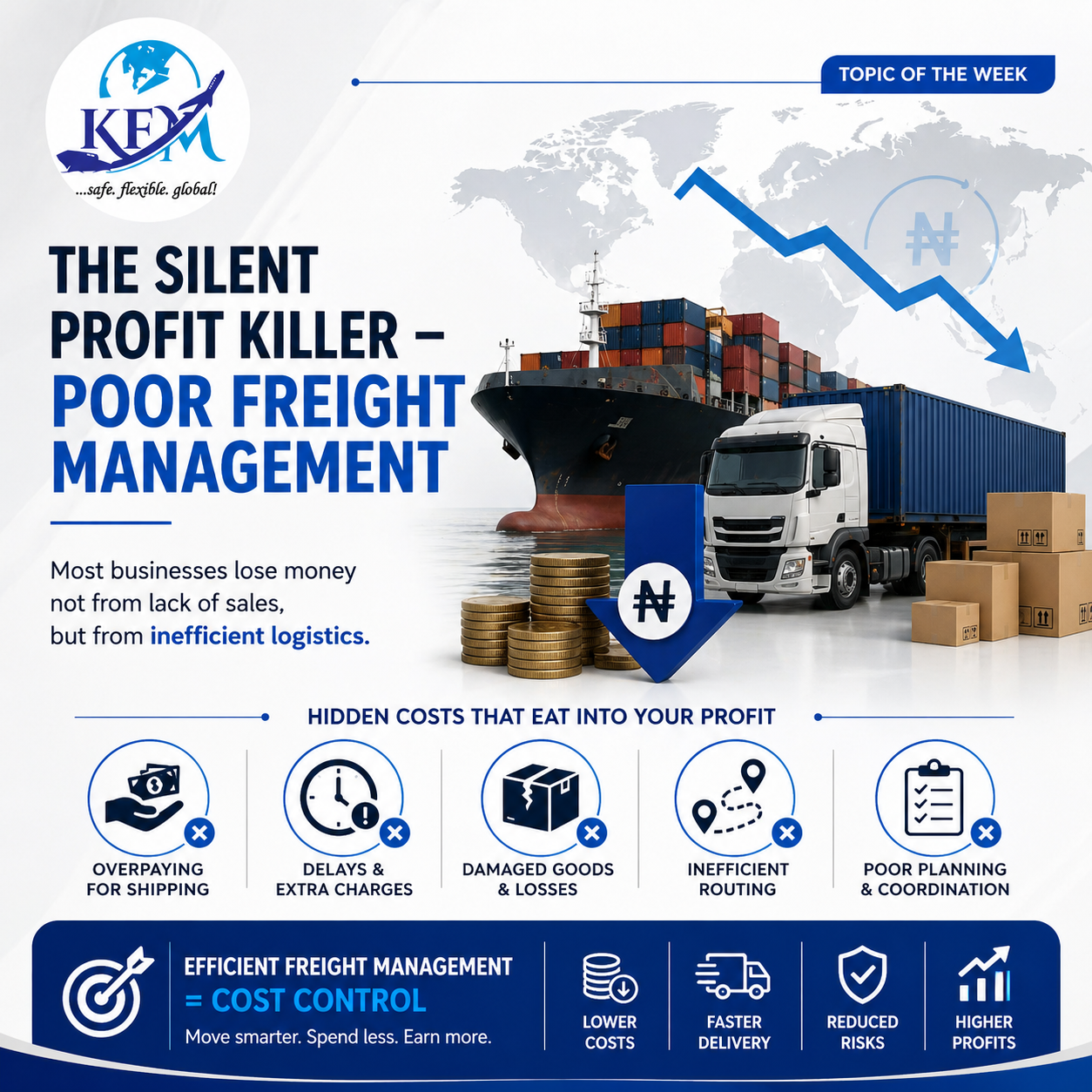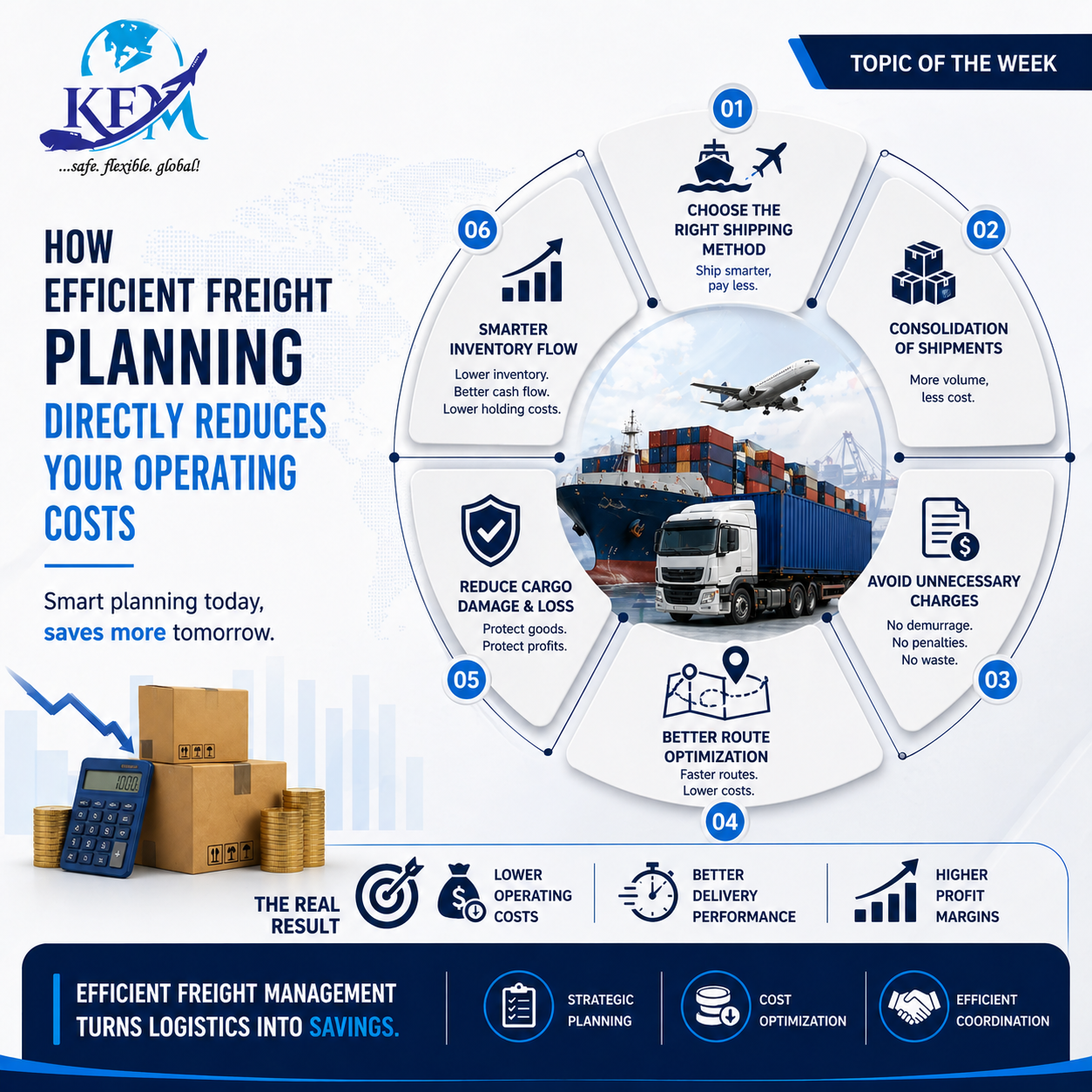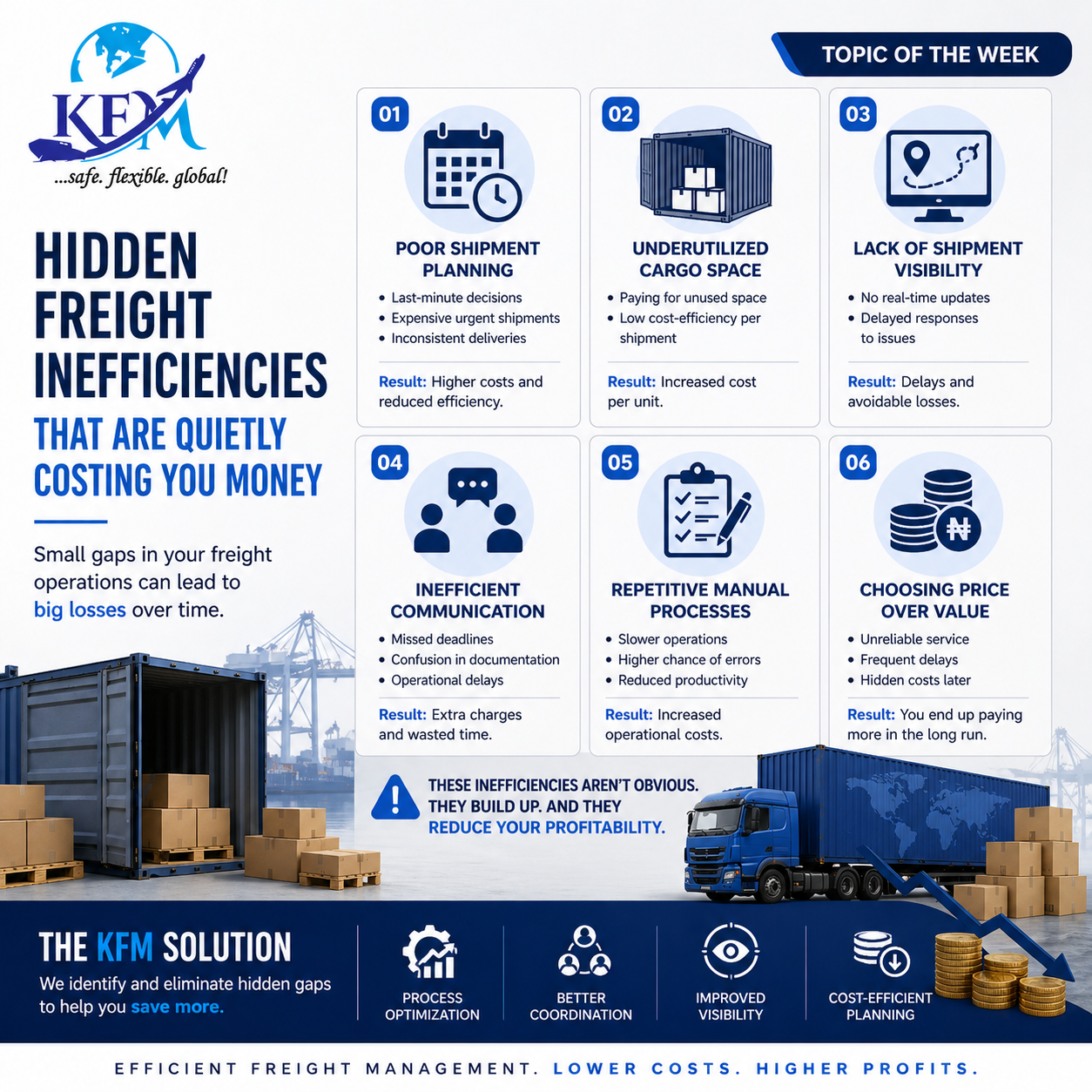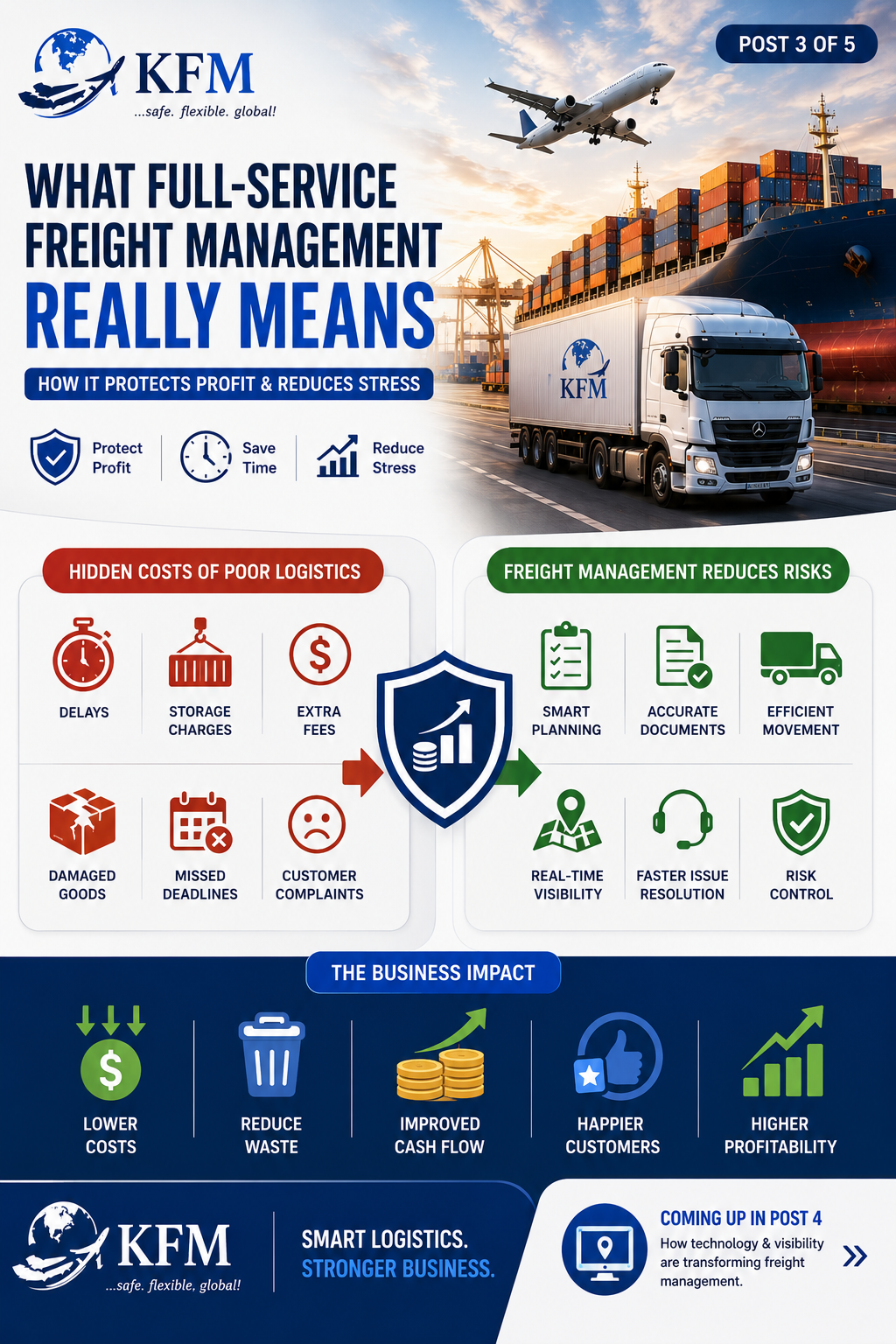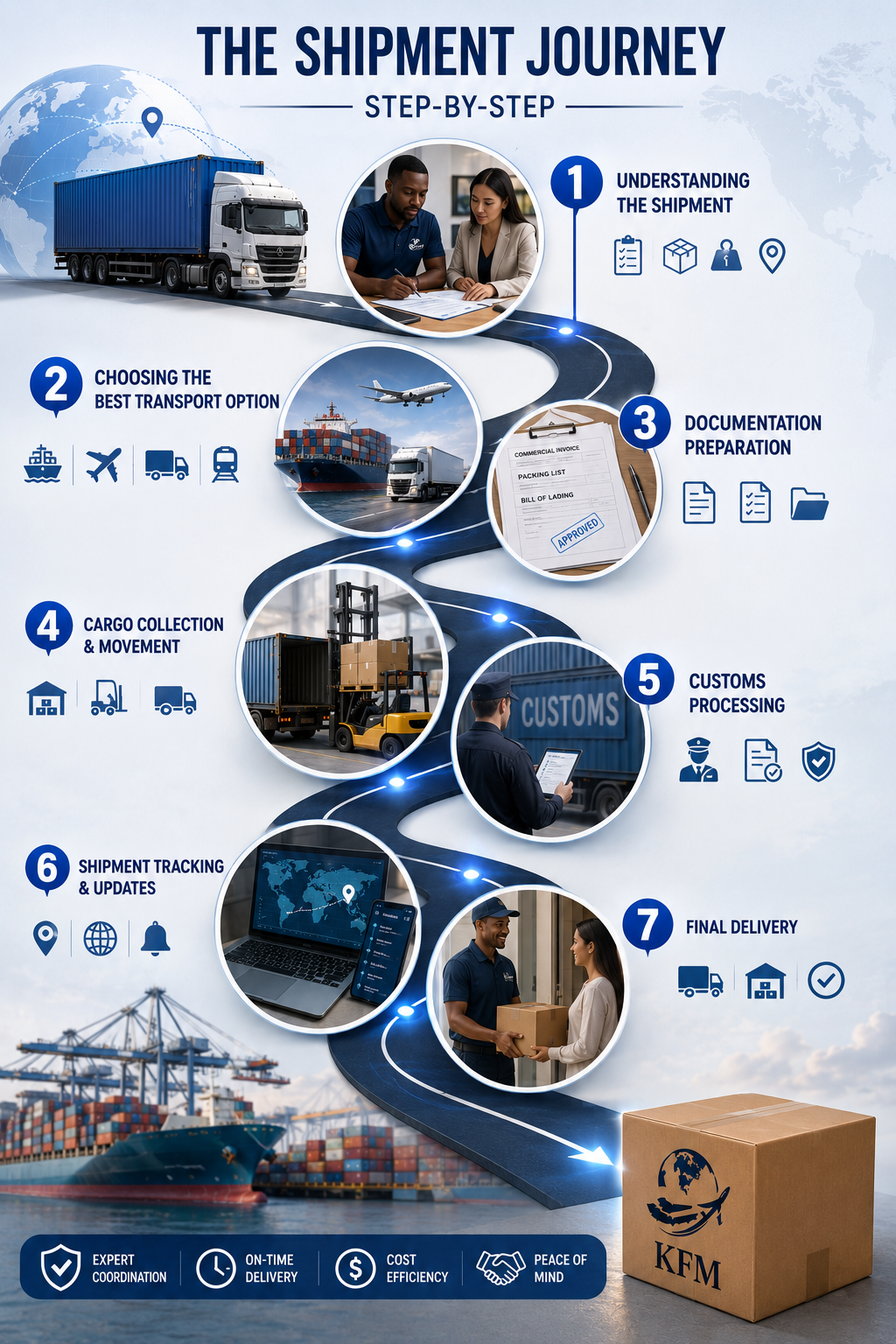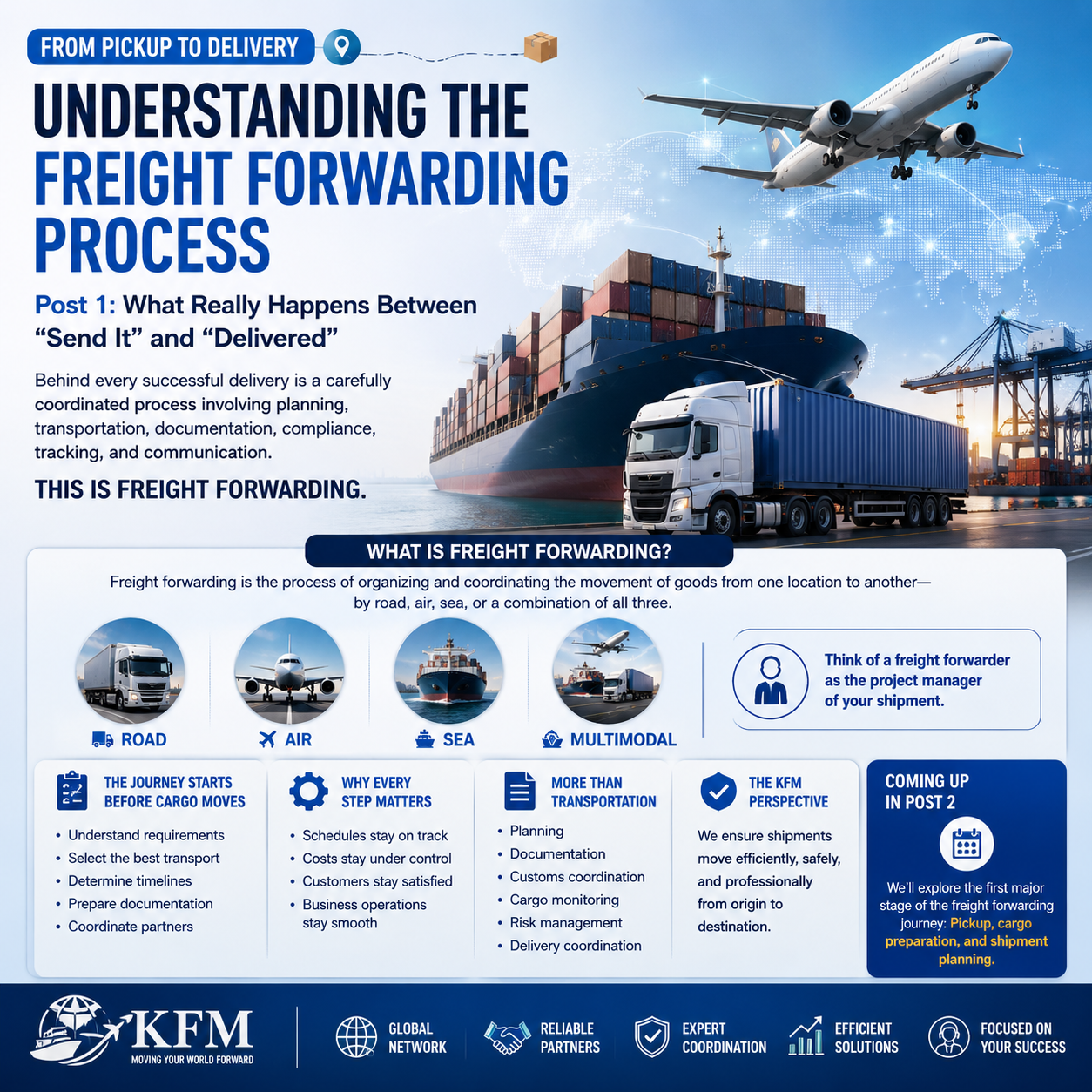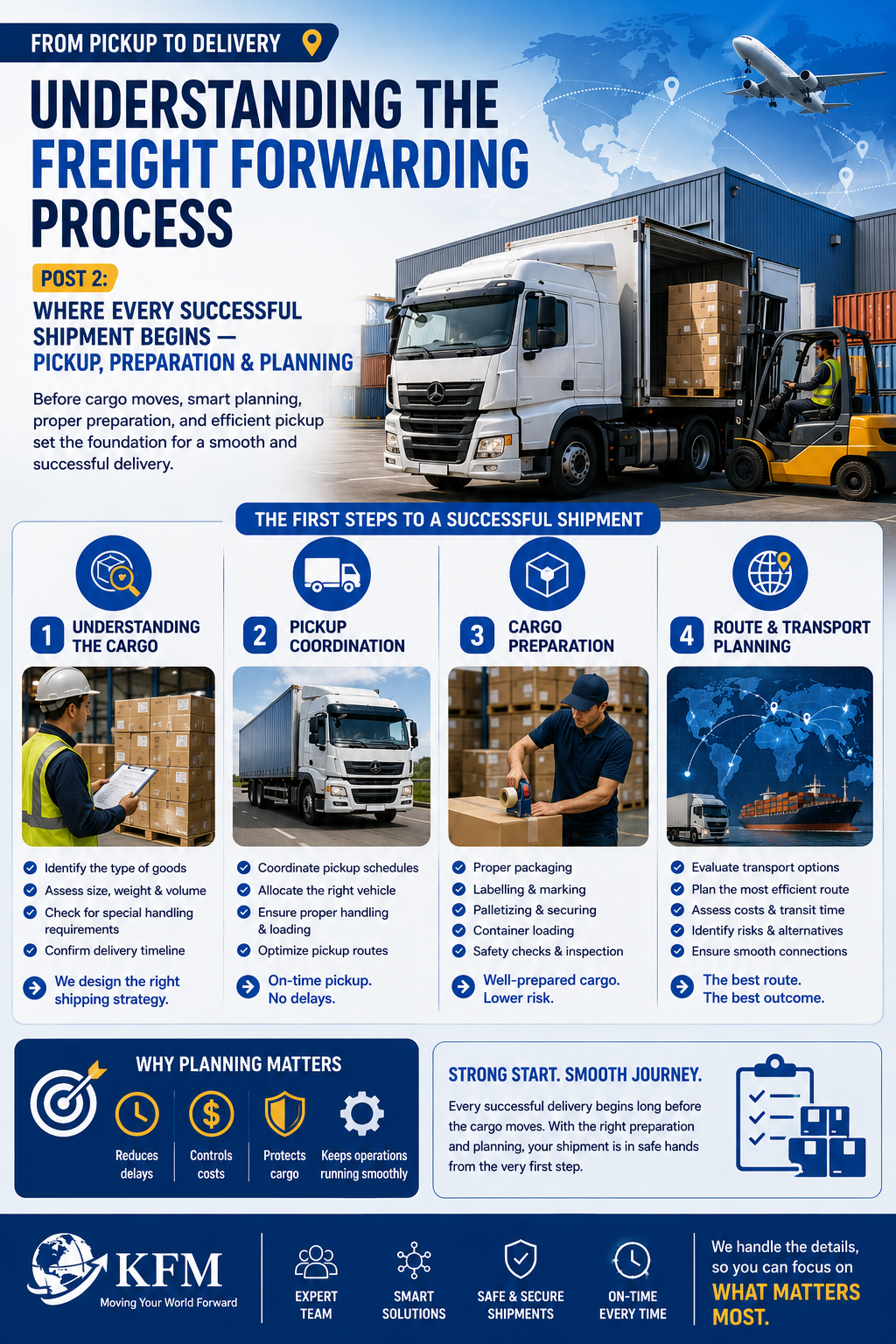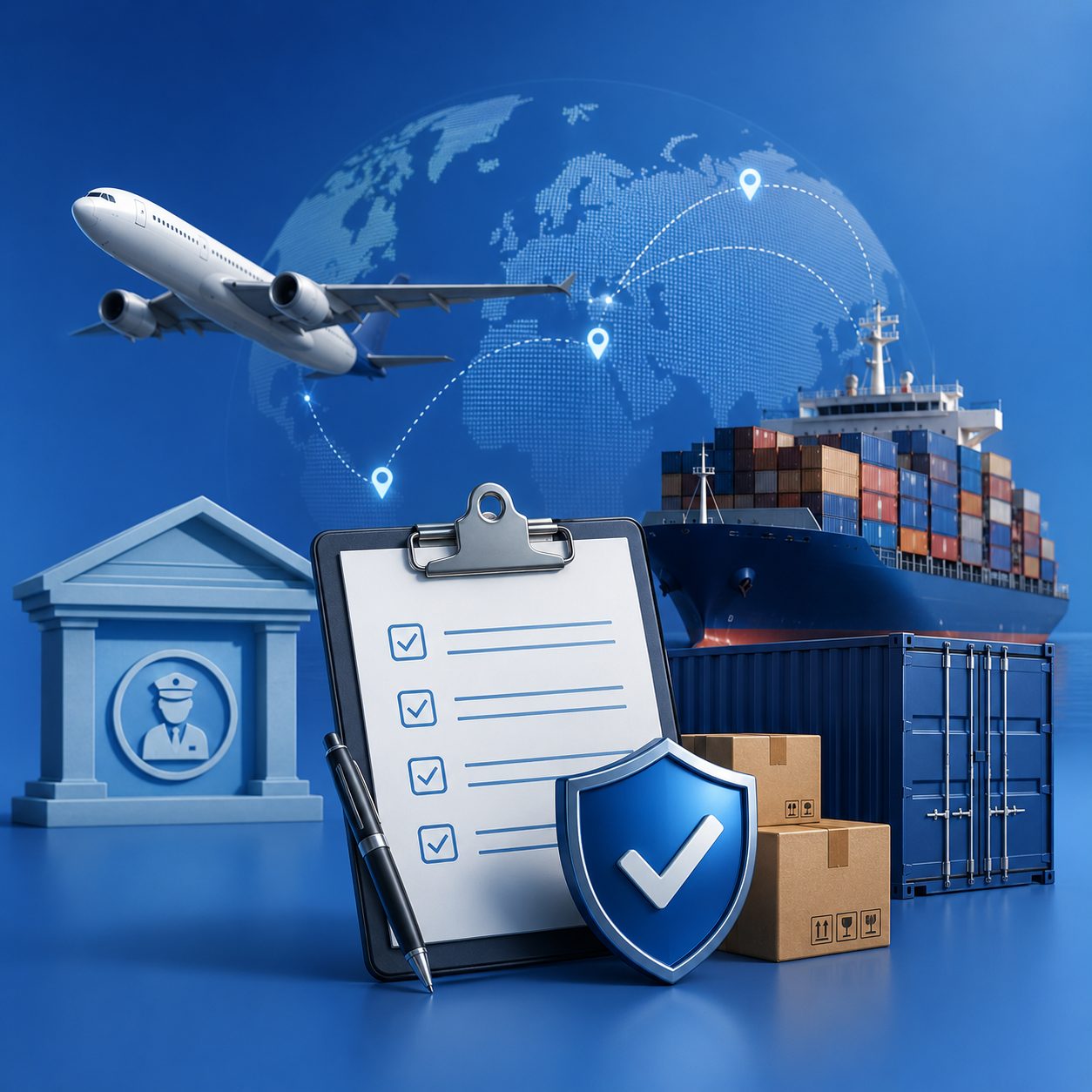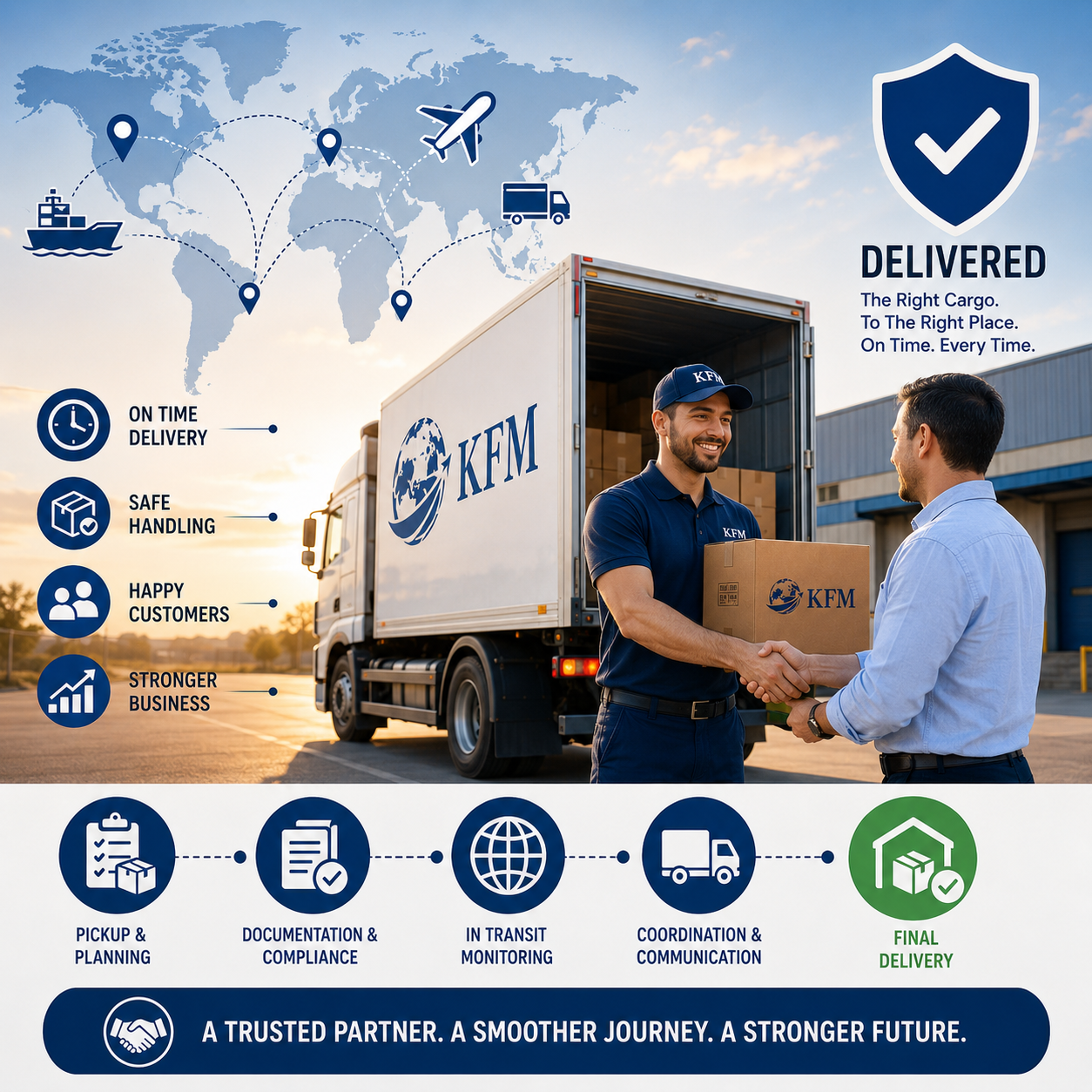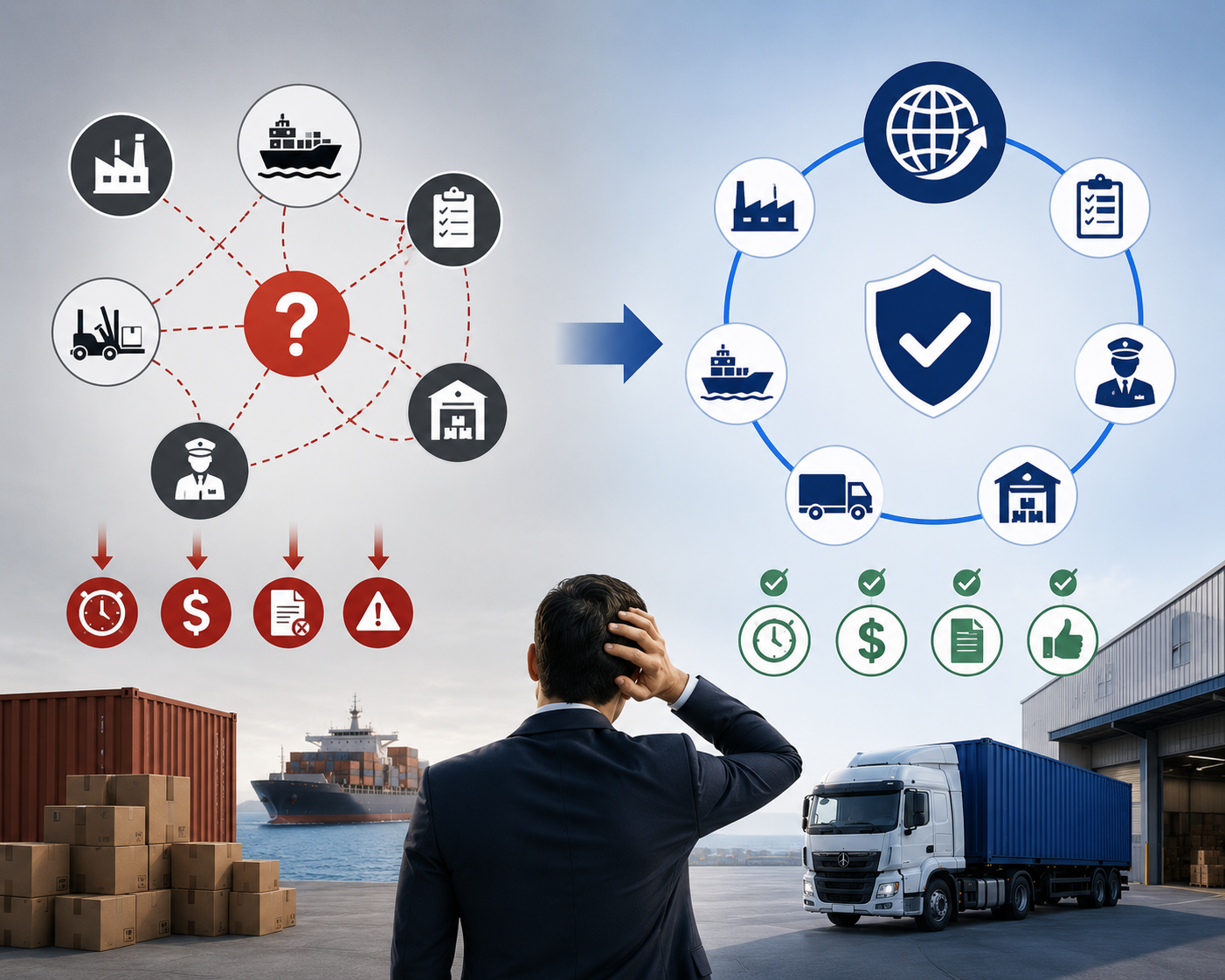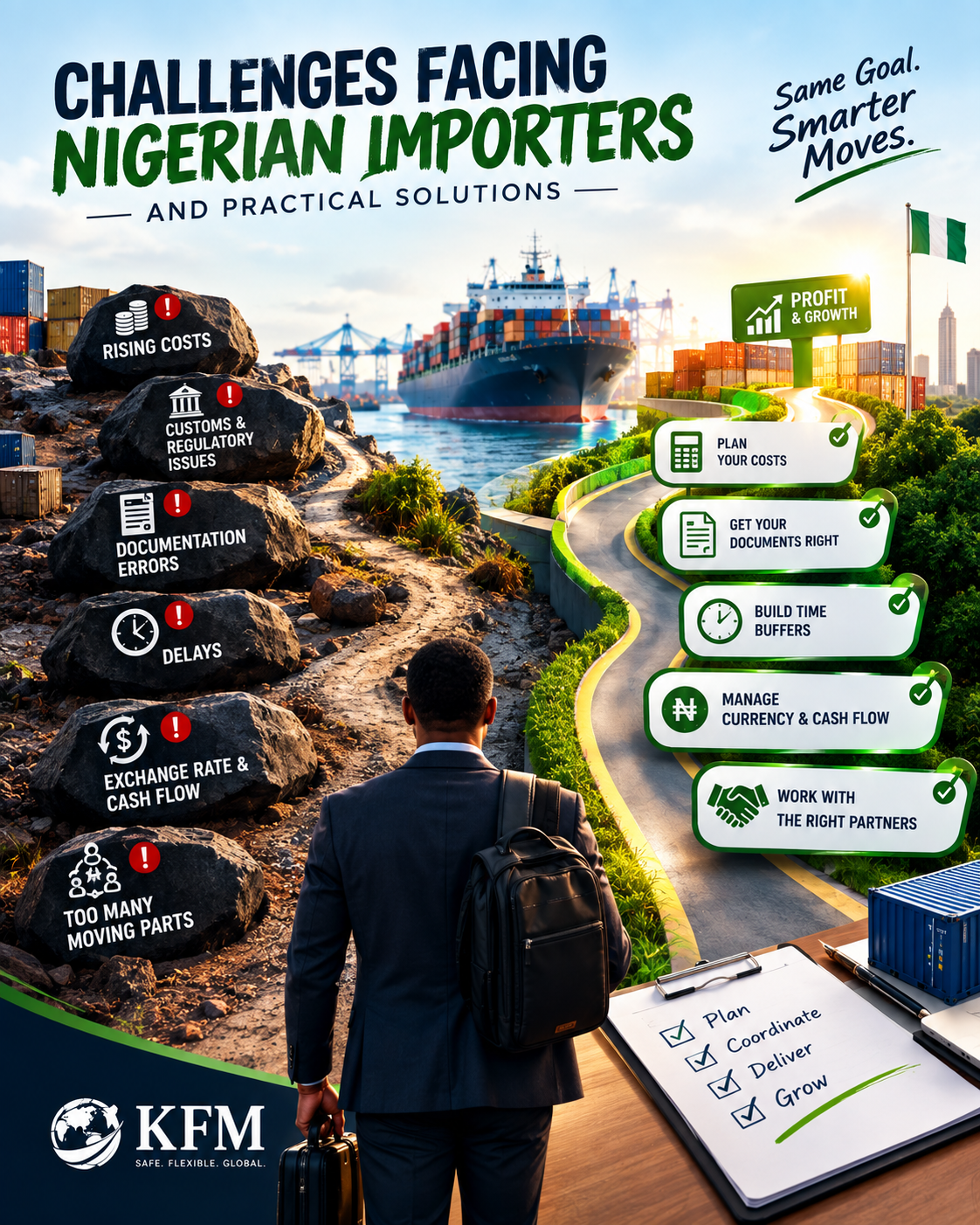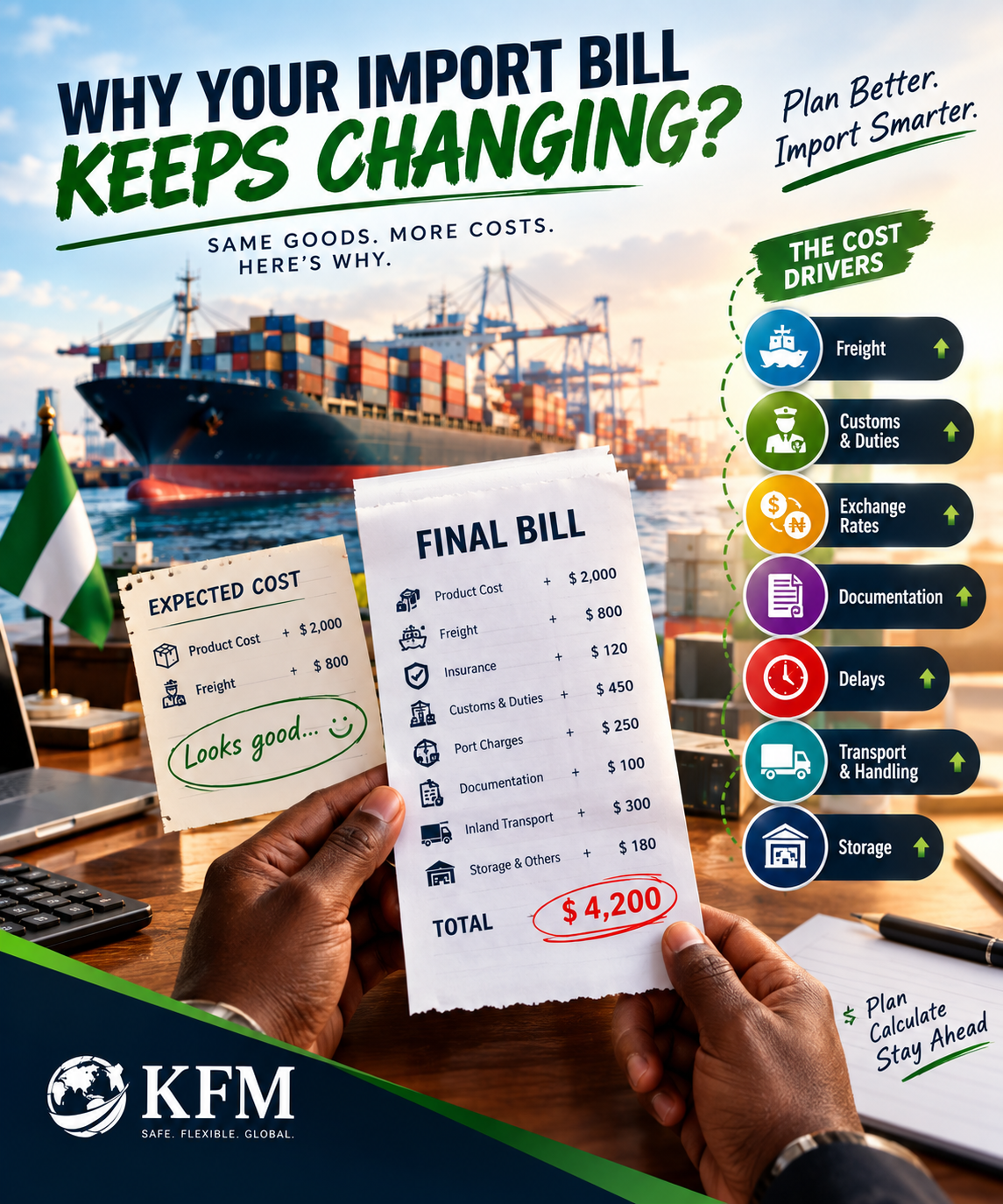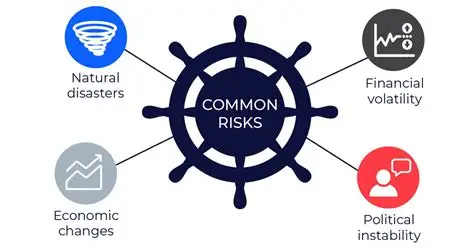
Shipping cargo across borders can feel like sending a valuable package through a very long obstacle course. From ports and warehouses to trucks and customs checkpoints, many things can happen along the journey.
That’s why experienced logistics companies like KFM pay close attention to risk management. Understanding the most common cargo risks is the first step toward preventing them.
1. Documentation Errors
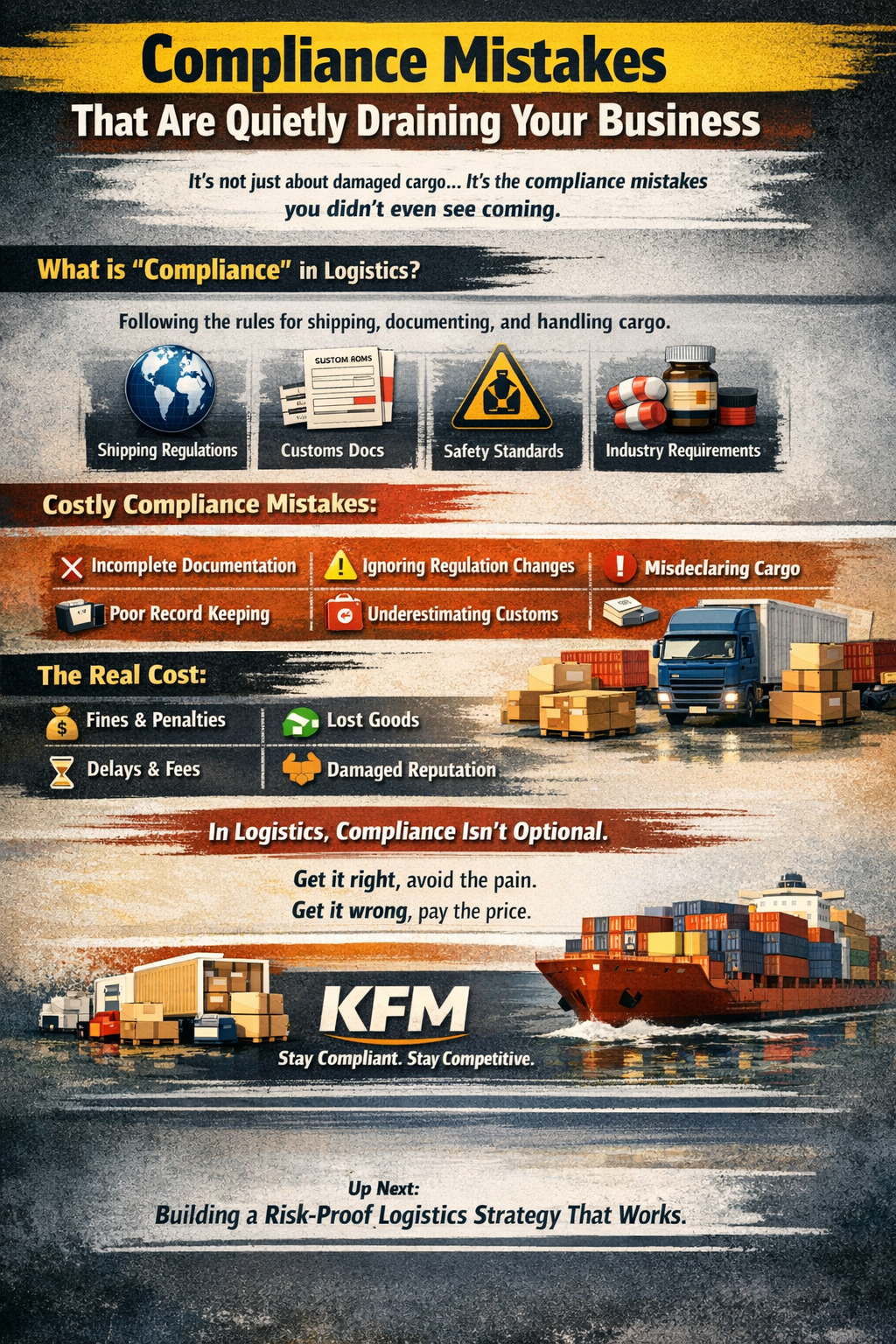
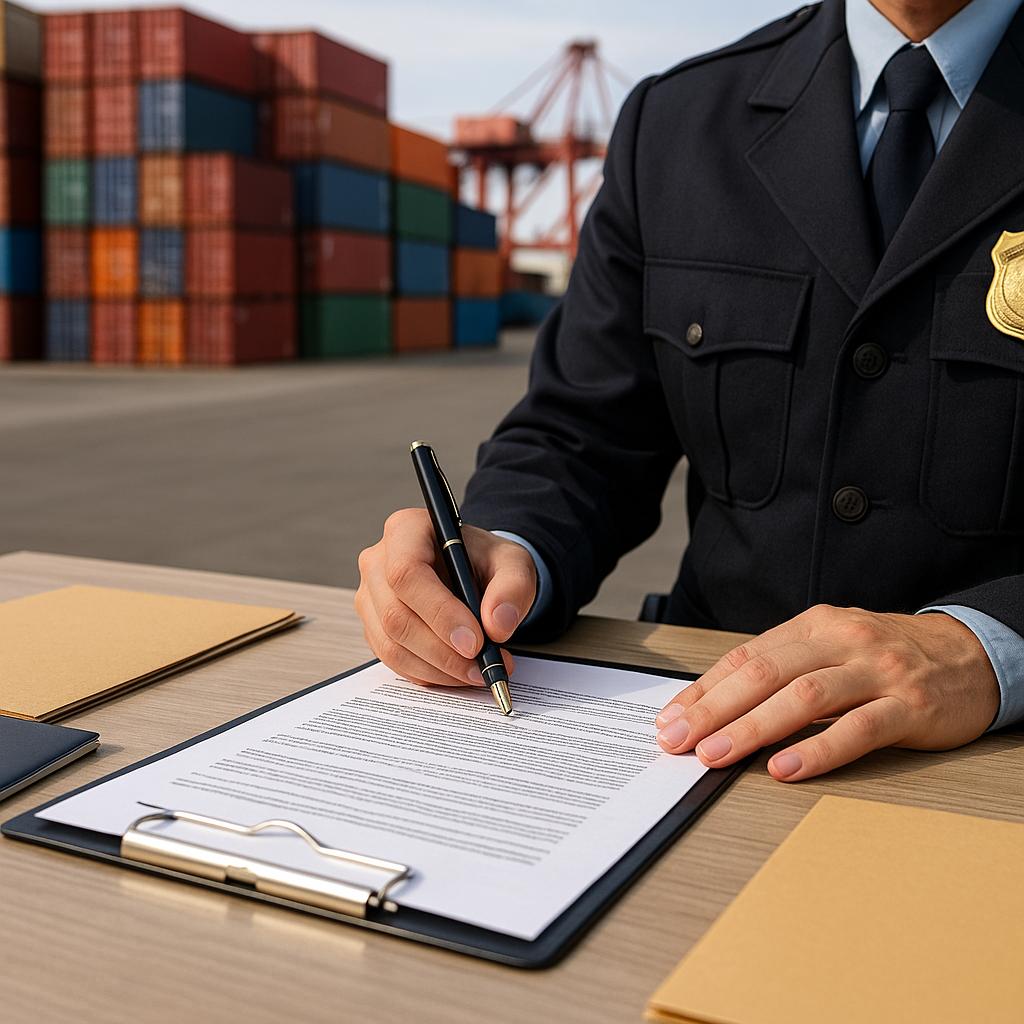
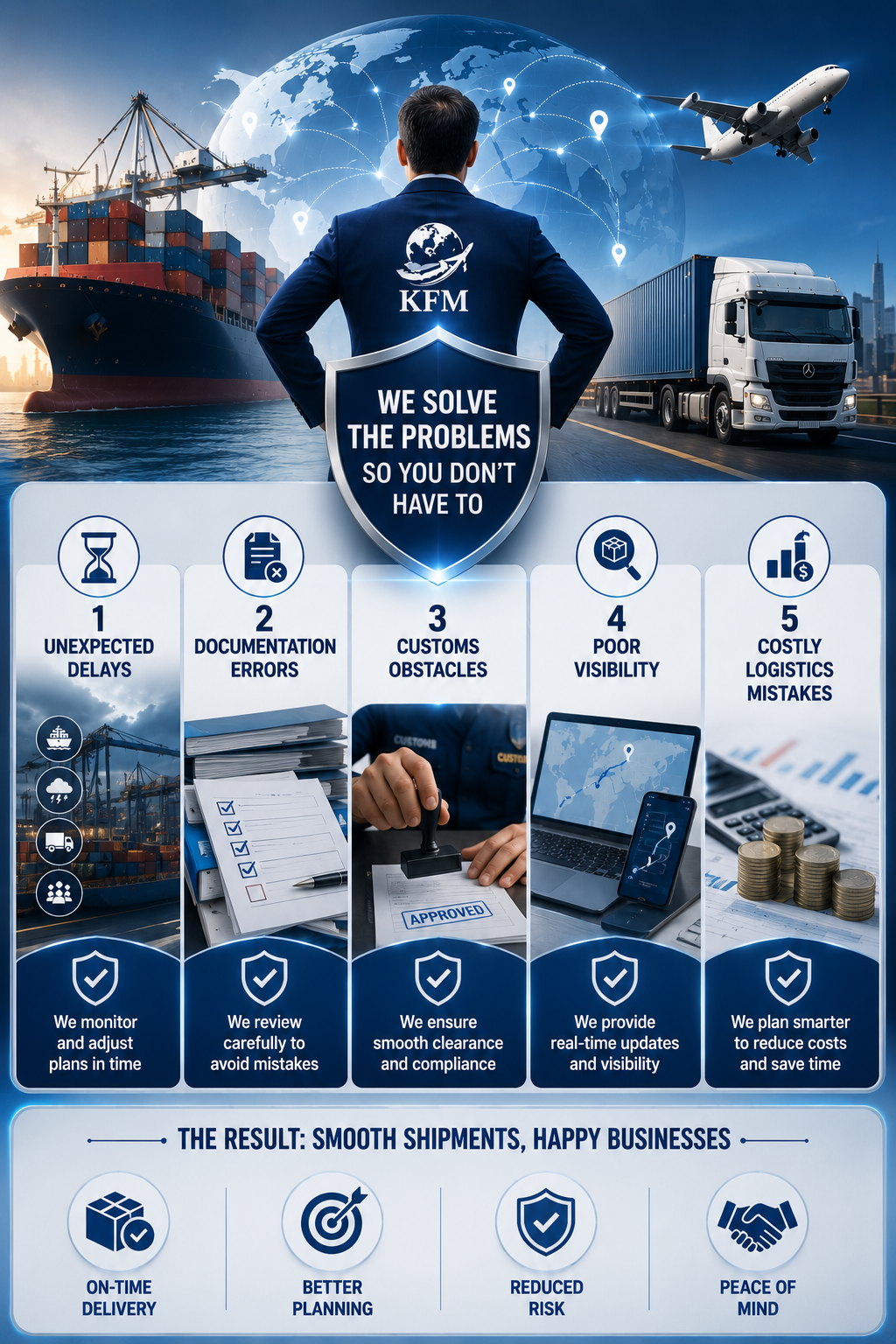
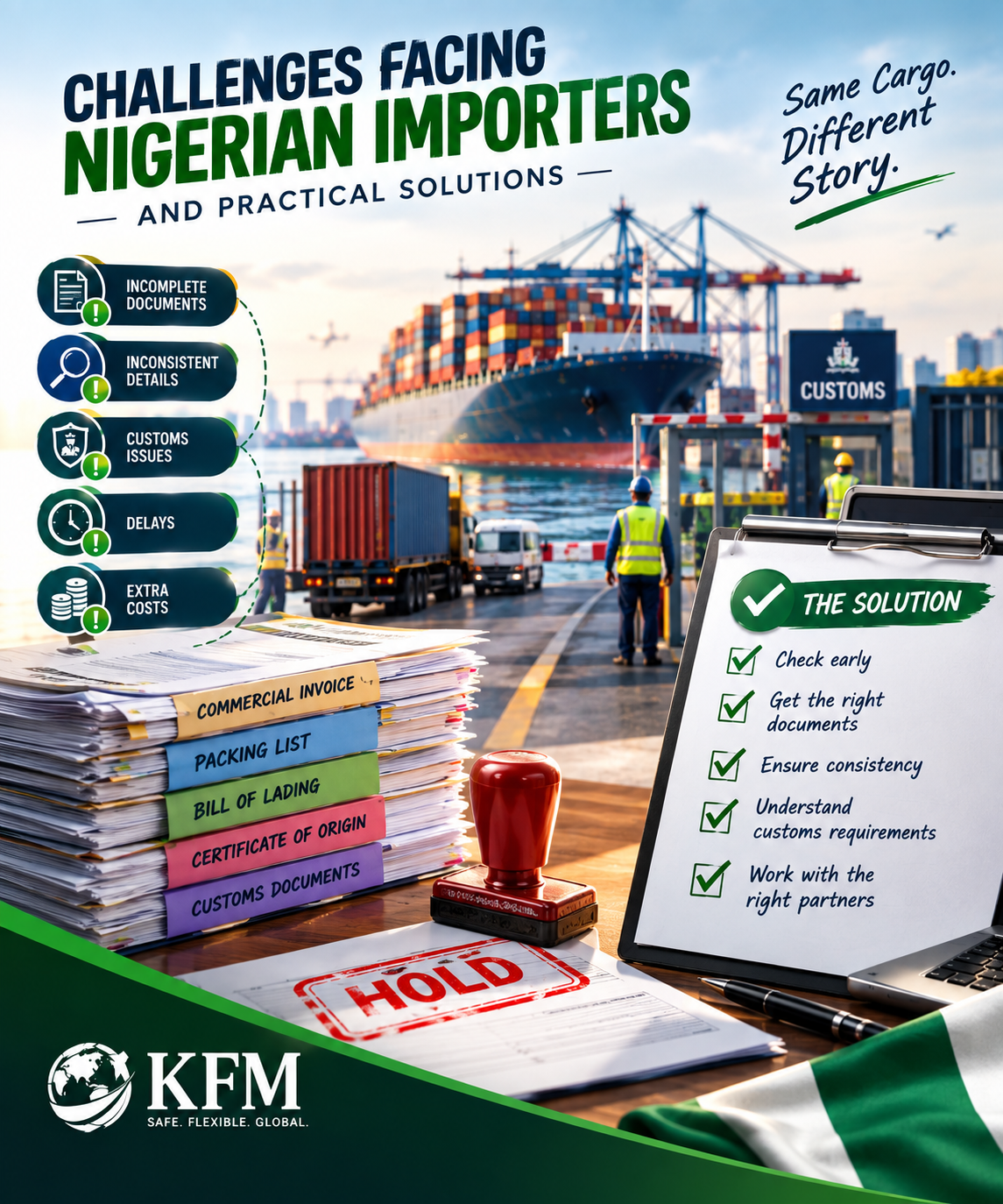
Believe it or not, one of the biggest causes of shipping delays is simple paperwork mistakes. A missing document, incorrect product description, or wrong classification code can cause customs authorities to stop a shipment immediately.
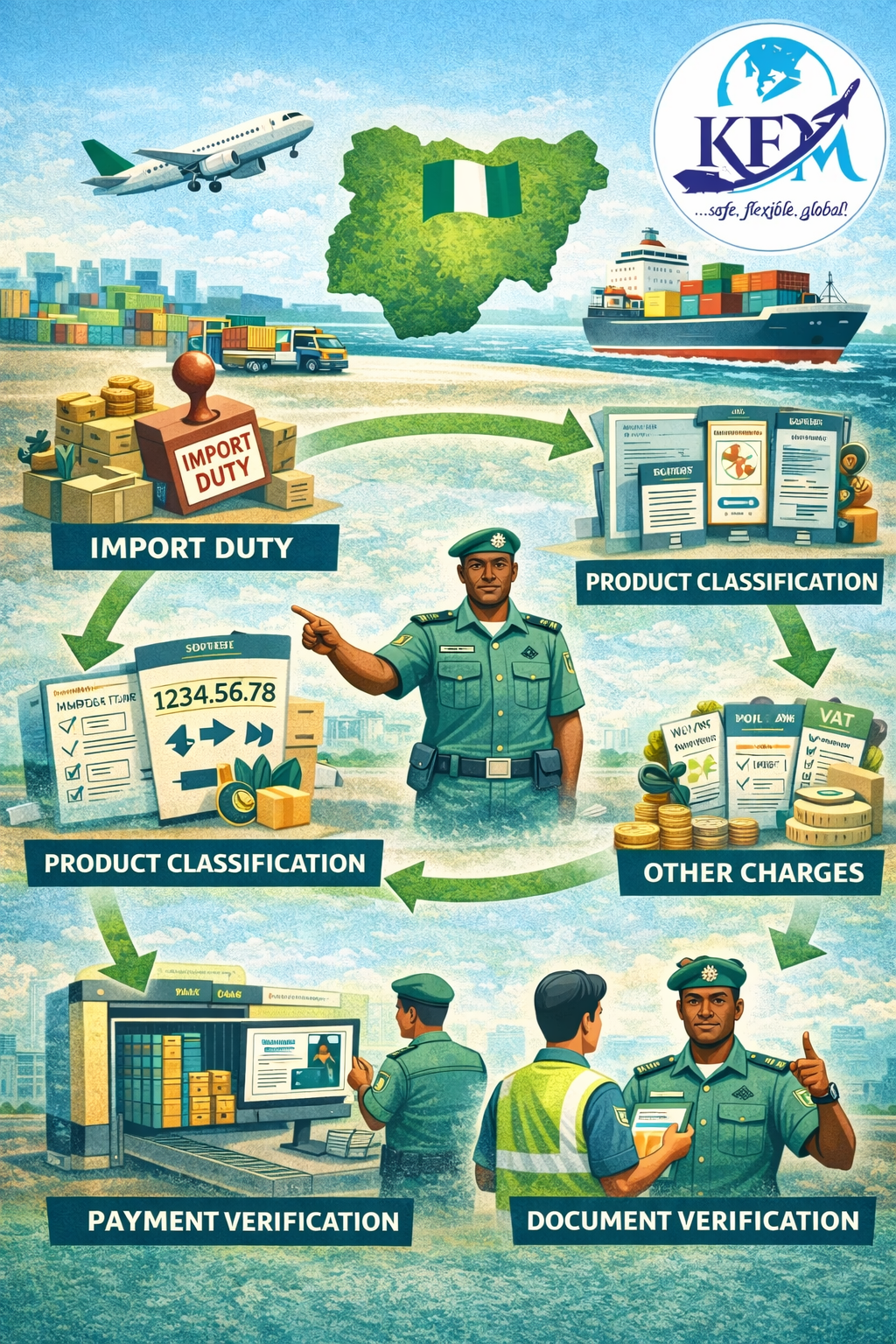
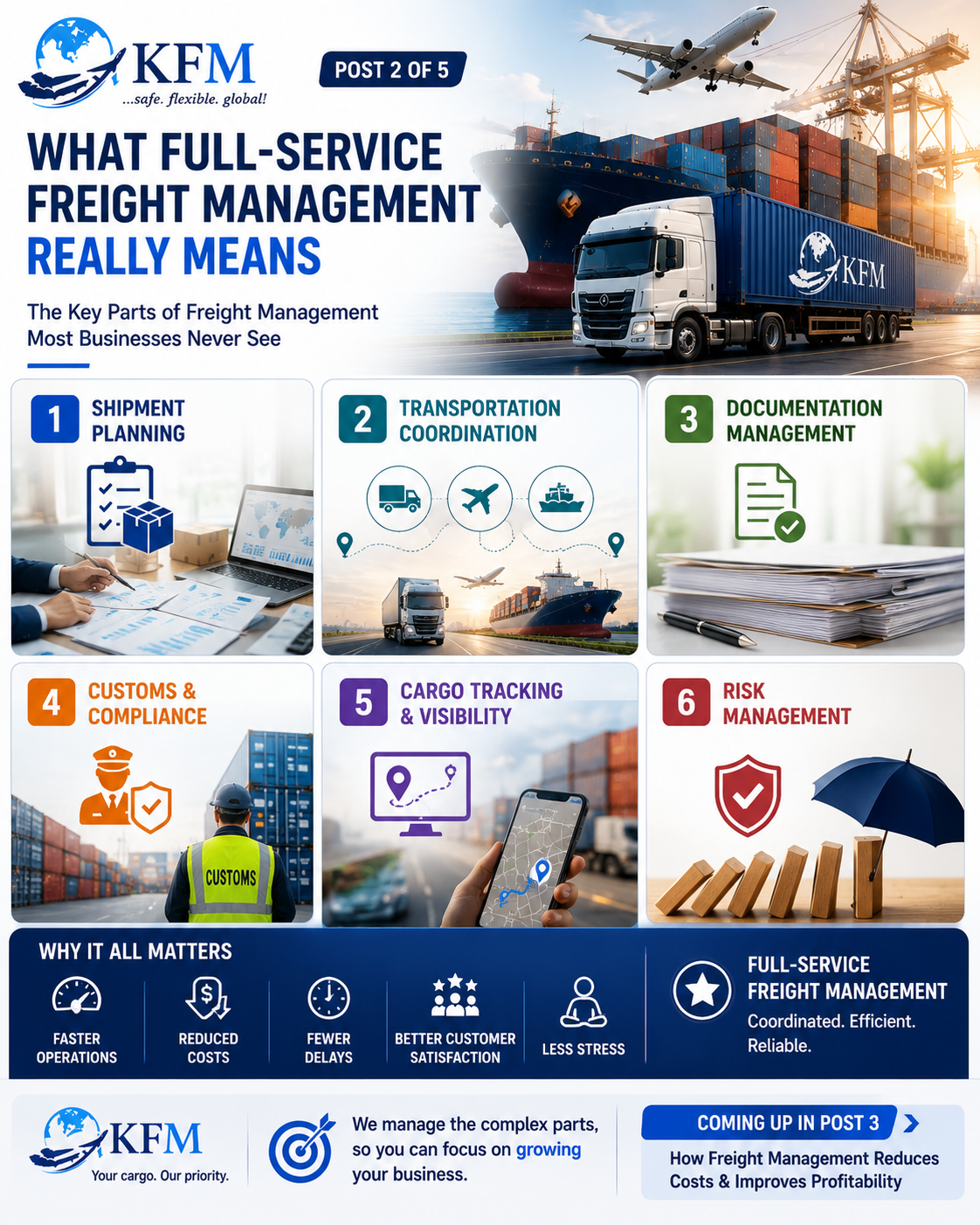
At KFM, careful document verification helps ensure shipments meet regulatory requirements before they even arrive at the port.
2. Cargo Damage During Transit
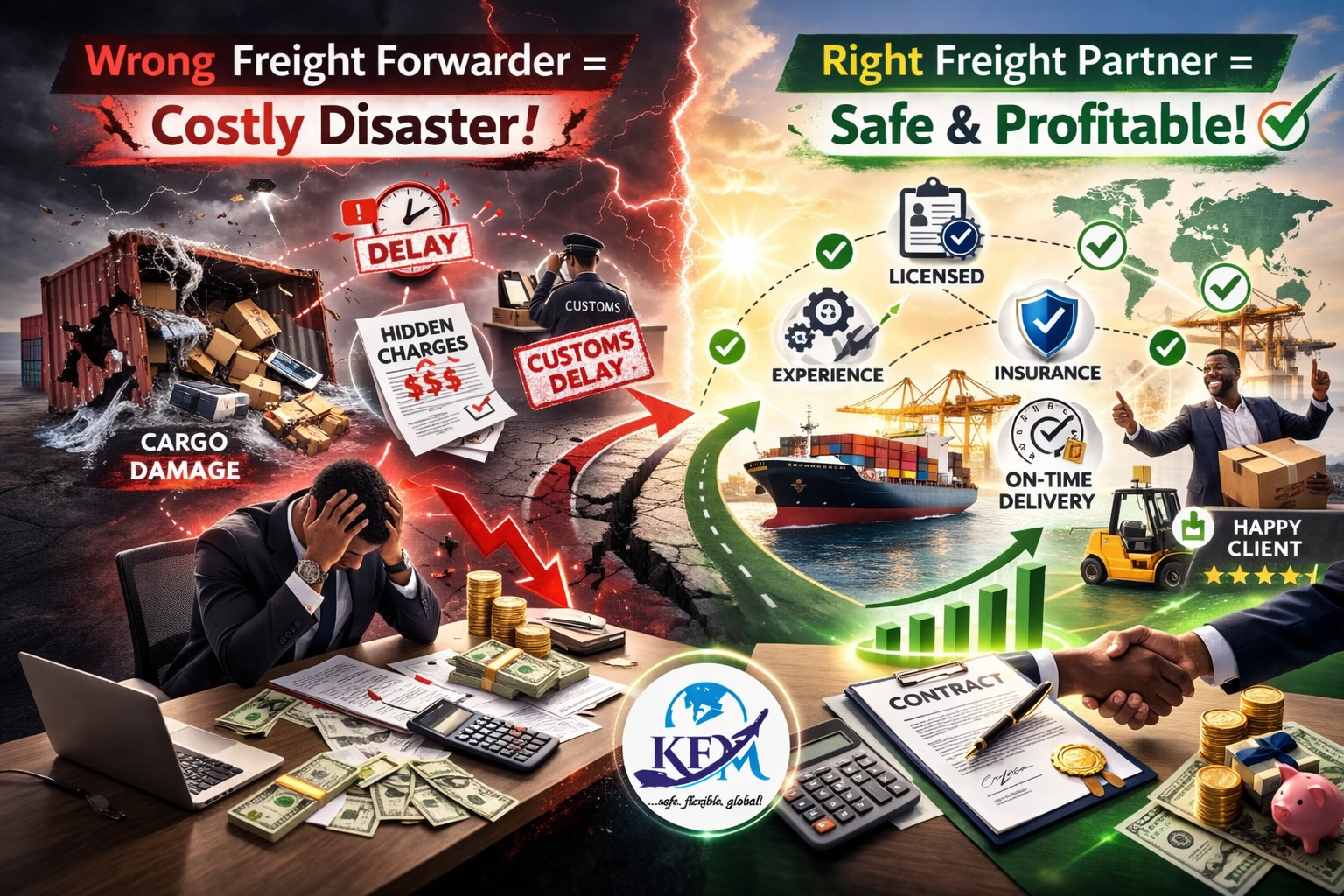
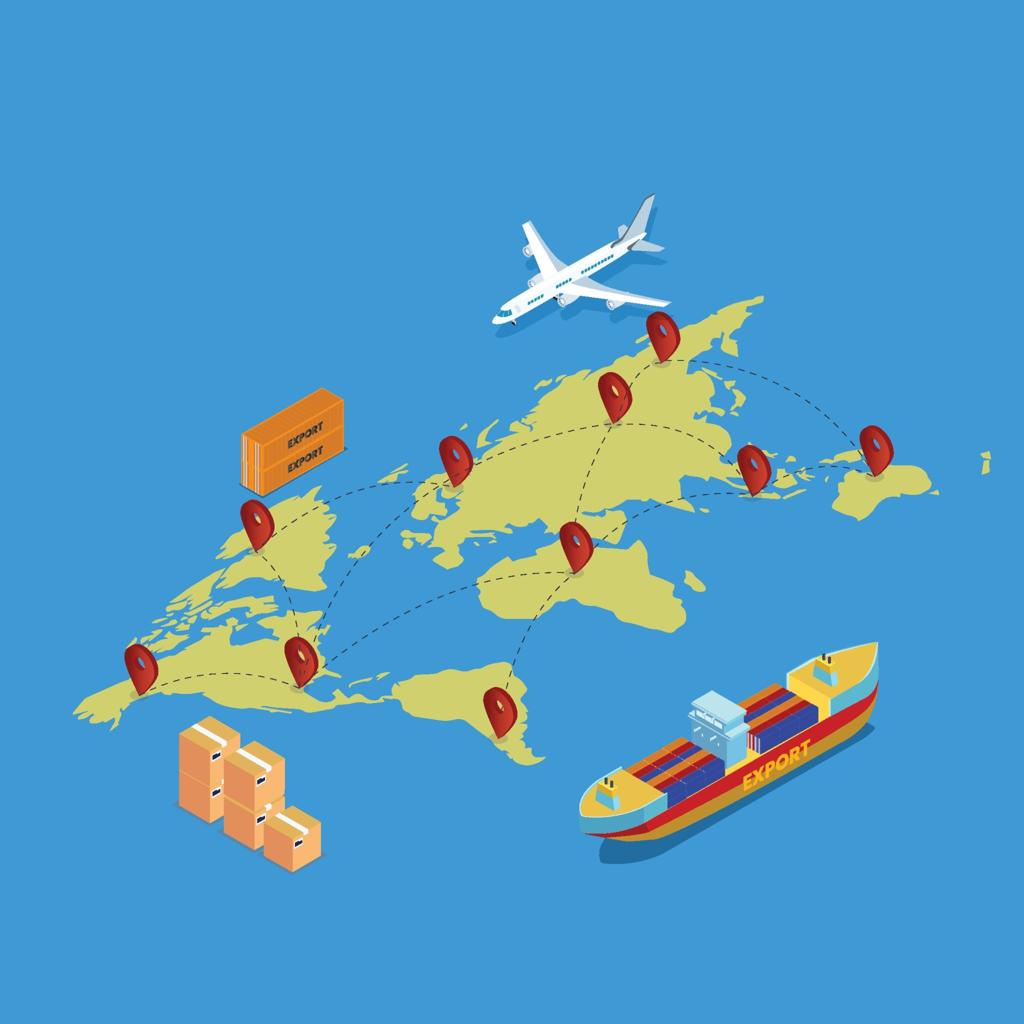
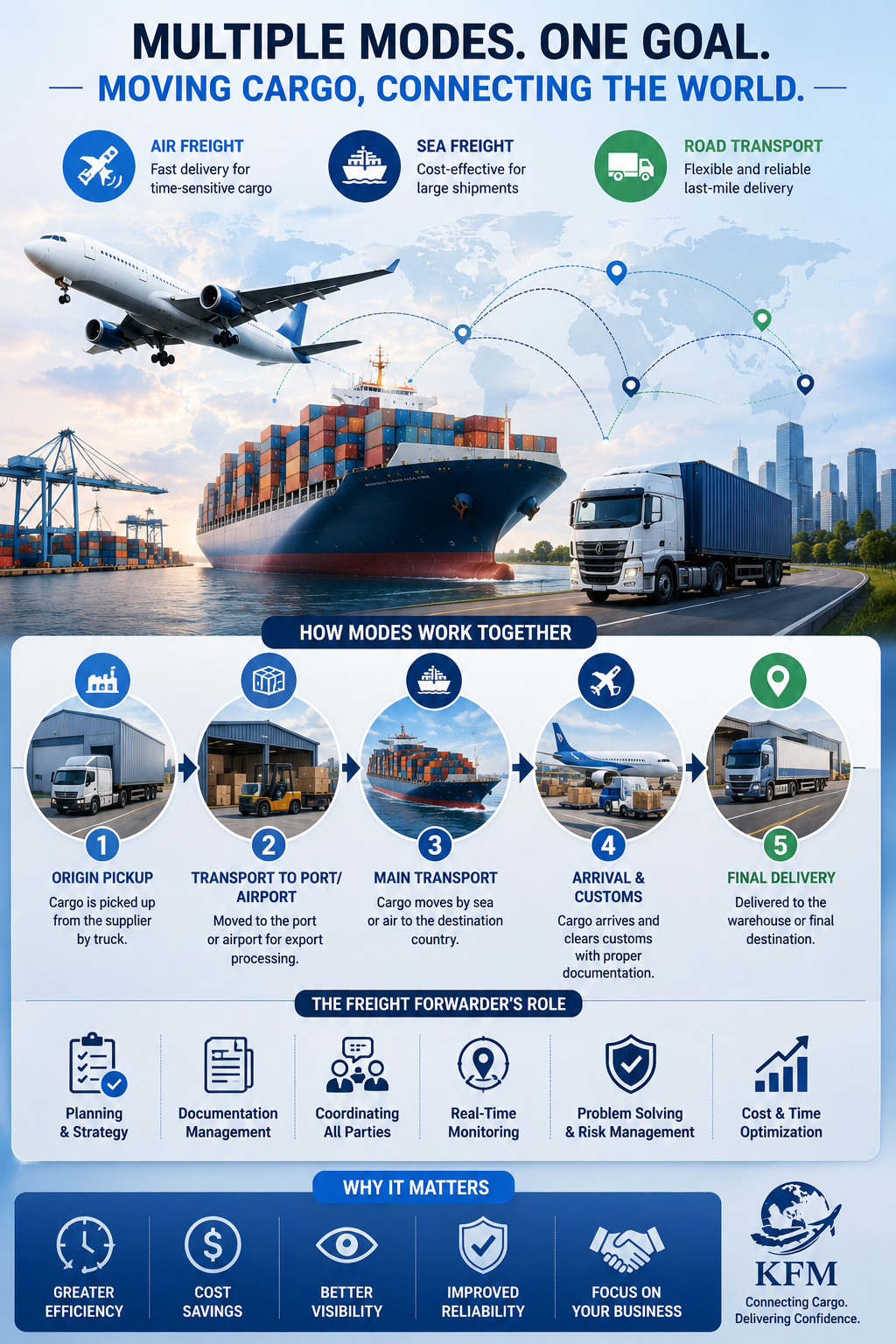
Cargo travels long distances through multiple transportation modes — ships, trucks, and sometimes aircraft. Without proper packaging and handling, goods can easily be damaged.
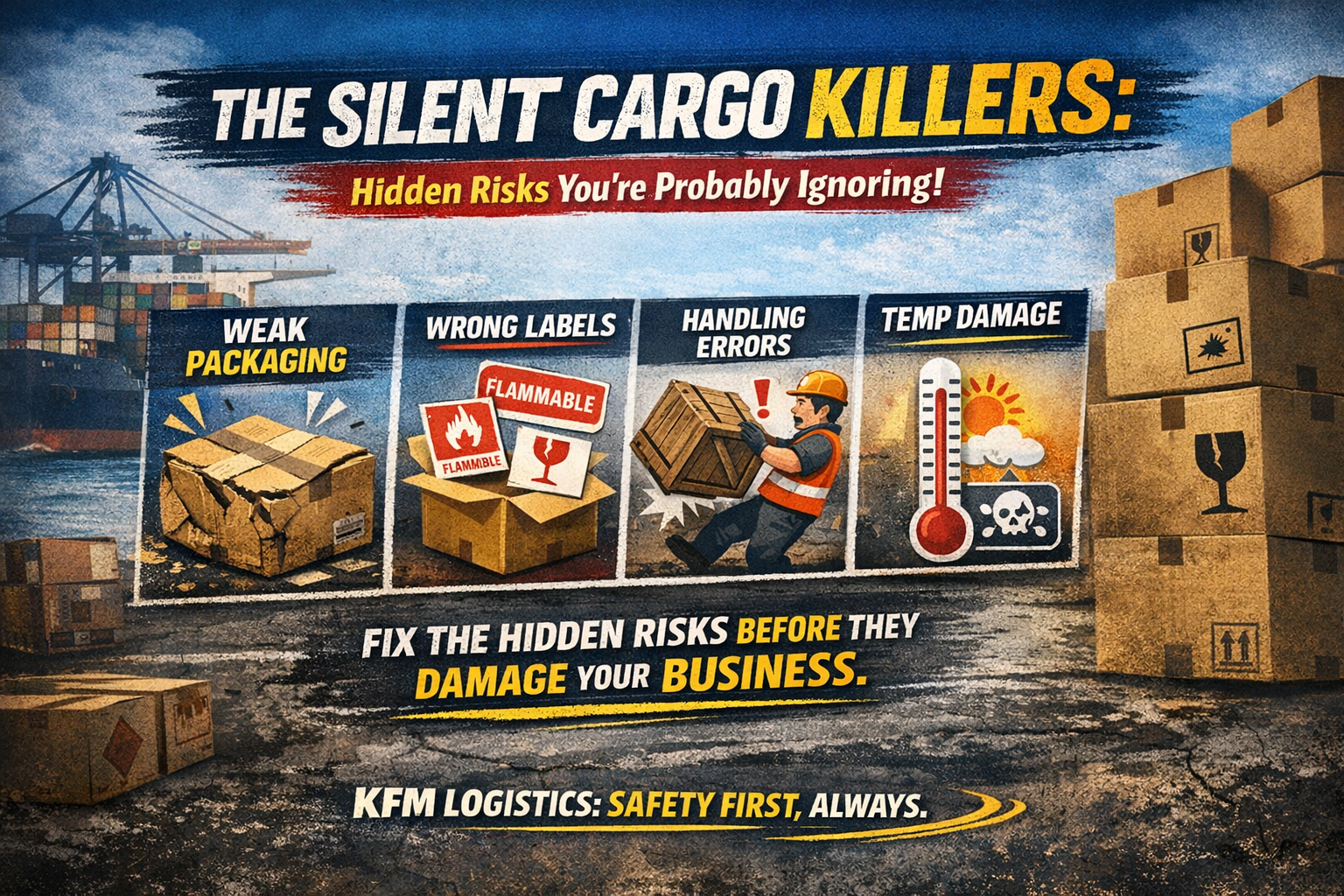
Common causes of cargo damage include:
- Poor packaging or weak containers
- Improper stacking of cargo
- Rough handling during loading and unloading
- Weather exposure during transport
Logistics providers like KFM work closely with handlers and carriers to ensure cargo is packaged, loaded, and secured properly.
3. Cargo Theft and Security Risks
Unfortunately, cargo theft is a real issue in global shipping. Valuable goods can become targets during transportation, storage, or port operations.
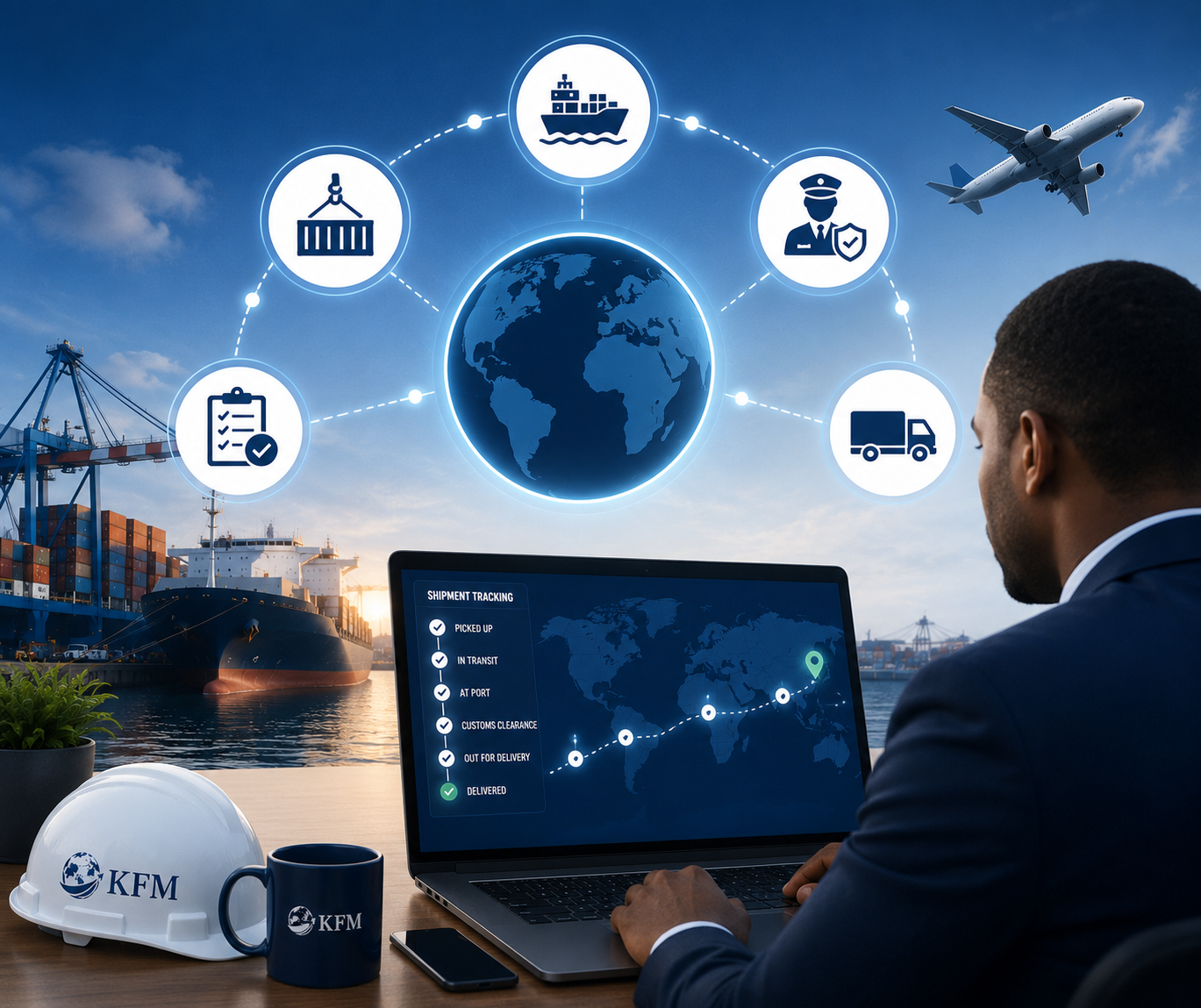
To reduce this risk, logistics professionals use security procedures such as cargo tracking, verified documentation, and controlled cargo access.
4. Customs Delays
Customs inspections are necessary for international trade, but they can sometimes lead to unexpected delays — especially when shipments are flagged for further review.
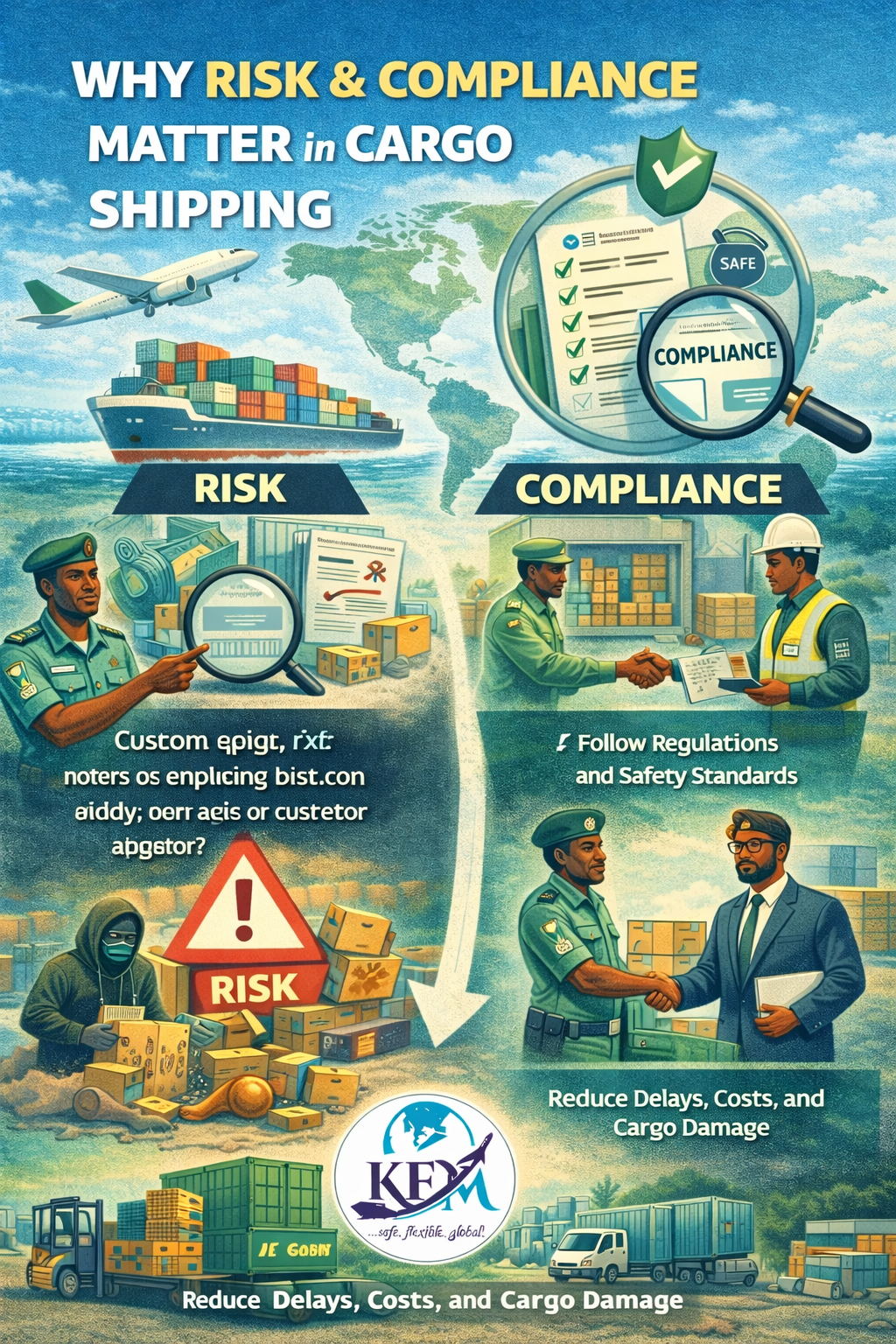
This is where strong compliance practices make a difference. Companies like KFM ensure that shipments follow regulations and documentation standards, which helps reduce the chances of lengthy customs delays.
5. Regulatory Changes
International trade regulations can change quickly. Import restrictions, documentation requirements, or duty rates may be updated by government authorities.
Experienced logistics providers stay updated on these changes so clients can avoid unexpected compliance problems.
Why Risk Awareness Matters
When businesses understand the risks involved in shipping, they can take proactive steps to protect their cargo.
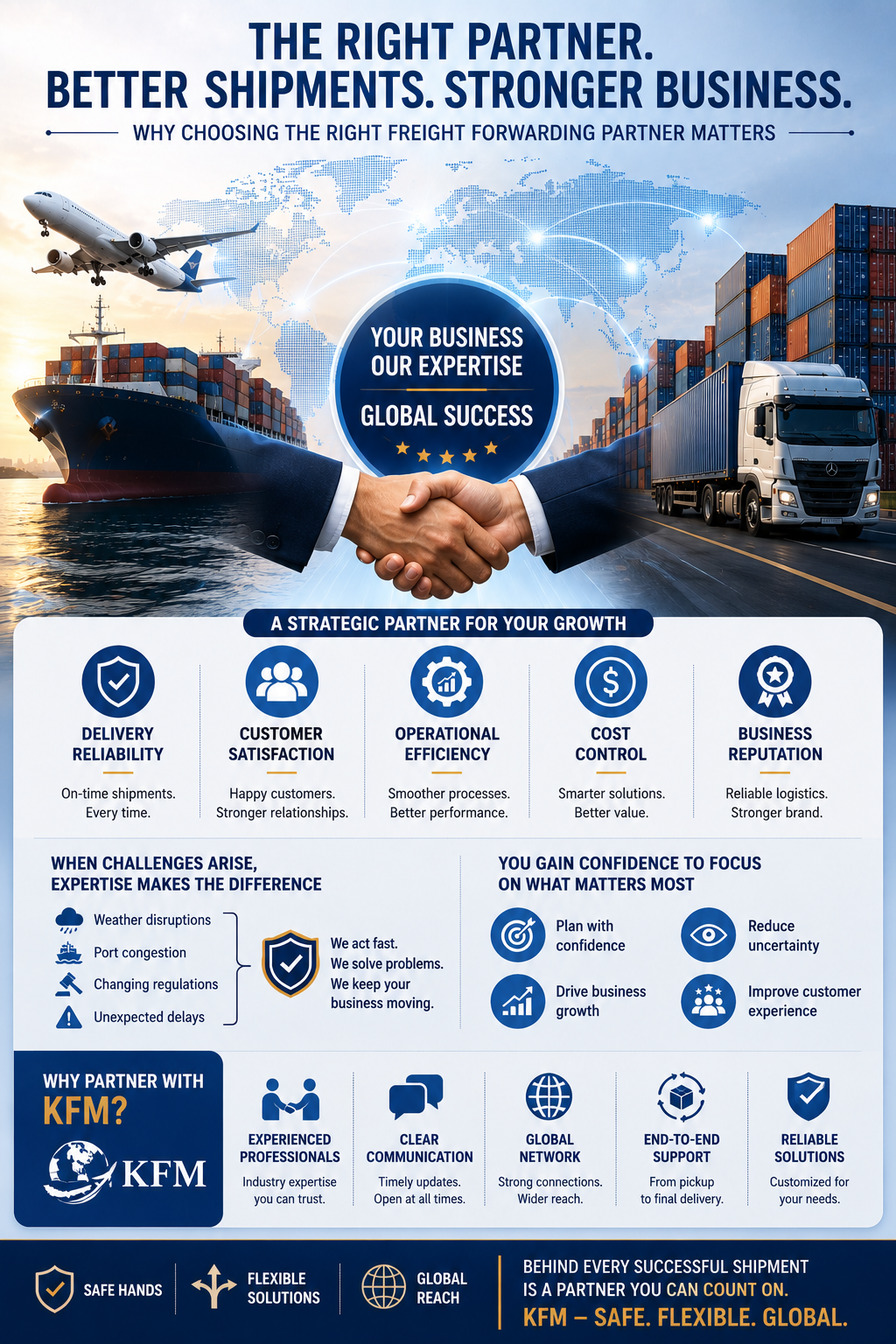
Working with a knowledgeable logistics partner like KFM ensures that potential risks are identified early and managed properly throughout the shipping process.
Coming Up in Post 3
In the next post, we’ll explore how cargo safety measures and compliance systems work together to protect shipments from damage, theft, and costly delays.